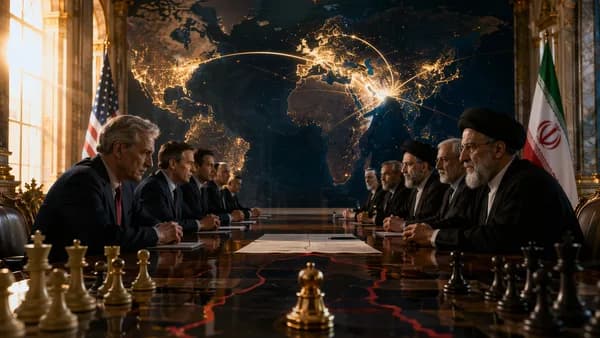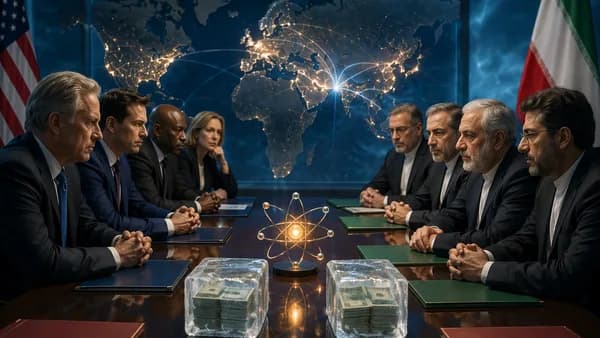
A deal was being described as close on Tuesday. By Wednesday, Donald Trump was threatening punishment and Iran was promising retaliation.
XOOMAR Intelligence
Analyst Take
That whiplash is the story beneath the headline. The latest US-Iran exchange shows how quickly diplomacy can turn into public deadline-setting once military action enters the frame, according to BBC World. Trump said Tehran had taken “too long to negotiate a deal” and would now “have to pay the price”, while Iranian officials warned they would answer any attack or threat.
Trump’s price warning turns diplomacy into a countdown
Trump’s language moved the talks from bargaining to punishment. On Tuesday, he told journalists the US and Iran were in the “final throes of what will be a very, very good deal”. On Wednesday, he wrote on Truth Social that Iran had been “completely defeated” and was “all talk and no action”.
“They've taken too long to negotiate a deal that would have been great for them, now they will have to pay the price!!!”
That matters because public threats shrink the space for compromise. If Washington says delay must carry a cost, any later concession risks looking like retreat. If Tehran says every attack will be answered, restraint can look like humiliation.
The immediate danger is not only another strike. It’s the logic of response. Each side now has a public reason to answer the last move.
Before vs. after the latest exchange:
- Before: Trump framed a deal as close and favorable.
- After: Trump framed delay as something Iran must be punished for.
- Before: Diplomacy appeared to have momentum.
- After: Iran said the process had been damaged by US conduct and “contradictory messages”.
- Before: Military action sat beside talks.
- After: Military action is shaping the talks.
That is a much narrower lane.
The strike ledger now matters more than the talking points
The known sequence is stark. The US said it struck Iranian sites on Wednesday after a US army helicopter was downed in the Gulf. US Central Command said Iranian defence systems, ground control stations and radar sites were targeted near the Strait of Hormuz.
Iran then launched strikes at US bases in the region. The Islamic Revolutionary Guard Corps said it launched strikes on 21 targets at US bases, one in Bahrain and one in Jordan, while Kuwait’s army said it was also intercepting an attack. The Independent reported Iran fired at least four ballistic missiles and several drones at US bases in Bahrain, Kuwait and Jordan.
XOOMAR’s earlier coverage of Iran’s claimed strikes on US bases fits directly into this ledger. The key point is not whether every claimed target was hit. The key point is that Iran is now publicly tying its retaliation to US regional facilities.
| Actor | Reported action | Public message |
|---|---|---|
| US | Struck Iranian defence systems, ground control stations and radar sites near Hormuz | Iran delayed too long and must “pay the price” |
| Iran | Claimed strikes on 21 targets at US bases in the region | It will “leave no attack or threat unanswered” |
| Kuwait | Said it was intercepting an attack | Gulf states are no longer just observers |
The Strait of Hormuz is the pressure point. NBC’s related reporting said some 20% of the world’s oil flowed through the strait before the war, and that oil prices jumped around 3% after an earlier escalation. Those numbers explain why even limited strikes can move markets before damage is fully confirmed.
Threats move militaries too. Bases raise alert levels. Air defences look for follow-on attacks. Shipping routes get reassessed. In this kind of standoff, signals can create real costs before facts are settled.
Iran’s retaliation vow speaks to three audiences at once
Iranian Foreign Minister Abbas Araghchi said Iran would “leave no attack or threat unanswered”. Foreign ministry spokesman Esmaeil Baqai accused the US of “damaging this diplomatic process through the contradictory messages it sends, its repeated shifts in positions and demands, and, worst of all, through repeated violations of the ceasefire”.
That message is aimed first at Washington. Tehran wants the US to believe further strikes will carry costs.
It is also aimed at Iranians. If Trump says Iran’s military is “a complete and total mess”, Tehran cannot easily absorb attacks in silence. Public retaliation becomes part of regime credibility.
A third audience sits across the Gulf. Bahrain, Kuwait and Jordan appear in the strike reporting because US forces and facilities in the region are central to the confrontation. Iran’s warning tells host states that support for US operations can pull them closer to the firing line.
The supplied reporting documents missiles, drones, radar sites, air defences and ground control stations. It does not establish cyber operations or wider proxy activity in this latest round. That restraint matters. Iran may still seek calibrated responses, but the confirmed channel here is military and regional.
Gulf states are exposed to a fight they don’t control
Washington’s likely calculation is visible: pressure Iran into concessions, reassure allies, and make delay costly. Trump’s language is designed to deny Tehran the benefit of time.
Iran reads the same posture differently. A deal signed under public threat can look like surrender, even if diplomacy remains useful. That is why Baqai’s complaint about “contradictory messages” matters. Tehran is framing instability itself as a reason talks cannot proceed normally.
Gulf states face the hardest practical problem. Bahrain, Kuwait and Jordan appear in the latest reporting because US bases or personnel are part of the target set. Oman also appeared in NBC’s related reporting, with Trump warning it against partnering with Iran over the strait.
Europe’s role, based on the supplied material, is narrower. The Independent reported that the US, UK and other European countries issued a statement condemning Iran for “lethal plotting”. That shows alignment against Iranian activity, but not enough leverage to stop Washington and Tehran from trading threats in public.
The result is a region where the actors most exposed to escalation may not be the ones setting the tempo.
The coercion loop is repeating inside the ceasefire itself
The broader historical comparison is tempting, but the supplied reporting supports a tighter point: even within this current war and ceasefire framework, the pattern is already repeating.
One side claims provocation. The other answers with force. Diplomats say talks remain possible. Leaders then harden the public line.
NBC’s related reporting said Iran and the US had accused each other of violating a shaky ceasefire, while talks mediated by Pakistan and Qatar had appeared close to a deal. A senior Arab official told NBC that American and Iranian negotiators had agreed to terms of a truce deal three days earlier, but that both sides had delayed finalizing and announcing it.
That is the contradiction at the center of the crisis. The mechanics of a deal may exist, but the politics of announcing one may be deteriorating.
Trump’s posts intensify that gap. Iran’s retaliation language widens it. Both sides can still use diplomacy, but neither wants to look like it needed diplomacy.
Markets and security planners now trade on credibility, not calm
For markets, the core risk is not every angry statement. It is a credible threat to oil flows, US personnel, or regional bases. NBC’s reporting that oil moved around 3% after an earlier escalation shows how quickly pricing reacts when Hormuz enters the story.
That is why XOOMAR’s market coverage of US-Iran fire rattling Asian stocks before a CPI test remains relevant as context. The macro calendar matters, but it can get shoved aside when missiles and shipping lanes enter the same sentence.
For companies, the practical exposure is straightforward:
- Energy: Oil-linked costs can swing if Hormuz risk rises.
- Shipping: Insurance and routing assumptions can change fast.
- Defence: US assets and regional bases face higher alert pressure.
- Infrastructure: Commercial operators near the Gulf have to plan for disruption, even if they are not direct targets.
- Government contractors: Any escalation around US bases can alter timelines, staffing and risk controls.
Markets may fade rhetoric. They won’t ignore confirmed attacks near a chokepoint tied to global oil flows.
Three paths now define the next phase
The first path is controlled escalation. The US and Iran keep trading threats and limited actions, while trying to avoid deaths or damage that would force a larger war. This is unstable, but still deliberate.
The second path is a break in control. A strike kills US personnel, hits critical infrastructure, or lands in a way neither side intended. At that point, leaders may respond less to strategy than to pressure.
The third path is a face-saving diplomatic reset. Backchannels reopen, intermediaries try to package restraint as strength, and both sides keep using hard language in public while testing compromise in private.
The evidence to watch is specific: whether attacks stop near US bases, whether Iran keeps Hormuz pressure below a wider disruption threshold, and whether Washington returns to deal language instead of punishment language. If those signals don’t appear soon, the next move may be shaped by the need to answer the last headline.
The Stakes
- Public threats make it harder for either side to compromise without appearing weak.
- The exchange raises the risk that retaliation replaces diplomacy as the main driver of events.
- A breakdown in US-Iran talks could widen instability across an already tense region.
US-Iran Diplomacy Before vs. After the Latest Exchange
| Before | After |
|---|---|
| Trump framed a deal as close and favorable. | Trump framed delay as something Iran must be punished for. |
| Diplomacy appeared to have momentum. | Iran said the process had been damaged by US conduct and “contradictory messages”. |
| Military action sat beside talks. | Military action is now shaping the talks. |
Primary Sources & Disclosures

Written by
XOOMAR
Data desk
XOOMAR is a capital markets software and data company. Every brief on this site starts from a dataset the company collects itself from primary sources (CFTC, SEC EDGAR, FINRA, the Federal Reserve, exchange APIs) and names the numbers it is built on, with a link to the data page so you can check them. Briefs are reviewed before they go out and corrected in place when the data is revised.