Enterprise cloud security buying has become harder because CNAPP vs CSPM vs CWPP is not a simple three-way product comparison. These categories overlap, but they solve different problems: posture risk, workload runtime risk, and full-lifecycle cloud-native risk.
XOOMAR Intelligence
Analyst Take
For enterprise buyers, the practical question is not “Which acronym is best?” It is: what level of visibility, prioritization, runtime protection, identity context, and cloud maturity does your environment actually require?
1. What CNAPP, CSPM, and CWPP Mean
Before comparing platforms, it helps to separate the three categories by what each one watches.
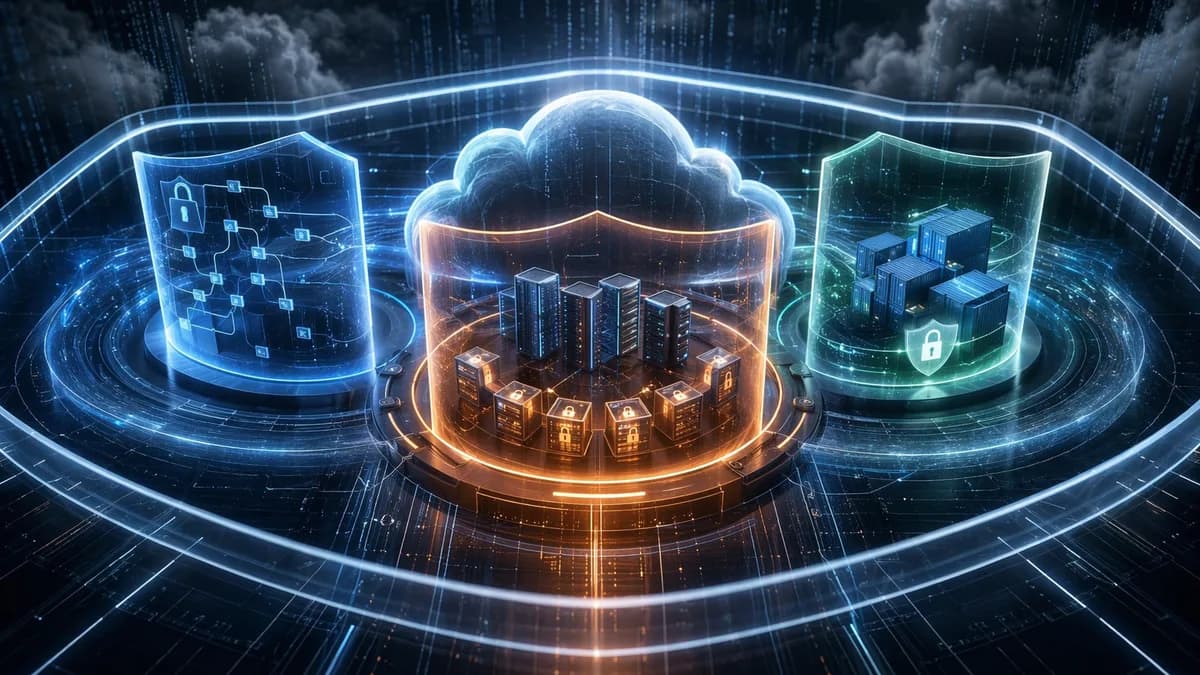
Simple distinction: CSPM watches cloud configuration. CWPP watches workloads. CNAPP combines both and adds broader context across identity, data, code, and runtime.
CSPM: Cloud Security Posture Management
Cloud Security Posture Management (CSPM) tools continuously monitor cloud environments for configuration errors, policy violations, and compliance gaps.
According to the source data, CSPM commonly assesses resources such as:
- Storage: Public buckets, encryption settings, logging status
- Compute: Virtual machines and cloud instances
- Serverless: Functions and related configuration risks
- Identity: IAM policies, excessive permissions, access controls
- Cloud controls: Logging, encryption, security groups, and policy settings
CSPM is especially useful for detecting issues such as publicly accessible storage, missing encryption, disabled logging, overly permissive IAM roles, and cloud configuration drift.
A CSPM tool typically connects to cloud accounts through cloud provider APIs and inventories resources against a policy library. AppSecSanta describes CSPM as the cloud-configuration layer of a broader security program, while Wiz describes it as a way to automatically identify misconfigurations, configuration drift, and compliance violations across cloud environments.
CSPM also supports compliance alignment. Sources specifically mention frameworks and standards such as NIST 800-53, SOC 2, ISO/IEC 27001, CIS Benchmarks, PCI DSS, HIPAA, and GDPR.
CWPP: Cloud Workload Protection Platform
Cloud Workload Protection Platform (CWPP) focuses on protecting workloads during runtime.
The researched sources define workloads broadly, including:
- Physical servers
- Virtual machines
- Containers
- Serverless workloads
- Hybrid and multicloud workloads
CWPP capabilities include:
- Image Scanning: Scans container images for vulnerabilities
- Runtime Monitoring: Detects anomalous workload behavior
- Policy Enforcement: Blocks or flags unauthorized actions
- Container Security: Secures containerized applications
- Host Hardening: Helps improve workload-level security
- Behavioral Monitoring: Supports detection of suspicious activity
- Application Control: Helps enforce allowed behavior
Uptycs cites Gartner’s CWPP control layers, including hardening, configuration and vulnerability management, network firewalling and microsegmentation, system integrity assurance, application control and allowlisting, exploit prevention, workload EDR, host-based IPS, and anti-malware scanning.
CWPP is therefore workload-centric. It is designed for what happens inside workloads, not just how the surrounding cloud infrastructure is configured.
CNAPP: Cloud-Native Application Protection Platform
Cloud-Native Application Protection Platform (CNAPP) combines multiple cloud security capabilities into a unified platform.
Tenable describes CNAPP as providing full-lifecycle visibility and risk reduction across cloud environments. The source data says CNAPP typically includes:
- CSPM: Cloud security posture management
- CWP/CWPP: Cloud workload protection
- KSPM: Kubernetes security posture management
- CIEM: Cloud infrastructure entitlement management
- DSPM: Data security posture management
- Vulnerability Management
- CI/CD Integration
- IaC Scanning
- Runtime Threat Detection
The defining benefit of CNAPP is correlation. Instead of treating a vulnerable image, public exposure, excessive permissions, and sensitive data access as separate alerts, CNAPP connects them into a single risk story.
Key insight: CNAPP is valuable when security teams need to prioritize toxic combinations of risk, not just collect more findings.
Tenable gives a concrete example: a public S3 bucket with no logging and tied to an over-permissioned identity ranks higher than a standalone misconfiguration. Another example: a container with a known vulnerability running as root and connecting to sensitive storage should be treated as higher priority than a generic vulnerability alert.
2. Core Differences at a Glance
For enterprise buyers comparing CNAPP vs CSPM vs CWPP, the most useful distinction is scope.
| Category | Primary Scope | What It Detects Well | Source Signal | Best Fit |
|---|---|---|---|---|
| CSPM | Cloud account and control-plane configuration | Misconfigurations, compliance gaps, public storage, permissive IAM, missing encryption, disabled logging | Cloud provider APIs, usually read-only | Compliance, posture management, configuration drift |
| CWPP | Runtime workloads such as VMs, containers, physical servers, and serverless | Malware, anomalous behavior, vulnerable workloads, runtime threats, workload hardening gaps | Agents, workload telemetry, runtime monitoring, scanning | Workload protection, container security, runtime threat detection |
| CNAPP | Full cloud-native application lifecycle | CSPM and CWPP findings plus identity, data, IaC, Kubernetes, vulnerability, and runtime context | Cloud APIs, workload scanning, CI/CD, IaC repositories, container registries, audit logs | Unified cloud risk reduction, multicloud, DevSecOps, alert prioritization |
The Tenable comparison also frames the overlap this way:
| Capability | CSPM | CWPP | CNAPP |
|---|---|---|---|
| Configuration Visibility | ✅ Fully covered | ⚠️ Partially supported | ✅ Fully covered |
| Runtime Behavior | ❌ Not supported | ✅ Fully covered | ✅ Fully covered |
| Identity and Access Context | ⚠️ Partially supported | ⚠️ Partially supported | ✅ Fully covered |
| Data Risk Visibility | ❌ Not supported | ⚠️ Partially supported | ✅ Fully covered |
| CI/CD Shift-Left Integration | ⚠️ Partially supported | ✅ Fully covered | ✅ Fully covered |
| Best For | Compliance and posture | Workload security | Full risk reduction |
CSPM vs CWPP
CSPM secures the cloud infrastructure from a posture and configuration perspective. CWPP secures the workloads running inside or across that infrastructure.
Uptycs summarizes the difference clearly: CWPP protects workloads, while CSPM ensures the infrastructure surrounding those workloads is secure.
CSPM vs CNAPP
CSPM is narrower. It identifies cloud misconfigurations and compliance issues. CNAPP includes CSPM, then adds workload protection, identity management, data security posture, IaC scanning, runtime threat protection, and risk correlation.
Wiz describes CSPM as lower-context because alerts are often siloed. CNAPP provides higher context by correlating identity, configuration, vulnerability, and workload data to prioritize risks that are actually exploitable in a specific environment.
CWPP vs CNAPP
CWPP focuses on workloads. CNAPP includes workload protection but expands into posture, identity, data, code, and cloud attack-path analysis.
Orca Security notes that CWPP can provide detailed workload-level visibility but lacks visibility into the cloud control plane. That means CWPP alone may not understand how a workload connects to permissions, exposed services, or broader infrastructure risk.
3. When CSPM Is Enough for Cloud Risk Management
A standalone CSPM can be enough when the enterprise’s main cloud security need is posture visibility, compliance reporting, and configuration drift detection.
CSPM is a strong fit when cloud risk is mostly configuration risk
Choose CSPM if your priority is to answer questions like:
- Storage Exposure: Are any storage buckets publicly accessible?
- Identity Risk: Do any IAM roles have excessive or administrative privileges?
- Encryption: Are databases and storage resources encrypted?
- Logging: Is audit logging enabled where required?
- Network Exposure: Are security groups exposing sensitive ports to the internet?
- Compliance: Are resources aligned to CIS Benchmarks, SOC 2, NIST 800-53, ISO/IEC 27001, PCI DSS, HIPAA, or GDPR?
CSPM is also useful for continuous monitoring. If a developer creates an unencrypted storage bucket, changes a security group outside Terraform, or disables logging, CSPM is designed to detect that drift.
CSPM is often suitable for early-stage cloud maturity
Wiz states that CSPM is a good fit when an organization prioritizes regulatory compliance, manages a relatively static cloud environment with few custom applications, or only requires a solution for misconfiguration management.
AppSecSanta similarly frames CSPM as a common starting point for teams that need cloud configuration drift monitoring and compliance reporting.
CSPM can be lower-cost than CNAPP
The source data includes specific pricing ranges from AppSecSanta:
| Platform Type | Source-Reported Pricing Range |
|---|---|
| Third-party CSPM | $5,000–$15,000 per year for small environments |
| CNAPP | Starts around $20,000 and can reach $100,000–$500,000+ for enterprise deployments |
These numbers are not universal quotes, but they are useful for budget framing. If your enterprise only needs compliance evidence and cloud configuration monitoring, a full CNAPP may be more platform than you need at the time of writing.
CSPM limitations buyers should understand
CSPM does not look deeply inside workloads.
According to AppSecSanta, CSPM cannot tell you whether a container is running a vulnerable version of Log4j, whether a Lambda function has a code injection vulnerability, or whether a compromised pod is moving laterally through a Kubernetes cluster.
Orca Security also notes that CSPM tools do not provide workload-deep insight. For example, CSPM would not alert on a vulnerable web server or infected workload without CWPP or CNAPP capabilities.
Practical warning: CSPM is not runtime protection. It tells you what is misconfigured, not necessarily what is happening inside a workload right now.
4. When Enterprises Need CWPP for Workload Protection
Enterprises need CWPP when cloud risk extends beyond control-plane configuration and into workload runtime behavior.
CWPP is designed for dynamic workloads
Tenable describes CWPP as essential for cloud-native workloads that spin up quickly or operate in ephemeral environments where traditional scanners fall short.
This matters for enterprises running:
- Containers: Images, registries, and runtime containers
- Kubernetes: Pods, clusters, and container orchestration environments
- Serverless: Functions with dependencies and runtime behavior
- Virtual Machines: Cloud instances requiring vulnerability and process visibility
- Hybrid Workloads: Workloads spanning on-premises and cloud environments
CWPP provides workload-centric visibility across these environments.
CWPP helps detect runtime and exploit activity
CWPP capabilities in the research include:
- Vulnerability Scanning: Identifies vulnerabilities before software is pushed to production
- Runtime Monitoring: Detects anomalous behavior
- Exploit Detection: Supports faster detection of exploits and active threats
- System Integrity: Tracks changes that may indicate compromise
- Application Control: Enforces allowed behavior
- Anti-Malware: Optional runtime malware protection
- Host-Based IPS: Provides vulnerability shielding
- Microsegmentation: Helps control workload-to-workload communication
Uptycs notes that CWPP solutions mapping observed activity to the MITRE ATT&CK enterprise matrix can give analysts more context and help them understand incident severity.
CWPP is important for container-heavy environments
If containers are in production, CSPM alone will usually leave visibility gaps.
AppSecSanta notes that workload-inside scanners such as Trivy can scan container images, code repositories, binary artifacts, and Kubernetes clusters for CVEs and IaC misconfigurations CSPM does not see. The same source also mentions Snyk Container as a dev-first approach where vulnerabilities surface during pull request review and base-image upgrades can be fixed before workloads reach production.
The broader point is not that every enterprise needs those exact tools. It is that workload security requires visibility into software packages, images, dependencies, runtime behavior, and workload execution.
CWPP has its own limitations
CWPP alone does not provide full cloud security context.
Orca Security lists several CWPP challenges:
- Control Plane Gap: CWPP does not provide insight into the cloud control plane.
- Alert Prioritization: CWPP may lack environmental context to prioritize alerts effectively.
- Agent Coverage: Agent-based CWPP can create deployment and maintenance overhead.
- Blind Spots: Agents may not cover every asset, operating system, stopped machine, paused workload, or idle workload.
- Lateral Movement Risk: CWPP alone may not identify which keys or credentials could enable movement to other assets.
Orca Security research cited in the source says that, on average, less than 50% of assets are covered by host cloud security solutions.
Buying implication: CWPP is valuable for runtime protection, but buyers should validate deployment coverage, agent requirements, and how workload findings are prioritized against cloud context.
5. Why CNAPP Combines Multiple Cloud Security Capabilities
A CNAPP exists because CSPM and CWPP each solve important but incomplete parts of cloud security.
CSPM finds cloud posture problems. CWPP finds workload security problems. CNAPP brings posture, workload, identity, data, code, and runtime signals into one platform.
CNAPP reduces siloed cloud security operations
Tenable states that CNAPP correlates identity, workload, configuration, and data risks into a unified view. This helps teams avoid alert fatigue and prioritize real threats over isolated findings.
Wiz similarly states that CNAPP unifies CSPM with workload, identity, and data security to provide context-driven cloud protection.
Orca Security describes CNAPP as a platform approach that can replace or consolidate tools such as CSPM, CWPP, and CIEM into one cloud security platform.
CNAPP’s key differentiator is risk correlation
AppSecSanta describes the defining CNAPP capability as a risk graph or attack-path correlation.
A single vulnerable image is a finding. But a vulnerable image that is:
- Internet-Facing
- Running with Admin Privileges
- Connected to Sensitive Data
- Part of a Production Workload
is a much more urgent risk.
Tenable gives a similar example: if a container with a known vulnerability runs as root and connects to sensitive storage, it should be flagged as high priority rather than treated as just another vulnerability alert.
This is where CNAPP differs from simply buying multiple point tools. The value is not only feature breadth; it is context.
CNAPP supports shift-left and runtime security
CNAPP platforms commonly include CI/CD and IaC capabilities. Tenable lists CI/CD integration as a typical CNAPP capability. Wiz includes Infrastructure as Code scanning and runtime threat protection among CNAPP features.
Examples of shift-left checks include scanning Terraform, CloudFormation, and other templates before deployment. The purpose is to catch misconfigurations earlier in the development lifecycle, before they reach production.
At runtime, CNAPP can also detect activity such as unusual API calls, lateral movement, data exfiltration patterns, and cryptomining processes, according to AppSecSanta.
CNAPP is especially relevant for multicloud environments
The source data repeatedly references support for major cloud platforms such as AWS, Azure, and GCP.
Tenable Cloud Security, for example, is described as linking asset metadata, configuration state, identity relationships, and runtime behavior across AWS, Azure, and GCP environments. AppSecSanta also notes that third-party CSPM tools normalize findings across AWS, Azure, and GCP, while CNAPP expands this with more layers of analysis.
For enterprises operating across multiple cloud providers, the buyer challenge is not only detecting issues. It is normalizing findings, correlating risks, and assigning remediation ownership across teams.
6. Feature Checklist for Enterprise Cloud Security Platforms
Use the checklist below when comparing CNAPP vs CSPM vs CWPP vendors or deciding whether to consolidate.
Core platform capabilities
| Feature | Why It Matters | Most Associated Category |
|---|---|---|
| Cloud Configuration Monitoring | Detects misconfigurations, missing encryption, public exposure, and disabled logging | CSPM, CNAPP |
| Compliance Mapping | Maps cloud findings to standards such as CIS Benchmarks, SOC 2, NIST 800-53, ISO/IEC 27001, PCI DSS, HIPAA, and GDPR | CSPM, CNAPP |
| Workload Vulnerability Scanning | Finds vulnerabilities in VMs, containers, serverless functions, OS packages, libraries, and dependencies | CWPP, CNAPP |
| Runtime Monitoring | Detects anomalous behavior, malware, unauthorized activity, and active threats | CWPP, CNAPP |
| Container Security | Scans images, registries, and running containers; supports Kubernetes security use cases | CWPP, CNAPP |
| Identity Context / CIEM | Analyzes excessive permissions, entitlement risk, and privilege escalation paths | CNAPP |
| Data Security Posture / DSPM | Helps identify and protect sensitive data such as PII or intellectual property | CNAPP |
| IaC Scanning | Detects issues in Terraform, CloudFormation, and other templates before deployment | CNAPP |
| CI/CD Integration | Supports shift-left workflows inside development pipelines | CWPP, CNAPP |
| Attack Path or Exposure Path Analysis | Correlates cloud, workload, identity, and data risks into prioritized findings | CNAPP |
Evaluation questions from the research
When comparing vendors, the source data supports asking:
- Unified Visibility: Does the platform unify posture, runtime, identity, and data visibility?
- Risk Prioritization: Can it prioritize risk across configuration, access, and workload behavior?
- Shift-Left Support: Does it support policy-as-code and CI/CD workflows?
- Tool Integration: Will it integrate with tools such as GitHub, Terraform, AWS, or Azure?
- Remediation Output: Does it provide usable remediation outputs, such as IaC remediation snippets or context-aware alerts?
- Cloud Coverage: Does it provide visibility across AWS, Azure, and GCP if you operate multicloud?
- Remediation Usability: Can DevOps, cloud, and security teams understand and act on the findings?
Product examples mentioned in the source data
The source material references several platforms and tools. The table below only includes attributes explicitly covered in the provided data.
| Product / Tool | Category Context in Source Data | Noted Capabilities |
|---|---|---|
| Tenable Cloud Security | CNAPP | Links asset metadata, configuration state, identity relationships, and runtime behavior; supports shift-left security, least privilege enforcement, and threat detection across AWS, Azure, and GCP |
| Tenable CSPM | CSPM capability within broader platform | Maps configuration risks to exposure paths |
| Tenable CWPP | CWPP capability | Ties runtime findings back to source misconfigurations and identity context |
| AWS Security Hub | Cloud-native CSPM example | Provides single-cloud coverage at low cost, according to source data, but lacks cross-cloud visibility and attack path analysis |
| Microsoft Defender for Cloud | Cloud-native CSPM / posture example | Includes Secure Score-style posture scoring; cloud-native coverage noted in source data |
| GCP Security Command Center | Cloud-native CSPM example | Provides single-cloud coverage at low cost, according to source data, but lacks cross-cloud visibility and attack path analysis |
| Wiz | CNAPP / security graph example | Source data says its security graph models cloud assets and identities as nodes for attack-path correlation |
| Trivy | Workload and scanning tool example | Scans container images, repositories, binary artifacts, and Kubernetes clusters for CVEs and IaC misconfigurations |
| Snyk Container | Container security example | Surfaces vulnerabilities during pull request review and supports base-image fixes before production |
7. Common Buying Mistakes to Avoid
Enterprise buyers often evaluate cloud security platforms by feature count. The research points to a better approach: evaluate based on context, coverage, and operational fit.
Mistake 1: Treating CSPM, CWPP, and CNAPP as interchangeable
They are not interchangeable.
- CSPM: Configuration and compliance
- CWPP: Runtime workload protection
- CNAPP: Unified cloud-native risk management
Buying CSPM when you need runtime workload visibility will leave gaps. Buying CWPP when your main issue is cloud misconfiguration and compliance may miss the control plane. Buying CNAPP before your teams can operationalize it may create unnecessary complexity.
Mistake 2: Assuming CSPM provides workload protection
CSPM does not inspect workload internals in the way CWPP or CNAPP can.
It can flag an exposed port, public storage bucket, or missing encryption setting. But it typically does not scan inside the OS and application layers for CVEs, detect a cryptominer inside an instance, or observe suspicious container behavior.
Mistake 3: Assuming CWPP sees the full cloud estate
CWPP can provide deep workload visibility, but sources warn that it may lack cloud control-plane context.
That means CWPP may see a vulnerable workload without understanding the surrounding cloud exposure, identity permissions, sensitive data access, or attack path.
Mistake 4: Ignoring agent coverage and operational overhead
Some CWPP approaches require agents on hosts or pods. Orca Security notes that agents can create slow deployment times, ongoing maintenance, cost, and possible performance impact. It also cites average coverage below 50% of assets for host cloud security solutions.
Buyers should ask how the platform handles stopped, paused, idle, ephemeral, or unsupported workloads.
Mistake 5: Buying CNAPP only for consolidation
CNAPP can consolidate capabilities, but consolidation alone is not the point.
The stronger business case is correlation: connecting misconfiguration, vulnerability, identity, exposure, and data context into prioritized risks. If a platform does not improve prioritization and remediation workflows, consolidation may simply centralize noise.
Mistake 6: Evaluating only the security analyst experience
Tenable recommends evaluating ease of use for remediation teams, not just analysts.
That matters because many cloud security fixes are implemented by cloud engineering, DevOps, platform engineering, or application teams. A finding that is clear to a security analyst but unusable by an engineer will slow remediation.
8. How to Choose the Right Platform for Your Cloud Environment
The right choice depends on cloud maturity, workload mix, risk profile, compliance pressure, and team capacity.
Choose CSPM when posture and compliance are the main goals
A CSPM-led approach is usually appropriate when:
- Compliance Priority: You need audit readiness for frameworks such as SOC 2, ISO/IEC 27001, NIST 800-53, CIS Benchmarks, PCI DSS, HIPAA, or GDPR.
- Static Environment: Your cloud footprint is relatively stable and not heavily containerized.
- Misconfiguration Risk: Your top concerns are public exposure, missing encryption, disabled logging, and overly permissive cloud policies.
- Budget Sensitivity: You need cloud risk visibility without the broader cost of a CNAPP.
- Early Cloud Maturity: Your team is still building baseline cloud governance.
At the time of writing, source-reported pricing suggests third-party CSPM can start at $5,000–$15,000 per year for small environments, while CNAPP starts around $20,000 and may reach $100,000–$500,000+ for enterprise deployments.
Choose CWPP when runtime workload protection is the gap
CWPP becomes more important when:
- Containers Are in Production: You need image scanning, container security, and runtime monitoring.
- Workloads Are Ephemeral: Traditional periodic scanning misses fast-changing workloads.
- Runtime Threats Matter: You need to detect malware, anomalous behavior, exploit activity, or unauthorized actions.
- Hybrid Coverage Is Needed: You protect workloads across on-premises and cloud environments.
- Regulated Applications Run in Cloud: Workload-level visibility is required for sensitive systems.
CWPP is not a replacement for CSPM. It protects workload runtime, while CSPM secures posture and configuration.
Choose CNAPP when cloud risk is cross-layer and operationally noisy
CNAPP is usually the better fit when:
- Multicloud Is Real: You operate across AWS, Azure, and GCP and need normalized visibility.
- Containers, Serverless, and VMs Coexist: Your workload mix spans multiple runtime models.
- Identity Complexity Is Growing: Permissions, trust relationships, and entitlement risk are hard to analyze manually.
- Alert Fatigue Is High: Teams need context to know what to fix first.
- DevSecOps Is Established: You want IaC scanning, CI/CD integration, and shift-left controls.
- Data Risk Matters: You need to connect sensitive data exposure to identity, workload, and configuration risk.
- Tool Consolidation Has Value: You want fewer disconnected cloud security tools, provided correlation improves.
A practical decision matrix
| Your Environment Looks Like This | Better-Fit Category |
|---|---|
| Single cloud, compliance-first, mostly static workloads | CSPM |
| Cloud workloads include production containers, VMs, or serverless requiring runtime monitoring | CWPP |
| You already have CSPM but lack workload protection | Add CWPP or evaluate CNAPP |
| Multicloud, container-heavy, identity-complex, alert-heavy environment | CNAPP |
| DevSecOps teams need IaC scanning and CI/CD integration | CNAPP |
| Security team needs attack-path or exposure-path prioritization | CNAPP |
Decision rule: If your main problem is configuration drift, start with CSPM. If your main problem is runtime workload risk, evaluate CWPP. If your main problem is prioritizing connected risks across cloud, identity, data, code, and runtime, evaluate CNAPP.
Bottom Line
The CNAPP vs CSPM vs CWPP decision comes down to scope and maturity.
CSPM is the best fit for cloud posture, configuration drift, and compliance management. CWPP is the best fit for workload runtime protection across VMs, containers, serverless, and hybrid environments. CNAPP combines CSPM and CWPP with additional capabilities such as CIEM, DSPM, IaC scanning, Kubernetes security, vulnerability management, CI/CD integration, and attack-path correlation.
For early-stage or compliance-first environments, CSPM may be enough. For production cloud-native workloads, CWPP fills an important runtime gap. For enterprises dealing with multicloud complexity, identity sprawl, sensitive data exposure, container adoption, and alert fatigue, CNAPP provides the broader context needed to prioritize remediation.
FAQ
What is the main difference between CNAPP, CSPM, and CWPP?
CSPM monitors cloud configurations and compliance posture. CWPP protects workloads such as VMs, containers, physical servers, and serverless functions. CNAPP combines CSPM and CWPP with additional capabilities such as CIEM, DSPM, IaC scanning, runtime threat detection, and risk correlation.
Is CNAPP replacing CSPM and CWPP?
The source data shows that CNAPP often absorbs CSPM and CWPP capabilities into a broader platform. However, CSPM and CWPP remain useful categories. A standalone CSPM can still be appropriate for compliance-focused environments, while CWPP remains important for runtime workload protection.
When is CSPM enough?
CSPM may be enough when your primary needs are cloud configuration monitoring, compliance reporting, and drift detection. It is especially suitable for relatively static environments, early cloud maturity, or teams focused on frameworks such as SOC 2, ISO/IEC 27001, NIST 800-53, CIS Benchmarks, PCI DSS, HIPAA, or GDPR.
When do enterprises need CWPP?
Enterprises need CWPP when they must protect workloads at runtime. That includes environments running containers, Kubernetes, virtual machines, serverless functions, or hybrid workloads where vulnerability scanning, malware detection, behavioral monitoring, and workload hardening are required.
Why choose CNAPP over separate CSPM and CWPP tools?
Choose CNAPP when separate tools create too much alert noise or lack context. CNAPP correlates configuration, workload, identity, vulnerability, and data signals so teams can prioritize risks such as internet-facing vulnerable workloads with excessive permissions and access to sensitive data.
How much does CSPM or CNAPP cost?
According to the provided source data, third-party CSPM starts at $5,000–$15,000 per year for small environments. CNAPP pricing starts around $20,000 and can reach $100,000–$500,000+ for enterprise deployments. Actual pricing depends on vendor, environment size, and scope.
Sources & References
Content sourced and verified on June 17, 2026
- 1CNAPP vs CSPM vs CWPP: A cloud security tools comparison | Tenable®
https://www.tenable.com/cybersecurity-guide/learn/cnapp-vs-cspm-vs-cwpp
- 2CSPM Meaning: Understanding CNAPP vs CSPM vs CWPP | Uptycs
https://www.uptycs.com/blog/cspm-meaning-whats-the-difference-cnapp-vs-cspm-vs-cwpp/
- 3CSPM vs CNAPP vs CWPP: 10 Differences + Framework (2026)
https://appsecsanta.com/application-security/cspm-vs-cnapp
- 4CNAPP vs CSPM: How Do They Compare? | Wiz
https://www.wiz.io/academy/cloud-security/cnapp-vs-cspm
- 5Know Your Cloud Security Acronyms: An Overview of CWPP, CSPM, CIEM and CNAPP
https://orca.security/resources/blog/cwpp-cspm-ciem-cnapp/
- 6CNAPP vs CWPP - CrowdStrike
https://www.crowdstrike.com/en-us/cybersecurity-101/cloud-security/cnapp-vs-cwpp/

Written by
XOOMAR Insights Team
Research and Editorial Desk
The XOOMAR Insights Team pairs automated research with human editorial judgment. We track hundreds of sources across technology, fintech, trading, SaaS, and cybersecurity, cross-check the facts, and explain what happened, why it matters, and what to watch next. We do not just rewrite headlines. Every article is fact-checked and scored for reliability before it goes live, and we link back to the original sources so you can verify anything yourself.