Choosing between refurbished vs new smartphones is mostly a value decision: how much more are you willing to pay for a factory-fresh device, full launch-day choice, and the newest hardware? The research shows refurbished phones can save buyers hundreds of dollars, but the best deal depends on warranty length, battery standards, seller reputation, software support, and cosmetic grade.
For most buyers who do not need the latest release on day one, certified refurbished smartphones can deliver similar day-to-day performance for significantly less money. But “refurbished” is not a universal standard, so the safest path is to compare the seller’s testing process, battery policy, return window, and warranty before you buy.
1. What Refurbished Smartphone Really Means
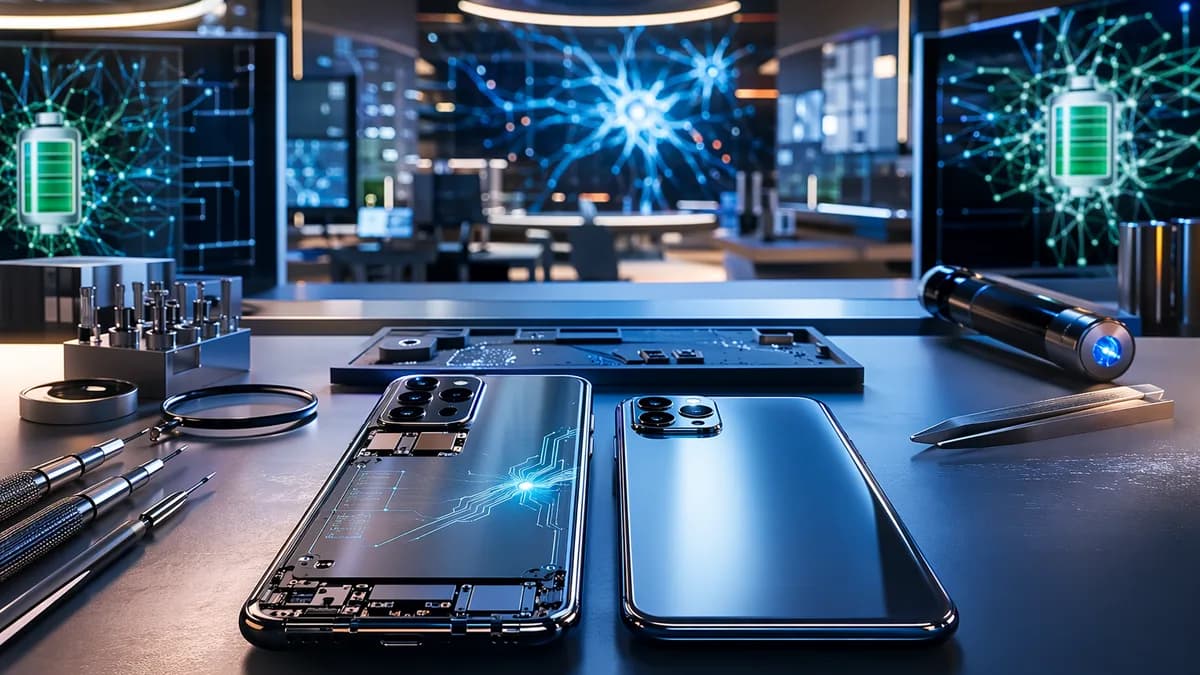
A refurbished smartphone is not the same thing as a random used phone from a private seller. According to the source data, a refurbished phone is a pre-owned device that has been professionally inspected, tested, cleaned, wiped, repaired if needed, and restored to full working condition before resale.
Common sources of refurbished phones include:
- Customer returns: Devices returned shortly after purchase.
- Trade-ins: Phones exchanged by previous owners during an upgrade.
- Store demo units: Devices previously used for display or demonstration.
- Pre-owned devices: Phones that go through inspection and restoration before being resold.
The typical refurbishment process includes several steps.
| Refurbishment Step | What It Means for the Buyer |
|---|---|
| Multi-point inspection | Technicians check key parts such as the battery, camera, screen, buttons, ports, speakers, and charging system. |
| Data wiping | Previous user data is securely erased and the phone is restored to factory settings. |
| Repairs or replacements | Faulty parts may be repaired or replaced before resale. |
| Cosmetic grading | The phone is assigned a condition grade such as Excellent, Good, Fair, Grade A, Grade B, or Grade C. |
| Certification | Reputable sellers certify that the device meets their working-condition standards. |
Key distinction: A used phone is usually sold “as is.” A refurbished phone has been professionally inspected, tested, and restored before resale.
This difference matters because the risks are not equal. Consumer Reports warns that you cannot judge a phone’s health by outward appearance alone. A phone may look clean in photos but still have battery degradation, hidden hardware problems, carrier locks, malware risks, or model misrepresentation if purchased from an individual seller.
The safest refurbished phones usually come from manufacturers, certified refurbishers, or retailers that clearly explain their testing process, warranty, accessories, battery policy, and return terms.
2. Price Differences Between Refurbished and New Phones
Price is the biggest reason most shoppers compare refurbished vs new smartphones. The source data consistently shows that refurbished phones cost less, though the exact discount depends on model age, condition, seller, stock, and whether the device is manufacturer-refurbished or seller-refurbished.
A SmartphonesPLUS price comparison of popular flagship models found an average savings of 25.8% across nine devices. Some models had modest savings, while others were discounted by more than half.
| Phone Model | New Price | Refurbished Price | Savings |
|---|---|---|---|
| iPhone 16 Pro Max | $1,199 | $1,099 | $100 / 8.3% |
| iPhone 16 Pro | $999 | $899 | $100 / 10.0% |
| iPhone 15 Pro | $899 | $759 | $140 / 15.6% |
| Galaxy S25 Ultra | $1,299 | $949 | $350 / 26.9% |
| Galaxy Z Fold 6 | $1,899 | $1,129 | $770 / 40.5% |
| Galaxy S24 | $799 | $589 | $210 / 26.3% |
| Galaxy S24 Ultra | $1,199 | $879 | $320 / 26.7% |
| Google Pixel 9 Pro | $999 | $719 | $280 / 28.0% |
| Google Pixel 8 | $699 | $339 | $360 / 51.5% |
The pattern is clear: refurbished savings tend to grow as devices age or as retail prices rise. The Google Pixel 8 example showed the largest listed discount at 51.5%, while the newest iPhone models in the comparison showed smaller savings of 8.3% and 10.0%.
Other sources give broader savings ranges:
| Source Data Point | Refurbished Savings Mentioned |
|---|---|
| SmartphonesPLUS comparison | Average savings of 25.8% across nine flagship models |
| Goji Mobile | Refurbished phones can be 40–60% cheaper |
| TronicsPay | Refurbished phones may save 20–50% compared with new |
| iFixit | Refurbished devices can save at least 15%, sometimes more |
| Consumer Reports example | A refurbished iPhone 15 128GB at Back Market was about $500, compared with $200 more new from Apple |
The best value often comes from buying a refurbished version of a phone that is one or two generations old. Consumer Reports describes refurbished phones as especially attractive for shoppers comfortable with a device that is a year or two older, because the savings can be significant while the phone may still perform well.
The trade-in effect
The value gap can widen if you sell or trade in your current phone. SmartphonesPLUS gives an example where an iPhone 13 Pro worth $400 on the secondary market could be applied toward a refurbished iPhone 15 Pro priced around $759. That leaves $359 out of pocket.
Compared with buying the same phone new at $899, that example produces $540 in total savings.
For value-focused buyers, the strongest savings often come from combining two moves: buying refurbished and using the resale value of an old device toward the upgrade.
3. Battery Health and Replacement Risks
Battery condition is one of the most important differences between new and refurbished phones.
A new smartphone starts with 100% battery health. A refurbished phone may have a battery that has already been used, but reputable certified sellers generally apply minimum battery-health standards.
The source data points to 80% battery health as a common minimum threshold. SmartphonesPLUS states that certified sellers usually verify that the battery meets a minimum standard, often 80% or higher, and may replace the battery entirely if it falls below that threshold.
| Phone Type | Battery Expectation |
|---|---|
| New phone | Starts with 100% battery health |
| Certified refurbished phone | Usually must meet a minimum battery standard, commonly 80% or higher |
| Manufacturer-refurbished phone | May include a new battery, depending on the program |
| Used phone from individual seller | Battery condition may vary and may not be guaranteed |
Consumer Reports notes that manufacturer refurbished programs can be stronger here. Apple’s refurbished iPhones are described as coming with a new battery, a new outer shell, new cables and accessories, and a fresh box. Samsung’s refurbished devices are also described as restored to “like new” condition with a new battery and a one-year warranty.
That does not mean every refurbished phone has a new battery. The safer assumption is:
- Manufacturer refurbished: More likely to include a new battery if the program states it.
- Certified seller refurbished: Battery should meet the seller’s stated health threshold.
- Marketplace used: Battery health may be unknown unless verified.
If you are buying an iPhone, Consumer Reports notes that battery health can be checked through:
Settings → Battery → Battery Health & Charging
For Samsung Galaxy phones, the source points buyers to:
Settings → Battery & Device Care
Buyer warning: Do not assume “refurbished” automatically means “new battery.” Look for the seller’s written battery threshold or replacement policy before purchasing.
Performance is a related but separate issue. SmartphonesPLUS and Goji both state that certified refurbished phones can deliver the same performance as new when properly tested, because the processor, camera, and software are the same for that model. The bigger uncertainty is not raw performance—it is battery condition, prior wear, and the quality of the refurbishment process.
4. Warranty, Returns, and Seller Reputation
Warranty coverage is where refurbished phones vary the most. A new phone generally comes with a full manufacturer warranty, usually one year, according to multiple sources. Refurbished warranties range from short coverage windows to a full year, depending on the seller.
| Seller or Program Mentioned in Source Data | Warranty Length Mentioned |
|---|---|
| Apple refurbished | One year |
| Google refurbished | One year |
| Samsung refurbished | One year |
| Back Market | One year according to Consumer Reports; iFixit also notes a guaranteed 6-month warranty or higher from the refurbisher |
| SmartphonesPLUS | One year |
| Amazon Renewed | 90 days mentioned by Consumer Reports and iFixit |
| Best Buy refurbished | 90 days according to Consumer Reports |
| Walmart refurbished | 90 days according to Consumer Reports |
| Goji Mobile general range | Typically 90 days to 1 year |
| TronicsPay general range | Some sellers offer 6 months to 1 year |
Return policies also matter because some problems only appear after daily use. Consumer Reports recommends choosing a retailer that gives you at least a month to return the item.
| Retailer or Program Mentioned | Return Window Mentioned |
|---|---|
| Amazon Renewed Guarantee | Up to 90 days for refund or replacement |
| Apple | Two weeks |
| Best Buy | Two weeks |
A strong warranty and return policy can make refurbished buying much safer. But seller reputation still matters because the term “refurbished” is not used consistently across every marketplace.
What to look for in a seller
- Testing details: The seller should explain what diagnostics are performed.
- Battery policy: Look for a minimum battery-health threshold or replacement promise.
- Warranty length: Avoid refurbished products with no warranty.
- Return policy: Prefer a return window long enough to test the phone thoroughly.
- Network compatibility: Confirm the phone works with your carrier before buying.
- Accessories: Check whether accessories are original, equivalent, or not included.
- Parts policy: Manufacturer-refurbished devices may use authentic parts; third-party standards vary.
Consumer Reports specifically warns that buying from individual sellers on marketplaces such as eBay, Craigslist, or Facebook Marketplace is riskier. The device may lack a warranty or refund policy, defects can be hard to see in photos, and the phone could be locked to a carrier or not fully paid off.
5. Software Updates and Long-Term Support
Software support is one of the most overlooked parts of the refurbished vs new smartphones decision. The source data states that refurbished phones can receive software updates as long as the model is still supported by the manufacturer.
That means the question is not simply whether the phone is new or refurbished. The question is how old the model is and whether the manufacturer still supports it.
| Buying Choice | Software Update Consideration |
|---|---|
| New latest-release phone | Typically starts with the longest remaining update window for that model line. |
| Refurbished current model | Should receive the same updates as a new unit of the same model, if still supported. |
| Refurbished older model | May have fewer remaining years of manufacturer support. |
| Used phone from private seller | Update support depends on model age, region, carrier status, and manufacturer support. |
Goji’s source data says refurbished phones get software updates as long as the model still supports updates from the manufacturer. That is the key limitation.
So, if two phones are the same model—one new and one refurbished—the software experience should be the same if the refurbished device is properly restored and eligible for updates. But if you choose an older refurbished model to maximize savings, you may be giving up some future update runway.
This is one of the strongest arguments for buying new if you plan to keep the phone for a long time and want the newest hardware and longest support period available at purchase.
Practical rule: A refurbished phone can be a strong value, but do not evaluate price alone. Check the model’s remaining software support before buying, especially if you plan to keep it for several years.
6. Cosmetic Grades and What They Mean
Cosmetic grading tells you how the phone looks, not whether it works. Reputable refurbished sellers separate condition from functionality: even lower-grade refurbished phones should be fully functional if properly certified, but they may show more visible wear.
The source data uses several grading systems.
| Grade or Label | Meaning Based on Source Data |
|---|---|
| Like New | May be visually indistinguishable from a new phone. |
| Excellent / Grade A | Excellent condition; looks and feels close to new, with minimal signs of use. |
| Good / Grade B | Light signs of use, such as small scuffs. |
| Fair / Grade C | More noticeable wear, but still fully functional if certified. |
| Very Good | A higher used/refurbished tier with less visible wear than lower grades. |
Goji describes Grade A refurbished phones as excellent condition, looking and feeling like new. Grade B may have light signs of use, while Grade C can show more noticeable wear but should remain 100% functional if sold as certified refurbished.
SmartphonesPLUS similarly notes that buyers can often choose “Like New” or “Excellent” grades if they want a device that is visually close to new. Buyers who do not mind minor scratches may save more by choosing a lower cosmetic grade.
iFixit also emphasizes that grading differs by seller. Manufacturer-refurbished devices tend to have stricter standards, while seller-refurbished products may vary more.
Cosmetic grade vs performance
A lower cosmetic grade does not necessarily mean lower performance. The sources repeatedly separate appearance from functionality. A Grade B or Grade C phone may have scratches or scuffs while still passing functional testing.
However, cosmetic grading can affect satisfaction. If you are buying a gift or care about a flawless out-of-box experience, a new phone or high-grade refurbished phone may be a better fit.
7. When a New Phone Is Worth Paying More For
A new phone is not always the best value, but it is worth paying more for in specific situations.
Choose a new smartphone if the advantages below matter more than the savings.
| Reason to Buy New | Why It Matters |
|---|---|
| Latest flagship release | New phones give you access to the newest models and features immediately. |
| Full manufacturer warranty | New phones typically include a full one-year manufacturer warranty. |
| Perfect cosmetic condition | A new phone is factory-fresh and unused. |
| Original packaging and accessories | New devices arrive with the expected retail presentation and included accessories. |
| Longest possible support runway | The latest model usually starts with the most future support available for that product line. |
| Gifting | Goji notes that new may be preferable when you want the “fresh out of the box” experience. |
| Carrier device payment plans | Goji lists carrier payment plans as a reason some buyers may prefer new. |
| Insurance simplicity | TronicsPay notes that brand-new devices may be easier to insure with complete protection. |
New phones also avoid uncertainty around prior use. You do not have to evaluate battery thresholds, cosmetic grades, refurbishment standards, or whether accessories are original.
There is a trade-off, though. TronicsPay notes that new phones are costly and lose value quickly. Goji similarly lists depreciation as a downside of buying new, stating that a new phone depreciates the moment it is unboxed.
For shoppers who always want the newest release, that may be acceptable. For shoppers focused on cost-per-year of ownership, depreciation is one reason refurbished can be compelling.
8. When Refurbished Offers the Best Value
Refurbished usually offers the best value when you want premium hardware but do not need the latest model at full retail price.
Based on the source data, refurbished is especially compelling when:
You want to save hundreds of dollars
SmartphonesPLUS found an average savings of 25.8% across nine flagship phones, while Goji cites refurbished prices as 40–60% cheaper in some cases.You are buying a flagship from a prior generation
Consumer Reports notes refurbished buying can be especially attractive if you are comfortable with a phone that is a year or two older.You buy from a certified seller with warranty coverage
Apple, Google, Samsung, Back Market, and SmartphonesPLUS are all cited as offering one-year warranties on refurbished phones.You do not mind minor cosmetic wear
Choosing a lower cosmetic grade can increase savings if scratches or scuffs do not bother you.You care about environmental impact
SmartphonesPLUS cites Deloitte’s estimate that 83% of a smartphone’s total emissions come from manufacturing, shipping, and first-year use. Extending the life of an existing device can reduce e-waste and demand for new materials.You can trade in your old phone
The SmartphonesPLUS example shows how applying a $400 old-device value toward a refurbished iPhone 15 Pro can reduce out-of-pocket cost to $359.You want similar performance for less
Goji and SmartphonesPLUS both state that certified refurbished phones can perform like new when properly tested.
Here is a simplified decision table.
| Buyer Priority | Better Fit |
|---|---|
| Lowest upfront price from a reputable seller | Refurbished |
| Latest model immediately at launch | New |
| Best warranty certainty | New or manufacturer-refurbished |
| Strong savings with reduced risk | Certified refurbished with warranty |
| Perfect condition for gifting | New or Like New refurbished |
| Maximum environmental benefit | Refurbished |
| Longest remaining software support | Usually latest new model |
| Premium phone for less money | Refurbished |
For most value-focused buyers, certified refurbished is strongest when the seller offers clear testing, a battery standard, a warranty, and a reasonable return window.
9. Safe Buying Checklist for Refurbished Phones
Use this checklist before buying a refurbished smartphone.
Seller Reputation: Buy from a manufacturer, certified refurbisher, or trusted retailer. Avoid random private listings if you want warranty and return protection.
Certified Refurbished Label: Look for wording that confirms the phone has been professionally inspected, repaired if needed, tested, and approved.
Warranty Length: Prefer sellers with meaningful coverage. Consumer Reports lists one-year warranties from Apple, Back Market, Google, and Samsung; Amazon, Best Buy, and Walmart are listed at 90 days.
Return Window: Choose a return policy long enough to test the phone. Amazon Renewed offers up to 90 days, while Apple and Best Buy are listed at two weeks.
Battery Health Policy: Look for a stated battery threshold, often 80% or higher, or a promise of replacement below that level.
Cosmetic Grade: Match the grade to your expectations. Choose Like New, Excellent, or Grade A if appearance matters.
Network Compatibility: Confirm the phone works with your carrier before purchasing.
Unlocked Status: Check whether the device is unlocked or tied to a specific network.
Accessories Included: Verify whether the phone includes original accessories, equivalent accessories, or no accessories.
Parts and Repair Standards: Manufacturer-refurbished phones may use authentic parts, while third-party standards vary.
Software Support: Confirm the model still receives manufacturer updates if long-term use matters.
Inspect Immediately: Test the screen, cameras, speakers, microphone, buttons, charging port, wireless connectivity, battery behavior, and cosmetic condition as soon as it arrives.
A simple arrival test can prevent problems later:
1. Confirm the model and storage match the listing.
2. Check battery health where supported.
3. Test charging and wireless charging if available.
4. Make a test call and record a short video.
5. Test front and rear cameras.
6. Check speakers, microphone, buttons, and ports.
7. Confirm carrier activation and network compatibility.
8. Inspect the screen and body under bright light.
9. Factory reset again before adding personal data.
10. Report issues before the return window closes.
Bottom Line
In the refurbished vs new smartphones comparison, refurbished phones are often the better value for buyers who want premium performance at a lower price and are willing to check warranty, battery health, and seller reputation. The research shows real savings: SmartphonesPLUS found average savings of 25.8% across nine flagship models, with one example—the Google Pixel 8—showing 51.5% savings.
New phones are still worth paying more for if you want the latest release, perfect condition, original packaging, the simplest warranty path, and the longest likely support runway. Refurbished phones make the most sense when purchased from reputable sellers that clearly disclose testing standards, battery policy, cosmetic grade, warranty coverage, and returns.
For most buyers, the best value is not simply “new” or “refurbished.” It is a certified refurbished phone from a trusted seller, with at least a solid warranty, a clear return policy, and a battery standard you can verify.
FAQ
Are refurbished phones better than used phones?
Yes, refurbished phones are generally safer than used phones from individual sellers because they are professionally inspected, tested, wiped, repaired if needed, and certified. Used phones are often sold “as is” and may not include a warranty or return policy.
Do refurbished phones have new batteries?
Not always. Some manufacturer-refurbished programs, such as Apple and Samsung in the source data, are described as including new batteries. Other certified sellers may instead guarantee a minimum battery-health threshold, commonly 80% or higher, and replace the battery if it falls below that standard.
Do refurbished phones get software updates?
Yes, if the model is still supported by the manufacturer. A refurbished phone of the same model should receive the same eligible updates as a new unit of that model, but older refurbished models may have less remaining support time.
What is the biggest disadvantage of buying refurbished?
The biggest disadvantages are variable warranty coverage, possible cosmetic imperfections, and uncertainty around battery age unless the seller clearly states its policy. These risks can be reduced by buying certified refurbished from a reputable seller with a written warranty and return window.
When should I buy a new phone instead of refurbished?
Buy new if you want the latest flagship release, a factory-fresh device, full retail packaging, a full manufacturer warranty, easier insurance, or the longest likely software-support runway. New can also be better for gifting when presentation matters.
How much can I save with a refurbished smartphone?
The source data shows a wide range. SmartphonesPLUS found 25.8% average savings across nine flagship phones, Goji cites 40–60% cheaper in some cases, and TronicsPay cites 20–50% savings compared with new. Actual savings depend on model, age, condition, stock, and seller.