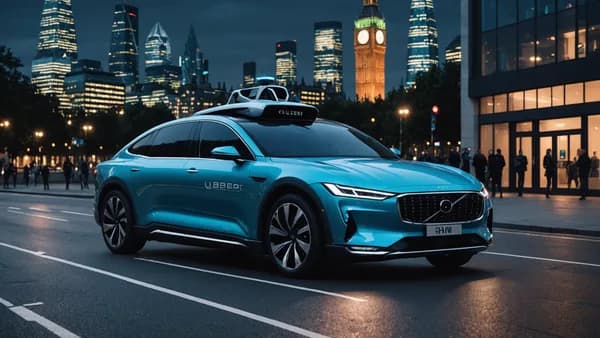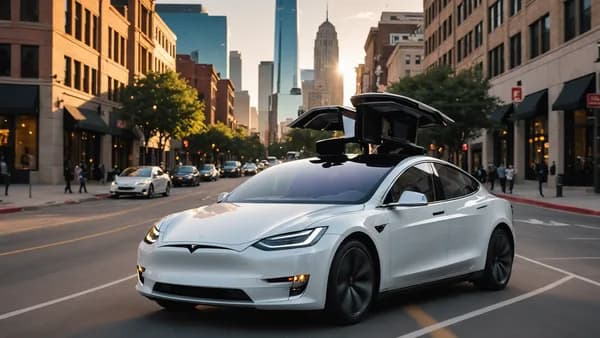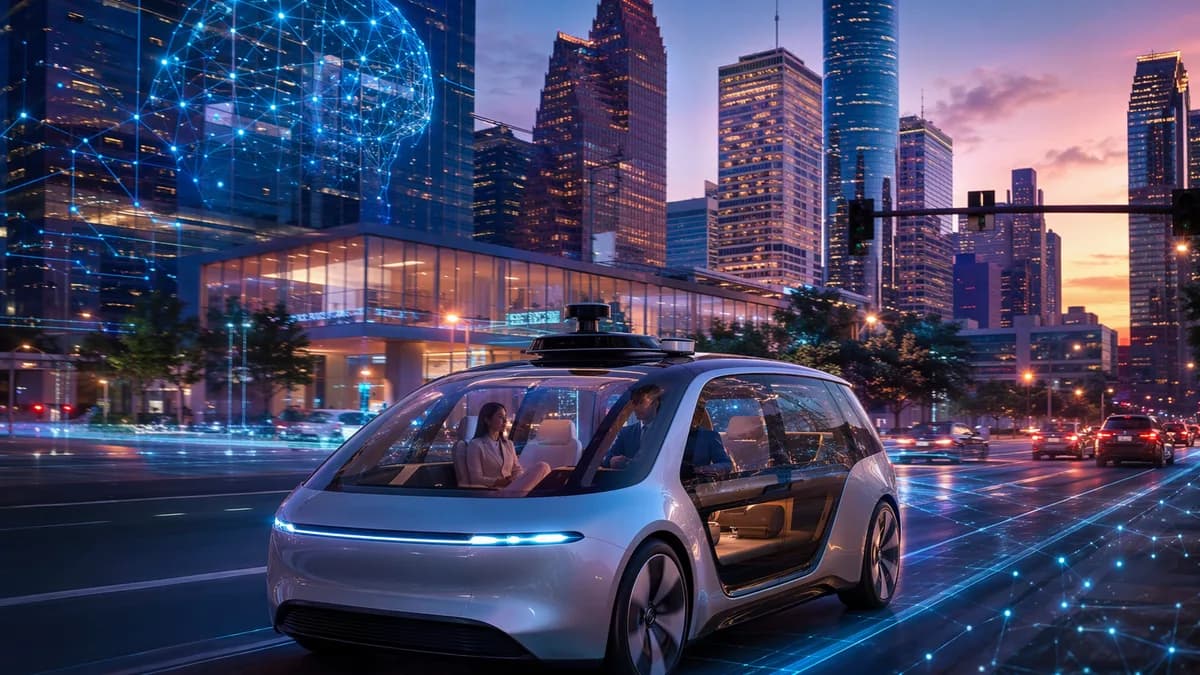
By mid-2027, Uber plans to put Lucid-built, Nuro-driven robotaxis on Houston streets, turning the city into the second U.S. market for its premium autonomous ride-hailing program. The Uber robotaxi Houston launch is a concrete expansion step for a partnership that is already preparing service in the San Francisco Bay Area later this year.
XOOMAR Intelligence
Analyst Take
The Houston plan will use Lucid Gravity SUVs equipped with Nuro’s self-driving system, according to TechCrunch. Uber will own and operate the fleet, while the rides will be offered through the Uber app.
Mid-2027: Uber Robotaxi Houston Plan Follows San Francisco Bay Area Prep
Houston is slated to become the second market for this specific Uber robotaxi model, after the San Francisco Bay Area. That sequencing matters because it gives Uber, Lucid, and Nuro one initial market to test the service playbook before taking it into a very different city.
Uber says it eventually wants to bring the program to “dozens of cities” in the coming years. For now, the real plan is narrower: San Francisco first, Houston next.
The company will also face Waymo in both markets. TechCrunch reports that Alphabet-owned Waymo already operates commercial robotaxi services in San Francisco and Houston, setting up a direct contest between a vertically integrated autonomy leader and Uber’s partner-led model.
Nuro has spent months testing Lucid Gravity SUVs in San Francisco. Uber employees have been able to hail the Lucid robotaxis there, but the vehicles still are not driverless. That remains true even after Nuro received a California Department of Motor Vehicles permit last month that would allow it to remove the safety driver.
In Houston, Uber and Nuro already have a combined engineering fleet of 100 autonomous vehicles testing on public roads with safety operators behind the wheel. Nuro is also using closed courses and simulation to validate the system before opening rides to the public.
Houston Gives Uber a Big, Car-Heavy Test Bed for Robotaxis
Houston gives Uber a demanding place to prove that a premium robotaxi can work beyond the dense, tech-forward streets of the Bay Area. The city is large, sprawling, and car-dependent, which makes it a meaningful test of pickup coverage, charging logistics, routing, and rider patience.
The Uber robotaxi Houston rollout also raises practical questions that the announcement does not answer yet. Airport trips, downtown demand, suburban pickups, traffic patterns, weather, and road design could all shape how fast the service expands.
Uber is already building the physical base for that work. The company now has a 50,000-square-foot depot and dedicated charging pitstop in Houston that will serve as its operations hub in the city.
That depot is not a side detail. For autonomous ride-hailing, vehicle storage, cleaning, charging, maintenance, remote support, and incident response all become part of the product. If the hub underperforms, the app experience suffers.
The premium positioning also matters. Lucid’s Gravity SUV gives Uber a higher-end vehicle platform, not a bare-bones shuttle. Nuro’s robotaxi page says the vehicle has room for up to six passengers, generous luggage space, interactive screens, real-time driving visualization, and a Halo-mounted LED display that can show passenger initials to help riders identify the correct car.
“We’re thrilled to partner with Nuro and Lucid on this new robotaxi program, purpose-built just for the Uber platform, to safely bring the magic of autonomous driving to more people across the world.”
That quote from Uber CEO Dara Khosrowshahi, published on Nuro’s robotaxi page, captures the pitch. The harder part is turning that pitch into repeatable service, city by city.
Lucid and Nuro Put Uber's Partner-First Robotaxi Strategy on Display
Uber is not trying to build every layer of the autonomy stack itself. It is leaning on partners: Lucid for the electric vehicle platform, Nuro for the self-driving system, and Uber for the marketplace, fleet operations, rider experience, and demand channel.
That approach fits a broader tension in autonomous mobility. Companies that sell autonomy to multiple customers can gain reach, but they also have to manage conflicts across partners and business models. XOOMAR covered a related version of that problem in Mobileye Robotaxi Bet Puts Its Own Tech Buyers on Edge.
| Company | Role in Uber’s robotaxi program | Strategic payoff |
|---|---|---|
| Uber | Owns and operates the fleet, controls the rider app and in-cabin experience | Adds autonomous rides without rebuilding the full AV stack |
| Lucid | Supplies the Lucid Gravity EV platform and builds production versions at its Arizona factory | Gets a large fleet customer for robotaxi-ready EVs |
| Nuro | Provides the self-driving system and safety validation work | Extends its 2024 pivot from delivery robots to licensing autonomy tech |
The production ramp is starting to matter. TechCrunch reports that the test fleet is expected to expand in the coming weeks as Lucid begins manufacturing the first production versions of the robotaxis at its Arizona factory.
The vehicle package is dense with autonomy hardware. The Lucid Gravity robotaxi, unveiled in January, carries high-resolution cameras, solid-state lidar sensors, and radars to help the system perceive and operate in real-world conditions. Nuro’s program page also lists NVIDIA DRIVE AGX Thor for real-time AI processing.
Uber has put money behind this structure. It has made direct investments in both Nuro and Lucid, including about $500 million in Nuro, as TechCrunch first reported in May. Uber has also committed $500 million to Lucid and agreed to buy a minimum of 35,000 robotaxi-ready Lucid vehicles.
Before Houston Riders Can Book a Lucid Robotaxi, Safety Operators Still Matter
The next phase is less flashy than the announcement, but more important. Uber, Lucid, and Nuro have to move from supervised road testing to a commercial service that riders can book and trust.
The companies still have several pieces to clarify before the Uber robotaxi Houston service goes live:
- Launch area: Uber has not said which parts of Houston will be covered first.
- Fleet size: The company has not disclosed how many Lucid robotaxis will operate at launch.
- Safety operators: Current Houston testing uses safety operators, but Uber has not said whether public rides will begin with them.
- Pricing: No fare structure has been announced.
- Service hours: Uber has not detailed whether service will launch around the clock or in limited windows.
- Support model: Rider support, emergency response, insurance, and local incident protocols remain key operational questions.
Analysis: Houston is a credibility test for Uber’s partner-first autonomy strategy. A clean rollout would show that Uber can stitch together a premium EV, third-party self-driving software, and its own ride-hailing network into a real commercial product. A delay would strengthen doubts that robotaxi announcements can scale on the timelines companies advertise.
That same partner risk is why the industry is watching supplier relationships so closely, including in cases like Mobileye’s robotaxi push and the tension with its own tech buyers. In Uber’s case, the watch item is simple: before mid-2027, the market needs evidence that the San Francisco Bay Area launch can move beyond employee hails and safety-driver testing into a service that works repeatedly, safely, and without constant human intervention.
The Bottom Line
- Houston will be the second U.S. market for Uber’s premium robotaxi program.
- The launch will test Uber’s partner-led autonomy strategy against Waymo’s established commercial service.
- Uber’s use of Lucid vehicles and Nuro technology signals a push to scale robotaxis without building all components in-house.
Uber Premium Robotaxi Rollout by Market
| Market | Uber Status | Waymo Presence |
|---|---|---|
| San Francisco Bay Area | Preparing service later this year with Lucid Gravity SUVs using Nuro’s self-driving system; employee hailing is underway but vehicles are not yet driverless. | Waymo already operates commercial robotaxi service. |
| Houston | Planned launch by mid-2027; Uber and Nuro have 100 autonomous vehicles testing with safety operators. | Waymo already operates commercial robotaxi service. |
Primary Sources & Disclosures

Written by
XOOMAR Insights Team
Research and Editorial Desk
The XOOMAR Insights Team pairs automated research with human editorial judgment. We track hundreds of sources across technology, fintech, trading, SaaS, and cybersecurity, cross-check the facts, and explain what happened, why it matters, and what to watch next. We do not just rewrite headlines. Every article is fact-checked and scored for reliability before it goes live, and we link back to the original sources so you can verify anything yourself.