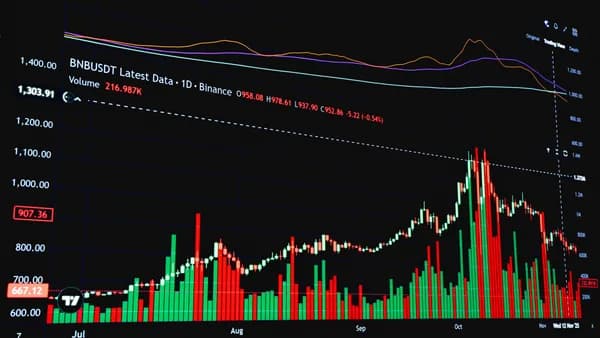
If you’re comparing TradingView vs TrendSpider, the core decision is not “which platform has charts?”—both do. The better question is whether you want a flexible, community-driven charting platform with a strong free tier, or a premium technical-analysis platform built around automation, pattern recognition, and multi-timeframe workflows.
XOOMAR Intelligence
Analyst Take
Both tools serve active traders, swing traders, and technical analysts, but they take very different approaches. TradingView emphasizes broad market coverage, social research, custom indicators, and broker-connected charting; TrendSpider emphasizes automated trendlines, chart patterns, alerts, scans, backtesting, and AI-assisted technical analysis.
TradingView and TrendSpider at a Glance
TradingView is one of the most widely used charting and market-analysis platforms, with source data reporting 50 million+ users in one review and 100 million+ users in another. It offers charting, screeners, alerts, Pine Script custom indicators, backtesting, broker integrations, paper trading, and a large public community of traders publishing ideas and indicators.
TrendSpider is a newer, more automation-focused platform. Source data describes it as an AI-powered charting suite designed to automate technical analysis tasks such as trendline detection, support/resistance identification, Fibonacci retracements, candlestick recognition, chart pattern recognition, scans, alerts, and backtesting.
Key takeaway: TradingView is generally the stronger all-round platform for charting, community, multi-asset access, and custom indicators. TrendSpider is stronger for traders who want automated technical analysis, multi-timeframe confluence, no-code scanning, and dynamic alerts.
| Category | TradingView | TrendSpider |
|---|---|---|
| Core strength | Flexible charting, community, Pine Script, broad market access | Automated technical analysis, AI charting, multi-timeframe workflows |
| Free plan | Yes | No free tier reported in source data |
| User base | Reported as 50M+ to 100M+ users depending on source | One source reports around 4,000 users at the time it reviewed the platform |
| Markets | Stocks, ETFs, forex, crypto, futures, bonds, global exchanges | Stocks, ETFs, indices, futures, forex, crypto; US-focused in several source descriptions |
| Custom indicators | Pine Script plus large community library | Parameters can be modified, but no comparable public coding ecosystem reported |
| Automated analysis | Available in some forms, but less central | Core feature: auto trendlines, patterns, Fibonacci, support/resistance |
| Broker workflow | Direct broker integrations and paper trading | Webhook/broker-connected automation; sources also note no fully integrated trading platform |
| Best fit | Beginners, community users, multi-asset traders, custom indicator builders | Technical traders, swing traders, automation-focused users, heavy chart scanners |
Both platforms are web-based and designed for technical traders. Both include advanced charting, screeners, custom alerts, and backtesting. The difference is where each platform puts its emphasis.
TradingView gives you a broad toolkit and lets you build or discover almost anything through its community and Pine Script ecosystem. TrendSpider tries to reduce manual chart work by having the platform identify key technical structures for you.
Charting Experience and Indicator Libraries
Charting is the foundation of the TradingView vs TrendSpider comparison. Both platforms are strong charting tools, but they differ in chart types, drawing tools, indicator depth, and customization.
Chart Styles and Layouts
Source data reports that TradingView offers 16 customizable chart formats, including bars, candles, hollow candles, columns, line, line with markers, step line, area, baseline, high-low, Heikin Ashi, Renko, line break, Kagi, point & figure, and range charts on certain paid plans.
TrendSpider is reported to offer 6 chart formats: candlestick, line, bar, hollow candles, Heikin Ashi, and its proprietary raindrop charts.
| Charting Feature | TradingView | TrendSpider |
|---|---|---|
| Reported chart styles | 16 | 6 |
| Drawing tools | 90+ reported in one source | 20+ reported in one source |
| Built-in indicators | Reported as 100+ in one source and 1,000+ in another | Reported as 190+ or almost 200 |
| Multiple charts per layout | Up to 8 in one source; up to 16 with a professional plan in another | Up to 16 charts per layout reported |
| Proprietary chart type | Not specifically proprietary in source data | Raindrop charts |
The source data is not perfectly consistent on TradingView’s total built-in indicator count, with different sources reporting 100+ and 1,000+. The safe conclusion is that TradingView has a very large indicator library, and its effective indicator universe expands significantly through community-built scripts.
TrendSpider’s charting strength is not simply the number of visual formats. Its advantage is that charting is deeply connected to automated analysis, scanning, and alerting.
Indicator Libraries and Customization
TradingView’s major advantage is Pine Script, its proprietary scripting language. Source data describes Pine Script as relatively easy to learn and notes that users can create custom indicators, edit existing indicators, and access a large library of community-built studies.
One source reports 200K+ community Pine Script indicators, while another references 100,000+ community-built indicators. Because the sources vary, the practical takeaway is that TradingView has a very large public indicator ecosystem.
TrendSpider offers many built-in indicators and lets traders adjust parameters such as timeframes and price sources. However, source data says TrendSpider does not provide the same level of underlying-code access or public custom-indicator marketplace as TradingView.
| Indicator Capability | TradingView | TrendSpider |
|---|---|---|
| Custom indicator language | Pine Script | No equivalent public scripting ecosystem reported |
| Community indicators | Large public library reported | No similar marketplace reported |
| Modify indicator code | Yes, for Pine Script indicators | Not in the same way; parameters can be adjusted |
| Combine indicators in scans/alerts | Yes | Yes |
| Advanced volume tools | Source mentions footprint charts, TPO charts, volume profile | Source mentions volume by price, but not session volume profile |
Advanced Volume and Market Structure Tools
One source notes that TradingView offers advanced tools such as footprint charts, TPO charts, and volume profile. It also distinguishes TradingView’s session volume profile and visible range volume profile from TrendSpider’s volume by price.
TrendSpider’s volume by price is described as useful, especially for swing traders, but the source notes it does not offer session volume by price in the same way TradingView offers session volume profile.
For day traders who rely heavily on session-based volume structure, TradingView appears to have the edge based on the provided data. For traders who mostly use higher-timeframe volume zones, TrendSpider’s volume by price may still be sufficient.
Automated Trendlines, Patterns, and Technical Analysis
This is where TrendSpider most clearly differentiates itself.
TrendSpider’s core value proposition is automated technical analysis. Source data describes its patented AI algorithms as capable of automatically plotting trendlines, candlestick patterns, chart patterns, and Fibonacci retracements. Other sources specifically mention automated support/resistance identification, multi-timeframe analysis, and AI-powered chart analysis.
TradingView also has charting automation in some forms and community-built scripts that approximate automated analysis. However, the sources consistently frame automation as TrendSpider’s primary advantage.
Critical distinction: TradingView gives traders flexibility and customization. TrendSpider gives traders automation designed to reduce manual chart work.
Automated Trendlines and Support/Resistance
TrendSpider can automatically identify trendlines and potential support/resistance areas. One source describes a workflow where you load a chart and TrendSpider marks trendlines and support/resistance levels automatically.
That matters for traders who review many charts. A source estimates that traders analyzing 50+ charts daily may save 2–3 hours per week using TrendSpider’s automated chart analysis.
TradingView users can draw trendlines manually or use community Pine Script indicators. But based on the research data, TradingView does not match TrendSpider’s native automation depth in this area.
| Automated Technical Analysis | TradingView | TrendSpider |
|---|---|---|
| Auto trendlines | Available in some forms, but less central | Core feature |
| Auto support/resistance | Requires manual work or scripts in many workflows | Core feature |
| Fibonacci automation | Not emphasized in source data | Automatic Fibonacci retracements reported |
| Candlestick recognition | Available | Available and integrated into scans/alerts |
| Chart pattern recognition | Available, but one source calls it inaccurate | Strongly emphasized across sources |
| Multi-timeframe confluence | Possible manually with layouts | Native strength |
Multi-Timeframe Analysis
TrendSpider’s multi-timeframe analysis is repeatedly highlighted in the source data. It can display chart drawings and technical indicators from higher timeframes on a single chart, helping traders see where support, resistance, and signals align.
This is especially relevant for swing traders who compare daily, 4-hour, 1-hour, and shorter-term charts. One source says TrendSpider visually highlights where different timeframe trends converge, reducing manual cross-referencing.
TradingView can display multiple charts and supports multiple timeframes. However, the sources indicate that TradingView requires more manual comparison, while TrendSpider is built to surface multi-timeframe confluence more directly.
Raindrop Charts
TrendSpider includes raindrop charts, described in source data as a relatively unique chart style that builds bars using high, low, right VWAP, and left VWAP rather than open and close prices. This chart type is designed to highlight volume behavior within the bar.
A source notes that TradingView users have created an open-source script to approximate similar raindrop charts, which illustrates TradingView’s community strength. However, raindrop charts are a native TrendSpider feature.
Alerts, Scanners, and Market Monitoring
Both platforms have strong scanners and alert systems. The difference is that TrendSpider’s alerts and scans can incorporate its automated technical analysis more directly.
Stock, Crypto, Forex, and Market Scanners
Both platforms allow traders to screen markets using technical indicators, and both support visual scanning workflows that do not require coding.
TradingView’s screener is described as strong for both technical and fundamental criteria. Source data says it lets users filter by price, volume, indicators, earnings, dividends, ratings, and more. Another source states TradingView provides significantly more parameters for fundamental stock screening than TrendSpider.
TrendSpider’s scanner is described as especially powerful for technical traders. It supports multiple timeframes, multiple simultaneous scans, pattern-recognition criteria, and real-time scanning. Source data also mentions Human Language Scanning, allowing users to search markets in plain English.
| Scanner Feature | TradingView | TrendSpider |
|---|---|---|
| Technical screening | Yes | Yes |
| Fundamental screening | Stronger based on source data | One source says no fundamental screening; another says AI-powered fundamental data is available |
| Multi-timeframe scans | Supported, but less emphasized | Major strength |
| Pattern-based scans | Available in some forms | Strongly emphasized |
| Plain-English scanning | Not reported in source data | Human Language Scanning reported |
| Multiple simultaneous scans | Not emphasized | Reported as available |
There is some conflict in the source data around TrendSpider and fundamentals. One source lists “No Fundamental Screening” as a TrendSpider con, while another says TrendSpider includes AI-powered fundamental data and Sidekick AI can analyze fundamentals. The safest interpretation is that TradingView has the clearer, more established fundamental screening workflow in the provided research, while TrendSpider’s strength remains technical and AI-assisted scanning.
Alerts and Dynamic Market Monitoring
Both platforms allow custom alerts using multiple indicators. TradingView alerts can be built around price levels, indicators, and custom Pine Script logic.
TrendSpider’s alerts go further in technical-automation workflows. Source data says TrendSpider alerts can be based on chart patterns, algorithmically determined support/resistance lines, automated trendlines, and multi-factor conditions.
For example, a TrendSpider user could create an alert when a stock breaks above an automatically detected resistance level while also meeting a volume threshold or indicator condition. Based on the source data, that type of alert is where TrendSpider’s automation becomes especially useful.
| Alert Capability | TradingView | TrendSpider |
|---|---|---|
| Price alerts | Yes | Yes |
| Indicator alerts | Yes | Yes |
| Multi-condition alerts | Yes | Yes |
| Pattern-based alerts | Available in some forms | Strong native focus |
| Auto support/resistance alerts | Less emphasized | Strong native focus |
| Webhook support | Not detailed in source data | Reported for platform/broker integrations |
Alternative Data and News
TrendSpider includes alternative data sources that are not broadly available in TradingView according to the research. Source data mentions:
- News Feed: Benzinga Pro financial news feed reported in one source.
- Insider Data: Insider trading data reported.
- Social Sentiment: Reddit sentiment analysis reported.
- Options Flow: Unusual options flow tracker reported.
- Dark Pool / Short Volume: Mentioned in one source as alternative data.
TradingView includes a news feed according to one source, but the same source says most of TrendSpider’s alternative data is not available in TradingView.
For traders who combine chart patterns with sentiment, insider data, or options flow, TrendSpider has more alternative-data features in the provided research. For traders who mainly want charting plus community ideas, TradingView’s social feed may be more useful.
Backtesting and Strategy Testing Features
Both TradingView and TrendSpider support backtesting, but they take different approaches.
TradingView’s backtesting is closely tied to Pine Script and its strategy tester. Users can create scripts, apply them to charts, and evaluate historical results. Source data notes that TradingView offers up to 15 years of historical data in one review, while another says its backtesting depth depends on broker integration and scripting complexity.
TrendSpider’s backtesting is described as more purpose-built and easier for non-coders. Sources report 20 years of historical data in one review and 40+ years of historical data with 30K+ candles per chart in another. Because source reports differ, the safe conclusion is that TrendSpider offers substantial historical data for backtesting, with some sources reporting deeper history than TradingView.
| Backtesting Feature | TradingView | TrendSpider |
|---|---|---|
| Strategy testing | Yes | Yes |
| Coding required | Pine Script often needed for advanced strategies | No-code strategy builder reported |
| Historical data reported | Up to 15 years in one source | 20 years in one source; 40+ years in another |
| Best for | Traders comfortable coding or modifying scripts | Traders wanting visual/no-code backtesting |
| Flexibility | High for Pine Script users | High for technical-condition workflows |
TradingView Backtesting
TradingView is powerful if you are willing to work with Pine Script. Source data describes Pine Script as intuitive and easy to learn relative to many programming languages.
Because any premade or user-generated indicator can be opened in the Pine Script editor and customized, TradingView is well suited to traders who want to modify strategy logic directly. The trade-off is that non-coders may face a learning curve when building more advanced strategies.
TrendSpider Backtesting
TrendSpider’s backtesting advantage is accessibility. Source data describes a no-code custom strategy builder and backtester where traders can use predefined templates or create their own scenarios using custom parameters.
This makes TrendSpider attractive for traders who think in conditions—such as “price breaks resistance,” “specific candlestick pattern appears,” or “indicator confirms across multiple timeframes”—but do not want to write code.
Practical recommendation: Choose TradingView if you want maximum flexibility and are comfortable with Pine Script. Choose TrendSpider if you want faster, no-code testing of technical setups built from patterns, trendlines, and multi-timeframe conditions.
Broker Integrations and Trading Workflow
Broker workflow is one of the biggest differences between the platforms.
TradingView supports direct broker integrations and paper trading. Source data mentions integrations with brokers such as Oanda, Interactive Brokers, and TradeStation, and another source says TradingView supports trading through approved brokers. One comparison table also reports trading through 40+ stock, FX, and crypto brokers.
TrendSpider is described differently. One source lists “No Integrated Trading Platform” as a TrendSpider con, while another says TrendSpider bots can integrate with any platform that supports webhooks, making it possible to send orders to many brokerages. A separate source describes TrendSpider as “analysis only” unless connected to a broker for execution.
| Workflow Feature | TradingView | TrendSpider |
|---|---|---|
| Direct chart trading | Reported through approved brokers | Not described as a fully integrated trading platform |
| Paper trading | Reported as available | One source comparison says no paper trading |
| Broker examples | Oanda, Interactive Brokers, TradeStation | Specific broker names not provided in source data |
| Webhook automation | Not deeply detailed in source data | Reported as supported |
| Trading bots | Pine Script/script-editor workflow | Visual bot builder/no-code workflow reported |
TradingView Trading Workflow
TradingView is better documented in the source data for direct chart-to-broker workflows. Traders can analyze charts, place trades through supported brokers, and use paper trading for practice.
This makes TradingView practical for traders who want charting, order placement, alerts, and community analysis in one interface.
TrendSpider Trading Workflow
TrendSpider’s workflow is more analysis-and-automation oriented. You build scans, alerts, and bots, then connect externally where execution is supported.
Source data says TrendSpider bots can be created using indicators or automated technical analyses, with a process similar to creating alerts. It also mentions webhooks, which can send signals to external platforms.
For traders who want no-code bots based on technical conditions, TrendSpider may be easier to implement. For traders who want direct manual execution through well-known broker integrations, TradingView has the clearer advantage in the provided data.
Pricing and Plan Differences
Pricing is a critical part of the TradingView vs TrendSpider decision, and the source data shows some variation. Because platform pricing can change, treat all figures below as source-reported prices and verify live pricing before subscribing.
TradingView Pricing
TradingView is consistently described as more affordable and more accessible because it has a free tier.
Source data reports several TradingView pricing points:
- Free plan: Available; includes charting, screening, community access, and delayed stock data in some cases.
- $12.95/month billed annually: Starting price reported by one source.
- $14.95/month: Basic paid tier reported by another source.
- $29.95/month: Pro tier reported by one source.
- $59.95/month: Premium tier reported by one source.
- $0–$60/month: Range reported by another source.
- 30-day free trial: Reported for paid plans.
TradingView’s free plan is described as genuinely useful but ad-supported, with 15-minute delayed data on stocks in at least one source. Real-time exchange data may require add-on exchange fees, especially for stocks.
TrendSpider Pricing
TrendSpider is consistently described as premium and lacking a free tier.
Source data reports several TrendSpider pricing points:
- No free tier: Consistently reported.
- $19 trial: Reported by one source as a limited trial.
- 14-day paid trial: Reported by another source.
- $54/month: Starting annual-plan price reported by one source.
- $68/month billed monthly: Reported by one source.
- $107/month: Starting price reported by another source.
- Multi-timeframe plans at $179/month annual or higher: Reported by one source.
- Plans mentioned include Standard, Premium, Enhanced, Advanced, and Business in one source.
The pricing sources conflict, likely because plan structures and promotional pricing vary. The consistent point is that TrendSpider does not offer the same free-entry path as TradingView.
Pricing Comparison Table
| Pricing Factor | TradingView | TrendSpider |
|---|---|---|
| Free plan | Yes | No |
| Source-reported starting price | $12.95/month annually or $14.95/month depending on source | $54/month, $68/month, or $107/month depending on source |
| Premium range reported | Up to around $59.95/month or $0–$60/month | Higher tiers reported, including $179/month multi-timeframe plans in one source |
| Trial | 30-day free trial reported | $19 limited trial or 14-day paid trial reported |
| Real-time data | Free where available; exchange fees may apply | Real-time data included in some pricing descriptions; one source mentions a $7.50 monthly futures exchange fee |
Pricing warning: The source data contains conflicting TrendSpider price points and different TradingView plan names. At the time of writing, verify current pricing, exchange data fees, and trial terms directly on each platform before making a purchase.
Which Platform Offers Better Value?
For budget-conscious traders, TradingView has the obvious edge because it offers a functional free plan. Beginners can learn charting, use indicators, test ideas, and follow community content without immediately paying.
TrendSpider’s value depends on whether its automation saves enough time to justify the subscription. For traders analyzing dozens of charts, building pattern-based scans, or relying on multi-timeframe technical setups, the automation may be more valuable than a lower monthly price.
Which Platform Is Better for Your Trading Style?
The best platform depends on how you trade, how many charts you review, and whether you prefer manual control or automated analysis.
Choose TradingView If You Want the Best All-Round Platform
TradingView is the stronger fit for traders who want flexibility, a large community, and broad market coverage.
Choose TradingView if:
- Beginner-Friendly Access: You want a free plan that lets you learn charting before committing to a subscription.
- Community Research: You want to publish ideas, follow traders, read annotated charts, and explore public indicators.
- Custom Indicators: You want to build or modify indicators using Pine Script.
- Global Markets: You want access to international stocks, forex, crypto, futures, bonds, and global exchanges.
- Broker Workflow: You want direct broker integrations and paper trading.
- Advanced Volume Tools: You rely on tools such as volume profile, session volume profile, TPO charts, or footprint charts, as described in the source data.
TradingView is especially attractive for traders who want one platform that can grow with them. You can start free, add paid features later, and use community-created tools as your strategy becomes more advanced.
Choose TrendSpider If You Want Automated Technical Analysis
TrendSpider is the stronger fit for traders who want the platform to do more of the technical work automatically.
Choose TrendSpider if:
- Automated Trendlines: You want automatic trendline, support/resistance, Fibonacci, and pattern detection.
- Multi-Timeframe Confluence: You trade based on alignment across multiple timeframes.
- Pattern-Based Alerts: You want alerts tied to chart patterns, algorithmic support/resistance, or automated technical events.
- No-Code Backtesting: You want to test technical setups without learning Pine Script.
- Technical Scanning: You want real-time scans that include patterns, indicators, and multiple timeframes.
- Alternative Data: You value features such as insider data, Reddit sentiment, unusual options flow, short volume, or dark pool volume as reported in the source data.
- No-Code Automation: You want visual bot-building rather than script-heavy automation.
TrendSpider makes more sense for traders who already know what they are looking for technically and want to scale that process across many charts.
Best Platform by Trader Type
| Trader Type | Better Fit | Why |
|---|---|---|
| Complete beginner | TradingView | Free plan, intuitive charts, large community |
| Budget-conscious trader | TradingView | Functional free tier and lower reported entry pricing |
| Pine Script/custom indicator user | TradingView | Strong scripting and community indicator ecosystem |
| Global multi-asset trader | TradingView | Broader international coverage reported |
| Manual technical analyst | TradingView | More drawing tools and flexible charting |
| Heavy chart scanner | TrendSpider | Automated trendlines, patterns, and multi-timeframe scans |
| Swing trader using confluence | TrendSpider | Native multi-timeframe analysis |
| No-code strategy tester | TrendSpider | Visual/no-code backtesting workflow reported |
| Automation-focused technical trader | TrendSpider | Visual bot builder and webhook workflow reported |
| Trader needing direct broker chart trading | TradingView | Better-documented broker integrations and paper trading |
The shortest answer: TradingView is better for most traders who want a flexible charting platform at a low starting cost. TrendSpider is better for traders who specifically need automated technical analysis and are willing to pay for it.
Bottom Line
In the TradingView vs TrendSpider matchup, TradingView wins on accessibility, community, custom indicators, global market coverage, broker-connected workflows, and overall value for most retail traders. Its free tier, Pine Script ecosystem, and large library of public indicators make it a strong default choice.
TrendSpider wins when automation matters more than cost. Its automated trendlines, support/resistance detection, Fibonacci tools, candlestick and chart pattern recognition, multi-timeframe analysis, no-code scanning, dynamic alerts, and strategy testing make it especially useful for serious technical traders reviewing many charts.
The practical decision is simple: start with TradingView if you want broad, affordable charting and community-powered customization. Consider TrendSpider if your trading process depends on technical-pattern automation, multi-timeframe confluence, and faster scanning across large watchlists.
FAQ
Is TradingView better than TrendSpider?
TradingView is better for most traders who want a flexible, affordable, all-round charting platform with a free plan, Pine Script, community indicators, broker integrations, and global market coverage. TrendSpider is better for traders who prioritize automated technical analysis, pattern recognition, multi-timeframe confluence, and no-code scanning.
Does TrendSpider have a free plan?
No free TrendSpider plan is reported in the source data. Sources mention paid access, including a $19 limited trial in one source and a 14-day paid trial in another. Pricing details vary, so verify current terms directly before subscribing.
Can TradingView automatically draw trendlines like TrendSpider?
TradingView can support automated or semi-automated analysis through built-in features and community Pine Script indicators, but the research consistently identifies TrendSpider as stronger for native automated trendlines, support/resistance, Fibonacci retracements, and pattern recognition.
Which platform is better for backtesting?
Both platforms support backtesting. TradingView is stronger for traders comfortable with Pine Script and custom-coded strategy logic. TrendSpider is stronger for traders who want no-code or visual backtesting based on technical conditions, patterns, and multi-timeframe setups.
Which platform has better scanners?
Both have strong scanners. TradingView offers strong technical and fundamental screening, while TrendSpider is especially strong for technical scans involving multiple timeframes, pattern recognition, automated support/resistance, and dynamic conditions.
Is TrendSpider worth the higher cost?
TrendSpider may be worth it if automated chart analysis saves you meaningful time or improves your workflow. If you analyze dozens of charts, rely on multi-timeframe confluence, or want no-code technical scans and alerts, its premium pricing may be justified. If you mainly need charting, indicators, and alerts, TradingView’s free or lower-cost plans may offer better value.
Sources & References
Content sourced and verified on June 18, 2026
- 1TradingView vs. TrendSpider - Which Tool Should You Use?
https://daytradereview.com/tradingview-vs-trendspider/
- 2TrendSpider vs TradingView 2025: Which is Better?
https://thesovereigninvestor.net/trendspider-vs-tradingview/
- 3TradingView vs TrendSpider (2026) — Which Is Better?
https://tradingtoolshub.com/compare/tradingview-vs-trendspider/
- 4TrendSpider vs TradingView: Which Charting Platform Wins in 2026?
https://www.financialtechwiz.com/post/trendspider-vs-tradingview/
- 5TradingView vs. TrendSpider: My 5-Year Test Results
https://www.liberatedstocktrader.com/tradingview-vs-trendspider/
- 6TrendSpider vs. TradingView: Detailed Feature Comparison
https://finmasters.com/trendspider-vs-tradingview/

Written by
XOOMAR
Data desk
XOOMAR is a capital markets software and data company. Every brief on this site starts from a dataset the company collects itself from primary sources (CFTC, SEC EDGAR, FINRA, the Federal Reserve, exchange APIs) and names the numbers it is built on, with a link to the data page so you can check them. Briefs are reviewed before they go out and corrected in place when the data is revised.