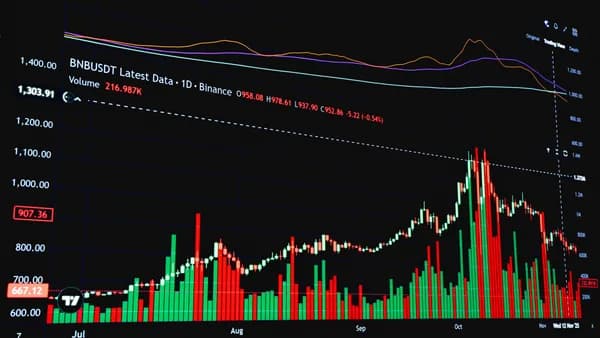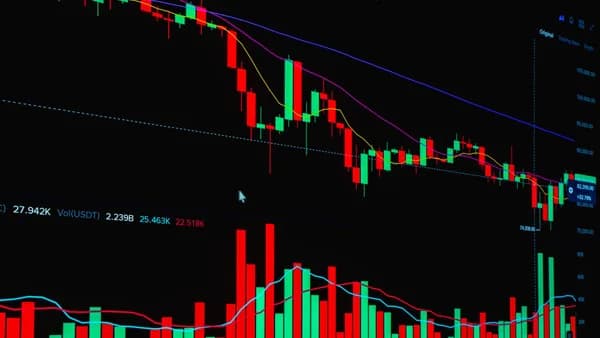
Finding the best charting software for penny stocks is not just about pretty candles or dozens of indicators. Penny stock traders need platforms that can handle low-priced equities, OTC access, unusual volume, low-float momentum, fast alerts, and risk controls because these stocks can move sharply and become hard to exit.
XOOMAR Intelligence
Analyst Take
The research data points to a clear pattern: the strongest penny stock platforms are not always standalone charting tools. They are usually broker-integrated platforms that combine charts, screeners, real-time data, alerts, order entry, and — in some cases — OTC access.
Why Penny Stock Traders Need Specialized Charting Tools
Penny stocks are formally defined as stocks trading below $5 per share, according to SEC-style definitions cited in the research. In common trading language, many investors also use “penny stock” to describe shares trading under $1.
That low price does not automatically mean low risk. In fact, the opposite is often true.
Penny stocks can be more volatile, less liquid, and harder to sell than larger listed companies. SmartAsset notes that penny stock prices can be “more volatile and less accurate” because these stocks trade less frequently. Millennial Money also highlights that it can sometimes be hard to find a buyer, especially because many penny stocks are tied to small companies.
Key insight: For penny stocks, charting software is not just for technical analysis. It is a risk-management tool that helps traders monitor volume, liquidity, alerts, and execution conditions in real time.
That is why the best charting software for penny stocks should help with more than trendlines. Traders need to know:
- Volume: Is today’s activity meaningfully above normal?
- Float: Is the stock low-float enough to move quickly?
- Liquidity: Can you enter and exit without severe slippage?
- OTC access: Can the platform trade the market you are watching?
- Alerts: Can you react quickly to breakouts or reversals?
- Order tools: Can you place trades without delays?
- Risk controls: Can you avoid oversized losses in volatile names?
For penny stock traders, the wrong app can create real problems. High commissions can eat into already thin margins, limited OTC access can block trades, and weak alerting can cause missed breakouts.
Essential Features: Volume, Float, Spreads, and Liquidity
The research is especially clear on screening criteria. TradeAlgo identifies two of the most important filters for penny stock setups:
| Filter | Research-Based Threshold | Why It Matters |
|---|---|---|
| Float | Under 20 million shares | Lower float stocks can move faster when demand increases |
| Relative Volume | Above 3x average | Helps identify unusual activity versus normal trading volume |
These are not the only factors traders should consider, but they are two of the clearest data-backed filters in the source material.
Volume and Relative Volume
Penny stock breakouts often depend on unusual activity. A stock moving on low volume can be difficult to trade because the move may not have enough participation behind it.
A relative volume filter above 3x average, as cited by TradeAlgo, helps traders separate ordinary movement from unusual demand. This is especially important for low-priced stocks, where sudden spikes can occur around news, promotions, or speculation.
Float
Float refers to the number of shares available for public trading. TradeAlgo’s research highlights float under 20 million shares as a critical filter for penny stock traders.
Low-float stocks can be attractive to momentum traders because a smaller supply of tradable shares can contribute to sharp price moves. However, that same characteristic also increases risk. Thinly traded, low-float names can reverse quickly.
Spreads and Liquidity
The provided research does not give specific bid-ask spread benchmarks, so traders should avoid relying on unsupported rules of thumb. However, the sources repeatedly warn that penny stocks can be difficult to buy or sell because trading may be less frequent.
That makes liquidity monitoring essential. In practical terms, traders should use platforms that provide real-time quotes, time-sensitive alerts, and — for more active traders — Level 2 or order flow tools when available.
Verifiable Catalysts
TradeAlgo also emphasizes that every penny stock trade needs a verifiable catalyst. Social media hype alone is flagged as a pump-and-dump warning sign.
Critical warning: A penny stock moving only because of online hype, without a verifiable catalyst, should be treated as high risk.
Examples of catalyst checks may include news, filings, earnings-related updates, sector movement, or other confirmable information. The source data does not provide a full catalyst checklist, so traders should verify information directly before trading.
Best Charting Platforms for Penny Stock Setups
The platforms below are included because the research sources specifically discuss them in the context of penny stock trading apps, screeners, charting tools, OTC access, alerts, commissions, or execution features.
Quick Comparison: Best Platforms for Penny Stock Charting and Trading
| Platform | Best For | Penny Stock Strengths From Source Data | Key Limitations From Source Data |
|---|---|---|---|
| TradeStation | Active traders and advanced charting | Professional charting, drawing tools, indicators, streaming Level II, hotlists, OTC support, direct market access | Not described as the cheapest option by SmartAsset |
| Interactive Brokers | Active and global traders | Real-time streaming data, customizable alerts, advanced charting, OTC and sub-$5 access, complex orders | SmartAsset notes costs can include a $1 minimum per trade and per-share pricing starting at $0.0029 |
| E*TRADE | Beginners and learning resources | Real-time quotes, interactive charts, customizable dashboards, education, quick order entry | OTC trades may carry commissions; sources cite $4.95–$6.95 or starting at $6.95 |
| Charles Schwab | Simple app and integrated banking/investing | Commission-free U.S.-listed penny stocks, customizable alerts, research, education, OTC and pink sheet access cited by Millennial Money | Research does not position it as the most advanced charting platform |
| Fidelity | Low-cost penny stock trading | No penny stock trading charge cited by SmartAsset; research and education resources | SmartAsset says the format may not be friendliest for beginners seeking specialized OTC tools |
| Firstrade | Straightforward low-cost access | No commissions on penny stock trades, large selection of penny stocks, beginner-friendly interface | Lacks some high-end charting and customization features |
| Webull | Mobile-first exchange-listed penny stocks | Commission-free trading across stocks, ETFs, and options; sleek app-based design | Limited OTC access; primarily supports exchange-listed penny stocks |
| Robinhood | Basic beginner access | Commission-free model, simple app, no minimum account balances | Very limited research and analysis tools; no broader OTC market access |
1. TradeStation — Best for Advanced Penny Stock Charting
TradeStation is one of the strongest platforms in the source data for active penny stock traders who prioritize charts, execution, and market data.
Benzinga highlights TradeStation’s mobile app for advanced charting and order execution, including:
- Professional charting tools with drawing tools and indicators
- Streaming Level II data in-app
- Hotlists for penny stocks
- Customizable chart studies
- Advanced order types
- Synchronized watchlists across desktop and mobile
- Direct market access
- OTC stock support
SmartAsset also describes TradeStation as a strong platform for “data-heavy work” and notes that it offers real-time OTC stock prices. The same source says real-time OTC prices can be unreliable, but still considers that access a strong feature for OTC traders.
Millennial Money adds that TradeStation offers TS Go and TS Select account levels. According to that source:
| TradeStation Tier | Minimum Deposit | App Stock Trades | Notable Detail |
|---|---|---|---|
| TS Go | $0 | $0 in the app | $10 for desktop trades |
| TS Select | $2,000 | Commission-free desktop and mobile trades up to 10,000 shares per trade | Designed for broader platform access |
TradeStation is best suited for traders who need charting, watchlists, alerts, order tools, Level II, and OTC support in one ecosystem.
2. Interactive Brokers — Best for Active Traders Who Need Market Access
Interactive Brokers appears repeatedly in the research as a strong choice for active penny stock traders.
Benzinga says IBKR Mobile provides:
- Access to thousands of U.S. and international stocks
- Access to many OTC shares
- Real-time streaming data
- Customizable alerts
- Advanced charting
- Watchlist monitoring
- Complex orders
- Multiple account management
- Commissions starting at $0.005/share
- No minimum deposit for IBKR Lite
- 24/5 customer support
Millennial Money describes Interactive Brokers as a strong choice for active traders because its app functions similarly to the desktop platform and includes advanced mobile features, a constant stream of market data, quick trades, and a screening tool.
However, pricing details vary by source. SmartAsset notes Interactive Brokers can be one of the more expensive options for penny stock trading, citing a $1 minimum per trade and per-share prices starting at $0.0029.
| Interactive Brokers Detail | Source Data |
|---|---|
| Mobile app | IBKR Mobile |
| Minimum deposit | $0 cited by Millennial Money; no minimum for IBKR Lite cited by Benzinga |
| Commission detail | Benzinga cites from $0.005/share; SmartAsset cites $1 minimum per trade plus per-share pricing starting at $0.0029 |
| Strength | Real-time streaming data, alerts, advanced charting, OTC/sub-$5 access |
| Best fit | Active traders needing advanced tools and broad access |
Because penny stock costs can materially affect returns, traders should confirm current account-specific pricing before placing trades.
3. E*TRADE — Best for Beginners Who Still Need Real Tools
E*TRADE is consistently positioned as beginner-friendly while still offering useful trading tools.
Benzinga highlights:
- Customizable dashboards
- Real-time quotes
- Interactive charts
- Quick order entry
- Educational content
- Commission-free trading on many U.S.-listed penny stocks
- OTC market access through broker assistance
- 24/7 customer service
Millennial Money notes that ETRADE offers both the basic *ETRADE Mobile app* and the more advanced Power E*TRADE app. It also cites access to Bloomberg TV and research from Credit Suisse, Reuters, and more.
The key drawback is OTC cost. Millennial Money lists:
- $0 online stock trades
- $4.95–$6.95 commission for OTC stocks
- $25 with broker assistance
SmartAsset similarly notes that OTC stock trades start at $6.95 per trade.
E*TRADE is a practical choice for traders who want a cleaner learning curve, education, and usable charts — but OTC-focused traders should pay attention to fees.
4. Charles Schwab — Best for Simple App, Research, and Broader Account Integration
Charles Schwab is positioned as a reliable, full-service option rather than the most specialized penny stock charting platform.
Benzinga highlights:
- Commission-free trades on U.S.-listed penny stocks
- Customizable alerts
- Solid research and third-party analysis
- Live CNBC video streams
- Educational resources
- Integration with Schwab checking and savings
- 24/7 phone and chat support
Millennial Money adds that Schwab gives access to penny stocks outside major exchanges, including OTC stocks and pink sheets, and lists:
- $0 online trades
- $5 phone trades
- $25 with broker assistance
- $0 minimum deposit
Schwab is a good candidate for traders who want penny stock access inside a broader investing and banking ecosystem. However, the provided research does not describe Schwab as having the most advanced penny stock charting or Level II setup.
5. Fidelity — Best for Low-Cost Penny Stock Trading
Fidelity stands out in SmartAsset’s research because it does not charge to trade penny stocks, excluding costs charged by other market participants. For penny stocks, where profit margins can be small, this can matter.
SmartAsset also notes that Fidelity offers a strong overall trading platform with numerous resources for education and research. Millennial Money adds that Fidelity has:
- $0 minimum deposit
- $0 online commissions
- $32.95 with broker assistance
- A user-friendly app for trading penny stocks and managing investments
- Upfront risk disclosure for penny stocks
The trade-off is usability for specialized OTC workflows. SmartAsset says Fidelity’s format may not be the friendliest for beginners looking for highly specialized OTC tools and information.
Fidelity is best for traders who prioritize low costs and research resources, but it may not be the top choice for advanced intraday penny stock scanning.
6. Firstrade — Best Budget-Friendly Straightforward Access
Firstrade is highlighted by SmartAsset for charging no commissions on penny stock trades. The source also says it offers access to a large selection of penny stocks, including broader OTC access than some competitors.
Its interface is described as clear and approachable for beginners.
The limitation is important: SmartAsset says Firstrade lacks some of the high-end charting and customization features that experienced traders often want.
Firstrade is best for traders who want low-cost penny stock access without needing advanced analytics.
7. Webull — Best for Mobile-First Exchange-Listed Penny Stocks
Webull is described by SmartAsset as appealing to penny stock investors because it offers commission-free trading across stocks, ETFs, and options. It also has a sleek, app-based design with intuitive navigation and built-in tools.
However, Webull’s penny stock access is limited. SmartAsset notes that the platform primarily supports penny stocks listed on major exchanges and has limited OTC access.
That makes Webull more suitable for traders focused on exchange-listed low-priced stocks, not those who need broad OTC coverage.
8. Robinhood — Best for Basic Beginner Access
Robinhood is included because it offers a simple, commission-free experience for listed penny stocks. SmartAsset says it has no minimum account balances and makes trading accessible for beginners.
Millennial Money also notes:
- $0 minimum deposit
- $0 commissions on stocks, ETFs, and options
- Some transaction fees may apply
- Penny stock lineup limited to NYSE and NASDAQ
The main limitation is research depth. SmartAsset says Robinhood offers very limited research and analysis tools and does not provide broader OTC market access.
Robinhood may work for beginners testing exchange-listed penny stocks, but it is not the strongest candidate for traders who need advanced charting, OTC access, or deep screening.
Intraday Alerts and Breakout Monitoring
For penny stocks, alerts can be as important as charts. Benzinga notes that penny stocks can swing wildly in minutes, so fast, reliable mobile access matters.
The best charting software for penny stocks should allow traders to monitor sudden breakouts, reversals, and volume spikes. In the source data, several platforms stand out for alerts and intraday monitoring.
| Platform | Alert and Monitoring Features From Source Data |
|---|---|
| Interactive Brokers | Real-time streaming data, customizable alerts, watchlists |
| TradeStation | Desktop-to-mobile alert and watchlist syncing, hotlists, chart studies |
| E*TRADE | Customizable dashboards, real-time quotes, quick order entry |
| Charles Schwab | Customizable alerts, research tools, live CNBC streams |
| Webull | Mobile-first design with built-in tools for market tracking |
What to Monitor Intraday
Based on the research, penny stock traders should prioritize:
- Relative Volume: TradeAlgo cites above 3x average as a key filter.
- Float: TradeAlgo cites float under 20 million shares as critical.
- Catalyst Quality: TradeAlgo warns that social media hype alone can signal a pump-and-dump.
- OTC Availability: Some platforms do not support broader OTC markets.
- Execution Tools: Benzinga highlights fast execution and order entry as important for volatile names.
Alerts are most useful when they are connected to a trading plan. A breakout alert without liquidity checks, catalyst verification, and risk limits can encourage impulsive trading.
Level 2 Data, Time and Sales, and Order Flow Tools
The source data provides specific Level II information for TradeStation and broader real-time data details for Interactive Brokers.
Platforms With Notable Market Data Tools
| Platform | Market Data / Order Flow Detail From Source Data |
|---|---|
| TradeStation | Streaming Level II quotes in-app, real-time OTC stock prices, direct market access |
| Interactive Brokers | Real-time streaming data, advanced charting, complex orders |
| E*TRADE | Real-time quotes, interactive charts, quick order entry |
| Charles Schwab | Research tools, third-party analysis, live CNBC streams |
TradeStation is the clearest Level II candidate in the provided research. Benzinga specifically mentions streaming Level II data in-app, while SmartAsset highlights real-time OTC stock prices.
The research does not provide detailed time-and-sales specifications for each platform, so it would be inaccurate to claim every app offers robust tape-reading tools. At the time of writing, based on the provided data, TradeStation has the strongest explicitly documented Level II feature set for penny stock charting and execution.
Practical takeaway: If Level II is central to your penny stock strategy, prioritize platforms where the source data explicitly confirms Level II availability rather than assuming all trading apps include it.
Risk Management Features for Volatile Stocks
Penny stocks are speculative. The sources repeatedly emphasize risk, volatility, liquidity problems, and the possibility of large losses.
TradeAlgo gives the clearest risk rule: never risk more than 1% of your account on any single penny stock trade.
That does not mean putting only 1% of your account into the position. It means the amount you stand to lose if the trade fails should not exceed 1% of account value.
Penny Stock Risk Checklist
Use this checklist before taking a trade:
- Risk Limit: Keep risk to 1% of account value or less per trade, per TradeAlgo.
- Catalyst: Confirm a verifiable catalyst; avoid trades driven only by social media hype.
- Liquidity: Check whether the stock trades actively enough to exit.
- Platform Access: Confirm whether the stock is U.S.-listed, OTC, or pink sheet before choosing a broker.
- Fees: Review commissions, especially for OTC trades.
- Order Entry: Use platforms with fast, reliable order tools if trading intraday volatility.
- Education: Beginners should favor apps with strong educational resources, such as E*TRADE, Schwab, or Fidelity based on the research.
Why Fees Are a Risk Tool
Costs matter more with penny stocks because margins can be thin. Benzinga notes that high commissions can quickly erode profits. SmartAsset makes a similar point when discussing Fidelity’s free penny stock trading.
Fee differences are especially important for OTC traders.
| Platform | Fee Detail From Source Data |
|---|---|
| Fidelity | SmartAsset says Fidelity does not charge to trade penny stocks |
| Firstrade | No commissions on penny stock trades, per SmartAsset |
| TradeStation | Millennial Money cites $0 in-app stock trades; $10 desktop trades with TS Go |
| Interactive Brokers | Benzinga cites from $0.005/share; SmartAsset cites $1 minimum per trade plus per-share pricing from $0.0029 |
| E*TRADE | OTC commissions cited as $4.95–$6.95 by Millennial Money; SmartAsset cites starting at $6.95 |
| Charles Schwab | Millennial Money cites $0 online, $5 phone, $25 broker-assisted |
| Robinhood | $0 on stocks, ETFs, and options; some transaction fees may apply |
| Webull | Commission-free trading across stocks, ETFs, and options cited by SmartAsset |
Always verify live pricing with the broker before trading, because fees can vary by account type, security, and trade route.
Free Charting Tools vs Paid Platforms
Many traders searching for the best charting software for penny stocks want to know whether free tools are enough. The research suggests the answer depends on whether you need OTC access, Level II data, advanced charting, and real-time alerts.
Free or Low-Cost Strengths
Several platforms in the data offer commission-free or low-cost access:
- Fidelity: No charge to trade penny stocks, per SmartAsset.
- Firstrade: No commissions on penny stock trades, per SmartAsset.
- Robinhood: Commission-free listed stock trading with a simple app.
- Webull: Commission-free trading for listed stocks, ETFs, and options.
- Charles Schwab: Commission-free U.S.-listed penny stocks.
- TradeStation: $0 app trades cited by Millennial Money.
These may be enough for traders who are focused on listed low-priced stocks and basic charting.
Paid or Advanced Platform Advantages
The research points to stronger advanced workflows in platforms such as TradeStation and Interactive Brokers.
| Need | Better-Supported Platforms in Source Data |
|---|---|
| Advanced charting | TradeStation, Interactive Brokers |
| Streaming Level II | TradeStation |
| OTC support | TradeStation, Interactive Brokers, Schwab, E*TRADE through broker assistance, Fidelity, Firstrade |
| Beginner education | E*TRADE, Schwab, Fidelity |
| Mobile-first simplicity | Robinhood, Webull, Schwab |
| Custom alerts | Interactive Brokers, TradeStation, Schwab |
The main trade-off is complexity and cost. Advanced tools can help active traders, but beginners may benefit more from clean navigation, education, and lower friction.
Best Picks for Beginners, Active Traders, and Budget Users
Here is a practical shortlist based strictly on the provided research.
Best for Active Penny Stock Traders: TradeStation
TradeStation has the strongest source-backed combination of advanced penny stock features:
- Streaming Level II data
- Professional charting
- Indicators and drawing tools
- Hotlists for penny stocks
- OTC support
- Direct market access
- Desktop/mobile watchlist and alert syncing
It is the most complete candidate for traders who need intraday charting, alerts, and execution tools.
Best for Advanced Market Access: Interactive Brokers
Interactive Brokers is a strong fit for active traders who want real-time streaming data, advanced charting, customizable alerts, complex orders, and access to many OTC and sub-$5 stocks.
The main caution is cost. Source data includes different pricing references, including $0.005/share from Benzinga and a $1 minimum per trade plus per-share pricing from SmartAsset.
Best for Beginners: E*TRADE
E*TRADE is repeatedly described as beginner-friendly. It offers:
- Clean mobile design
- Customizable dashboards
- Real-time quotes
- Interactive charts
- Quick order entry
- Education
- 24/7 customer service
The main caution is OTC cost, with source data citing $4.95–$6.95 or starting at $6.95 for OTC trades.
Best for Full-Service Simplicity: Charles Schwab
Schwab is a strong choice for traders who want penny stocks alongside broader financial tools. It offers commission-free U.S.-listed penny stock trades, alerts, research, education, live CNBC streams, and banking integration.
Millennial Money also cites OTC and pink sheet access.
Best for Lowest-Cost Penny Stock Trading: Fidelity or Firstrade
Both Fidelity and Firstrade are strong budget-oriented choices in the source data.
- Fidelity: SmartAsset says it does not charge to trade penny stocks and offers education and research.
- Firstrade: SmartAsset says it charges no commissions on penny stock trades and provides access to a large selection of penny stocks.
The trade-off is that Firstrade lacks some high-end charting and customization features, while Fidelity may not be the friendliest for specialized OTC workflows.
Best for Listed Penny Stocks Only: Webull or Robinhood
Webull and Robinhood are better suited for exchange-listed penny stocks rather than full OTC coverage.
- Webull: Sleek mobile-first platform, commission-free listed trading, limited OTC access.
- Robinhood: Simple beginner app, commission-free listed stocks, very limited research and no broader OTC market access.
These are not the strongest options for traders who need deep penny stock screeners, OTC access, or advanced order-flow tools.
Bottom Line
The best charting software for penny stocks depends on your trading style.
For active traders who need advanced charting, Level II, hotlists, alerts, and OTC support, TradeStation is the strongest research-backed choice. For traders who want real-time data, alerts, advanced charts, and broad market access, Interactive Brokers is also compelling, though traders should review pricing carefully.
Beginners may prefer E*TRADE for its clean design, education, real-time quotes, and interactive charts. Budget-focused traders should compare Fidelity and Firstrade, both of which are highlighted for low-cost penny stock trading. For simple listed-stock access, Webull and Robinhood may work, but both have OTC limitations in the source data.
Above all, penny stock traders should combine platform selection with disciplined filters: float under 20 million shares, relative volume above 3x average, a verifiable catalyst, and no more than 1% account risk on any single trade.
FAQ
What is the best charting software for penny stocks?
Based on the provided research, TradeStation is the strongest overall choice for advanced penny stock charting because it offers professional charting tools, drawing tools, indicators, hotlists, streaming Level II data, OTC support, and direct market access.
What filters matter most for penny stock screeners?
TradeAlgo identifies float under 20 million shares and relative volume above 3x average as two of the most critical penny stock filters. It also emphasizes that every trade should have a verifiable catalyst.
Can I trade OTC penny stocks on mobile apps?
Yes, but access varies by platform. The source data cites OTC support for platforms including Interactive Brokers, TradeStation, Charles Schwab, Fidelity, and Firstrade. E*TRADE offers OTC access through broker assistance, while Webull and Robinhood are more limited to exchange-listed penny stocks.
Are free penny stock platforms good enough?
They can be, depending on your needs. Free or low-cost platforms such as Fidelity, Firstrade, Robinhood, Webull, and Charles Schwab may work for listed penny stocks or cost-sensitive traders. However, active traders may need advanced features such as Level II data, OTC tools, and synchronized alerts, which are more clearly supported by platforms like TradeStation.
Which penny stock platform is best for beginners?
E*TRADE is one of the strongest beginner choices in the research because it offers an intuitive app, real-time quotes, interactive charts, quick order entry, educational resources, and customer support. Charles Schwab and Fidelity also provide education and research resources.
How much should I risk on a penny stock trade?
TradeAlgo’s guidance is to never risk more than 1% of your account on any single penny stock trade. This is especially important because penny stocks can be volatile, thinly traded, and difficult to exit.
Sources & References
Content sourced and verified on June 17, 2026
- 14 Best Penny Stock Apps: Low Fees, OTC Access, and Trading Tools • Benzinga
https://www.benzinga.com/money/best-penny-stock-trading-apps
- 29 Best Penny Stock Trading Platforms to Consider
https://smartasset.com/investing/best-penny-stock-trading-platforms
- 3Best Penny Stock Trading Apps
https://millennialmoney.com/best-penny-stock-trading-apps/
- 4Best Penny Stock Screeners 2026: Find Low-Float | TradeAlgo
https://www.tradealgo.com/trading-guides/stocks/penny-stock-screener-guide
- 54 Best Penny Stock Trading Platforms, Brokers & Apps
https://www.wallstreetzen.com/blog/best-penny-stock-trading-platforms/
- 6What Are the Best Stock Screeners for Penny Stocks?
https://www.warriortrading.com/best-penny-stock-screener/

Written by
XOOMAR
Data desk
XOOMAR is a capital markets software and data company. Every brief on this site starts from a dataset the company collects itself from primary sources (CFTC, SEC EDGAR, FINRA, the Federal Reserve, exchange APIs) and names the numbers it is built on, with a link to the data page so you can check them. Briefs are reviewed before they go out and corrected in place when the data is revised.