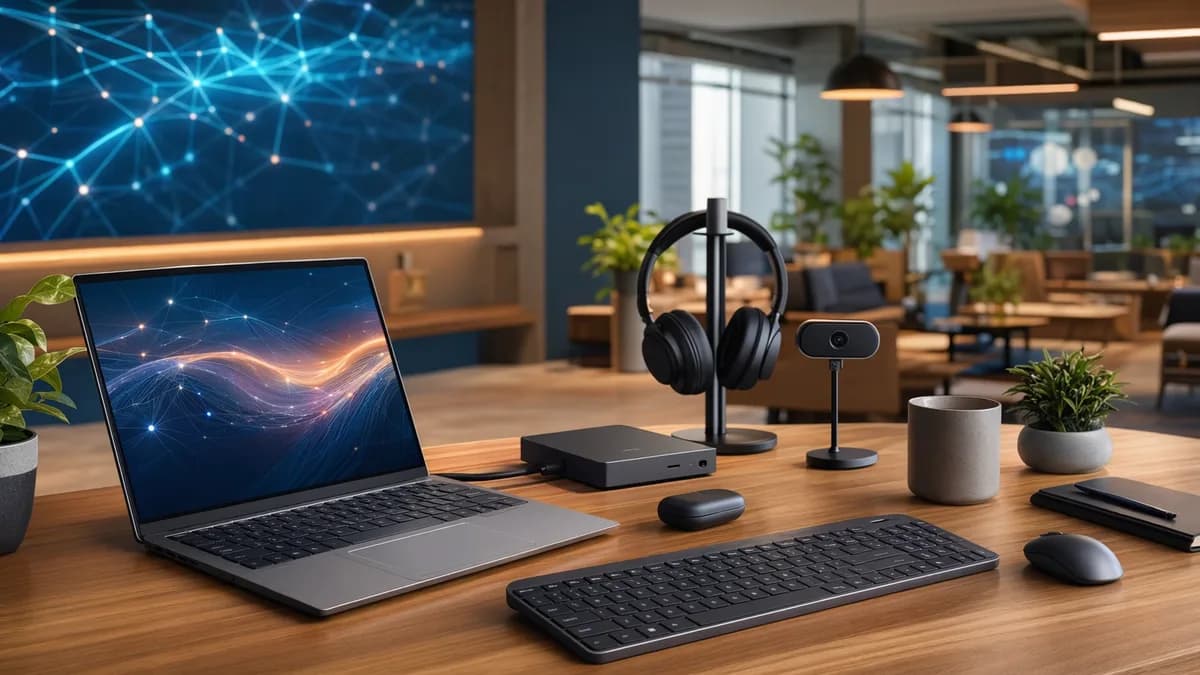
Choosing laptops for hybrid workers is less about chasing the highest specs and more about matching the device to a mixed workday: home desk, office docking setup, video meetings, commuting, and occasional travel. For professionals who move between locations, the right laptop needs to balance portability, battery life, webcam quality, keyboard comfort, ports, and docking support.
Important note: the provided source data does not include named laptop models, prices, benchmark scores, battery-life figures, webcam specifications, port lists, or security feature details. Because of that, this guide does not rank specific products or invent specifications. Instead, it provides a practical, source-limited buying framework using the hybrid-work priorities in the brief: lightweight design, long-lasting use, remote meeting quality, dock-friendliness, and professional usability.
1. What Hybrid Workers Should Prioritize in a Laptop
Hybrid work creates a different buying problem than fully remote or fully office-based work. A laptop for this setup needs to be portable enough for commuting, comfortable enough for long writing sessions, capable enough for meetings, and easy to connect to a desk setup when you arrive at home or the office.
At the time of writing, the provided research data does not include verified product-level specs, so the safest way to evaluate laptops for hybrid workers is by use case rather than by brand claims.
Core buying priorities for hybrid work
| Priority | Why It Matters for Hybrid Workers | What to Check Before Buying |
|---|---|---|
| Battery Life | Hybrid workers may spend time away from reliable power outlets during commutes, meetings, or travel. | Look for vendor-stated battery life and independent test data where available. |
| Weight and Portability | A laptop carried between home, office, and travel locations should not become a daily burden. | Check listed weight and charger size before purchase. |
| Webcam Quality | Remote meetings are central to hybrid work. | Confirm webcam resolution, microphone details, and whether privacy features are included. |
| Ports and Docking | A dock-friendly laptop can quickly connect to monitors, keyboard, mouse, Ethernet, and power. | Review port selection and docking compatibility carefully. |
| Keyboard Comfort | Hybrid professionals often write emails, reports, proposals, and chat messages for hours. | If possible, test key travel, layout, touchpad size, and palm rest comfort. |
| Security Features | Business users may need safer sign-in, device management, or privacy controls. | Check for business-oriented security features listed by the manufacturer. |
| Performance Headroom | Power users may need more capability for multitasking, large spreadsheets, creative work, or development. | Compare processor class, memory, storage, and thermal design using verified specs. |
Key insight: For hybrid workers, the “best” laptop is rarely the one with the most impressive headline spec. It is the one that minimizes friction when moving between home, office, meetings, and travel.
The hybrid-work test: ask these questions first
Before comparing models, answer these practical questions:
- Commute: Will you carry the laptop daily?
- Meetings: Are you on video calls every day?
- Desk Setup: Do you use external monitors or a docking station?
- Travel: Do you often work in airports, trains, hotels, or client offices?
- Workload: Are you mostly using documents and meetings, or heavier professional applications?
- Security: Does your employer require specific device-management or authentication features?
These questions help avoid overspending on features you do not need—or underbuying a device that becomes frustrating after a few months.
2. Best Overall Laptop for Hybrid Work
Because the source data does not name specific products, the best overall choice should be understood as a laptop profile rather than a single model recommendation.
The best overall laptop for hybrid work is the balanced option: light enough to commute with, durable enough for frequent movement, comfortable enough for full-day use, and dock-friendly enough to become a desktop replacement when needed.
Best overall profile
| Category | Recommended Direction |
|---|---|
| Portability | Choose a laptop light enough for regular commuting. |
| Battery | Prioritize verified long-lasting battery claims where available. |
| Webcam and Audio | Select a model designed for frequent video meetings. |
| Ports | Look for enough connectivity to reduce dongle dependence. |
| Docking | Confirm compatibility with your home or office docking setup. |
| Keyboard | Favor comfort and layout over ultra-thin design alone. |
| Performance | Choose enough power for multitasking without excessive heat or fan noise. |
For most hybrid professionals, the best overall laptop will sit in the middle of the market: not the cheapest machine, not necessarily the most premium workstation, but a well-rounded business or productivity laptop.
Who should choose this type?
This is the right category if you:
- Split Time Evenly: Work from both home and office.
- Join Frequent Meetings: Need dependable webcam and audio quality.
- Use External Displays: Want smooth docking at a desk.
- Carry It Regularly: Need manageable weight and battery life.
- Do General Productivity: Work mostly in documents, spreadsheets, browsers, email, and collaboration tools.
Critical warning: Do not choose a laptop based only on processor or screen size. For hybrid work, poor battery life, weak webcam quality, uncomfortable keys, or awkward docking can matter more in daily use.
Trade-offs
A balanced hybrid-work laptop may not be the absolute lightest, cheapest, or fastest option. That is acceptable. The goal is to reduce everyday friction across multiple environments.
3. Best Lightweight Laptop for Commuters
For commuters, portability becomes the top requirement. A laptop may look excellent on paper, but if it is uncomfortable to carry daily, it can become the wrong choice for hybrid work.
The best lightweight laptop for commuters should focus on low weight, compact size, practical battery life, and strong enough build quality to handle repeated travel between locations.
What commuters should prioritize
| Feature | Why It Matters |
|---|---|
| Low Weight | Reduces daily carry fatigue. |
| Compact Charger | The total carry weight includes the power adapter. |
| Battery Life | Helps avoid carrying a charger for short office days. |
| Durability | Frequent bag use increases wear and tear. |
| Fast Resume | Useful when opening and closing the laptop between meetings or transit. |
| Good Keyboard | Small laptops can compromise typing comfort. |
At the time of writing, the provided source data does not include exact weight bands or battery numbers. So buyers should verify manufacturer specifications and, where possible, independent reviews before making a decision.
Best fit for this category
Choose a lightweight commuter laptop if:
- You Travel Daily: The laptop goes in your bag every workday.
- You Work in Multiple Rooms: You move between meeting rooms, shared desks, and home spaces.
- You Rarely Need Maximum Performance: Your work is mostly browser-based, document-based, or meeting-heavy.
- You Value Convenience: You want a machine that is easy to grab and go.
Potential downsides
Lightweight laptops can sometimes involve trade-offs. Depending on the model, those may include fewer ports, smaller keyboards, limited cooling capacity, or reduced performance headroom.
Because the provided research does not include specific models, these trade-offs should be checked model by model before purchase.
4. Best Business Laptop for Docking and Security
A business laptop for hybrid work should make office transitions nearly invisible. You arrive, plug in one cable or connect to a dock, and instantly use external displays, full-size keyboard, mouse, network, and charging.
For professionals in managed IT environments, security and docking support may matter more than raw speed.
What makes a laptop business-friendly?
| Business Need | Why It Matters for Hybrid Work |
|---|---|
| Docking Support | Simplifies switching between mobile and desk setups. |
| Port Selection | Reduces adapter clutter and compatibility problems. |
| Secure Sign-In | Helps protect work data during travel and shared-office use. |
| Privacy Features | Useful for meetings and public workspaces. |
| IT Manageability | Important for employer-issued or centrally managed devices. |
| Build Quality | Business laptops are often moved between locations frequently. |
At the time of writing, no verified docking standards, port counts, or security feature lists were included in the source data. That means buyers should confirm compatibility with their employer’s docking hardware and IT requirements before purchasing.
Docking tip: If your office already uses a specific dock, do not assume every modern laptop will work perfectly with it. Confirm display support, charging support, and port compatibility before buying.
Best fit for this category
A business-focused laptop is the right choice if:
- Your Employer Has IT Standards: You need compatibility with company systems.
- You Use Multiple Monitors: Docking support is central to your workflow.
- You Handle Sensitive Data: Security and privacy controls matter.
- You Hot-Desk: You move between shared workstations.
- You Want Predictability: Business machines are often designed around practical workflows.
Docking checklist
Before buying, verify:
- Display Output: Does the laptop support your number of external monitors?
- Charging: Can the dock charge the laptop at the required power level?
- Peripheral Support: Will keyboard, mouse, webcam, headset, and storage devices work through the dock?
- Network: If you need wired networking, confirm dock or laptop support.
- IT Approval: If work-issued, confirm compatibility with company policies.
5. Best Budget Laptop for Remote Meetings
A budget laptop for hybrid work should not simply be the cheapest device available. For remote meetings, minimum usability matters: webcam quality, microphone performance, battery life, keyboard comfort, and stable everyday performance.
The best budget laptop for remote meetings is the lowest-cost option that still handles video calls and general productivity without creating frustration.
What to protect in a budget purchase
| Priority | Why You Should Not Ignore It |
|---|---|
| Webcam | Poor video quality can affect meeting presence. |
| Microphone | Clear audio is often more important than video. |
| Keyboard | Budget laptops can compromise typing comfort. |
| Battery | Weak battery reduces flexibility. |
| Ports | Fewer ports can force extra adapter spending. |
| Performance | Underpowered devices can struggle with multitasking. |
No source-provided price tiers or specific budget models were included, so this section cannot responsibly name a best-value laptop or price point. Instead, buyers should treat meeting quality as a non-negotiable requirement.
Good budget fit
A budget hybrid-work laptop may be enough if:
- Your Work Is Lightweight: Email, documents, calendars, browser tabs, and meetings.
- You Use One External Monitor: Your docking needs are modest.
- You Have Reliable Power Access: Battery life is less critical.
- You Do Not Run Heavy Apps: No intensive development, design, data, or media workloads.
Budget buying advice
- Avoid False Economy: A very cheap laptop that needs adapters, an external webcam, or frequent replacement may cost more over time.
- Check Return Policies: If webcam, audio, or keyboard quality disappoints, you need an exit option.
- Test Meetings Early: Join a real video call before the return window closes.
- Confirm Ports: Make sure the laptop connects to your monitor, headset, and charger setup.
Practical rule: For hybrid workers, a budget laptop should still feel professional in meetings. If the webcam, microphone, or keyboard is poor, the low price may not be worth it.
6. Best Premium Laptop for Power Users
Power users need more than basic productivity. They may run heavier spreadsheets, creative tools, development environments, analytics workflows, virtual meetings, and multiple external displays.
The best premium laptop for power users should prioritize performance headroom while still meeting hybrid-work needs: portability, battery life, docking, webcam quality, and keyboard comfort.
What power users should compare
| Requirement | Why It Matters |
|---|---|
| Processor Capability | Supports demanding multitasking and heavier applications. |
| Memory | Helps with large files, many browser tabs, and multitasking. |
| Storage | Important for local files, project data, and offline work. |
| Thermal Design | Sustained performance depends on cooling. |
| Display Support | Power users often rely on external monitors. |
| Battery Impact | Higher performance can reduce unplugged runtime. |
| Portability | Premium power should not automatically mean impractical weight. |
The source data does not include benchmark scores, processor names, memory configurations, storage capacities, graphics options, or thermal measurements. So this guide cannot claim which premium laptop is fastest or best for specific workloads.
Best fit for this category
Choose a premium power-user laptop if:
- You Multitask Heavily: Many apps, tabs, and meetings run simultaneously.
- You Use Large Files: Spreadsheets, presentations, datasets, or design assets.
- You Need External Displays: A docked multi-monitor setup is part of your workday.
- You Travel but Need Power: You cannot rely on a desktop workstation.
- You Want Longer Useful Life: Higher specifications may provide more headroom, depending on workload.
Premium trade-offs
Premium laptops can offer stronger performance, better displays, improved build quality, or more advanced features, depending on the model. But they may also cost more, weigh more, run warmer, or consume more power.
Without model-specific data, the right approach is to match premium spending to confirmed needs rather than buying the most expensive option by default.
7. Key Specs to Compare Before Buying
When comparing laptops for hybrid workers, focus on specs that directly affect daily work. Raw performance matters, but hybrid usability depends on the full system.
Hybrid laptop comparison checklist
| Spec Area | What to Compare | Why It Matters |
|---|---|---|
| Battery Life | Manufacturer claims and independent test results where available. | Determines how freely you can move between locations. |
| Weight | Laptop weight plus charger weight. | Affects commuting comfort. |
| Webcam | Resolution, low-light quality, privacy shutter, microphone pairing. | Impacts remote meeting quality. |
| Microphones | Noise handling and clarity. | Audio quality can make or break calls. |
| Keyboard | Layout, key travel, backlighting, comfort. | Important for long writing sessions. |
| Touchpad | Size, accuracy, palm rejection. | Affects mobile productivity. |
| Ports | Display, charging, USB, audio, networking options. | Reduces dependence on dongles. |
| Docking | Compatibility with your desk setup. | Enables fast transition to office or home workstation. |
| Display | Size, brightness, resolution, aspect ratio. | Affects multitasking and eye comfort. |
| Security | Sign-in, privacy, and business-management features. | Important for professional and corporate use. |
| Performance | Processor, memory, storage, graphics where relevant. | Determines workload suitability. |
| Repair and Support | Warranty and service options. | Matters for business continuity. |
Featured-snippet answer: what specs matter most?
For hybrid workers, the most important laptop specs are battery life, weight, webcam and microphone quality, keyboard comfort, port selection, docking support, and enough performance for daily multitasking. Business users should also compare security and IT compatibility before buying.
Questions to ask before checkout
- Battery: Can this laptop last through your typical mobile work block?
- Weight: Would you carry it every day without hesitation?
- Meetings: Is the webcam and microphone good enough for professional calls?
- Docking: Will it work with your home and office desk setups?
- Ports: Will you need to buy extra adapters?
- Keyboard: Would you type on it for several hours?
- Performance: Does it match your actual workload, not just today’s minimum needs?
- Security: Does it meet employer or client requirements?
8. Common Mistakes to Avoid When Choosing a Work Laptop
Hybrid workers often buy laptops the same way they would buy a home computer: by looking at price, processor, or brand reputation first. That can lead to a device that performs well in one environment but causes friction everywhere else.
Mistake 1: Ignoring docking compatibility
If you use external monitors, a keyboard, mouse, headset, Ethernet, or charging dock, docking support should be checked early.
A laptop that needs multiple adapters every time you sit down can undermine the entire hybrid-work experience.
Mistake 2: Choosing weight based only on the laptop
Commuters often forget the charger, adapters, sleeve, and accessories. The real carry weight is the whole bag, not just the laptop.
Mistake 3: Treating webcam quality as optional
Remote meetings are a core part of hybrid work. A weak webcam or microphone can make a new laptop feel outdated immediately, especially if you spend hours in video calls.
Mistake 4: Buying the cheapest possible laptop
Budget matters, but the lowest purchase price is not always the best value. If you need to add an external webcam, docking adapters, or replacement accessories, the real cost may rise.
Mistake 5: Overbuying performance and underbuying usability
A powerful laptop with poor battery life, loud fans, limited ports, or uncomfortable typing may be a poor hybrid-work machine.
For many professionals, a balanced laptop is better than one optimized only for maximum speed.
Mistake 6: Forgetting employer requirements
If your work involves company systems, managed software, security rules, or approved accessories, confirm requirements before buying.
This is especially important for business laptops used across office and home environments.
Bottom-line warning: The wrong laptop can still look excellent on a spec sheet. Hybrid work exposes weaknesses in battery life, portability, webcam quality, keyboard comfort, and docking faster than traditional desk-only use.
9. Final Recommendations by Use Case
Because the source data does not include named models, the final recommendations below are organized by buyer profile. Use them as a decision framework when comparing real laptops from verified product listings and independent reviews.
Use-case recommendation table
| Use Case | Best Laptop Type | Prioritize | Avoid |
|---|---|---|---|
| Balanced Hybrid Worker | All-around productivity laptop | Battery, keyboard, webcam, ports, docking | Extreme thinness that sacrifices usability |
| Daily Commuter | Lightweight laptop | Low carry weight, battery, compact charger | Heavy laptops with bulky adapters |
| Office/Home Docking User | Business laptop | Docking support, ports, security, manageability | Models with unclear dock compatibility |
| Remote Meeting Heavy User | Meeting-focused budget or midrange laptop | Webcam, microphone, keyboard, stable performance | Cheapest models with poor call quality |
| Power User | Premium performance laptop | Processor, memory, storage, cooling, display support | High-end specs that compromise portability |
| Security-Conscious Professional | Business-class laptop | Sign-in, privacy, IT compatibility | Consumer models lacking required controls |
Quick recommendations
Best Overall Laptop for Hybrid Work: Choose a balanced productivity laptop with strong battery life, comfortable input devices, good meeting features, and reliable docking support.
Best Lightweight Laptop for Commuters: Choose the lightest laptop that still gives you acceptable keyboard comfort, battery life, and port flexibility.
Best Business Laptop for Docking and Security: Choose a business-focused laptop after confirming dock compatibility, employer requirements, and security features.
Best Budget Laptop for Remote Meetings: Choose a budget model only if webcam, microphone, keyboard, and everyday performance are good enough for professional use.
Best Premium Laptop for Power Users: Choose a higher-performance laptop if your workload genuinely requires more processor, memory, storage, or display support.
Bottom Line
The best laptops for hybrid workers are not defined by one spec or one brand. They are defined by how well they support movement between home, office, meetings, commuting, and travel.
Based on the provided research brief, hybrid professionals should focus on battery life, lightweight design, webcam quality, ports, keyboard comfort, and docking support. Since no product-specific source data was provided, this article does not name individual laptop models or make unsupported claims about pricing, performance, or specifications.
If you are buying now, start by identifying your dominant work pattern: commuter, meeting-heavy, docked business user, budget buyer, or power user. Then compare real models against the checklist above using verified specs and current reviews.
FAQ
What is the most important feature in laptops for hybrid workers?
There is no single universal feature, but the most important areas are battery life, portability, webcam quality, keyboard comfort, ports, and docking support. Hybrid workers move between locations, so the laptop needs to work well both on the go and at a desk.
Should hybrid workers buy a lightweight laptop?
A lightweight laptop is a strong choice for daily commuters or frequent travelers. However, it should not sacrifice essentials like keyboard comfort, battery life, webcam quality, or the ports needed for your setup.
Is docking support important for hybrid work?
Yes, docking support is especially important if you use external monitors, a keyboard, mouse, headset, Ethernet, or desk charging. Before buying, confirm the laptop works with your home or office dock.
Are budget laptops good enough for remote meetings?
Some budget laptops may be suitable for remote meetings, but the source data provided does not include specific models or pricing. At minimum, check webcam quality, microphone clarity, keyboard comfort, battery life, and everyday performance before buying.
What type of laptop should power users choose?
Power users should look for a premium performance-focused laptop with enough processor capability, memory, storage, cooling, and display support for their workload. However, they should still consider portability, battery life, and docking because those remain important for hybrid work.
Why are no specific laptop models listed?
The provided research data did not include named laptop models, prices, specifications, benchmarks, or product comparisons. To avoid unsupported claims, this guide uses a practical buying framework instead of inventing product rankings.