Cellebrite Russia is now less a story about one seized iPhone than a test of whether surveillance tech companies can actually switch off government customers after publicly cutting them loose.
XOOMAR Intelligence
Analyst Take
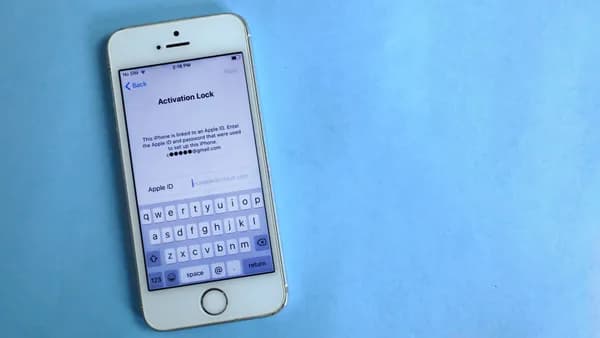
Russian authorities used Cellebrite technology to access the iPhone 12 of opposition politician and human rights dissident Andrey Pivovarov after the company said it had stopped doing business with Russian government customers, according to TechCrunch. Researchers at The Citizen Lab said they found forensic evidence tying the breach to Cellebrite’s UFED tools, and Russian court materials reportedly documented the use of Cellebrite software to extract data from the device.
That contradiction is the story. Cellebrite said it cut off Russia in March 2021. Pivovarov’s iPhone was seized after his detention on May 31, 2021. Citizen Lab found traces of Cellebrite use on or around June 17, 2021. If those findings hold, the Cellebrite Russia case shows that ending sales may not end capability.
The iPhone unlock that exposes the weak spot in Cellebrite's Russia exit story
The hard question for Cellebrite is not whether it announced a Russia cutoff. It did. The question is whether that cutoff had operational force.
Citizen Lab said Russian authorities used Cellebrite’s tools to breach Pivovarov’s iPhone while he was in custody. Pivovarov was the director of the now defunct opposition group Open Russia, and Russian authorities later sentenced him to four years in prison on charges tied to carrying out the activities of an “undesirable” organization. He was freed on August 1, 2024 as part of a prisoner exchange that also freed Wall Street Journal reporter Evan Gershkovich.
The evidence described by TechCrunch and Citizen Lab has two layers. First, researchers found forensic artifacts on Pivovarov’s iPhone indicating use of Cellebrite forensic tools. Citizen Lab said its analysis of MobileLockdown records showed USB connections on June 17, 2021 to a device with a Host ID the lab previously attributed to Cellebrite. Second, Pivovarov shared a Russian court document with researchers. That document, prepared by Russia’s Forensic Expert Center of the Ministry of Interior, reportedly described use of UFED Physical Analyzer and UFED 4PC.
Cellebrite’s chief marketing officer David Gee said the company “stopped all sales and services to the Russian Federation in March 2021, terminating existing licenses, and immediately began unwinding all legal contracts. Any use of legacy Cellebrite hardware in Russia after March 2021 is entirely unauthorized.”
That statement narrows the dispute. Cellebrite is not saying the tool was never in Russian hands. It is saying any post-March 2021 use was unauthorized. XOOMAR analysis: that defense may be legally meaningful, but it does not solve the technical and reputational problem. If a forensic tool continues working after a vendor says a customer is cut off, outsiders will judge the cutoff by what the tool does, not by what the contract says.
The stakes are larger than Cellebrite. Phone-unlocking products sold for criminal investigations can become political weapons when they remain usable inside security services that target dissidents. In Pivovarov’s case, Russian authorities reportedly searched extracted device data for political terms, organizations, contacts, and opposition figures.
How Cellebrite's phone-unlocking tools can outlive a sales ban
A sales ban stops the next transaction. It does not automatically erase hardware, software, operator training, or extracted workflows already inside a police lab.
Cellebrite sells hardware and software used by law enforcement agencies to unlock and extract data from connected phones. Its UFED product line is designed for device access and forensic extraction. Citizen Lab describes Cellebrite as providing technology to governments for non-consensual device extraction, including password bypassing and cracking. In practice, that means a government customer may have physical devices, PC-based software, analysis tools, trained personnel, and prior case procedures already built around the vendor’s products.
That matters because Cellebrite’s own website, as cited by TechCrunch, says that after it cut ties with Putin’s government in March 2021, the company “can stop the device from functioning or receiving software updates.” The Pivovarov case raises the obvious follow-up: why did that not prevent the reported June 2021 use?
There are several possible pathways, but the public record does not prove which one applied here. Russian authorities may have had legacy Cellebrite hardware already in the country. Agencies may have shared access internally. Software might have remained partly useful even after license termination. A device might have operated without fresh updates long enough to extract data from an iPhone already in custody. Covert procurement through third parties is a theoretical route, but the supplied evidence does not establish that it happened in this case.
The strongest counterpoint is that remote disabling forensic tools is not trivial. A vendor could risk damaging lawful evidence workflows, face contractual disputes, or create audit questions if a device is bricked mid-investigation. There may also be technical limits if tools are offline or air-gapped. Those are real complications.
They do not fully rescue Cellebrite’s position. XOOMAR analysis: the more invasive a tool is, the weaker a purely contractual cutoff becomes. If the product can unlock phones in politically sensitive cases, the vendor needs technical controls that map to its public commitments.
Citizen Lab’s John Scott-Railton told TechCrunch that Cellebrite “should also remote-disable deployments following credible reports of abuse, and end the era of plausible deniability by implementing cryptographically-signed watermarks on all imaged devices.” In plain terms, that means two things: make abused deployments stop working, and mark extractions so investigators, courts, or auditors can trace which Cellebrite system produced them.
The numbers behind the Russia-Cellebrite compliance gap
The timeline is tighter than Cellebrite would want: cutoff in March, seizure in May, alleged Cellebrite use in June.
The available data does not include Cellebrite revenue, customer counts, or digital forensics market size, so those figures should not be invented. What the supplied sources do provide is a clear sequence of dates, products, and custody events.
| Date or period | Event | Why it matters |
|---|---|---|
| March 18, 2021 | Cellebrite announced it would immediately stop selling solutions and services to customers in Russia and Belarus, according to related reporting supplied in the source material | Establishes the public cutoff before Pivovarov’s device was examined |
| May 31, 2021 | Pivovarov was removed from a flight and detained at St. Petersburg Airport | His devices entered Russian official custody after detention |
| June 17, 2021 | Citizen Lab found traces of Cellebrite forensic tools on the iPhone on or around this date | Places alleged use after Cellebrite’s cutoff |
| July 2022 | Pivovarov was sentenced to four years in prison | Shows the device extraction sat inside a political prosecution |
| 2023 | His devices were returned to his lawyer while he was still imprisoned | Made later forensic review possible |
| August 1, 2024 | Pivovarov was freed in a prisoner exchange | He later regained possession of the devices |
| Fall 2025 | Pivovarov contacted Citizen Lab researchers at the World Liberty Congress in Berlin | Triggered the forensic analysis |
The case also includes a concrete product trail. The Russian forensic report cited by Citizen Lab reportedly named UFED Physical Analyzer and UFED 4PC. It also documented extraction of data from apps including WhatsApp, Telegram, and Viber.
One detail cuts through the compliance fog: Pivovarov did not provide passwords or consent to the search, according to Citizen Lab’s account. That means the value of the tool was not convenience. It was access that authorities otherwise lacked or could not easily obtain.
A single forensic workstation or license can be worth far more to an investigative unit than its purchase price when the target is an opposition figure’s phone. The supplied sources do not give the price of Cellebrite tools, so the economics cannot be quantified here. But the intelligence value is visible in the report: messages, political searches, contacts, and private life.
From crime labs to dissident phones: the long history of forensic tech drifting into repression
The Pivovarov case fits a familiar dual-use pattern: tools marketed for lawful investigations can follow government incentives into political policing.
Cellebrite sells to governments around the world, including in the U.S., according to TechCrunch. Law enforcement agencies argue that phone extraction tools help access evidence in serious criminal cases. That is the cleanest version of the use case. The harder version is what happens when the same capability is held by agencies that treat political opposition as a security threat.
Citizen Lab and TechCrunch cite prior cases where Cellebrite customers used its technology against dissidents, human rights activists, and journalists in Hong Kong, Kenya, and Jordan. TechCrunch also reports that Cellebrite has cut ties with Bangladesh, China and Hong Kong, Myanmar, and Serbia in response to some findings. Those examples do not prove misconduct in every deployment. They do show that the Pivovarov case is not an isolated reputational headache.
The reason mobile forensics is so sensitive is simple. A modern phone is not just a communications device. It can hold years of messages, contacts, media, location records, cloud tokens, app histories, and fragments of deleted activity. For activists, journalists, lawyers, and opposition figures, physical seizure of a phone can expose entire networks.
That is why the Apple security race matters, even when a given vulnerability is not tied to this case. Our prior coverage of an unpatchable Apple chip flaw cracking the iPhone jailbreak door showed how hardware-level weaknesses can reshape what attackers and forensic researchers think is possible. Separately, the unfixable iPhone security flaw affecting A12 and A13 models underlined the uncomfortable reality that not every device risk can be solved with a routine software update. Pivovarov’s phone was an iPhone 12, and those articles do not establish a link to this extraction. The broader point is that device makers and forensic vendors are locked in a continuing contest over access after seizure.
Cellebrite, Russian investigators, activists, and investors all read this case differently
Each stakeholder sees a different failure: unauthorized use, investigative necessity, human rights abuse, or governance risk.
Cellebrite’s likely position is visible in Gee’s statement. The company says it stopped all sales and services to Russia in March 2021, terminated existing licenses, and began unwinding legal contracts. If Russia used legacy hardware after that point, Cellebrite calls it unauthorized.
Activists and civil liberties lawyers see a deeper design failure. Israeli human rights lawyer Eitay Mack, who has campaigned against surveillance technology makers including Cellebrite and NSO Group, told TechCrunch:
“It’s not surprising, and [it] is the result of the policies of Cellebrite,”
Mack argued that ending sales, or even revoking a software license, does not necessarily stop former customers from abusing the technology. He also said Cellebrite refuses to say whether it asks customers to dismantle hacking tools it previously sold to them. That is a critical gap. A vendor can announce an exit from an abusive market while leaving the machinery of abuse physically intact.
Russian investigators would likely frame the device extraction as evidence gathering. The source material says the Russian Embassy in Washington D.C. did not respond to a request for comment, so there is no official response in the record. Still, the Russian forensic document reportedly shows investigators searched for political terms and opposition-linked names, not just conventional criminal evidence.
For investors and regulators, the risk is sharper. Cellebrite is not merely accused of selling a controversial product. It is facing evidence that a government customer kept using that product after the company said the relationship was over. XOOMAR analysis: public companies that sell sensitive tools to governments need more than policy language. They need controls that can survive hostile customers, resellers, offline deployments, and embarrassing forensic audits.
What this means for police technology buyers, smartphone users, and the forensic tools industry
The practical lesson is blunt: compliance in forensic technology has to become technical, not just legal.
Government buyers should expect tighter procurement language around phone-unlocking systems. Contracts may need clear end-use rules, reseller audits, jurisdiction limits, mandatory license checks, and shutdown clauses tied to credible abuse findings. Those controls will be controversial because police agencies do not want vendors reaching into evidence systems. But without them, a vendor’s human rights policy can become a press release with no enforcement layer.
For smartphone users at risk, the most dangerous moment remains physical seizure. This is not a how-to point. It is a threat model point. Pivovarov’s case shows that once a device is in state custody, the fight shifts from encryption in the abstract to whether a forensic lab can connect the phone, run extraction tools, and search private data for political value.
For the forensic tools industry, the next credibility test will be auditability. Scott-Railton’s proposal for cryptographically signed watermarks points in that direction. If every extraction carried a traceable mark tied to a specific deployment, vendors, courts, and investigators would have a harder time denying where tools were used. That would not stop every abuse, but it would raise the cost of plausible deniability.
Apple, Google, and other device makers are on the other side of this contest. Their security work makes seized devices harder to exploit. Commercial forensic firms then search for new access methods. The Cellebrite Russia case shows why that technical race is also a human rights fight.
The next fight over Cellebrite-style tools will be about enforceable shutdowns
The Russia case shows the old standard is broken: “we stopped selling there” is not enough when the tool still works there.
Regulators are likely to scrutinize mobile forensic systems as high-risk surveillance technology when they appear in political cases after vendor cutoffs. The source material does not establish a new rulemaking process, so that is a watch item, not a prediction of a specific policy. The pressure point is obvious: resellers, legacy deployments, license renewals, update servers, and post-sale audits.
More litigation and shareholder pressure would also be unsurprising if similar cases surface. The key trigger would be evidence that vendors promised controls but could not enforce them. Cellebrite’s statement that post-March 2021 Russian use was “entirely unauthorized” may protect the company from one set of accusations, but it invites another: why could unauthorized use continue?
The technical fight will also intensify. Phone makers will keep hardening devices after seizure. Forensic vendors will keep seeking extraction paths. Governments will keep wanting access. The open question is whether vendors like Cellebrite can build controls that prove where their tools work, where they do not, and who used them.
The evidence that would weaken the thesis is straightforward: Cellebrite could show that the Russian extraction did not rely on functioning post-cutoff capability, or that the tool used was outside its control in a way no reasonable technical system could have stopped. The evidence that would strengthen it would be more cases where former customers keep using Cellebrite tools after public exits.
For now, the Cellebrite Russia case lands in the uncomfortable middle. Cellebrite says Russia was cut off. Citizen Lab says Russian authorities still used Cellebrite against a political opponent. The next standard for this industry will not be the announcement of an exit. It will be proof that the product actually stops working where the company says it no longer operates.
Impact Analysis
- The case tests whether surveillance tech companies can truly disable government customers after ending business with them.
- It highlights how digital forensics tools can be used against opposition figures and human rights dissidents.
- The reported timeline raises accountability questions for vendors operating in authoritarian or sanctioned environments.
Cellebrite’s Russia Cutoff vs. Reported Use
| Claim or Event | Reported Reality |
|---|---|
| Cellebrite said it stopped doing business with Russian government customers in March 2021. | Russian authorities allegedly used Cellebrite tools on Andrey Pivovarov’s iPhone after that cutoff. |
| The company’s public exit suggested access had ended. | Citizen Lab found forensic traces of Cellebrite use on or around June 17, 2021. |
| Ending sales was presented as a compliance step. | The case raises whether previously supplied surveillance tools could still operate after customers were cut off. |
Primary Sources & Disclosures

Written by
XOOMAR Insights Team
Research and Editorial Desk
The XOOMAR Insights Team pairs automated research with human editorial judgment. We track hundreds of sources across technology, fintech, trading, SaaS, and cybersecurity, cross-check the facts, and explain what happened, why it matters, and what to watch next. We do not just rewrite headlines. Every article is fact-checked and scored for reliability before it goes live, and we link back to the original sources so you can verify anything yourself.