
Let's stop pretending the next war begins with a draft or a decoy. It began weeks ago, in your network logs.

CybersecurityAugust 9, 2026· 6 min read· By XOOMAR Insights Team
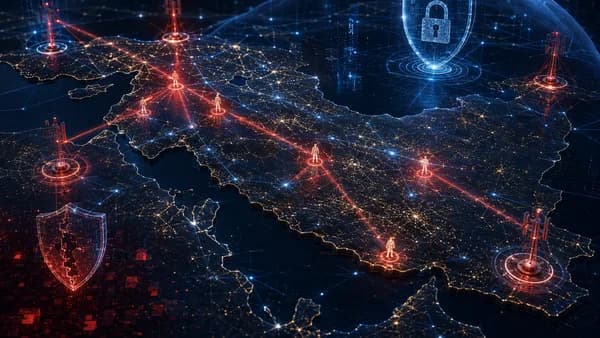
Silicon Dust Precedes Troops as Cyber War Becomes First Strike
Updated on August 9, 2026
XOOMAR Intelligence
Analyst Take
65/ 100
3 sources analyzedLow confidenceTrend10Freshness100Source Trust85Factual Grounding87Signal Cluster20
That's the central, uncomfortable reality laid out in a detailed SecurityWeek analysis featuring Dmitri Alperovitch, the co-founder of CrowdStrike. The piece, drawing from his forthcoming book, paints a stark picture: cyber operations are no longer a separate, technical shadow war. They are the opening artillery barrage of modern conflict.
As Alperovitch argued, the digital intrusions against Ukraine in late 2021 weren't just aggressive espionage. They were a "clear indication that Russia was again preparing for a full scale invasion." He saw them as a "canary in the coalmine." When the tanks finally rolled in February 2022, they were following a path cleared by viruses like HermeticWiper, which had already struck hundreds of systems across Ukrainian finance, defense, and aviation.
This isn't theory anymore. It's a playbook, visible now in the Pacific. To understand global power dynamics today, you must watch for the silicon dust that precedes the troop movements.
If Cyber Is the Prelude, Have We Already Lost the First Battle?
The most dangerous misconception in national security circles is treating cyber as a support function, a niche tool for spies and signals intelligence. Alperovitch's evidence reframes it entirely: cyber is now the mandatory, non-lethal first phase of kinetic warfare.
Its purpose is not to win wars alone, but to prepare the battlefield for traditional forces. It degrades the enemy's ability to see, communicate, and coordinate.
"Cyber operations degraded Iran's radar grids to allow the initial wave of US and Israeli airstrikes" during the Epic Fury and Roaring Lion missions in February 2026, the source notes.
This is textbook modern combat. Before a single jet crosses a border, its target's digital eyes are gouged out. Before special forces raid a building, the local telecom hub is already under friendly control, thanks to a prior cyber raid. The goal is concrete: create military advantage by sowing chaos, blinding command structures, and crippling critical infrastructure that supports defense.
This function makes cyber activity the single most reliable early-warning system we have. When a state actor shifts from broad, stealthy espionage to disruptive, aggressive network attacks against a rival's military and government systems, it's not just posturing. It's laying the groundwork for physical force.
Can a War Be Won With Code Alone?
Of course, a powerful counterargument exists. Skeptics rightly point out that destructive cyberattacks are often over-hyped. Real war, they argue, still requires boots, steel, and the messy, expensive, and politically risky business of putting troops on the ground. Ukraine proves this: despite a massive, years-long cyber onslaught from Russian groups like Sandworm and APT28, the kinetic war grinds on in trenches. Cyber can assist, but it cannot conquer.
This view is correct in its ultimate conclusion but fatally flawed in its timeline. The mistake is assuming the purpose of pre-conflict cyber ops is to achieve victory. It's not. Its purpose is to ensure the invading force achieves victory faster and with fewer losses.
Conceding that "not every malware strain is a prelude to invasion" is sensible. But dismissing the now-established pattern of behavior from major state actors is strategic blindness. When China engages in persistent cyber campaigns against Taiwanese government and infrastructure networks, it's not practicing for a hacking competition. It is methodically mapping the digital terrain for a future invasion, exactly as Russia did in Crimea and Ukraine.
To ignore this pattern is to leave a nation's power grids, financial systems, and civilian communications dangerously exposed on day one of a real crisis. An army can mobilize in days. A shattered national network can take months to rebuild.
Who Sees the First Move on a Digital Chessboard?
If the first shots of war are silent, network-bound events that happen months before troops mobilize, then traditional military intelligence cycles are catastrophically slow. Victory on this fourth battlefield belongs to whoever sees the digital chessboard move first.
This is where Alperovitch's perspective, and that of firms like CrowdStrike, becomes controversially essential. Private threat intelligence companies are the new, privatized frontline scouts. They have the sensors planted deep in global corporate and, increasingly, government networks. They see the command-and-control servers light up, the novel malware strain get deployed, the spear-phishing campaign targeting a specific defense contractor's supply chain.
"If you detect nation state actors on your network," Alperovitch notes, "chances are they have already been there for weeks or months."
Governments often operate in secrecy and silos. These firms operate across global client data in near real-time. Their role is uncomfortable for the nation-state model, but indispensable. The call to action is clear: deeper, faster, and more trusted integration of private-sector cyber threat intelligence into government defense and diplomatic warning systems is no longer a nice-to-have. It is a core component of national defense readiness.
Treating cybersecurity as a corporate IT problem is a pre-9/11 mindset, as we've argued in our analysis of critical infrastructure threats. It is now a matter of geopolitical foresight.
What Does "Provocation" Mean When the Bullets Are Bits?
Here is the ultimate challenge for policymakers and the public. We are stuck with 20th-century definitions of acts of war. A formal declaration. A border skirmish. A naval blockade.
But what is a cyber operation that disables a regional power grid for weeks? What is the systematic theft of decades of military R&D data? What is the constant probing and mapping of a nation's telecommunications backbone?
If we cling to old definitions, we will always be reacting, never anticipating. The nation best prepared for total war in the 21st century is not necessarily the one with the most carriers or tanks. It is the one that can weather the initial, invisible cyber barrage with its lights on, its data intact, and its citizens informed.
Resilience is the ultimate strategic deterrent in this age. This means validated backups, segmented critical networks, and a public that understands that a widespread internet or power outage might not be a technical glitch, but the opening salvo of something far graver.
The next major conflict will not be announced on CNN. Its first shots have already been fired. They're buried in your firewall alerts. The question isn't if we will decipher them in time, but whether we even recognize them as shots at all.
XOOMAR Analysis: The source material provides a compelling, expert-driven framework for understanding cyber ops as integral to modern warfare. However, it relies heavily on Alperovitch's perspective. The critical unknown, which the source hints at but doesn't resolve, is the escalation dilemma. If every disruptive cyber operation is a prelude to kinetic war, where is the threshold for a kinetic response? The article notes that "We're not going to go [full kinetic] war over espionage," but the line between espionage and disruptive cyber-kinetic action is blurring. This gray zone is where miscalculation becomes most likely, and it's the pressing question for diplomats and generals alike. The forward-looking implication is that national security strategy must now formally define red lines in cyberspace with the same clarity as those for physical borders.
Impact Analysis
- Cyber operations now serve as the non-lethal first phase of kinetic warfare, disabling enemy communication and coordination before physical attacks begin.
- Understanding cyber intrusions as early indicators can provide critical strategic warnings, as seen with Russia's pre-invasion attacks on Ukraine in 2021.
- Nations that fail to integrate cyber defense into core military strategy risk being digitally blinded before a conflict even enters its traditional phase.
Sources

Written by
XOOMAR Insights Team
Research and Editorial Desk
The XOOMAR Insights Team pairs automated research with human editorial judgment. We track hundreds of sources across technology, fintech, trading, SaaS, and cybersecurity, cross-check the facts, and explain what happened, why it matters, and what to watch next. We do not just rewrite headlines. Every article is fact-checked and scored for reliability before it goes live, and we link back to the original sources so you can verify anything yourself.
Explore More Topics
Related Articles
 Cybersecurity
Europe Turns Up Heat on Putin as Ukraine Talks Hit Paris
Macron is staging Paris Ukraine talks with Zelenskyy, Starmer and Merz as Europe looks to turn Kyiv's momentum into pressure on Putin.
Jul 13, 20266 min
 Cybersecurity
US Slaps $10M Bounty on Russian Bulletproof Hosting Trio
The US named three Russians behind alleged bulletproof hosting shops and put up $10M, aiming to make Media Land too toxic to use.
Jul 14, 20266 min
 Cybersecurity
SS7 Flaw Let Iran Hunt U.S. Troops by Phone Signal
Iran allegedly used SS7 flaws to track U.S. troops by phone signal, turning commercial networks into targeting tools.
Jul 20, 20268 min
 Cybersecurity
Iran-Linked Hackers Breach U.S. Water, Energy Controls
U.S. agencies say Iran-linked hackers are breaching exposed utility controls, turning water and energy networks into pressure points.
Jul 23, 20267 min
 Cybersecurity
42 US Attacks Pull Russian Cybercrime Hosts Into Court
DOJ says Russian bulletproof hosts enabled attacks on 42 US entities, shifting pressure from hackers to infrastructure sellers.
Jul 19, 20267 min
 Fintech
Russians Empty Shelves of Crypto Wallets Before Law Hits
Russian hardware wallet sales more than doubled as retail investors rush to secure their crypto assets before a new regulatory framework imposes strict limits a
Aug 8, 20267 min
 Global Trends
Canada Mocks Trump's Conspiracy Rhetoric Amid Trade War
PM Mark Carney publicly ridiculed Trump's conspiracy claims, marking a sharp diplomatic break as a serious trade cold war escalates between the US and Canada.
Aug 9, 20265 min
 Global Trends
Americans Face Empty Tables as Avocado Pipeline Shuts
America's avocado supply chain from Mexico, worth $3.65 billion annually, is frozen after the U.S. government suspended all operations—including safety inspecti
Aug 9, 20265 min
 Global Trends
Drug Cartels Now Move Tonnage Like Multinationals
A massive drug bust in Spain and Ecuador seized 21 tons of cocaine, exposing an industrial-scale supply chain that is now as sophisticated as a multinational co
Aug 9, 20268 min
 Trading
Tokyo's Yen Gambit Already Fails at $153 Ceiling
TD Securities strategists assert Japan's massive currency intervention only created a temporary bounce, with USD/JPY's decline capped near 153 as overwhelming U
Aug 9, 20266 min
Don't miss the signal
Get our weekly roundup of the stories that matter across tech, fintech, and trading. No noise, just signal.
Free forever. No spam. Unsubscribe anytime.