
Spanish police just announced the 21-ton cocaine seizure was enough to flood a city, not just supply a few streets, according to ABC International. This isn't a simple drug bust, it's an audit of an industrial-scale global supply chain. For European ports and consumers, the sheer volume signals a market glut. For police, it's a tactical win. But for anyone tracking the narcotics trade, this operation exposes a sobering reality: the logistics of cocaine are now as sophisticated as any multinational corporation, and seizing billions in product may do little more than briefly raise operating costs for a demand-driven industry.
Global TrendsAugust 9, 2026· 8 min read· By XOOMAR Insights Team
Drug Cartels Now Move Tonnage Like Multinationals
Updated on August 9, 2026
XOOMAR Intelligence
Analyst Take
55/ 100
4 sources analyzedLow confidenceTrend10Freshness99Source Trust85Factual Grounding78Signal Cluster20
The Cocaine Glut That's Overwhelming European Ports
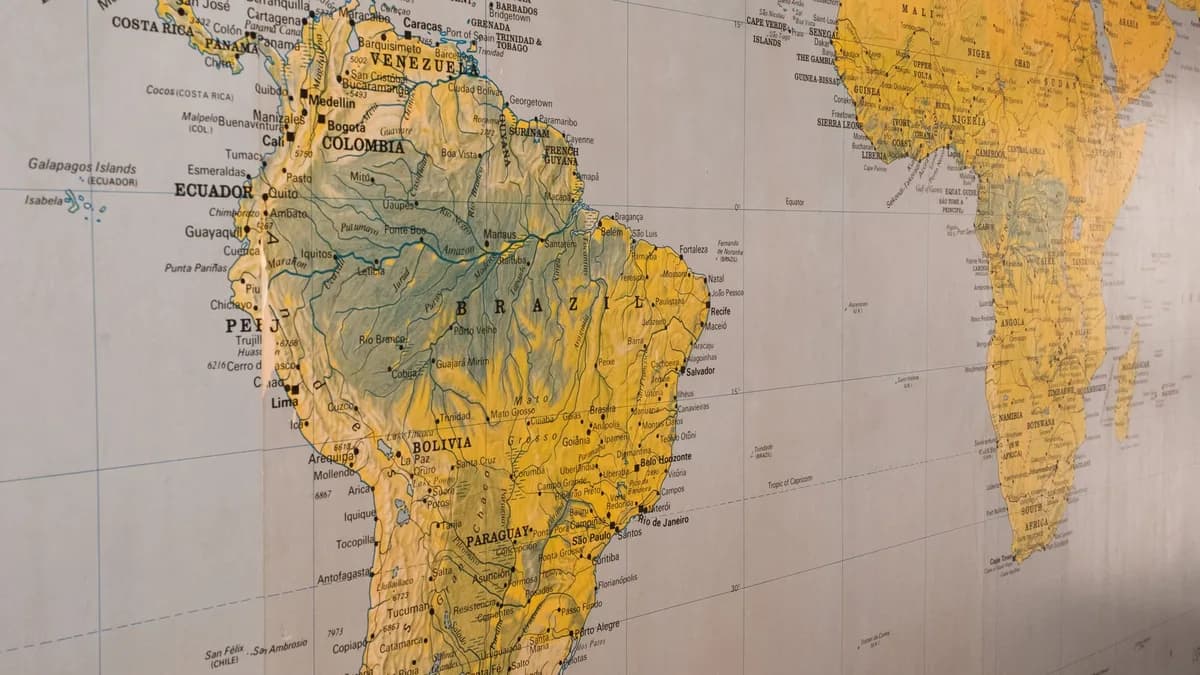
The key figure is 21 tons. To grasp that, consider that a single kilogram contains about 1,000 gram doses. This seizure, arriving in shipping containers from Ecuador, represents tens of millions of individual doses before it's cut for retail. This is a market-moving quantity. The 44 arrests across Ecuador and Spain illustrate the manpower required just to manage the transit, not the production.
The Civil Guard said the operation... targeted a ring that was financed by investors in Dubai and was smuggling drugs from South America into Spain in shipping containers.
XOOMAR interpretation: The mention of Dubai-based financiers points to a transnational business model, where capital is insulated from operational risk. The bust, while significant, is likely a symptom of a saturated supply chain. European demand has catalyzed overproduction in South America, turning major ports like Guayaquil into high-volume export hubs. When authorities intercept 21 tons, they are skimming the overflow of a system running at full capacity.
From Guayaquil's Docks to Barcelona's Container Yards: The Supply Chain Exposed
The operation maps a chillingly efficient route. The cocaine was "hid... among commercial goods shipping primarily from the port of Guayaquil," often concealed within legitimate banana exports. This method leverages Ecuador’s legitimate agricultural trade as camouflage, exploiting the high volume and routine nature of fruit shipments to bypass targeted inspections.
The Timeline Shows Systemic Infiltration
The "multiyear investigation" that culminated in March 2025 arrests in Ecuador and subsequent raids in Spain underscores a critical point. This wasn't a lucky find, it was a persistent, systemic enterprise embedded within global trade logistics. Corrupting port officials and forging shipping documents are just line items in their budget.
Key Methods of the Ring:
- Logistics: Use of standard commercial shipping containers.
- Concealment: Co-mingling with agricultural exports (bananas).
- Finance: Offshore investors in Dubai.
- Geography: Exploitation of Ecuador's major port, Guayaquil, and destination to Spain's container terminals.
This isn't a rogue ship; it's cargo fraud on a planetary scale. The model is so effective that, as our source notes, "Smugglers in Ecuador have been using commercial shipments to Europe to hide drugs" regularly.
Crunching the Cartel's Numbers: The Staggering Economics of 21 Tons
While the source doesn't provide a street value, the financial mechanics are stark. Seizing 21 tons (21,000 kilograms) of wholesale cocaine represents the loss of a primary asset. Here’s what that disruption looks like in cold numbers.
- Capital Seizure: Spanish police confiscated 1 million euros ($1.15 million) in cash from properties in Spain. This is likely just operational liquidity, not major capital.
- Asset Disruption: The raid on "about 50 properties" in Ecuador represents a significant hit to the network's physical infrastructure, warehouses, safe houses, and offices.
XOOMAR analysis: The seizure's financial impact is two-fold. First, it represents a massive inventory loss that must be repaid to producers, straining the network's credit. Second, the arrests of 36 suspects in Ecuador, the vast majority of the 44 total, dismantles a crucial local logistics layer that cannot be instantly replaced. However, with financing from Dubai, the network is structured to absorb such blows. The cash seized in Spain is a rounding error compared to the wholesale value of 21 tons, which could run into the hundreds of millions of euros in Europe. This bust is a painful quarterly loss, not necessarily a bankruptcy.
The Uneasy Alliance: Police Celebrate While Politicians Grapple with Root Causes
For law enforcement, this is a clear victory. The cooperation between Spain's Civil Guard, Ecuador’s National Police, and Europol is a model of international coordination. They successfully traced a complex financial and logistical chain across continents. The police narrative will rightly focus on this interagency success and the 44 arrests as a blow to organized crime.
However, the political context in Ecuador tells a darker story. This operation occurred during a declared state of emergency in Ecuador, as the government battles narco-powered gangs for control of prisons, streets, and ports. Busts like this, while massive, are reactive measures in a wider war. The ability of a ring to operate on this scale for years points to deep-seated institutional vulnerabilities.
For Europe, there's a perverse market dynamic at play. Large seizures can sometimes lead to temporary shortages, but more often, they indicate such abundant supply that intercepting a few containers doesn't tighten the market. Instead, it can signal to users that purity remains high and supply is robust, which can ironically stabilize or even stimulate demand. This creates a frustrating dichotomy for policymakers, as reported in our analysis of the NBA Star Died From Heroin and Cocaine Cocktail, where potent supply directly fuels public health crises.
A Historical Pivot: How Cocaine's Center of Gravity Swung South
The structure of this ring highlights a fundamental shift from the late 20th century. The era of monolithic Colombian cartels controlling everything from jungle labs to Miami street corners is over. Today's model is fragmented and outsourced.
Colombia & Peru focus on cultivation and primary production. Ecuador has become the primary transit nation, thanks to its dollarized economy (easing financial transfers), corruptible port infrastructure in Guayaquil, and geographic position sandwiched between the world's largest cocaine producers. European syndicates, often with Balkan or Dutch links, handle distribution within the EU, financed from opaque hubs like Dubai.
This specialization is a direct result of past policy. Decades of U.S.-led "source country" eradication pushed traffickers to diversify routes and logistics, creating the very transit nation crises we see today in Ecuador, and similar to the complex criminal ecosystems seen in other regions, as detailed in Crime Ring Kidnaps Satellite-Tagged Eagle, Drops Ransom Demand. The problem wasn't solved, it was geographically redistributed and made more resilient.
For Europe, a Sobering Reality Check on Drug Policy
The 21-ton seizure forces an uncomfortable question: what is the actual goal of interdiction? If the objective is to shrink the market and reduce harm, this bust alone fails the test. The European market is defined by steady demand. Seizures of this scale, while record-breaking, act as a tax on the traffic, not a blockade.
The Strain on Port Security
The "needle in a haystack" problem is now a "container in a port" problem. Searching even a fraction of the millions of containers entering Europe annually requires immense resources and intelligence. This creates a whack-a-mole effect: intense scrutiny in Guayaquil may simply push traffic to other Ecuadorian ports like Manta, or to alternative routes via West Africa.
This operation exposes the stark limits of a purely supply-side enforcement strategy when consumer demand provides a near-limitless financial incentive for suppliers to innovate and absorb losses. The tragic outcomes of this unimpeded supply are visible in the human toll, as seen in the Brandon Clarke's Autopsy Reveals Heroin, Cocaine Overdose.
The Narco-Whack-a-Mole Game: Where the Traffickers Go Next
Based on the exposed model, the network's response will be tactical and swift.
- Route Diversification: Expect immediate testing of alternative ports in Ecuador and other South American countries. The Balkan route or West African transit points may see increased volume as a medium-term hedge.
- Data-Driven Fallout: The 50 properties raided and 44 arrested individuals' phones and records are an intelligence goldmine. Europol's analysis will likely trigger secondary operations across Europe as they map the distribution network, leading to more arrests but also causing the network to sever compromised links.
- Financial Obfuscation: The spotlight on Dubai-based financing will prompt money movers to adopt even more complex layering, potentially through cryptocurrency or trade-based money laundering.
The final, stark takeaway is this: as long as European demand for cocaine remains structurally high, the industrial logistics of supply will innovate faster than enforcement can adapt. Networks will treat seizures as a cost of business, budgets will be adjusted, and new routes will be pioneered. 21-ton busts will continue to make headlines not because they are extraordinary, but because they represent the terrifying new normal of a globalized narcotics trade. The real metric to watch won't be seizure tons, but the street price and purity in Berlin or Barcelona. If those remain stable, this entire operation was just a very expensive speed bump.
The Bottom Line
- The 21-ton seizure reveals an industrial-scale global drug supply chain, suggesting European demand is fueling massive overproduction in South America.
- Arrests across Ecuador and Spain, combined with financing from Dubai, show how transnational criminal organizations have adopted sophisticated, corporate-style logistics.
- The sheer volume of the bust indicates a market glut, meaning such high-profile seizures may only temporarily disrupt a deeply entrenched, demand-driven industry.
Sources

Written by
XOOMAR Insights Team
Research and Editorial Desk
The XOOMAR Insights Team pairs automated research with human editorial judgment. We track hundreds of sources across technology, fintech, trading, SaaS, and cybersecurity, cross-check the facts, and explain what happened, why it matters, and what to watch next. We do not just rewrite headlines. Every article is fact-checked and scored for reliability before it goes live, and we link back to the original sources so you can verify anything yourself.
Explore More Topics
Related Articles
 Global Trends
67 Deaths Drag Ceuta Migrant Crisis into EU Border Fight
At least 67 deaths turned a Ceuta sea crossing into a border showdown for Spain, Morocco, and the EU.
Aug 2, 20269 min
 Global Trends
Ceuta Migrant Crossings Shatter Europe's Schengen Trust
Spain says Italy's Schengen suspension over Ceuta is unlawful, exposing a sharp EU split over migration and border trust.
Aug 1, 20268 min
 Global Trends
Mass Migration to Ceuta Leaves Thousands Stranded, 100 Dead
Ceuta's leader told the European Parliament that up to 5,000 migrants remain after last week's mass influx, with at least 100 deaths, revealing the crisis is no
Aug 8, 20268 min
 Global Trends
Heatwave Squeezes Crews at France and Spain Wildfires
Crews in France and Spain have a shrinking window to contain massive fires before heat and wind threaten new flare-ups.
Aug 2, 20267 min
 Global Trends
Russia Exposes Ukraine Air Defence Shortage in Deadly Strike
Ukraine stopped just one of 27 ballistic missiles, exposing a dangerous air defence shortage after a strike killed nine.
Aug 1, 20266 min
 Fintech
Nomura Risk Desk Powers $100M Private Credit Bet in Dubai
Nomura’s Laser Digital has taken a strategic stake in ZIGChain to become its risk oversight partner, targeting over $100 million in onchain private credit from
Aug 9, 20267 min
 Global Trends
Lottery Winner Trashed $1M Ticket Over 'Non-Payable' Error
Waste workers in Italy recovered a €1 million lottery ticket that a winner threw away after misreading a 'non-payable' message from the shop's scanner.
Aug 9, 20267 min
 Global Trends
Saudi Oil Tanker Hit, Exposing World's Backup Supply Routes
A reported Houthi missile strike on a Saudi Aramco tanker near the Red Sea port of Yanbu has shattered the global oil market's primary contingency plan, proving
Aug 9, 20266 min
 Trading
Tokyo's Yen Gambit Already Fails at $153 Ceiling
TD Securities strategists assert Japan's massive currency intervention only created a temporary bounce, with USD/JPY's decline capped near 153 as overwhelming U
Aug 9, 20266 min
 Future Fiction
The Unbind
In 2053, after the global rollout of fusion-powered resonant energy grids ends energy scarcity, geopolitical analyst Li Wei is tasked with monitoring global stability. Instead, she uncovers a growing subculture of "Unbinders" who voluntarily reject the wireless power field, revealing that true human connection may require a little friction.
Aug 9, 20269 min
Don't miss the signal
Get our weekly roundup of the stories that matter across tech, fintech, and trading. No noise, just signal.
Free forever. No spam. Unsubscribe anytime.