
At least 67 people died in the Ceuta migrant crisis, turning a sudden sea crossing into a political test for Spain, Morocco, and the European Union.
Global TrendsAugust 2, 2026· 9 min read· By XOOMAR Insights Team
67 Deaths Drag Ceuta Migrant Crisis into EU Border Fight
Updated on August 2, 2026
XOOMAR Intelligence
Analyst Take
59/ 100
4 sources analyzedLow confidenceTrend10Freshness98Source Trust92Factual Grounding92Signal Cluster20
Most of the tens of thousands of people who swam into Spain’s North African exclave of Ceuta on Thursday have now returned to Morocco, escorted by Spanish soldiers and police, according to BBC World. The immediate border emergency may be easing. The political shock is not.
Ceuta migrant crisis forced Madrid to manage deaths, returns, and politics at once
The Ceuta migrant crisis exposed a hard truth: Europe’s external border strategy depends on fragile cooperation with neighbors that can shift fast. Ceuta is Spanish territory on the North African coast, bordered by Morocco, and it sits outside the Schengen zone. That detail matters because Madrid argues the arrivals were never positioned to move unchecked into mainland Europe.
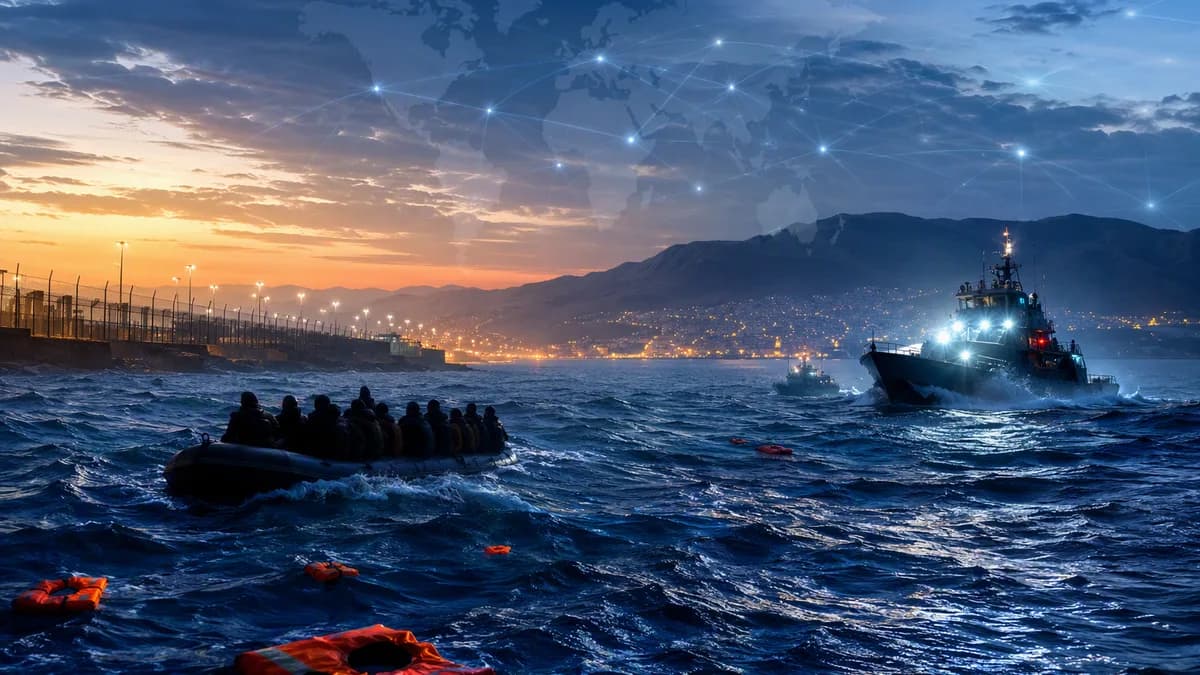
Yet the optics were explosive. Images of migrants racing through Ceuta spread quickly. Spanish troops and police escorted people back to the border. Bodies were pulled from the sea, among abandoned rubber rings and flippers. How could Madrid treat this as contained when the pictures looked like a loss of control?
That tension shaped the week. Pedro Sanchez framed Spain as the target of political opportunism inside Europe. He accused some in the EU of "attacking" Spain rather than backing it during the crisis.
The target was clear: Italy.
"This is the Sanchez model the Italian left wing likes so much," Fratelli d'Italia wrote alongside images of migrants in Ceuta, according to the BBC.
XOOMAR analysis: Spain’s central claim is procedural and geographic: Ceuta is not Schengen, and most arrivals returned. Italy’s political claim is visual: the border looked breached. In migration politics, images often move faster than legal distinctions.
For related context on the Schengen fallout, see Ceuta Migrant Crossings Shatter Europe's Schengen Trust.
Spanish border agencies faced a legal bottleneck at sea
The operational strain came from the route. Many migrants reached Ceuta by swimming or using small boats, rather than by crossing the land fence. That distinction has become politically charged.
BBC World reports that Sanchez pointed to a recent Spanish Supreme Court ruling saying those who enter by sea cannot be pushed back immediately. The prime minister said smugglers misrepresented the ruling as an easy path to Europe.
Times Now reported a more specific version of the legal issue: it said the court allowed immediate returns for migrants breaching Ceuta’s land border fences, but not for those reaching Spanish territory by sea, who must be processed individually. It also reported nearly 49,000 crossings in 24 hours and around 7,000 minors among arrivals. Those figures are not in the BBC article, so they should be read as additional reporting rather than the BBC’s count.
The practical problem is obvious. If each sea arrival requires individual processing, the pressure lands on local police, border officers, reception staff, and courts. Can a small enclave absorb that many cases at once without emergency measures?
Spain’s visible answer was force and speed: soldiers on the beach, police escorts to the border, and work to extend the border fence out to sea with long lines of orange buoys attached to the jetty. Ships will patrol the area to deter future swimmers, the BBC reported.
That is not just border engineering. It is legal engineering. If the weak point is the sea route, Spain is trying to turn that route into something more controllable.
For a closer look at that route, read Ceuta Migrants Expose Spain’s Border Fence Weak Spot.
Migrants were sold a false opening and met a closed door
The least powerful actors in the crisis were the people who entered the water.
BBC World reported that migrants showed reporters social media posts with people shouting "Spain is Open" and jumping into the sea. The BBC said multiple checked accounts showed young people in wetsuits and flippers, or filming themselves already swimming, mixed with pictures from inside Ceuta. Some accounts had been active only for weeks. Several had tens of thousands of likes.
The promise was false.
"All their promises were false," the BBC wrote of the social media posts encouraging crossings.
Those who reached Ceuta found no food, no shelter, and no route onward to continental Europe. Most quickly returned to Morocco. That is the brutal core of the Ceuta migrant crisis: the viral message framed Ceuta as an entry point, while the reality was a dead end.
XOOMAR analysis: This is where the story moves beyond traditional smuggling. The BBC says many of those heading for Ceuta were Moroccan, the route was well known, and they did not need to pay smugglers. If the mobilization was largely online, the next border crisis may be shaped less by organized transport than by false claims amplified fast enough to overwhelm official response.
The unresolved question is whether those accounts simply went viral, or whether someone pushed them deliberately.
Morocco’s role remains the diplomatic question Madrid won’t force
Morocco blamed "criminal organisations" for the crisis, according to the BBC. Sanchez, for his part, called Rabat a "good ally" and has not blamed Morocco directly.
That restraint is politically costly. Critics say Sanchez is appeasing Morocco and should be "showing teeth". The BBC notes that the last similar episode, though smaller, happened when Spain and Morocco were at odds over Western Sahara, the former Spanish colony.
Al Jazeera’s supplied reporting adds detail to that backdrop. It said Morocco does not recognize Spain’s sovereignty over Ceuta and Melilla, and links previous tension to Spain’s handling of Brahim Ghali, the Polisario Front leader, who was treated in a Spanish hospital for COVID-19 in April 2021. Morocco recalled its ambassador from Madrid, and in May about 10,000 migrants entered Ceuta, according to Al Jazeera’s account.
The current episode comes amid new tensions. Al Jazeera reported that relations soured again after Sanchez made an official visit to Algeria, which Morocco regards as a bitter enemy because of its support for the Polisario Front.
So why is Sanchez avoiding a direct accusation against Rabat?
Because Spain still needs Morocco’s cooperation. That is the uncomfortable part. Policing Ceuta without Moroccan coordination is harder. Confronting Morocco publicly could satisfy domestic critics, but it may also make the next crossing surge more likely.
XOOMAR analysis: The supplied sources do not prove Morocco organized the crossings. They do support a narrower conclusion: Morocco’s border posture is central to Spain’s security in Ceuta, and Western Sahara remains the diplomatic pressure point around which suspicions gather.
Italy and the EU turned Ceuta into a Schengen argument
Italy’s response transformed a local border crisis into a European one.
Giorgia Meloni announced she was suspending Italy’s Schengen agreement with Spain, citing a security threat. Travellers from Spain to Italy now face random police document checks for a few weeks, the BBC reported.
Madrid is angry because Ceuta is not in Schengen. Spain’s position is that Moroccan migrants in Ceuta were not about to move freely into mainland Europe. Meloni, the BBC wrote, knows that. But she faces elections next year, with her coalition losing ground to a new anti-immigrant party.
The political incentives were clear.
| Actor | Public position in the supplied sources | Immediate pressure |
|---|---|---|
| Spain | Crisis contained, Ceuta outside Schengen | Show control without breaking legal duties |
| Italy | Security threat justifies checks | Sound tougher on migration before elections |
| Morocco | Blames "criminal organisations" | Avoid direct responsibility while protecting interests |
| Migrants | Acted on false online claims | No shelter, no onward route, high physical risk |
| EU interior ministers | Emergency meeting on external borders | Respond without deepening internal splits |
Meloni’s call for an urgent meeting of interior ministers on Tuesday was signed by almost two dozen EU heads of state, the BBC reported. They called for removing policies that could act as "pull factors" to Europe.
One target is Spain’s move to let hundreds of thousands of undocumented migrants apply for residence and work permits and regularize their status. The Spanish government says the logic is pragmatic: Spain is ageing and needs workers. But the BBC also notes that the Ceuta arrivals were not heading for that campaign, which had already closed.
So the political fight is not just about the facts of this crossing. It is about the story each government wants voters to believe.
The historical echo is not Turkey or the Canary Islands, it is Belarus and Western Sahara
The supplied material does not verify the outline’s broader comparisons to the Canary Islands route or the Turkey migration deal, so they should not be treated here as established parallels.
The sources do support two sharper echoes.
First, the BBC raises the question of whether migrants have been "weaponised", citing Belarus as an example from a few years ago. That comparison is limited but useful. It points to a pattern where people on the move become tools in political conflict between states.
Second, the Western Sahara thread gives the Spain-Morocco relationship its deeper charge. When Ceuta becomes unstable, the question is never only border management. It is sovereignty, recognition, and who can make the other side pay a political price.
Can Spain solve a crisis like this with buoys and patrol boats alone?
No. Those measures may reduce the specific sea route. They do not answer why thousands believed an online claim that Spain was open, why the message spread so quickly, or why border cooperation with Morocco remains so sensitive.
The next test is whether Spain can separate control from spectacle
Spain is now extending physical barriers into the water, EU interior ministers are preparing to discuss stronger external borders, and Italy has imposed temporary document checks on travellers from Spain. Those are concrete outcomes. They are also limited.
The deeper signal from the Ceuta migrant crisis is that border pressure can be converted into political pressure almost instantly. A legal ruling, viral posts, local capacity limits, and diplomatic tension can collide before governments agree on what is happening.
Evidence that would strengthen Spain’s position would include clear proof that the arrivals were driven by false online claims rather than an official Moroccan decision. Evidence that would weaken it would be credible documentation that border controls on the Moroccan side were deliberately relaxed.
For now, the confirmed result is harsher than the politics around it: most migrants went back, Spain and Italy are fighting over Schengen, Morocco denies responsibility, and at least 67 people who chased a false opening to Europe are dead.
Impact Analysis
- At least 67 deaths turned a border incident into a humanitarian and political crisis.
- The episode exposed Europe’s reliance on cooperation with neighboring countries such as Morocco.
- The clash between legal arguments and powerful images shows how migration crises can quickly reshape political narratives.
Competing Frames in the Ceuta Migrant Crisis
| Actor | Core Claim | Political Message |
|---|---|---|
| Spain | Ceuta is outside the Schengen zone and most arrivals returned to Morocco. | Madrid argues the crisis was contained and Spain deserved EU support. |
| Italy’s right-wing critics | Images showed migrants entering Spanish territory in large numbers. | The crisis was portrayed as evidence of failed migration management. |
| European Union | Spain’s border challenge reflects the fragility of external border cooperation. | The crisis tests EU unity on migration enforcement and responsibility. |
Sources

Written by
XOOMAR Insights Team
Research and Editorial Desk
The XOOMAR Insights Team pairs automated research with human editorial judgment. We track hundreds of sources across technology, fintech, trading, SaaS, and cybersecurity, cross-check the facts, and explain what happened, why it matters, and what to watch next. We do not just rewrite headlines. Every article is fact-checked and scored for reliability before it goes live, and we link back to the original sources so you can verify anything yourself.
Explore More Topics
Related Articles
 Global Trends
49,000 Crossings Plunge Ceuta Border Crisis Into Chaos
A 49,000-person surge into Ceuta left at least 18 dead and put Spain's EU border strategy under brutal pressure.
Jul 31, 20268 min
 Global Trends
Ceuta Migrants Breach Spain’s Fortress Border by Sea
Hundreds, possibly thousands, swam from Morocco into Ceuta, turning Spain’s fortified enclave into a test of Europe’s border capacity.
Jul 30, 20268 min
 Global Trends
Ceuta Migrant Crossings Shatter Europe's Schengen Trust
Spain says Italy's Schengen suspension over Ceuta is unlawful, exposing a sharp EU split over migration and border trust.
Aug 1, 20268 min
 Global Trends
Ceuta Migrants Expose Spain’s Border Fence Weak Spot
Hundreds swam or used inflatables to reach Ceuta, turning the sea around Spain’s border fence into the crisis point.
Jul 30, 20265 min
 Global Trends
Russia Exposes Ukraine Air Defence Shortage in Deadly Strike
Ukraine stopped just one of 27 ballistic missiles, exposing a dangerous air defence shortage after a strike killed nine.
Aug 1, 20266 min
 Trading
Swiss Franc Sinks as Carry Trade and Gold Turn Toxic
CHF’s haven bid faded fast after the Iran shock. TD says carry pressure and Gold now matter more than the old crisis playbook.
Aug 2, 20268 min
 Global Trends
Twin Falls In-N-Out Shooting Kills Multiple at Lunch
A gunman killed multiple people at a newly opened Twin Falls In-N-Out before dying. Police say the public threat is over.
Aug 2, 20266 min
 Global Trends
Trump Shelves Iran Strikes Unless a Deal Lands Fast
Trump says Iran strikes are shelved only if a rapid deal opens Hormuz and ends the nuclear threat. The pressure hasn't vanished.
Aug 2, 20265 min
 Fintech
Russia Digital Depository Rules Squeeze Crypto Firms
Russia's draft rules could force crypto depositories to hold up to $2.8M in liquid capital before September's framework.
Aug 2, 20267 min
 Fintech
Hyperliquid Turns Crypto Perps Into DeFi Toll Road
Hyperliquid is turning perp liquidity into infrastructure, letting wallets and exchanges sell derivatives without building their own books.
Aug 2, 20268 min
Don't miss the signal
Get our weekly roundup of the stories that matter across tech, fintech, and trading. No noise, just signal.
Free forever. No spam. Unsubscribe anytime.