
On August 6, 2026, Ceuta's leader stood before the European Parliament and revealed a grim, lingering reality. The world had watched a week earlier as 78,000 migrants poured into the tiny Spanish coastal city of 85,000 residents in a matter of hours. Juan Jesús Vivas's update was more chilling than the initial spectacle: between 3,000 and 5,000 migrants remain, and at least 100 people died in the attempt. According to BBC World, this is not a resolved crisis but a frozen one, where the political symbolism of a breached European border has hardened into a permanent, grinding challenge.

Global TrendsAugust 8, 2026· 8 min read· By XOOMAR Insights Team
Mass Migration to Ceuta Leaves Thousands Stranded, 100 Dead
Updated on August 8, 2026
XOOMAR Intelligence
Analyst Take
59/ 100
4 sources analyzedLow confidenceTrend10Freshness93Source Trust92Factual Grounding88Signal Cluster40
For a few hours on July 30 and 31, the border between Morocco and Spain ceased to exist. It wasn't crossed, it was dissolved by sheer mass. People swam and walked across a frontier that defines the southern edge of the European Union. The influx numerically matched the city's entire population, creating an instantaneous, overwhelming strain on every system from sanitation to security. The immediate political focus was on the breach itself. But the deeper story, as Vivas's testimony shows, is the transition from that dramatic event to a silent crisis. A European territory now hosts thousands of people in legal limbo, with no clear path forward, revealing that the most significant impact of a border disappearing is what happens after everyone assumes it has been restored.
The 100 Deaths No One Can Fully Count
Vivas's statement of "profound sorrow" over an "irreparable tragedy" carries a specific weight. It is an official admission of scale from the territory's highest leader, not an estimate from an aid group. The 100 deaths represent a catastrophic human cost that unfolded away from the cameras focused on the swimming masses.
"Our people feel sad, helpless, anxious, fearful and worried - and they have good reason to, because it is inevitable to wonder whether this will happen again," Vivas commented.
The causes were multifaceted: drownings in the treacherous currents, a stampede at a breakwater barrier, and the harsh physical toll of the crossing and subsequent exposure. This death toll exposes a critical data gap inherent in such chaos. Counting is nearly impossible in real-time; bodies may still be in the sea, and those who perished after reaching shore from injuries or exhaustion may not be formally linked to the event. The 100 figure is a baseline for an official reckoning, but the full human cost of that week likely extends beyond it, obscured by the very disorder that defined the crossing.
The Legal Trap That Keeps 5,000 in Place
The rapid return of roughly 75,000 migrants to Morocco provided an illusion of resolution. But the remaining 3,000 to 5,000 are trapped in a procedural limbo engineered by the crossing's very nature. Most arrived without formal asylum claims, placing them in a non-status. Spain's return agreement with Morocco, typically leveraged for such situations, faltered under the sheer scale and the specific profile of those who stayed.
The Minors Dilemma: A major bottleneck is the 4,860 migrant children registered by volunteer groups. Spanish law requires the consent of unaccompanied minors for their return, which Vivas called "basically impossible" to secure in practice. Spain's interior ministry allocated €25m for their assistance, but with mainland Spanish regions reluctant to accept them, they remain in Ceuta, overwhelming local foster systems and volunteers.
"Neighbours are taking them into their homes, but the situation is unsustainable," a volunteer told Spanish paper El Mundo.
Physical and Bureaucratic Bottlenecks: The territory's two reception centres "collapsed," according to Vivas. Processing thousands of people for possible repatriation requires individual assessments, legal reviews, and coordination with Moroccan authorities, a system designed for dozens, not thousands. The result is a clogged pipeline where people cannot move forward into Europe nor be easily pushed back, creating a de facto, unplanned population in permanent transit.
A City's Resources Stretched Beyond Capacity
From the local administration's view, this is a fiscal and operational nightmare. Ceuta is a small autonomous city, not a major regional or national government. Vivas's complaint that Madrid ignored prior warnings of increased crossings points to a core tension: border security is a national and EU competency, but the humanitarian and social fallout lands squarely on local services.
"The fact that we don't have numbers on how many are still in Ceuta shows how few resources we have to deal with this situation," Vivas said.
For residents, the abstract "border crisis" translates into tangible pressures: strains on schools and clinics, disturbances to public order, and a test of the city's famed social cohesion between Christian, Muslim, Jewish, and Hindu communities. While shops have reopened and a semblance of normalcy returns, the underlying strain persists. The migrants' perspective, from overcrowded temporary shelters or the hills surrounding the city, is one of profound uncertainty, navigating a system that was never built to accommodate them and now seems to have no answer for their presence.
Morocco's Deliberate Leverage and Europe's Failed Doctrine
This was not a spontaneous movement. The coordinated scale points to a calculated decision by Moroccan authorities to permit, or at least not prevent, the crossing. Morocco’s own anonymous briefing to local media confirms this was a political act, blaming Spain's Supreme Court for a ruling that prevented summary returns at sea: "the deterrent element of the system collapsed and the dam gave way... under the weight of a judge's decision."
XOOMAR Analysis: This event is a stark lesson in statecraft. Morocco has long used migration as a lever in its diplomatic disputes with Spain, primarily over the status of Western Sahara. By allowing the border to become porous, it demonstrates its indispensability as a EU border guard and creates a crisis it can offer to "solve" in exchange for political or economic concessions. The EU's border doctrine, reliant on the cooperation of third countries like Morocco, was exposed as fundamentally vulnerable.
"As long as control depends on the goodwill of one neighbouring state, we remain … vulnerable," EU Migration Commissioner Magnus Brunner conceded.
The immediate EU reaction was fractured and symbolic. Italy suspended its Schengen arrangement with Spain, backed by Finland and Denmark, a move Spanish PM Sánchez called "selfish" and technically irrelevant since Ceuta is not part of the Schengen zone. This intra-EU friction is precisely the kind of divisive outcome a neighboring state can seek to provoke by weaponizing migration.
Internal Link Context: This event mirrors how infrastructure projects can have unintended geopolitical consequences, similar to how the Trump Highway sparked a migration surge in Morocco by altering local economies and mobility. Furthermore, the legal reasoning that sparked this crisis, a court ruling on the rights of individuals at borders, echoes foundational shifts in other jurisdictions, like when an Indian court declared walking a fundamental right.
The New Strategic Reality: A Border That Can Be Switched Off
The Ceuta crisis proves a terrifying new axiom for European security: an external land border can be made deliberately porous by a neighboring state almost at will. This resets the risk model for all of Southern Europe. The focus is no longer solely on reinforcing fences or funding coast guards, but on managing diplomatic relationships to ensure they are never incentivized to open the gates.
The implications are profound. For other Spanish enclaves like Melilla, and for EU states like Greece, Italy, and Cyprus, the threat is now twofold: migratory pressure from people seeking entry, and political pressure from states that control the points of origin. The long-term push will be towards more "offshoring" of asylum processing and deeper, more costly partnerships with third countries, essentially paying to keep borders stable. Commissioner Brunner explicitly suggested using "visa policy and trade" as leverage with Morocco, signaling a future where migration management is fully integrated into broader foreign policy and economic deals.
The Protracted Stalemate Defining Ceuta's Future
The crisis never ended. It transitioned from an acute invasion to a chronic condition. Predictions for the months ahead are bleakly straightforward.
A Grinding Status Quo: The thousands of remaining migrants, especially minors, are unlikely to be successfully integrated into Spain or fully repatriated to Morocco soon. They will exist in a state of extended limbo, supported by emergency funds but without permanent status, as we reported in our analysis of the EU's initial commendation of Spain's response. This creates a semi-permanent shadow population.
Renewed Tension as the Default: The situation is a tinderbox. If humanitarian conditions in temporary sites deteriorate, or if local resident patience wears thin, social unrest is likely. More significantly, the precedent is set for Morocco to apply this pressure again. Moroccan media is already reporting fresh online calls for another coordinated crossing attempt. Ceuta remains a pressure valve that Morocco now knows how to open.
Watch This: The key indicator will be the speed and outcome of bilateral talks between Madrid and Rabat. A quiet diplomatic deal that addresses Morocco's underlying grievances may bring a period of calm. The absence of such a deal, or the emergence of another political dispute, makes a repeat event not just possible but probable. The border crisis of July 2026 was not an anomaly. It was a demonstration of a new, powerful tactic. The thousands still stranded in Ceuta are the living proof that the demonstration worked.
Why It Matters
- This crisis tests Europe's border security and migration policies in a real-world scenario with thousands of lives in limbo.
- The humanitarian impact includes at least 100 migrant deaths and ongoing strain on a city with limited resources.
- The situation reveals how a brief border breach can create lasting challenges that persist long after media attention fades.
Ceuta population vs migrant influx during crisis
Ceuta residents
people85,000
Initial migrant influx
people78,000
Remaining migrants
people4,000
Sources

Written by
XOOMAR Insights Team
Research and Editorial Desk
The XOOMAR Insights Team pairs automated research with human editorial judgment. We track hundreds of sources across technology, fintech, trading, SaaS, and cybersecurity, cross-check the facts, and explain what happened, why it matters, and what to watch next. We do not just rewrite headlines. Every article is fact-checked and scored for reliability before it goes live, and we link back to the original sources so you can verify anything yourself.
Explore More Topics
Related Articles
 Global Trends
67 Deaths Drag Ceuta Migrant Crisis into EU Border Fight
At least 67 deaths turned a Ceuta sea crossing into a border showdown for Spain, Morocco, and the EU.
Aug 2, 20269 min
 Global Trends
49,000 Crossings Plunge Ceuta Border Crisis Into Chaos
A 49,000-person surge into Ceuta left at least 18 dead and put Spain's EU border strategy under brutal pressure.
Jul 31, 20268 min
 Global Trends
Ceuta Migrants Breach Spain’s Fortress Border by Sea
Hundreds, possibly thousands, swam from Morocco into Ceuta, turning Spain’s fortified enclave into a test of Europe’s border capacity.
Jul 30, 20268 min
 Global Trends
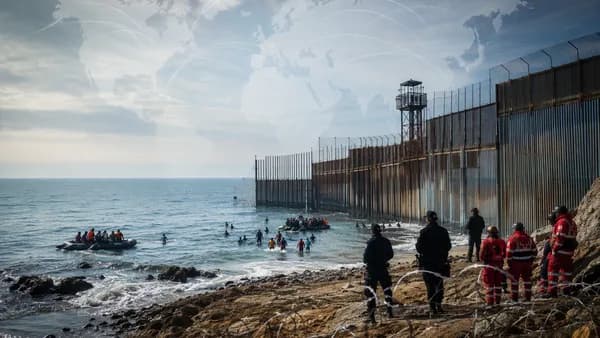
Ceuta Migrants Expose Spain’s Border Fence Weak Spot
Hundreds swam or used inflatables to reach Ceuta, turning the sea around Spain’s border fence into the crisis point.
Jul 30, 20265 min
 Global Trends
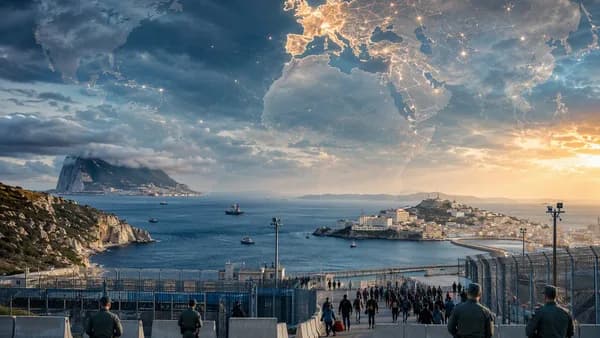
Ceuta Migrant Crossings Shatter Europe's Schengen Trust
Spain says Italy's Schengen suspension over Ceuta is unlawful, exposing a sharp EU split over migration and border trust.
Aug 1, 20268 min
 Technology
Corporate Boards Face AI Liability Under New EU, California Law
The AI regulation wave is no longer about user disclosures. It's a corporate governance earthquake making company boards and senior executives directly liable f
Aug 8, 202610 min
 Technology
Apple's App Store Ban Favors X Over Telegram
Apple abruptly banned Telegram over one CSAM post but hasn’t penalized X for a systemic AI scandal, exposing a power calculus in App Store enforcement far from
Aug 7, 20268 min
 Technology
Ford's Fathom EV Model T Claim Masks Deep Sales Crisis
Ford CEO Jim Farley's pitch of the Fathom EV as a 'Model T moment' reveals a desperate company struggling for relevance as its sales sit at less than half their
Aug 8, 20266 min
 Technology
Voice Actor Blacked Out Playing Geralt's Guttural Groan
Doug Cockle passed out recording a grunt for Geralt of Rivia, embodying his 21-year fight to give an 'emotionless' video game icon a beating heart.
Aug 8, 20267 min
 Global Trends
Brandon Clarke's Autopsy Reveals Heroin, Cocaine Overdose
Brandon Clarke's accidental death was caused by a combination of heroin, cocaine, and prescription medications, the LA County Medical Examiner concluded.
Aug 8, 20264 min
Don't miss the signal
Get our weekly roundup of the stories that matter across tech, fintech, and trading. No noise, just signal.
Free forever. No spam. Unsubscribe anytime.