
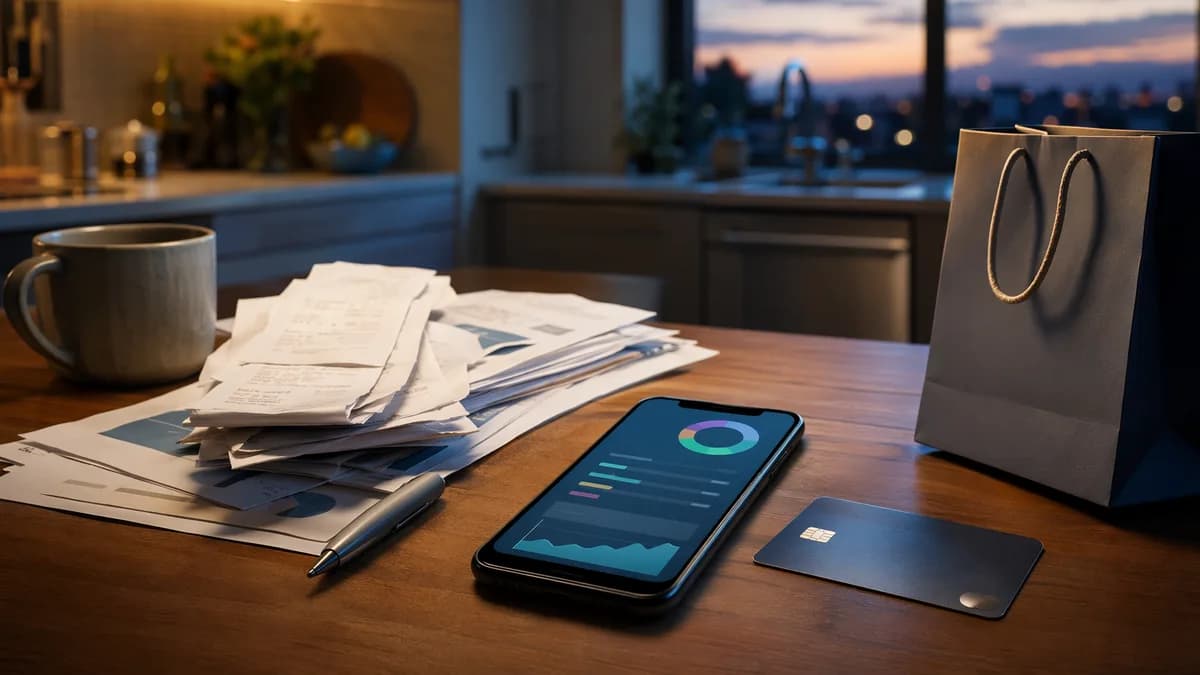
In the May edition of PYMNTS’ Consumer Expectations Index, deferred purchases show up as the real consumer signal: Americans still want to spend, but monthly bills are eating the budget room needed to act.
FintechJune 30, 2026· 8 min read· By XOOMAR Insights Team
Household Bills Force Deferred Purchases Despite Optimism
Updated on June 30, 2026
XOOMAR Intelligence
Analyst Take
72/ 100
2 sources analyzedMedium confidenceTrend10Freshness100Source Trust88Factual Grounding91Signal Cluster20
That is the useful read from PYMNTS Intelligence’s “Sentiment Split: Consumers Feel Hopeful Until the Bills Arrive,” based on a survey of 2,465 U.S. consumers, according to PYMNTS. The problem for merchants, banks and payment providers is not collapsed demand. It is conversion under pressure.
Consumers can feel good about work and their longer-term finances, then still delay a purchase when the bills land. That split creates a strange operating environment. Intent remains alive. Cash flow decides timing.
May PCEI shows deferred purchases are a cash-flow problem, not a demand problem
The PYMNTS finding is sharper than a generic “consumer weakness” story. It says shoppers have not lost the appetite to buy. They have lost room in the monthly budget.
That distinction matters. A lost customer and a delayed customer require different strategies. If demand has vanished, merchants need to rethink product fit, pricing power or category exposure. If demand is delayed, the fight moves to timing, payment terms and trust.
The report says many consumers are waiting for “more financial breathing room” before spending. That is a practical constraint, not a mood collapse. It also means optimism has become less useful as a standalone indicator. A household can believe its finances will improve over three years and still refuse to make a discretionary purchase this month.
XOOMAR analysis: this points to a longer retail funnel. Consumers may browse, compare and postpone rather than walk away completely. The PYMNTS excerpt does not provide cart data, basket-size data or category-level purchase rates, so those should not be treated as reported findings. But the underlying pattern is clear: willingness to buy is no longer enough. The monthly bill cycle is now part of the conversion path.
Since December 2025, struggling households have turned buying conditions sharply lower
The hardest data point in the report is the split between sentiment and spendable capacity.
Consumers struggling to pay bills gave current buying conditions a score of just 34.3, the lowest score among the financial groups surveyed. Their macroeconomic expectations have also slipped 8 points since December 2025, double the decline reported for consumers not living paycheck to paycheck.
Yet the same financially strained group scored its long-term economic outlook at 38.8, more than 4 points above its current buying conditions score. That gap is the story.
| Consumer signal | PYMNTS finding | XOOMAR read |
|---|---|---|
| Current buying conditions for bill-stressed consumers | 34.3 | Purchase ability is weak now |
| Long-term outlook for struggling paycheck-to-paycheck consumers | 38.8 | They still expect improvement |
| Gap between financially secure and struggling consumers | Roughly 21 points | Discretionary access is splitting by household health |
| Macro expectations for struggling consumers | Down 8 points since December 2025 | Pressure is worsening fastest at the bottom |
The roughly 21-point gap between financially secure and financially struggling consumers is the most commercially important divide. PYMNTS says consumers who do not live paycheck to paycheck posted a buying climate score nearly two dozen points higher than consumers struggling with monthly bills.
That means the market is not moving as one block. Financially secure consumers can still act on intent. Struggling consumers are forced to wait.
Monthly bills are pushing flexible purchases into the “later” bucket
Recurring obligations are acting as a gatekeeper. The PYMNTS source does not break down the exact household bills by category, but its point is direct: monthly bills collide with optimism and push purchases out.
Consumers under pressure appear to be sorting spending into three buckets:
- Urgent: purchases that cannot be delayed without immediate consequences.
- Flexible: purchases that are wanted, but can wait.
- Aspirational: larger goals that remain emotionally important, even when near-term action stalls.
XOOMAR analysis: flexible purchases are the most exposed to delay. That likely includes many nonessential categories where timing is discretionary, such as electronics, home goods, apparel, travel, subscriptions and other services. PYMNTS does not name those categories, so this is an inference from the report’s broader cash-flow finding, not a category-specific claim from the survey.
The housing data supplied by BMO shows the same deferral logic at a much larger ticket size. BMO reports that 74% of Americans say owning a home is a major life aspiration, yet only 14% plan to purchase within the next year, down from 17% in 2025. A majority, 51%, are waiting for rates to come down further.
"The American dream of owning a home is still alive and well, even if the market is presenting challenges that require new financial strategies for many to achieve this dream."
That quote from Paul Dilda, Head of U.S. Consumer Strategy at BMO, fits the PYMNTS thesis neatly. Desire survives. Timing breaks.
Banks, merchants and payment providers are seeing the same squeeze from different seats
For merchants, the PYMNTS data says interest may still be present even when sales do not close. That calls for sharper timing and more relevant offers. A shopper who delays is not the same as a shopper who rejects the product.
For banks, the opportunity is more delicate. PYMNTS points to consumer need for help managing uneven cash flow, including clearer budgeting tools and faster access to funds. But pushing more credit at households already struggling to pay bills can turn a conversion problem into a credit-quality problem.
For payment providers, flexible checkout can help bridge the gap between intent and available cash. The source specifically mentions more flexible payment experiences as an opportunity. The catch is transparency. Consumers under bill pressure will punish products that make the next month harder.
| Stakeholder | What PYMNTS supports | Risk if handled badly |
|---|---|---|
| Merchants | Demand may be delayed rather than lost | Mistaking postponement for disinterest |
| Banks | Consumers need budgeting help and access to funds | Extending stress through poor-fit credit |
| Payment providers | Flexible payment experiences can help | Hidden costs can damage trust |
This sits beside other payments problems XOOMAR tracks, but it is not the same issue. Fraud control, covered in Banks Unleash AI Fraud Detection After Payments Vanish, and payment infrastructure stress, covered in Real-Time Payment Liquidity Traps Banks at the Send Button, are separate from the PYMNTS finding. Here, the bottleneck is household cash flow.
By the next billing cycle, affordability timing becomes the growth lever
The most actionable phrase in the PYMNTS excerpt is “financial breathing room.” That is what businesses now have to find.
XOOMAR analysis: affordability timing may matter more than generic optimism. Promotions that land after bills have drained an account may miss the moment. Offers tied to pay cycles, transparent installment plans, rewards, cash-back offers and planning tools for larger purchases all match the problem PYMNTS identifies, as long as they do not encourage households to stretch past their budget.
The BMO housing data adds a cautionary signal. When large purchases become harder, consumers do not always trade down. BMO says 65% of prospective homebuyers expect their first purchase to be their “forever home,” and 58% of non-homeowners say buying a smaller house and later upgrading “makes no sense these days.” Deferral can reshape the purchase itself, not just the date.
That logic can travel across categories. A delayed buyer may return with different expectations, a different budget and a lower tolerance for friction.
Deferred demand can return, but the next purchase has to be earned
The optimistic read is that deferred purchases are still purchases in waiting. PYMNTS says many consumers believe their situation will improve over the next three years, and the report highlights improving confidence in employment.
The tougher read is that businesses cannot bank on intent alone. The gap between financially secure consumers and struggling consumers means rebounds will be uneven. The companies best positioned are likely to be the ones that help households manage trade-offs without exploiting stress.
The evidence to watch is straightforward: whether buying-condition scores for bill-stressed consumers begin closing the roughly 21-point gap, whether the 34.3 score improves, and whether the long-term outlook stays above current buying conditions. If those measures converge through stronger current capacity, deferred purchases could convert. If they diverge further, optimism will remain visible in surveys while spending stays stuck at the checkout.
Disclaimer: This XOOMAR analysis is for informational and educational purposes only. It is not financial, investment, legal, tax, or professional advice. It does not provide buy, sell, hold, price-target, portfolio, or personalized recommendations. Verify information independently and consult qualified professionals before making decisions.
The Bottom Line
- Consumers remain interested in spending, but household bills are delaying purchases.
- Merchants face a conversion problem rather than a full collapse in demand.
- Payment flexibility and timing may matter more as shoppers wait for financial breathing room.
Consumer Spending Signal: Lost Demand vs. Deferred Demand
| Signal | What It Means | Business Response |
|---|---|---|
| Lost demand | Consumers no longer want or need the product | Rethink product fit, pricing power or category exposure |
| Deferred demand | Consumers still want to buy but lack monthly budget room | Focus on timing, payment terms and trust |
Disclaimer: Content on XOOMAR is produced using AI-assisted research, drafting, and verification workflows and is intended for informational and educational purposes only. It does not constitute financial, investment, legal, tax, medical, or professional advice of any kind. All analysis reflects available information at the time of publication and may not be current. Verify information independently and consult qualified professionals before making decisions. Editorial policy

Written by
XOOMAR Insights Team
Research and Editorial Desk
The XOOMAR Insights Team pairs automated research with human editorial judgment. We track hundreds of sources across technology, fintech, trading, SaaS, and cybersecurity, cross-check the facts, and explain what happened, why it matters, and what to watch next. We do not just rewrite headlines. Every article is fact-checked and scored for reliability before it goes live, and we link back to the original sources so you can verify anything yourself.
Explore More Topics
Related Articles
 Fintech
Adyen Soars on Surprise In-Person Spending Rebound
Adyen's payments growth is being driven by a 28% surge in in-person volume as existing clients deepen their reliance on its platform, signaling powerful lock-in
Aug 15, 20267 min
 Fintech
Static Bank Loans Stall 28% of US Middle Market Growth
New data reveals middle market distributors and wholesalers are being strangled by a disconnect: their banks' static credit can't move with their real-time inve
Aug 19, 20267 min
 Fintech
Young Members Say 'Buy Bitcoin' to Struggling Credit Unions
A generational rift is opening inside credit unions as younger members demand crypto services that cautious leadership, worried about security, refuses to provi
Aug 14, 20266 min
 Fintech
Cash App Cuts Crypto's Hurdle To A Single Tap
Cash App has partnered with MoonPay, enabling users to purchase crypto directly from their app balance, which mainstreams digital assets by embedding them in a
Aug 18, 20266 min
 Fintech
X Dangles Cash in Your Feed to Hijack Your Wallet
X is dangling financial incentives like high APY and cashback directly inside the social feed, a risky attempt to turn your scrolling time into transaction time
Aug 18, 20267 min
 Trading
Walmart's Grocery Profits Squeezed as Amazon Takes Bespoke Shoppers
Walmart's huge lead in low-margin groceries drives store traffic, but Amazon is winning the sale of profitable goods like TVs and furniture those same shoppers
Aug 19, 20268 min
 Cybersecurity
U.S. Charges Iran in Multi-Billion Dollar Hacking Heist
U.S. prosecutors charged 17 Iranians with stealing over $3 billion in intellectual property from American universities and companies for Iran's Revolutionary Gu
Aug 19, 20265 min
 Trading
July CPI Prints 3.36%, Eases from June
U.S. inflation, as measured by the Consumer Price Index, eased to 3.36% in July, marking a second consecutive month of cooling after a rapid surge earlier in th
Aug 19, 20266 min
 Fintech
Banks Pour Millions Into AI Fraud Detection That's Still Too Late
A new Plaid study reveals that 47% of firms cannot detect fraud in real time, proving that faster payments have completely outrun traditional security checks.
Aug 19, 20266 min
 Technology
Hyperscaler Bets Millions on Hollow-Core Fiber for AI
Relativity Networks secured a vendor's bet with a $40 million order for its hollow-core fiber, bringing a 30% speed boost for sprawling AI data centers from the
Aug 19, 20264 min
Don't miss the signal
Get our weekly roundup of the stories that matter across tech, fintech, and trading. No noise, just signal.
Free forever. No spam. Unsubscribe anytime.