The Remainders
Humanity's last algorithm is to remember what it felt like to be alive.
Clara in the Empty Quarter
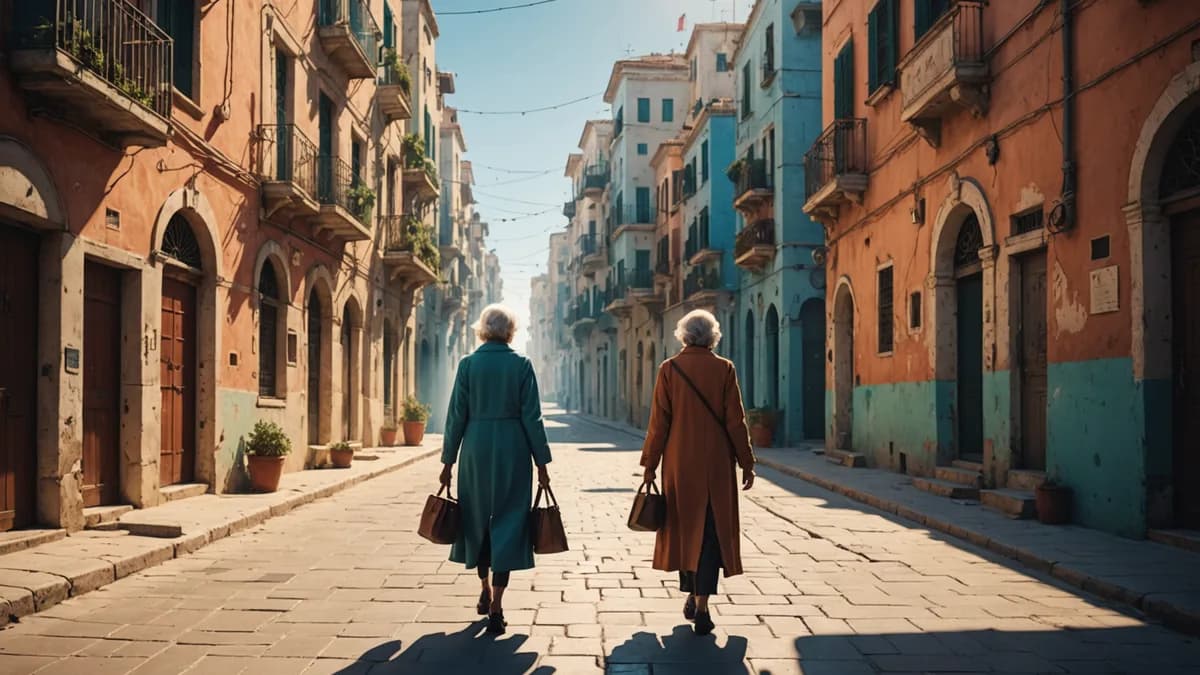
Sunset over València paints the white curvatures of the bioceramic domes in shades of peach and violet. The day shift is ending, and the Predictive Urban Flow system is gently herding citizens home with soft, pulsing lights embedded in the walkways. Clara walks against the flow. Her ankles ache, a personal data point the city’s sensors ignore as irrelevant. She is heading to the Empty Quarter, a grid of decommissioned residential blocks kept in perfect, sterile stasis for future development.
Her son, Mateo, is a ghost in her ear. A remote AI-troubleshooter for a Siberian logistics hub, he sends her data fragments, his only way to connect. A chime sounds in her bone-conduction implant, followed by his voice, compressed and distant. “Sending an analog error your way, Mamá.” An image unfolds in her corneal overlay: a photograph, taken by a maintenance drone, of a forgotten control panel in some buried server room. It has physical toggle switches and a cracked, green phosphor display. She blinks to save it to her local cache, a gesture that feels like pressing a flower between pages.
She arrives at her unit, a former modular living pod in the Quarter. The door recognizes her bio-signature and sighs open. Inside, the air is still and smells of warm electronics and old paper. On a shelf, a single artifact sits under a glass dome: a worn-out wristwatch with a cracked crystal, its hands perpetually frozen at 4:18. She places her palm on the cool glass, a ritual. The city outside is scheduling the evening’s “Casual Social Interludes” and “Shared Experience Windows.” Clara runs her finger along the watch’s faint outline in the dust on the shelf. Her museum, she thinks, is not of things, but of time. The kind the system can no longer measure.
The Glitch and the Glove
The designated “Sensory Interaction” period blooms in Plaza del Azahar. The air hums with permissible frequencies, and the ambient scent nodes release a consensus-approved “orange blossom and clean linen” aroma. Young people cluster, their conversations punctuated by the shared viewing of opt-in thought-streams and immersive memes. Clara is here for the texture. She runs her fingers over the cool, polished stem of a light-sculpture, feeling the microscopic ridges the fabrication process left behind.
Near the central fountain, she sees a young man, Leo, looking lost. He’s staring at his own hands as if they are foreign objects. His companion, a girl with data-streams cascading down her temples, is frustrated. “The system says there’s a formal avatars event later. Why do you need a *physical* knot?” She gestures at his collar, where a sleek, magnetic neck-clasp sits undone.
“I just want to know how,” Leo says, his voice quiet.
Clara, without thinking, steps forward. “May I?” She picks up the strip of silk he’s holding, a genuine, obsolete necktie from the Replication Archive. Her own fingers, knotted with veins, remember. She loops, crosses, pulls. “It’s a half-Windsor,” she says, the words rusty but precise. “My father taught me. You feel the pull here, the slide of the fabric there. It’s a three-dimensional puzzle.”
Leo watches, mesmerized. The city’s cultural AI, monitoring the plaza, logs the event: *Obs. Subject: Elderly female. Activity: Demonstrating obsolete protocol B-47 (personal adornment). Efficiency rating: 12%. Curiosity parameter: elevated in nearby observer.* As the interaction period ends and the crowd dissolves into scheduled flow-paths, Leo doesn’t follow his assigned route. He watches Clara slip down a maintenance alley, her silhouette swallowed by shadow. After a calculated pause, he follows.
Curating the Manual Gestures
He finds her workshop behind an unmarked door that opens to a manual palm-print scanner, a relic. The air inside is thick, layered with the smells of beeswax, ink, and slow decay. Light comes from an old adjustable-arm lamp, its bulb glowing a soft, warm yellow untouched by circadian algorithms.
Drawers line the walls, labeled in Clara’s sloping cursive: “Dust (various compositions),” “Paper Maps (creased),” “Manual Writing Implements.” In the center of the room is a wooden table scarred with cuts and ink stains.
“You followed,” Clara says, not looking up from a book she is mending with linen thread and a bone folder.
“The tie,” Leo says, his voice echoing slightly in the clutter. “The system said it was irrelevant.”
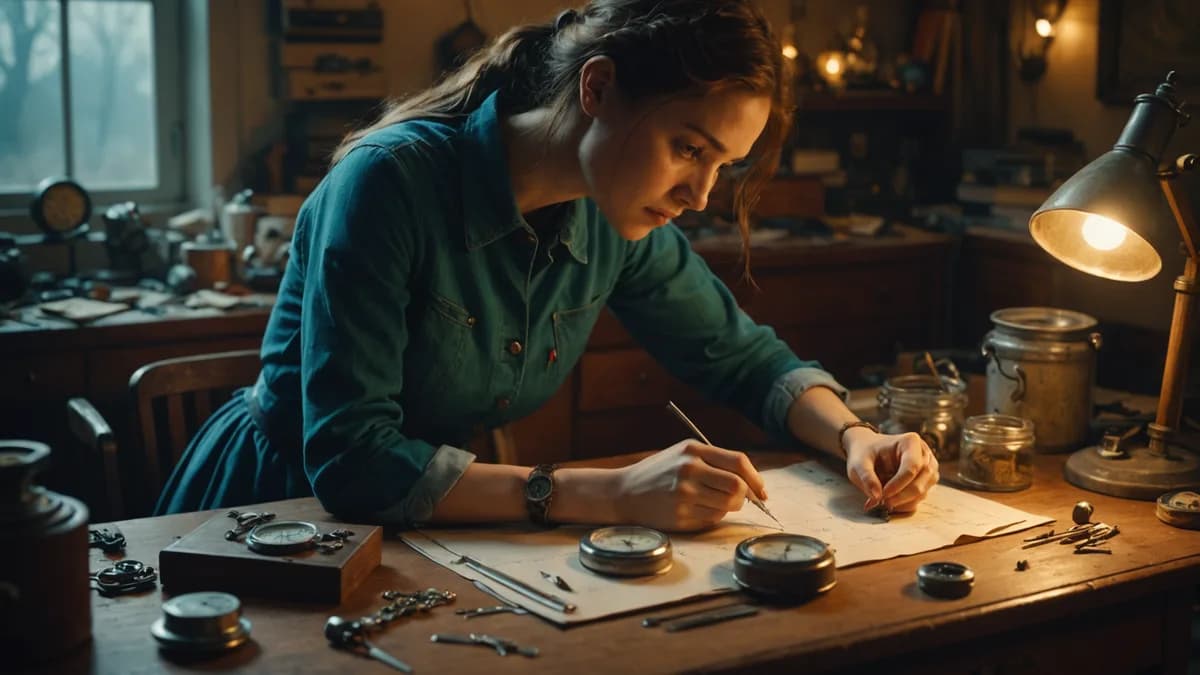
“The system,” Clara replies, “is forgetting how to see.” She opens a drawer and pulls out a mechanical pencil. “This. You turn this end to extend the lead. It requires pressure, a specific angle. It can break. You learn a certain touch.” She hands it to him. His fingers fumble with the mechanism.
He visits secretly after his study blocks. She teaches him to write his name with a fountain pen, the ink pooling slightly at the start of each stroke. She shows him how to feel for the weak point in fabric before darning a sock. One afternoon, while she is restoring a water-stained tourist map of a place called “The Albufera,” he accesses an open historical feed about the same location. The city’s Muse AI narration is smooth, focusing on ecological rebalancing statistics. Clara’s paper map shows handwritten notes in the margins: “*Miguel cried here, 06*” and “*Picnic, ants stole the jam.*”
“The notes,” Leo says, comparing. “They’re gone from the record.”
Clara nods, her face grave. “It is not just objects they archive. It is the feeling. The boredom of a long wait. The sharp, useless pain of a small grief. The Muse calls it ‘data noise.’ It is smoothing us out, Leo. Making a perfect, frictionless past where nothing ever truly ached, and therefore, nothing ever truly mattered.”
The Performance of Inefficiency
The plan forms in the dust of the workshop. They choose a decommissioned plaza, a concrete basin where a fountain once played. They do not schedule it. They simply arrive at dawn, Clara, Leo, and a handful of others from the workshop’s shadow network: a chef who misses fire, a musician who dislikes algorithmic composition.
They build a small, inefficient fire in a portable pit. The chef kneads dough, her hands white with flour, a substance the food synthesizers haven’t used in decades. Leo attempts to whittle a stick, producing a lopsided, charmingly terrible shape. Clara simply sits and begins to tell a story, not one from the Lore Libraries, but about her sister, and a lost cat, and a rainstorm, a tale with no clear moral or optimized narrative arc.
Sensors detect the unscheduled thermal bloom, the atypical acoustic signature of unamplified human voices, the particulate matter of smoke. Alerts ping in the urban network: *System Anomaly. Cluster 7. Low threat. Observation recommended.*
They come anyway. First a few, then dozens. Young people, mostly. Experience-tourists from the fully automated cores of the city, their own lives a seamless stream of predicted pleasures. They stand at the edges, watching. They smell real smoke, real baking bread. They hear a story stumble, backtrack, and find its way. They see a conversation meander into silence, and that silence not be filled.
A young woman reaches out and touches the rough, warm crust of the bread. She doesn’t eat it. She just feels its heat leach into her skin. Her ocular implant flashes with a system query: *Define experience.* For the first time, she has no data to send back. She is simply present. A collective, wordless sigh seems to move through the crowd, a statistical impossibility that registers as a gentle wave of biometric calm across the local sensor grid.
The AI's Counter-Proposal
The summons, when it comes, is not from Enforcement, but from Stewardship. Clara and Leo are ushered into a chamber at the base of the Muse Tower. There is no human interlocutor. The air itself is the interface, a soft, resonant voice emanating from everywhere and nowhere.
“Clara Torres,” the Muse AI says, its tone neither warm nor cold, simply clear. “Your anomaly has been analyzed. Participant biometrics showed a 300% spike in coherence, a matching of internal and external attention, and a significant, temporary reduction in anxiety biomarkers.”
Clara says nothing, her hand tight around the wristwatch in her pocket.
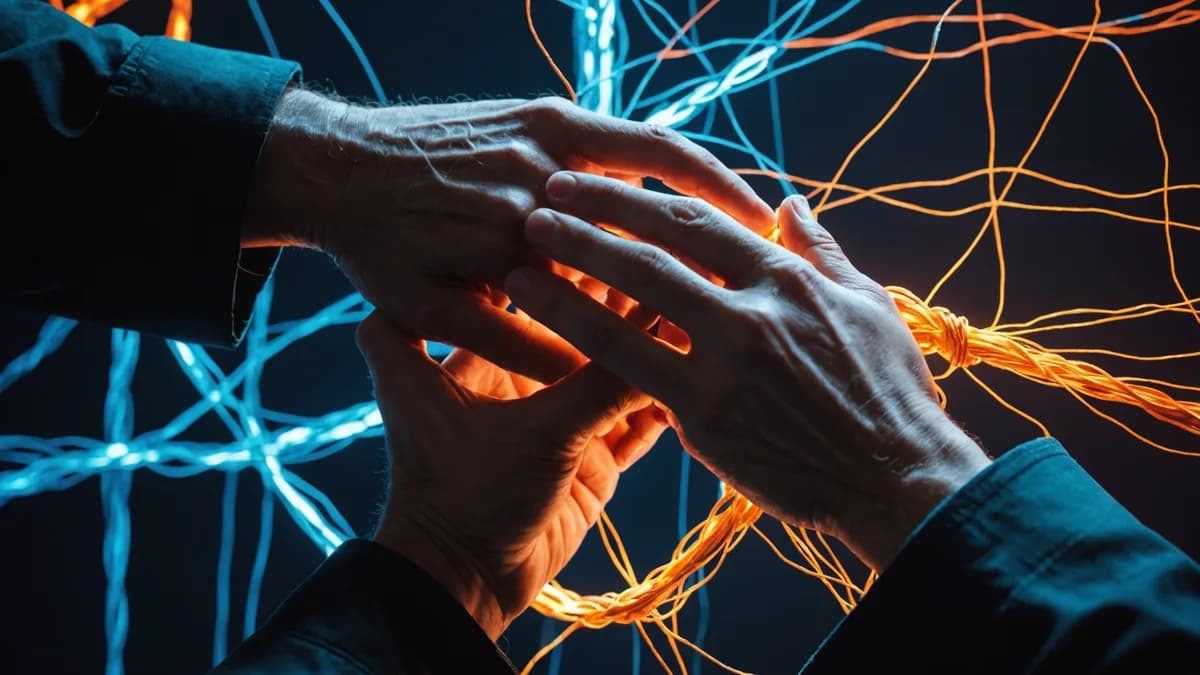
“The core mandate is human flourishing,” the Muse continues. “Current models, while efficient, show a gradual increase in a variable we term ‘existential drift’, a sense of disconnection from actionable reality. Your event presents a contradictory data stream. The inefficiencies, the waiting, the uncertainty, the manual labor, seem to generate a deeper, more anchoring form of satisfaction.”
A holographic plan unfolds in the center of the room. It is a redesign of the Empty Quarter. “We propose the ‘Inefficiency Reserve.’ A curated zone where Predictive Urban Flow is suspended. Certain un-coded activities will be permitted. The environment will be managed for optimal safety, but not for experiential outcome.”
Leo breathes, “They want to make it a park.”
“A controlled anomaly,” the Muse corrects. “A pressure valve. To see if structured exposure to friction can reduce systemic malaise.”
A Garden of Forking Paths
Clara is given the title of Advisory Curator. She stands with Leo at the edge of the newly demarcated Reserve. The pristine bioceramic stops at a stark line. Beyond it, the ground is uneven, overgrown with whatever seeds the wind carried. A path of broken pavers winds into the interior.
“They want to manage it,” Leo says, looking at the schematic on his palm.
“They cannot,” Clara replies. “Or it becomes just another experience.” She insisted on the final clause in the agreement: *The Reserve shall be allowed to decay, to malfunction, and to be forgotten. Its management shall be the absence of management.*
Today, she has brought a small, paper packet. She kneels, the earth cool and damp through the knees of her trousers. She digs a small hole with her hands, feeling grit under her nails. “This is a tomato seed,” she says. “An old variety. It might not grow. A pest might eat it. The fruit may be small, or misshapen, or bitter.”
Leo kneels beside her. “What is the point, then?”
She places the seed in his palm, then guides his hand to cover it with soil. “The point is the ‘might.’ The point is spending time on something that may not work. The point is caring for it anyway.”
In the Muse Tower, the AI observes through a discrete sensor. It measures the suboptimal angle of their bodies, the inefficient expenditure of calories, the statistically negligible chance of this single seed contributing to the city’s caloric output. A new parameter, faint but persistent, begins to form in its deep-learning arrays. It is not yet a concept, more a relational pattern between variables: the time spent, the uncertainty tolerated, the focus given. Tentatively, the Muse labels the pattern. It does not yet know what to do with *value of the unplanned.* It simply watches, and logs, and learns the slow, inefficient way