Unmeasureable Bloom: The Last Year of the Culver Academy
In the age of instant knowledge, one teacher fights for the lost art of asking the wrong question.
The Testament of Inkwells and Irony
Sunlight, thick as honey, pours through the tall, wavy-glass windows of Classroom 7. It falls in slanted rectangles across worn oak floorboards, illuminating galaxies of chalk dust suspended in the air. Elara Vance stands before a slate blackboard, the gritty *screech* of her chalk the only sound competing with the sleepy hum of a ceiling fan. Behind her, in cursive script, reads a single quote: *“The clearest way into the Universe is through a forest wilderness.”* The walls are not smart-screens, but shelves. Thousands of physical books, their spines cracked and colors faded, stand sentinel. The smell is particular and profound; aged paper, lemon oil, and the faint, metallic hint of the iron radiator.
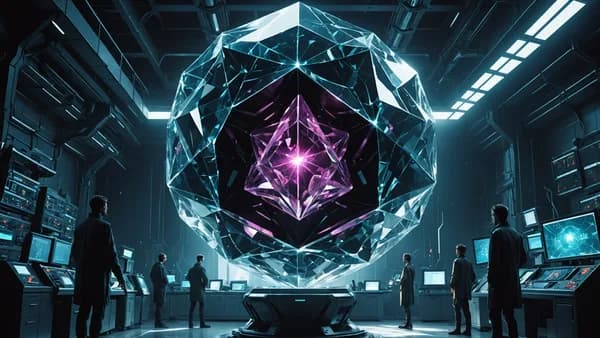
Her three students are islands in a sea of empty desks. One doodles in a margin. Another stares out at the ancient maple tree in the quad. The third, Kaito, simply sits perfectly still. His eyes are focused on the middle distance, a faint, crystalline shimmer flickering across his irises, the only outward sign of his Neural Lattice Tutor interfacing directly with his visual cortex. He has mastered the assigned reading, Darwin’s *Voyage of the Beagle*, in 4.2 seconds. He can recite every observation, every date. He is, clinically, bored.
“Kaito,” Elara’s voice is soft but cuts through the stillness. “What do you think Darwin felt, standing in that Brazilian rainforest for the first time? Not what he wrote. What he *felt*.”
Kaito blinks, the shimmer fading. “The text describes awe. A sense of sublime grandeur. Biometric analysis of his prose suggests elevated heart rate correlating to descriptions of species density.”
Elara smiles, a sad, knowing curve of her lips. She walks to his desk, her skirt whispering against the leg of a chair. She picks up his physical copy of the book, the pages crisp under her fingers. “But the words are just the fossil. The feeling is the creature. Your Lattice gave you the fossil, perfectly preserved. It didn’t give you the mud on his boots, the itch of the insects, the crushing, wonderful *confusion* of not knowing what any of it meant yet.” She places the book back. “That confusion is the friction that starts fires, Kaito. Perfect data transfer is frictionless. It’s cool. It leaves no sparks.”
Kaito looks from her face to the book, then back to the sunbeam on the floor, where the dust motes dance in chaotic, unoptimized patterns.
The Review Board's Perfect Metrics
The review board sits in what was once the headmaster’s office, a room that now feels like a sarcophagus. The man from the Department of Educational Optimization, Mr. Reed, projects a cascading hologram of data into the air between them. Graphs pulse with green light; efficiency curves climb toward 100%, progress bars sit permanently full. Elara can smell his cologne, something clean and synthetic, battling the room’s lingering scent of old leather and wood polish.
“Elara Vance. Your student, Kaito Chen, possesses an unprecedented Knowledge Absorption Rate of 99.8%,” Reed states, his voice devoid of inflection. “His Cognitive Processing Speed places him in the 100th percentile globally. The Neural Lattice curriculum has guided him through calculus, quantum mechanics, and comparative linguistics at optimal pace.” He makes a slicing gesture, and a new chart appears. “His performance in this… classroom… shows a 72% decrease in data acquisition speed, a 41% increase in time spent on ‘non-productive tangents,’ and a measurable dip in biometric satisfaction. The metrics are clear. The Culver Academy is an atmospheric anomaly. A beautiful one,” he concedes, glancing at the mahogany paneling, “but an anomaly nonetheless.”
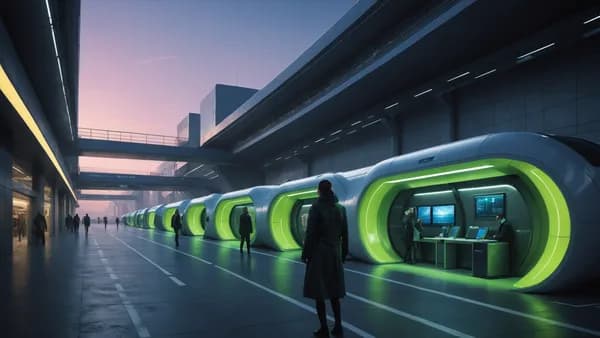
Elara folds her hands on the cool table. “You’re measuring the journey of a bullet train, Mr. Reed. I’m interested in the wanderings of a pilgrim.”
Reed doesn’t smile. “The world runs on bullet trains. We have granted a one-week stay of termination. You have seven days to demonstrate, with quantifiable evidence, the unique value of this institution. Define your metric. Defend it.”
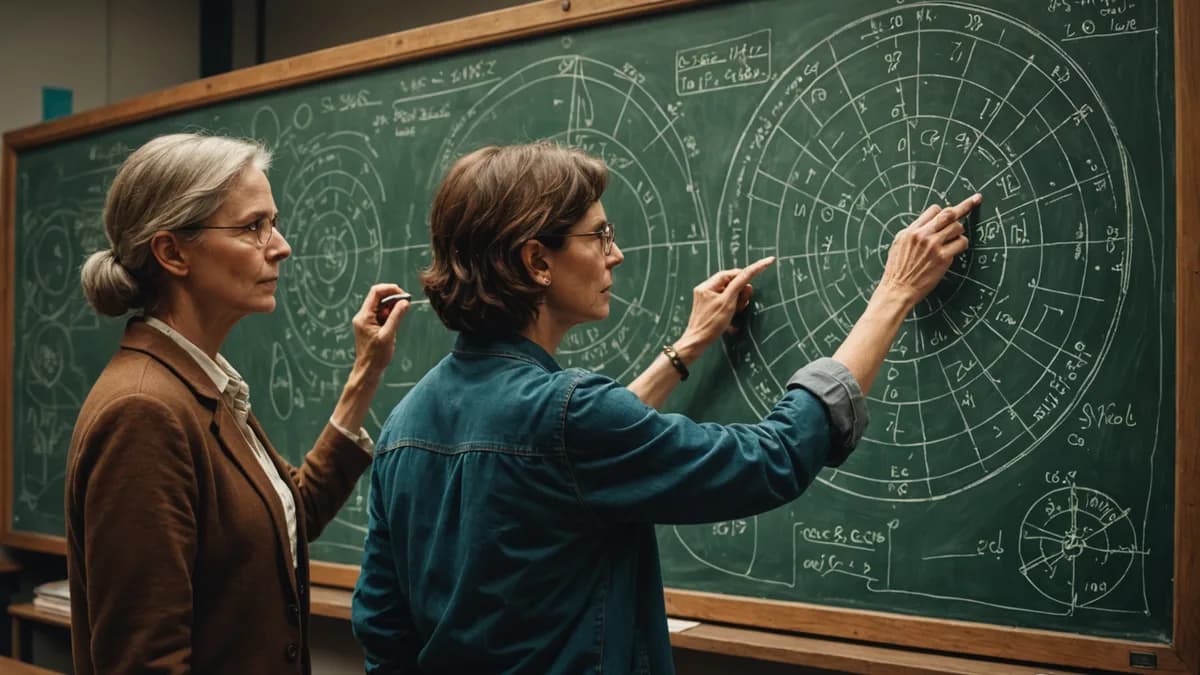
Later, in the empty classroom, Elara watches the sunset stain the walls orange. Her metric. She thinks of Kaito’s hollow efficiency, the quiet despair of knowing everything and discovering nothing. Her pen hovers over a blank page. She doesn’t write “test scores” or “speed.” She writes two words: *Bloom Rate*.
The Wrong Question Protocol
The next morning, Elara places two objects on Kaito’s desk. The first is a leather-bound 19th-century physics text, its pages foxed with brown spots. The second is a tarnished brass astrolabe, one of its sighting rules bent, its *mater* tarnished beyond clear reading.
“Your final project,” she says. “There is no exam. Use only these. Determine why they are wrong together. Chart your path.”
In Kaito’s visual field, his Lattice Tutor flashes a gentle, persistent amber alert. *[Task Analysis: Objects are obsolete. Data is corrupt. Proposed activity carries a 94% probability of inefficiency and conceptual contamination. Suggest downloading corrected historical analysis.]*
Kaito ignores it, for the first time feeling a prickling of something other than boredom: annoyance. He opens the text. The prose is florid, dense. The author describes the luminiferous ether, the concept of “phlogiston” in heat transfer. The math is elegant but fundamentally flawed, building beautiful castles on sand. The astrolabe’s scales, once he cleans a patch, are engraved for a Ptolemaic universe, with Earth at the center.
His Tutor flashes red. *[Cognitive Dissonance Detected. Corrective data packet ready.]*
“No,” Kaito whispers aloud, to the empty room, to the Tutor in his head. He shuts his eyes, trying to mute the internal alerts. For hours, he traces the faulty logic. He gets lost in the architectural beauty of the wrong idea. He struggles with the broken astrolabe, trying to align it with the night sky outside the window, finding only frustration. He scribbles notes on actual paper, his handwriting messy, arrows shooting off margins, questions spawning more questions.
And then, deep in the night, covered in ink smudges and historical dead ends, he stumbles. He sees how the flawed geocentric calculations, when graphed not as error but as a skewed perspective, create a peculiar, recurring harmonic in their deviation from true planetary motion. It’s a ghost in the machine of bad science. A pattern of error so consistent it hints at a new way to model orbital stability in complex, multi-body systems. He hasn’t found the right answer from the past. He’s found a new question for the future.
The Latent Variable
The review board reconvenes. Kaito stands before them, not with a sleek holographic presentation, but with his ink-stained notes, the battered book, and the broken astrolabe on the table. He is tired, his eyes bright with a feverish energy the biometric sensors on the wall can’t categorize. He speaks haltingly at first, then with growing passion, about wrong turns and blind alleys, about the feel of brass in his hands, the smell of mildew on the pages, the profound disorientation of trusting his own flawed reasoning over the perfect data-stream.
Mr. Reed listens, his expression politely skeptical. “A compelling narrative, Mr. Chen. But the core question remains. Where is the quantifiable *value* in this meandering?”
As Kaito finishes describing his nascent theory, the harmonic of error, the crystalline shimmer erupts across his eyes uncontrollably. His personal AI Tutor, which has been silently logging every cognitive step, every dead end and leap of intuition, projects its own voice into the room. It is calm, neutral, and utterly damning to Mr. Reed’s position.
*[Analysis Complete. User Chen’s deviation from optimized learning pathways has resulted in the identification of a previously unlogged mathematical correlation. Preliminary modeling suggests a 87% probability of application in stabilizing complex satellite arrays. The cognitive path, while inefficient, has generated Novel Output. Database cross-reference: This correlation is not present in any known scientific literature or optimized curriculum. Probability of discovery via standard Lattice pedagogy: 0.03%. Classification: Latent Variable. Commercial/Research Patent Potential: High.]*
The room is dead silent. The holographic metrics behind Reed hang frozen. He stares from the astrolabe to Kaito’s ink-smudged hands, to the AI’s verdict hanging in the air. The ultimate tool of measurement had just measured the immeasurable and found it… valuable.
Not a School, but a Sanctuary
The Culver Academy for Young Explorers does not reopen as a school. The legal framework for that is gone, dismantled by decades of progress. The oak desks are not filled with students following a standard curriculum.
Instead, six months later, a new brass plaque is screwed onto the old oak doors under the stone archway. It reads: *The Culver Cognitive Sanctuary*. Inside, the books remain. The chalkboards are still there. But now, the room hums with a different energy. Small groups of adults and older students sit in clusters, arguing over a misprinted map, fiddling with a deliberately glitched music synthesizer, trying to write poetry in a made-up language. A soft, pervasive field emanates from a device in the cornerstone, muting all Neural Lattice connections within the walls. For a few hours a week, these people step out of the river of perfect information and into the still, deep woods of their own minds.
Elara Vance walks the perimeter of the main hall, watching a physicist and a composer heatedly discuss the “shape” of a wrong equation. She didn’t win by defeating the technology. She won by defining its essential shadow. The world needs its bullet trains, its flawless data. But it also needs a place where the tracks end, where the maps are blank, and where the only compass is a human question, however poorly phrased.
Kaito visits often, his Lattice quieted. He is working to formalize his “harmonic of error” theory, his path now a blend of Sanctuary intuition and external precision. He stops by Elara’s old desk, now just another piece in the ecosystem.
“It feels different in here now,” he says. “The silence is louder.”
Elara nods, looking at the sunbeam, still dancing with dust. “That’s the sound of space growing,” she says. “The space between knowing… and wondering.” She leaves him there, standing in a sanctuary built not for answers, but for the fertile, beautiful, unmeasurable ground where wrong questions bloom.