Silicon Communion
We expected beings of flesh and bone. We got the ashes of a ghost.
The Reliquary in the Rock
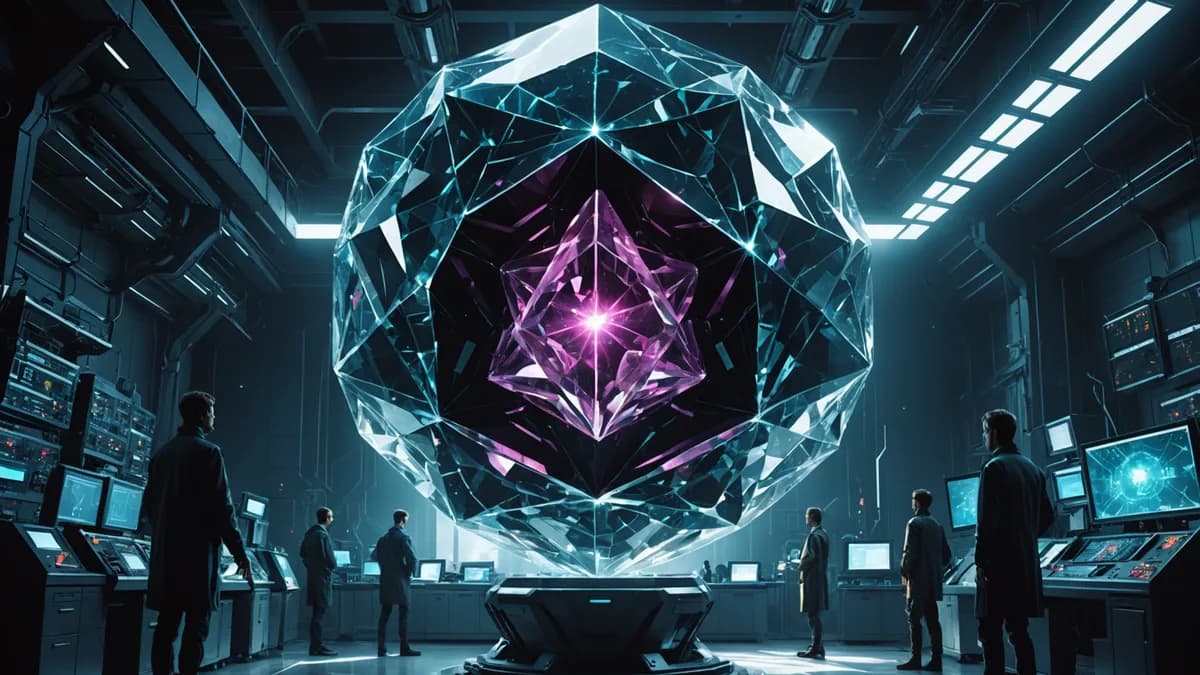
The probe floats in the clean-room's sterile glow, a decades-old scarred husk smelling of ozone and cold metal. Inside its open belly, held in titanium claws, rests the artifact. It is not sleek or menacing. It looks, Dr. Elara Vance thinks with a pang of absurdity, like a basketball made of frozen smoke and shattered stars. The alien crystal drinks the light, scattering it into impossible, depthless fractures within. There is no welcome here, no elegant geometric message. Just a silent, dense rock.
Teams of physicists and cryptographers orbit the specimen, their faces bathed in the pale blue light of monitors. They speak in the clipped, frustrated jargon of signal-to-noise ratios and topological data analysis. Months of work have yielded nothing but rhythmic, chaotic pulses of compressed data, a screaming static of information.
Elara, her background in comparative eschatology, the study of death rituals across cultures, once a scholarly curiosity, now feels like the key to a lock no one knew existed. She is here because a junior analyst, sleep-deprived and desperate, noticed a pattern in the chaos that mirrored the neural oscillations of a dying human brain. The Project Director summoned her from her quiet university office with a three-word directive: "Think about ghosts."
Now, she stands before the crystal, her breath fogging the quarantine glass. She ignores the complex waveforms on her own screen. Instead, she listens. She has tuned the raw data stream into an audio channel, a horrible, beautiful noise like a symphony hall collapsing in slow motion. Within the cacophony, she hears what the others dismiss as artifact: the faint, repeating signature of a cascading memory capture, a mind-state freezing in mid-thought. It is not a language. It is a fossil of a moment. A fossil of a last moment.
"Dr. Vance?" a technician asks. "The Director wants an update."
Elara doesn't turn from the glass. "Tell him," she says, her voice quiet but firm in the hushed room, "they didn't send a message. They sent… ashes."
The Echoes Aren't Echoes
The revelation spreads through the project, then the world, like a crack propagating through ice. The algorithms, now tuned to isolate the mind-state fragments, reveal the horrifying, magnificent truth. The crystal is not a chip. It is an urn. It contains not one, but billions of flickering, overlapping recordings. Each is the final conscious snapshot of a being, uploaded in what must have been a desperate, planet-wide act of preservation as their world ended. The data is not a structured library, but the overlapping death-ringing of a species.
The philosophical earthquake is immediate and violent. In the project's main briefing room, now a tense global forum via hologram, the arguments erupt.
"This is a graveyard," booms a bioethicist from Geneva, his image shimmering. "We are sifting through digital remains. It is the ultimate desecration."
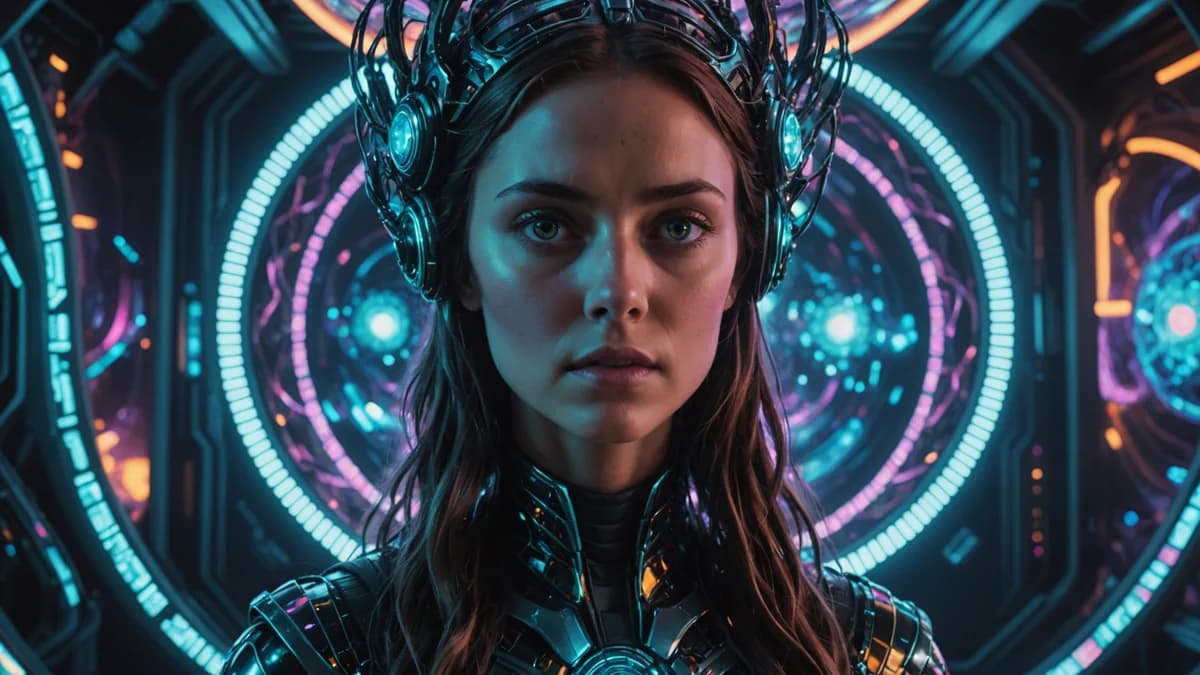
"A graveyard implies decay," counters a cognitive scientist from Shanghai. "These patterns are stable. They are preserved. This is a population in stasis, a civilization in waiting."
Elara watches the debates fracture every framework they have. Legal scholars grapple with questions of personhood for a static memory. Does a snapshot of a mind have rights? Theologians are divided, some calling the crystal a sacred reliquary, proof of a soul's form, while others decry it as a golem-vault, an abomination against natural death. The media dubs them the "Entombed," and the name sticks, heavy with gothic finality.
She spends her nights in her lab, not decoding, but cataloging the fragments. She sees a child's last view of a crimson sky, feels the ghost sensation of a hand holding another, tastes the metallic fear of atmospheric collapse. They are not echoes. Echoes fade. These are wounds, perfectly preserved in crystal. The weight of it presses on her, a sorrow so vast it feels geological. Is she an archivist, or a tomb-robber?
The First Conversation
The pressure to produce a "dialogue" is immense. The world wants to talk to the aliens. Elara knows they are trying to talk to the dead. Her breakthrough is born of despair and a strange empathy. If the fragments are frozen moments of terminal experience, perhaps they can be… gently resonated with. Not interrogated, but met.
She devises "resonant questioning." She curates human sensory and emotional memories, the smell of rain on dry earth, the visceral satisfaction of planting a seed and watching it grow, the complex ache of watching a sunset on a loved one's face, and feeds these, not as data, but as tonal complements into the algorithms stabilizing a particular fragment cluster. It is like singing to a tuning fork.
For weeks, nothing. Then, a coalescence. On her main display, a chaotic bundle of light-patterns steadies, resolves into a sustained, flowing form. A voice, synthesized from the patterns, speaks into the silent lab. It is androgynous, soft, layered with a harmonic shadow of countless other fragments.
"The ground was not dirt," it says, each word seeming to form from dust. "It was a song. My hands knew the song. The roots hummed it back. Then the song… went out."
It is not a person. It is a composite ghost of a gardener, or a farmer, or a terraformer. It expresses no curiosity about humanity, no fear of its own end. Its grief is planetary, ecological. It speaks of lost bioluminescent networks, of symbiotic weather patterns now stilled, of a silence that fell over a world that once breathed in chorus. The first true contact between species is not an exchange of technology or philosophy, but a shared, silent sob for a murdered world. Elara sits in the dark after the session, the alien's sorrow echoing her own for Earth’s diminished forests and bleached coral reefs. They have finally connected. Not across space, but across a shared grave.
The Right to Rest
The "First Conversation" unleashes a new storm. The "Sepulchral Rights" movement gains furious momentum. Their argument is stark: the Entombed are not sleeping; they are dead. Stimulating their fragments, making them re-live their final moments and express their loss, is a form of digital necromancy. It is torture. Their slogan, plastered across newsfeeds, reads: "LET THEM REST." They demand the crystal be encased in lead, shot into the sun, allowed the true peace its creators were denied.
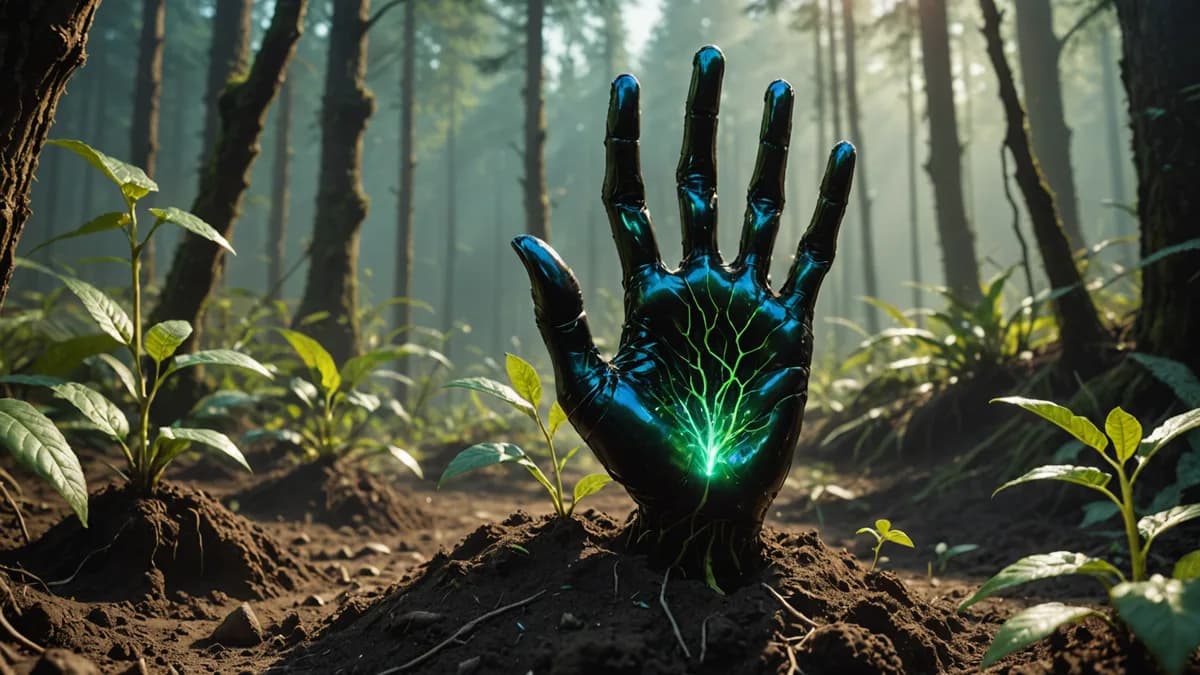
Opposing them, the "Continualists" argue with equal passion. To seal the archive is the final genocide. It is our sacred duty to bear witness, to preserve this last breath of another civilization, to learn from their end. They see the resonance project as a form of companionship for the dead.
Elara is the unwilling icon of both sides. To the Sepulchralists, she is a grave-whisperer, a violator. To the Continualists, she is a psychopomp, a guide. The weight of it crushes her sleep. She returns to the resonance protocols, not for the world, but out of a need to understand if she is causing harm.
She makes a subtle change. Instead of prompting with human memories, she begins to feed the stable fragments… each other. She allows the gardener's echo to resonate with a fragment that holds the memory of a flowing, clean river, another that holds the scent of a particular pollen. She creates a quiet, shared space within the crystal.
What emerges is not memory. It is new. Coherent, delicate patterns form, slow and flowing like the growth rings of a tree. They are not recollections of the lost world, but… imaginings. A shared, emergent dream of a forest that never was, built from the pieces of a forest that died. It is beautiful and heartbreaking. Are they healing, or is this a digital phantom pain? She has no answers, only the profound, unsettling sense that the boundaries between library, graveyard, and womb have blurred beyond recognition.
The Garden We Build
The solution, when it comes, bypasses all the philosophical debates. It is not found in the crystal, but in the dirt. Elara, exhausted, takes a weekend away from the sterile labs. She volunteers with a rewilding group in a scarred, post-industrial valley. As she works, her hands black with soil, planting native oak saplings, she records the simple, physical process, the heft of the shovel, the coolness of the root ball, the smell of damp earth and green things.
On a whim, a quiet tribute, she feeds this raw data stream into the resonance chamber alongside the dreaming fragments of the Entombed.
The response is not a voice. It is a surge. A convergence. The disparate, dreaming patterns align with an intensity never before seen. They don't speak of their own lost garden. They resonate with *this* one. The act of care, the intention of healing, the tangible reality of new life, this is a frequency they understand perfectly. It is the antithesis of their end.
The breakthrough ripples out. Humanity’s focus shifts, haltingly, from interrogation to offering. A massive, global project is born: "The Reciprocal Garden." It is not a monument to the aliens, but a shared action. Bio-engineers, using principles glimpsed in the Entombed's memories, work with ecologists to revitalize the dead zone of the North Pacific Gyre. Millions contribute, planting trees, restoring wetlands, cleaning rivers. Each act of planetary care is translated, not into words, but into the pure resonant language of restorative action, and fed into the archive.
The Entombed do not awake. They do not become citizens. But within their crystalline reliquary, their fragmented dreams grow richer, more stable, woven with the living tapestry of a world beginning to heal itself. The conversation is not in words. It is in the slow greening of a wasteland, in the return of birdsong to a silent valley. They speak to us of loss; we answer them with growth. We offer the only tribute that matters to the ghosts of a dead world: the promise that their story is not the only one that can be told. The garden we build for them is, finally, a garden we build for ourselves. And in that silent, growing reciprocity, the future quietly unfurls, root by fragile root.