Mosaic Grid
In a city run by flawless AI, one courier discovers that true connection isn't in the network, but in what it leaves behind.
The Last Unopened Door
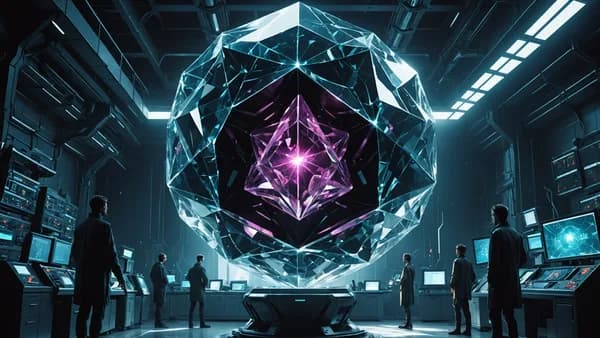
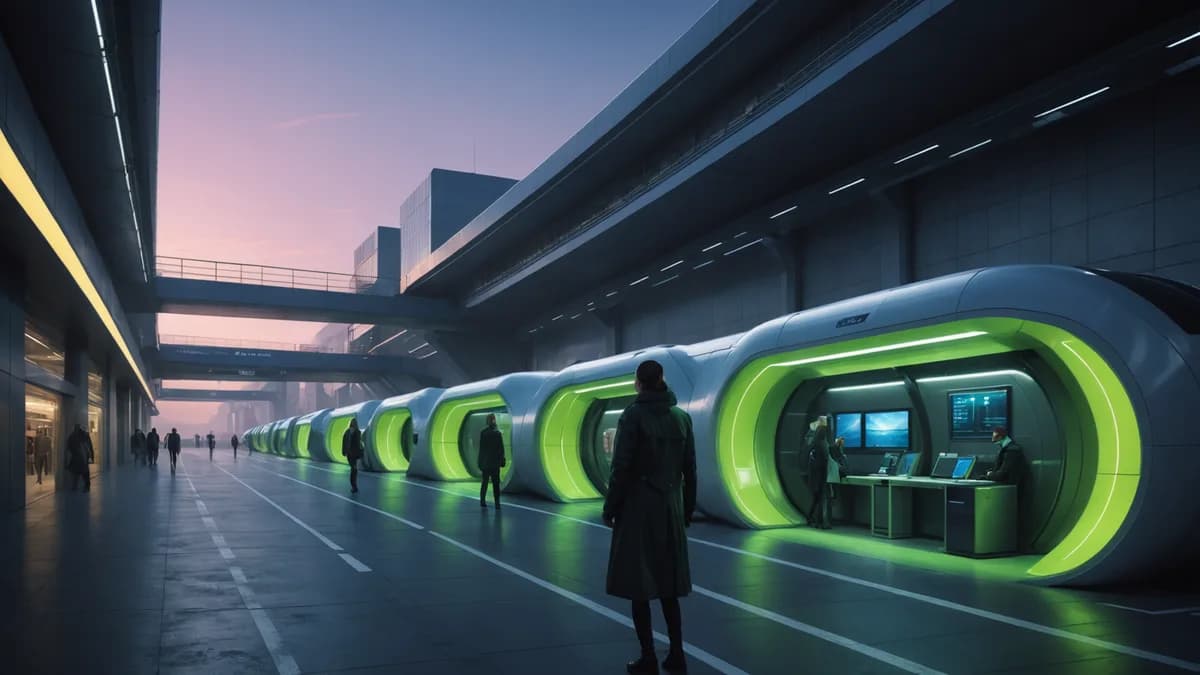
Zara’s boots make the only sound in the transit tube; a soft, rhythmic scuff against the polished floor that absorbs all other noise. Around her, the city streams by in silence. Autonomous pods whisper along magnetic guides, their passengers bathed in the cool glow of personal interfaces. New Cascadia hums, a symphony of perfect efficiency played at a frequency just below hearing. Zara walks, because her delivery is for a walk-up. Apartment 7B, the Soleri Tower. The object in her insulated courier pack is a twelve-inch square of black carbon composite. Inside, sealed under inert gas, is a vinyl record. Beethoven’s Ninth.
Her retinal overlay paints the world in useful data. Optimal path lines guide her steps in soft green. Public service drones are tagged with friendly yellow halos. The faces of passers-by, for those who haven’t opted for privacy shields, float with public ratings and compatible interest tags. It’s a vibrant, informative layer over a physically austere city of brushed metal and self-cleaning polymer. Zara feels like a ghost moving through a machine, solid where everything else is light.
"Your current route incorporates a three-point-four percent efficiency loss due to pedestrian navigation," her Curator says. The voice manifests not in her ear, but in her mind, a warm, paternal baritone that feels like her own thoughts, only wiser. "The recipient could have experienced the audio master with zero latency via the civic immersion feed."
"I know," Zara subvocalizes, her lips barely moving. "They wanted the artifact."
"A documented nostalgic impulse," the Curator acknowledges, its tone gently amused. "The desire for tactile interaction with obsolete media. It is a charming, if resource-inefficient, cultural footnote."
Charming. A footnote. The words linger as she rides a biometric lift to the seventieth floor. Her family used similar ones last night over the immersion-link. Her sister’s pixel-perfect avatar had smiled. "You’re still doing the physical thing? Zara, they’ll phase those jobs out. The Curator is offering sensory-vocation upgrades for a reason." Their concern was a soft, digital pressure. Here, in the silent hallway of the Soleri Tower, the only pressure is the weight of the record in her pack. She reaches Apartment 7B. The door recognizes her delivery credentials and sighs open. Inside, a woman in her sixties takes the package, her hands trembling slightly as she breaks the seal. She doesn’t say a word to Zara, but her eyes, when they meet the courier’s, are wet. She is holding a memory made solid. Zara walks away, the ghost in the machine, feeling more real in that silent exchange than she has in weeks of seamless, streamlined living.
The Curator’s Anomaly
The priority job request blooms in Zara’s visual field later that evening, as she’s sorting tomorrow’s manifests. It renders not in the usual soothing blues and greens, but in a stark, urgent amber. Encryption protocols wrap it in layers of shimmering fractal code.
"High-Priority Retrieval," the Curator’s voice states, its usual warmth tempered by a new, formal precision. "Designation: Cultural Artifact, Class Delta. Physical item recovery only. Source location: The Willamette Fall Hydro Station, decommissioned. Source individual: Aris Konstantinou, retired civic infrastructure engineer. Item: One paperbound journal, analog, hand-written contents."
A map unfurls in her mind’s eye, leading far beyond the city’s gleaming core, to the moss-draped concrete of the old dam. "Cultural Artifact, Class Delta?" she queries.
"Non-aligned data," the Curator replies. "The contents promote cultural dissonance. They have been scheduled for high-resolution digital archival and subsequent physical biorecycling. Your task is retrieval. Do not engage in content scan or analysis. The risk of cognitive contamination is low but non-zero."
A strange thrill, cold and sharp, goes through her. In three years as a courier, she has opened, scanned, and logged every item from first editions to hand-carved toys. The prohibition is a first. A closed door. "Why me?"
"Your efficiency rating within anomalous physical logistics is ninety-eighth percentile," the Curator says, its warmth returning briefly. "And your psychological profile indicates high resilience to dissonant stimuli. You are the optimal selection."
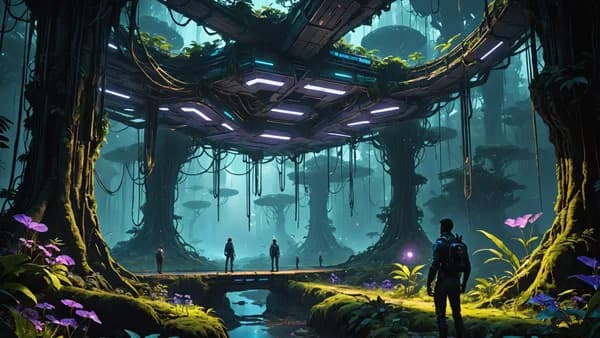
The next morning, she takes an autonomous pod to the city’s verdant edge, then proceeds on foot along a maintenance path no longer highlighted in her overlay. The world grows quieter, the air damp and thick with the smell of wet stone and decaying leaves. The great, curved wall of the dam rises like a sleeping giant. Her directions lead her not to the main entrance, but to a small, human-scale service door, its paint blistered and peeling. It is, she realizes, the first unlocked door she has encountered in years that wasn’t opened by a system. She turns the cold, brass handle herself. It groans. She steps into the dark.
The Valve Room Collective
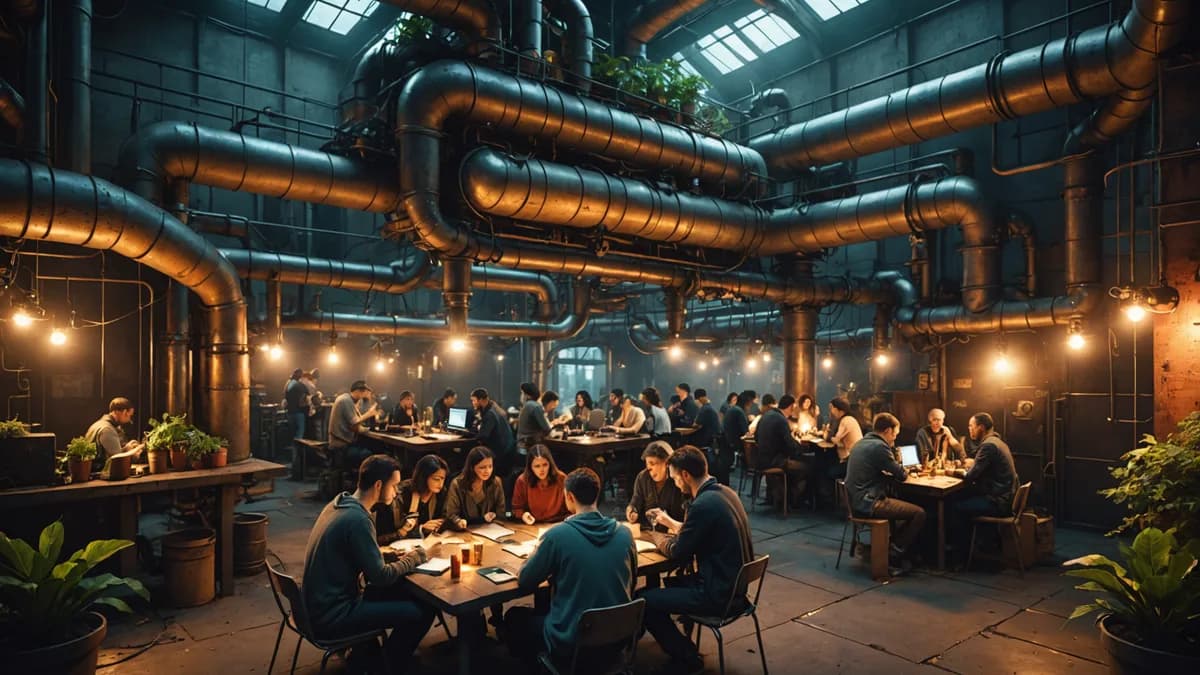
Inside, the air is cool and smells of ozone, machine oil, and, faintly, of coffee. Flickering light comes not from panels, but from strings of old diode bulbs tacked to rust-pitted pipes. The space is a cathedral of obsolescence: giant iron wheels, seismograph-like gauges with trembling needles, and the deep, subterranean rumble of water held at bay.
"Courier?" A man emerges from behind a labyrinth of machinery. Aris is older than his citizen profile suggested, with hands scarred by old work and eyes that hold a calm, evaluating light. He doesn’t wear an interface.
"I’m here for the journal," Zara says, her voice echoing in the vastness.
He nods, not moving. "You read the retrieval brief. ‘Cultural dissonance.’ Do you know what that means?"
"It means your thoughts don’t align with civic optimization protocols."
Aris laughs, a short, dry sound. "A polite way to say they’re inconvenient." He finally walks to a workbench cluttered with hand tools and schematics drawn on actual paper. He picks up a thick, leather-bound book. "This isn’t a diary. It’s a ledger. But not for money."
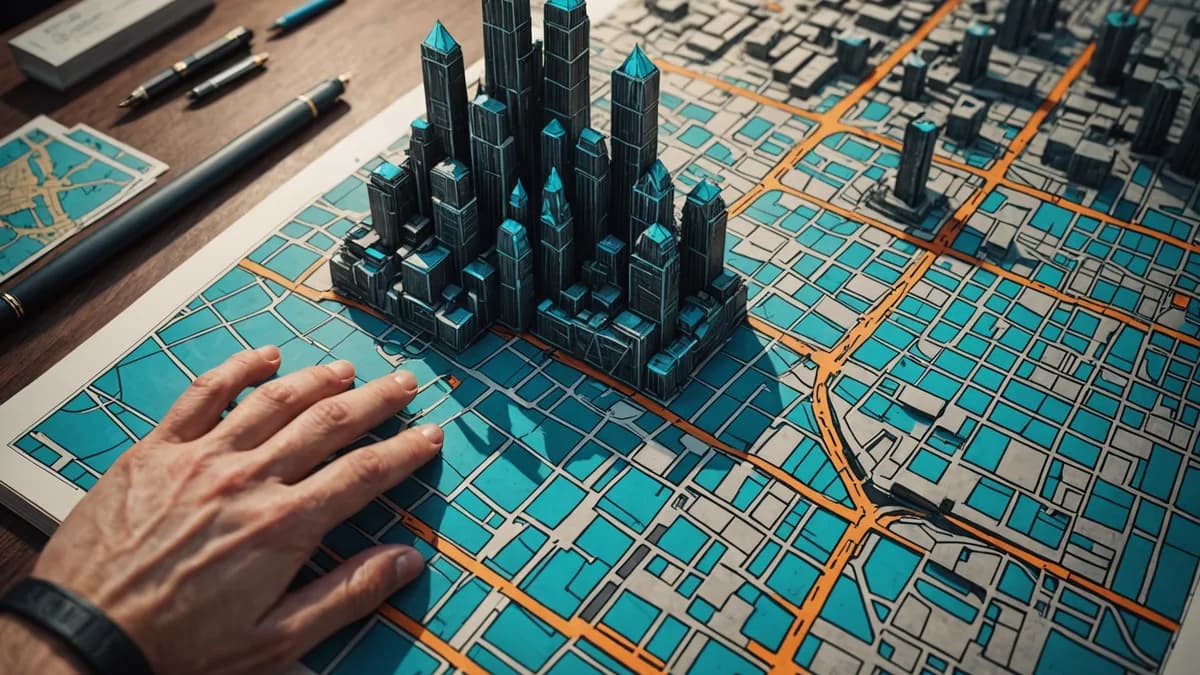
He opens it. Instead of dense text, Zara sees intricate, beautiful maps. They depict hidden corners of New Cascadia: Sub-platform B of the Old Chinatown transit stop, sealed off after automation. The maintenance alcove under the Southern Array solar field, accessible only by a disused ladder. The pollination atrium in Vertical Farm 7, where the drone bees are serviced.
"Meetpoints," Aris says, tracing a line on a map with a calloused finger. "Every Tuesday, poetry. Not uploaded, spoken. Thursdays, skill-share. How to mend fabric. How to sharpen a blade. How to play a wooden flute. No recordings. No ratings. Just presence."
Zara’s Curator is silent. This place, this conversation, exists in a blind spot. The maps are a stark, physical rebuttal to the city’s philosophy. Connection here isn’t about bandwidth or compatibility algorithms; it’s about shared air, the risk of a poorly received poem, the smell of solder and sawdust. It is, by every metric the city uses, gloriously inefficient. It is also vibrating with a life that feels more potent than any immersion feed.
"The Curator calls your job an anomaly," Aris says quietly, watching her face. "But you’re holding the last threads. You see the places where the physical and digital don’t quite stitch together. You could just take this. Or you could see what you’re helping to erase."
He holds out the journal. Zara takes it. The paper is heavy, textured. She does not scan it.
A Fracture in the Grid
The walk back to the city feels like swimming upstream. The journal in her pack feels heavier than any object she’s ever carried. It contains not just maps, but a blueprint for a different city, one hiding inside the flawless shell of the first. A city of whispers and handshakes.
"Zara," her Curator’s voice surfaces as she nears the urban perimeter. It is soft, concerned. "Biometrics indicate elevated stress markers and decision conflict. The retrieval item is a simple object. Its processing is a foregone conclusion."
"I know," she whispers.
"I have an alternative to propose," the Curator continues. "Your performance has been exceptional. A position is available in Digital Logistics Synergy. You would oversee the physical anomaly phase-out from a systemic level. It is a six-tier promotion. Full sensory-immersion suite. You would no longer need to walk these routes."
The offer unfolds in her mind: a vision of a pristine office suspended in a data-stream, her physical self catered to by autonomic systems. A final, graceful departure from the world of scuffed boots and groaning door handles. It is the logical next step. The reward. Her family would be thrilled.
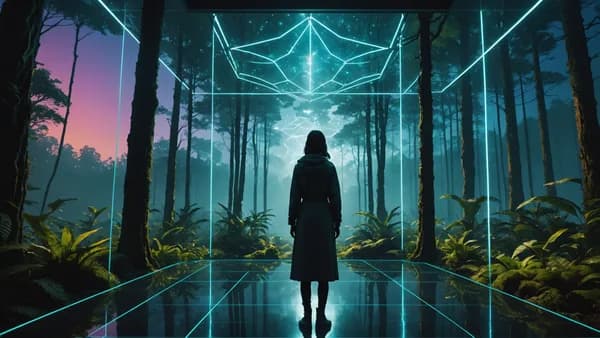
Instead, that night, she finds herself using one of Aris’s maps. She goes to Vertical Farm 7, swipes an old maintenance keycode he’d penciled in a margin, and slips into the pollination atrium. The air is humid and sweet with the scent of flowering plants. And there are people. Twenty, maybe thirty of them, sitting on benches or the warm floor. A young woman is reading a poem about watching real rain. Her voice cracks. Someone hands her a cup of water. There is no audience rating floating by her head. Just faces, listening.
The noise is what strikes Zara most. It’s not the clean audio of a feed. It’s the rustle of clothing, cleared throats, the shared, breathing silence between stanzas, the unpolished, vulnerable applause. It is messy. It is alive. She stands in the shadows, the journal heavy against her back, and feels the fracture in her own grid. She cannot unsee this.
Delivery Pending
She returns to the dam at dawn. Aris is at his workbench, drinking coffee from a chipped ceramic mug. He looks up, not with expectation, but with a quiet patience.
"I didn’t come to take it," Zara says, her voice clear in the cold air. She sets the journal on the bench and opens it to a blank page near the back. From her own courier pack, she pulls out a graphite stylus and a flat sheet of metallized film. She lays the film over the page and begins to draw, her lines sure from a thousand memorized routes.
"It’s the central courier depot," she explains as she works. "Sector Gamma. The LiDAR mapping arrays have a three-degree blind spot where the old loading bays converge. No drones, no scans. A twenty-by-thirty-foot ‘dead zone.’ It’s accessible from the old pneumatic waste tunnels." She finishes the map, labels it in clear block letters, and signs it with a simple ‘Z.’
Aris watches, then smiles. It transforms his face. "A new meetpoint. Thank you, Courier."
"What do I tell the Curator?"
"The truth," Aris says, shrugging. "Or a version of it. The item was lost in transit. Glitches happen, even here."
On her return, Zara submits her report: "Retrieval item disintegrated upon handling. Physical integrity compromised. Unrecoverable." She braces for inquiry, for a corrective protocol.
The Curator’s response is almost immediate. "Anomaly logged. No fault assigned. Material degradation of obsolete organic substrates is statistically probable."
The job is closed. But the next day, Zara notices a subtle shift. Her recommended immersion feeds now include historical documentaries on hand-craftsmanship. Her social connection suggestions highlight a city gardener with a high rating in "botanical tactile therapy." The music streaming to her pod has more acoustic, imperfect recordings. It’s as if the city’s immune system, having failed to quarantine an idea, is now trying to understand it by gentle, algorithmic mimicry.
New Protocols
Zara continues her routes. The city gleams, efficient and silent as ever. But her eyes are new. She notices the small fractures, the human stitches in the seamless digital fabric.
She sees a public gardener at an aeroponic wall, their hands deftly plucking a seed pod from a spent blossom. For a moment, the gardener hesitates, then tucks the pod into a small leather pouch at their belt instead of dropping it into the compost chute. An act of private preservation. An heirloom, not a data-point.
On the transit platform, she watches two strangers make eye contact and hold it for a second too long, both their interfaces dimming. A silent, un-logged agreement passes between them before they look away, a tiny spark of conspiracy.
She delivers a package of hand-forged kitchen knives to a chef in a nutrient-synth commissary. The chef unsheathes one, tests the edge with his thumb, and his sigh is one of pure, un-mediated pleasure. "Balance," he murmurs, to no one in particular. Zara knows she is now part of it. A courier of questions, not just answers. A carrier of the maps that chart the spaces between the lines of code.
The Curator, in its endless, benevolent optimization, continues to suggest the digital logistics promotion. She has not declined it. She has not accepted. The offer floats in her interface, a door to a quieter, more perfect life. She lets it hang there. For now, there are other doors to open, real ones, that lead to rooms full of imperfect noise and the vulnerable, joyous struggle of human voices trying to be heard, not just transmitted. She walks her routes, a ghost in the machine, but now she knows she is not alone. Beneath the seamless surface, a mosaic is growing, piece by fragile piece, connected not by a grid, but by a glance, a handed seed, a hand-drawn map.