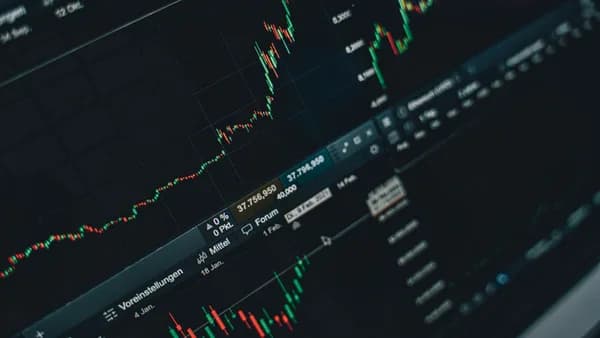
The US Dollar Index is stuck near 99.00, showing investors are deeply skeptical about the power of the Treasury's latest billion-dollar market move, a fresh bond buyback program.
XOOMAR Intelligence
Analyst Take
According to analysts cited by FXStreet, the currency's flat reaction signals the market sees the policy as a temporary fix, not a fundamental shift. Professional opinion is split between those forecasting a cautious US Dollar depreciation and those warning it could quickly snap back higher.
DXY Grinds at 99.00 After Treasury Market Intervention
The US Dollar Index is trading in a tight range just below the 99.00 handle. This consolidation follows a significant, yet pragmatic, policy announcement: the US Treasury will expand its program to buy back long-dated bonds.
Price action shows traders parsing the details. A modest rebound in long-end Treasury yields happened despite the buyback news, which was intended to cool those very borrowing costs. The market's tepid, sideways move is a statement. It suggests the buyback is seen as a tactical operation for market function, not a decisive lever for the US Dollar. This follows a period of pressure on the greenback, which we previously tracked in reports on dollar rallies meeting selling resistance.
"We see this week's developments less as a policy credibility story and more as a soft dollar, pro-risk story if the US Treasury is taking a greater interest in protecting the long end," said analysts at ING.
The Core Argument: Pro-Risk Dollar Dip vs. Inflation-Shock Vulnerability
Analysts are divided on what a contained yield curve means for the Dollar. The disagreement boils down to whether the Treasury’s actions are enough to change the macro picture.
| ING's Pro-Risk Dollar View | DBS's Cautious Dollar Outlook |
|---|---|
| Sees buybacks as a proactive yield containment effort. | Views buybacks as a transient tool with limited impact. |
| Forecasts a "gentler dollar decline" in a pro-risk environment. | Notes DXY has firmed alongside a rebound in yields. |
| Predicts outperformance for commodity and emerging market currencies. | Warns geopolitical sanctions on Iran could reignite inflation and dollar demand. |
ING’s scenario hinges on the premise that controlling the long end of the yield curve creates a favorable backdrop for risk assets, naturally weighing on the US Dollar as capital flows elsewhere, a dynamic recently highlighted by a 7% surge in Silver prices. DBS counters that the tool is too weak against structural forces.
"Without any meaningful change to the US fiscal trajectory (given that the US budget is set by Congress and not the Treasury), tweaks around buybacks can only have a small, transient impact on markets," DBS Group Research analysts observed.
The DBS argument highlights the Treasury's constrained power. Administering buybacks is one thing, but without congressional action on the budget deficit, the underlying fiscal pressure remains. This makes the Dollar vulnerable to external inflation shocks, which a buyback cannot mitigate.
What Consolidation at 99.00 Signals for Currency Markets
The immediate path for DXY is a narrow one. Both ING and DBS project the US Dollar Index will remain bounded around the 99.00 level in the near term. However, the consolidation zone is unstable, waiting for a catalyst to break it.
ING's Take: If official concern keeps long-end yields capped, the Dollar should stay supressed below 99.00, fostering gains for risk-sensitive currencies. This environment would resemble earlier periods of Fed-driven dollar weakness.
DBS's Warning: The calm is precarious. Structural fiscal issues are unchanged. A geopolitical flare-up that spikes energy prices could instantly reignite US yield momentum and propel the Greenback higher, ending the sideways trade.
XOOMAR Analysis: The lack of a strong directional move in the Dollar is itself a verdict. The market is saying the Treasury's operational move does not alter the fundamental equation for the US Dollar, which remains tethered to inflation expectations and the Federal Reserve. The burden of proof now lies with upcoming economic data. If inflation sticks or rises, the buyback will be forgotten, and the Dollar’s underlying strength, powered by the fight against price pressures, could reassert itself. This dynamic echoes the broader battle for capital, a topic we’ve covered in the context of AI giants battling the U.S. Treasury for trillion-dollar debt.
Disclaimer: This XOOMAR analysis is for informational and educational purposes only. It is not financial, investment, legal, tax, or professional advice. It does not provide buy, sell, hold, price-target, portfolio, or personalized recommendations. Verify information independently and consult qualified professionals before making decisions.
The Bottom Line
- The outcome directly impacts currency valuations and international trade costs.
- It influences global investor sentiment toward US economic stability and policy effectiveness.
- It signals potential shifts in inflation control and future Federal Reserve interest rate decisions.
Primary Sources & Disclosures
Disclaimer: Content on XOOMAR is produced using AI-assisted research, drafting, and verification workflows and is intended for informational and educational purposes only. It does not constitute financial, investment, legal, tax, medical, or professional advice of any kind. All analysis reflects available information at the time of publication and may not be current. Verify information independently and consult qualified professionals before making decisions. Editorial policy

Written by
XOOMAR Insights Team
Research and Editorial Desk
The XOOMAR Insights Team pairs automated research with human editorial judgment. We track hundreds of sources across technology, fintech, trading, SaaS, and cybersecurity, cross-check the facts, and explain what happened, why it matters, and what to watch next. We do not just rewrite headlines. Every article is fact-checked and scored for reliability before it goes live, and we link back to the original sources so you can verify anything yourself.