
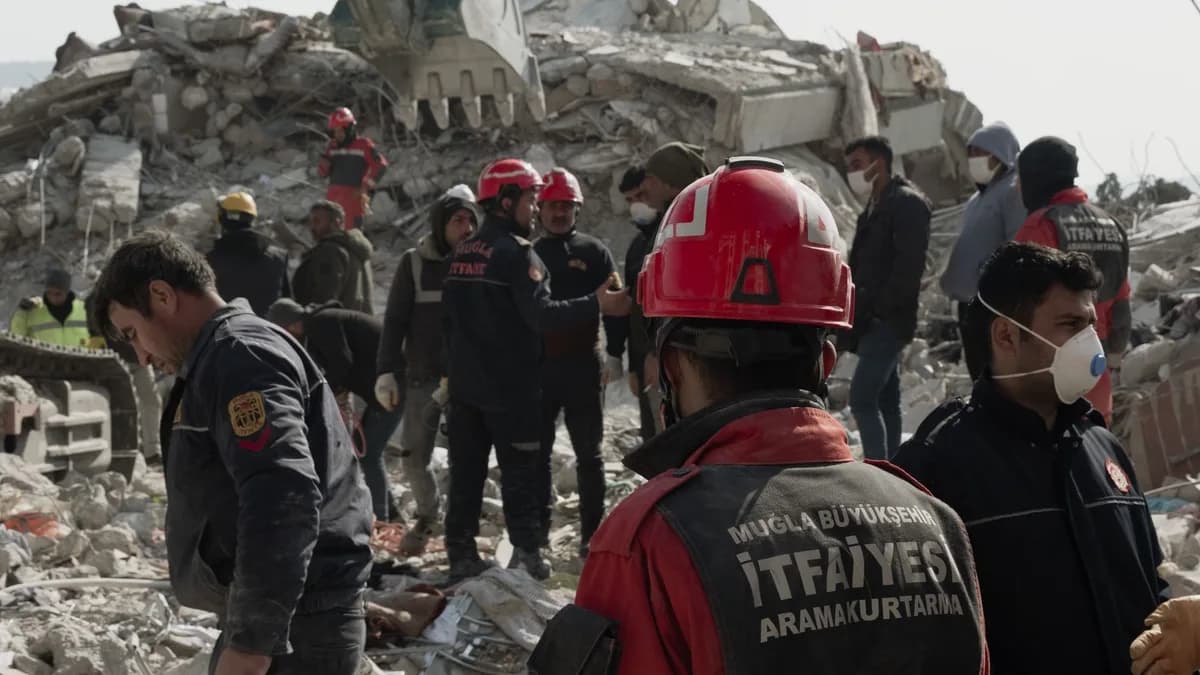
Rescue timelines are shrinking by the hour for teams in Colombia after a magnitude 7.4 earthquake ripped through its western region. The official toll stands at 181 dead, but aggregated local figures suggest the final number may exceed 240, with nearly 200 people still missing and thousands injured, according to BBC World.
Global TrendsAugust 12, 2026· 6 min read· By XOOMAR Insights Team
Colombia Earthquake Death Toll Climbs As Rescuers Race Clock
Updated on August 12, 2026
XOOMAR Intelligence
Analyst Take
68/ 100
4 sources analyzedLow confidenceTrend10Freshness94Source Trust92Factual Grounding94Signal Cluster60
The quake struck at 07:34 local time on Monday, its shallow depth and proximity to major urban centers magnifying its destructive power. In the cities of Cali and Pereira, the damage is catastrophic. This was the most severe seismic event in Colombia this century, as we reported in Powerful 7.4 Quake Collapses Buildings Across Colombia, and the response is now a critical test for the country's new government.
Why Did This Earthquake Cause So Much Damage So Quickly?
A magnitude 7.4 quake is a major seismic event anywhere. But in Colombia, this one's impact was intensified by two key factors that turned strong shaking into structural failure.
First, its shallow depth sent intense energy directly into the populated valleys below. Second, and more critically, the built environment was not ready for it. The source data shows a stark concentration of collapses in specific building types: schools, hospitals, and residential buildings. In Cali, a section of the Gimnasio Calima school collapsed, killing four children. Several upper floors of a city hospital dedicated to paediatric care came down. In Manizales, 60 buildings partially or totally collapsed.
XOOMAR Analysis: While the sources do not specify construction materials, the pattern of localized, heavy damage in certain buildings points to vulnerabilities in older structures or those not built to modern seismic codes. The collapse of a school and hospital wings, critical infrastructure meant to be resilient, suggests enforcement gaps.
The human cost is a direct reflection of this structural vulnerability. President Abelardo de la Espriella reported over 1,100 homes destroyed and more than 8,000 damaged. The sheer volume of damaged housing explains why thousands spent Monday night outdoors, either homeless or terrified of aftershocks.
How Are Aftershocks Complicating The Rescue Mission?
The initial quake was only the opening act. Colombia's geological service has recorded more than 70 aftershocks since Monday, including two of magnitude 3.6 early Tuesday.
For search teams, each tremor is a dual threat. It further destabilizes rubble where survivors might be trapped, and it forces rescuers to evacuate worksites for their own safety, causing critical delays. The psychological strain on a traumatized population is immense, feeding fear and slowing the return to any normalcy.
“We’re all in shock. It was really awful,” a resident of Pereira’s Parque Industrial neighborhood told BBC Mundo.
Authorities are acutely aware of the danger. Jorge Eduardo Rojas, mayor of Manizales, explicitly cautioned the public against sharing unverified social media posts, as they "may contain false or unverified information... which could cause greater concern and alarm."
What Makes Rescuing People From This Rubble So Difficult?
The operational picture is one of extreme urgency mixed with perilous complexity. In Cali, Mayor Alejandro Eder said 239 people remained trapped amid 45 fully or partially collapsed buildings. The city, home to 2.2 million, has set up a unified command post to coordinate the effort.
Rescue is a mix of high-stakes triage and sheer physical labor. Teams prioritize buildings where signs of life, sounds, detected movement, are reported. The composition of the rubble itself is a key obstacle. While the sources don't detail materials, collapses involving heavy concrete beams, as seen in rescue videos, require careful shoring to prevent secondary collapses.
The process is grueling but sometimes triumphant. Firefighters in Cali pulled a 35-year-old man from wreckage nearly 24 hours after the quake. In another 16-hour effort, a 31-year-old woman named Diana Troncoso was saved. Her father called it "a miracle."
Volunteers vs. Professionals: The scale of destruction has mobilized massive civilian response. Footage from Pereira shows hundreds of volunteers working alongside official crews. The city even implemented a car-free day to facilitate movement. However, the threat of looting has prompted local officials like Antonio Cadavid in Calima to impose a curfew from 20:00 to 06:00.
Why Is The International Response So Focused On Colombia Right Now?
Beyond the immediate human tragedy, this earthquake presents the first major crisis for Colombia's new political leadership. President Abelardo de la Espriella was sworn in just days before the quake. His declaration of a state of emergency and direct oversight of the response is being closely watched, both domestically and internationally.
The global reaction has been swift. The Donald Trump administration announced a donation of $15.5m. The UN Secretary-General António Guterres expressed solidarity, and offers of help came from Ecuador, Brazil, El Salvador, and Venezuela. Spain reported 164 of its citizens missing.
XOOMAR Analysis: The political dimension is unavoidable. As covered in our analysis of Dead Utility Tower Caused California's Catastrophic Eaton Fire, disaster response often exposes pre-existing systemic weaknesses. Here, the effectiveness of coordination between new national leadership and established local officials, like Cali's Mayor Eder, will be a telling indicator of governmental cohesion.
What Happens When The 72-Hour ‘Golden Window’ Closes?
The clock is the ultimate enemy. The first 72 hours after a quake are considered critical for finding survivors alive. As of Tuesday, rescuers were already working against timelines stretching past 24 and 36 hours for many trapped individuals.
The challenges escalate exponentially with time:
- Medical Emergencies: Crush injuries can lead to fatal kidney failure without treatment.
- Dehydration and Exposure: Those trapped are vulnerable to the elements.
- Structural Instability: Ongoing aftershocks degrade rubble piles, closing spaces.
The official count of almost 200 missing underscores the race ahead. Each successful extraction, like the ones in Cali, provides a surge of hope, but the logistical reality is daunting. The destruction of a major hospital in Cali itself cripples the local medical system needed to treat the nearly 2,600 injured.
Activity to Watch: The transition from search-and-rescue to recovery and rebuilding. The Espriella administration's management of over 9,000 destroyed or damaged homes and the relocation of thousands of displaced citizens will be a long-term test of governance and planning. The international aid pledges will need to translate into efficient, on-the-ground support, free from the political interference that has hampered responses in other regional crises.
Impact Analysis
- The earthquake is the most severe seismic event in Colombia this century, testing the country's new government and emergency response systems.
- Critical infrastructure failures, including the collapse of a school and hospital sections, reveal vulnerabilities in buildings not constructed to modern seismic codes.
- With nearly 200 people still missing and rescue timelines shrinking, the human cost and recovery effort will have long-term social and economic impacts.
Colombia Earthquake Casualty Estimates
Official Death Toll
people181
Projected Death Toll
people240
Missing
people200
Injured
people1,000
Sources

Written by
XOOMAR Insights Team
Research and Editorial Desk
The XOOMAR Insights Team pairs automated research with human editorial judgment. We track hundreds of sources across technology, fintech, trading, SaaS, and cybersecurity, cross-check the facts, and explain what happened, why it matters, and what to watch next. We do not just rewrite headlines. Every article is fact-checked and scored for reliability before it goes live, and we link back to the original sources so you can verify anything yourself.
Explore More Topics
Related Articles
 Global Trends
Brother's Vigil Haunts Colombia Quake Rubble Rescue
A brother's agonizing wait at the rubble of a collapsed apartment building captures the human toll as rescuers race to find survivors of Colombia's devastating
Aug 11, 20265 min
 Global Trends
Powerful 7.4 Quake Collapses Buildings Across Colombia
A 7.4 magnitude earthquake struck western Colombia, collapsing buildings in Cali and damaging regional airports while violent shaking was felt in the capital, B
Aug 10, 20264 min
 Global Trends
Grandmother's FGM Betrayal Forces Colombia Landmark Ban
A mother's fight for justice after her own grandmother subjected her baby to female genital mutilation led directly to Colombia passing a major new law banning
Aug 5, 20267 min
 Global Trends
BBC Grills Infantino in Colombia As FIFA Resignation Calls Mount
FIFA President Gianni Infantino was publicly asked by the BBC if he would resign as UEFA and other major figures demand his exit over a failed $40 million tourn
Aug 8, 20264 min
 Global Trends
Nigerian Army Frees 33 Hostages in Gunfight Rescue
Nigerian troops rescued all 33 people abducted just one day earlier in a firefight, forcing the kidnappers to flee into the bush.
Aug 9, 20264 min
 Global Trends
Secret Service Decoy Lures Assassins Away From Trump
The Secret Service protects presidents through a constant, high-stakes shell game of decoy limousines, fake motorcades, and secret aircraft swaps designed to ma
Aug 12, 20267 min
 Technology
Stop Letting AI Design Flyers That Scare Clients Off
A guide to using AI as a supplier for raw design components, rather than a designer, to create trustworthy flyers and avoid the generic, fake look that erodes c
Aug 12, 20267 min
 Technology
AI Brings Back Software Factories to Launch Your Apps
AI is reviving the concept of software factories, using automated systems to turn prototypes into shippable products. This shifts a developer's core job from wr
Aug 12, 20265 min
 Technology
Sonos Fires Direct Shot at Apple AirPods With Ace Ultra Headphones
Sonos is preparing a flagship 'Ace Ultra' headphone, revealed in FCC filings, to attack giants like Apple and Sony just two years after its first headphone laun
Aug 11, 20266 min
 Trading
Why China's Yuan Is Stuck in Glue as Fed Tightens
The Chinese yuan is frozen in an extreme trading range, a direct result of the collision between Federal Reserve hawkishness and Beijing's economic stimulus eff
Aug 11, 20268 min
Don't miss the signal
Get our weekly roundup of the stories that matter across tech, fintech, and trading. No noise, just signal.
Free forever. No spam. Unsubscribe anytime.