Forty-three deaths in the Genoa bridge disaster have now produced a 12-year prison sentence for Giovanni Castellucci, the former head of Italy’s motorway operator, after a court ruled in the long-running case over the 2018 Morandi bridge collapse.
XOOMAR Intelligence
Analyst Take
The sentence against Giovanni Castellucci, former chief of Autostrade per l’Italia, was handed down in Genoa and came in below what prosecutors had sought, according to BBC World. Another senior motorway official, Michele Donferri Mitelli, received 11 years in jail.
Genoa court gives Giovanni Castellucci 12 years over Genoa bridge disaster
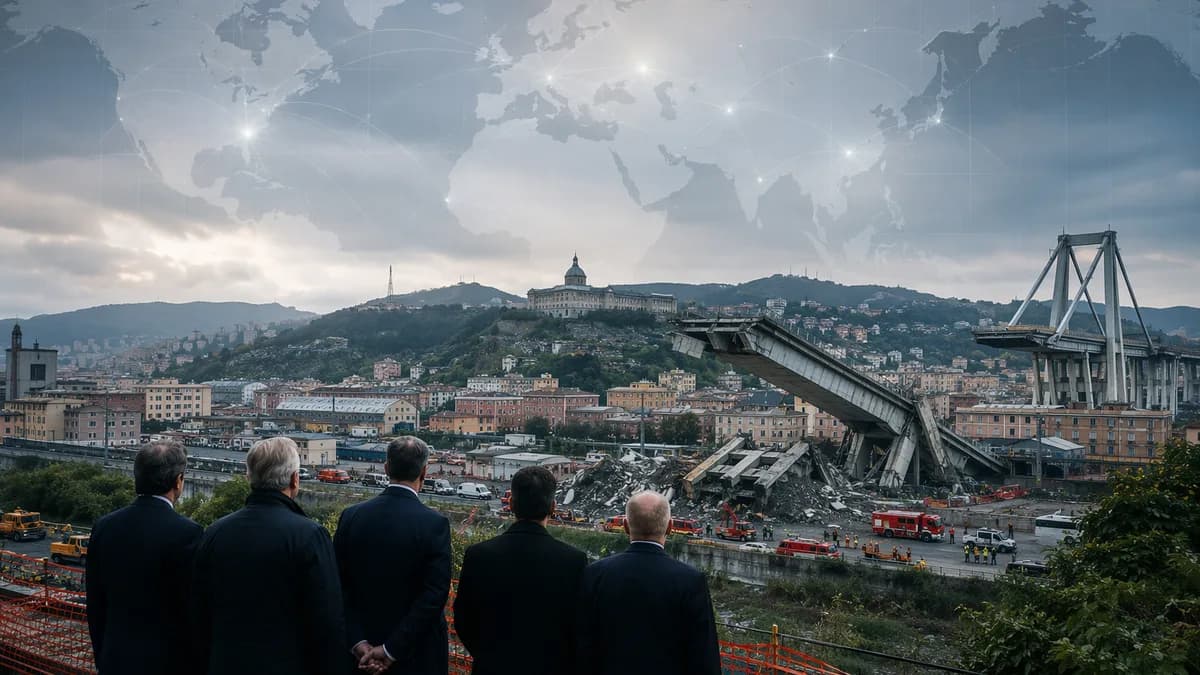
The ruling targets one of Italy’s most traumatic infrastructure failures: the August 14, 2018 collapse of the Morandi bridge, which sent cars and lorries plunging from a motorway bridge running through Genoa during a rainstorm at the height of the holiday season.
Castellucci was one of 57 defendants on trial. The case included former executives, engineers and transport ministry officials, according to additional reporting from AP and CNN. The most serious charges cited in those reports included multiple manslaughter, criminal negligence and negligent disaster.
A quick read of the main sentences confirmed so far:
| Person | Role described in source reporting | Sentence |
|---|---|---|
| Giovanni Castellucci | Former head of Autostrade per l’Italia | 12 years |
| Michele Donferri Mitelli | Senior motorway official | 11 years |
Castellucci is already serving a six-year prison term for a 2013 road disaster, the BBC reported. CNN, citing Reuters, said he was not in court to hear the verdict.
The sentence was several years below the prosecution demand. AFP reporting carried by The Local said prosecutors had sought 18 years for Castellucci. AP reported that prosecutors had demanded combined sentences totaling nearly 400 years across defendants.
For families of the victims, the verdict landed after years of waiting.
Emmanuel Diaz, whose brother Henry died in the bridge collapse, told Italian TV he was “very satisfied” with the verdict.
The Genoa bridge disaster is still moving through the legal system, not ending with Thursday’s judgment. CNN reported that under Italy’s legal process, a first-instance ruling can be appealed at least twice.
Morandi bridge verdict reopens anger over Italy's motorway safety failures
The Morandi bridge collapse became a national scandal because it turned a question of maintenance into a public reckoning over who was responsible for keeping critical infrastructure safe.
AP reported that a 200-meter section of the bridge gave way on the morning of August 14, 2018, during a rainstorm. CNN reported that a 50-meter-high section collapsed while as many as 35 vehicles were on it, sending them onto warehouses and a riverbed below.
That timing sharpened the shock. The collapse came just before Ferragosto, the August holiday period when millions of Italians travel. Images of the severed bridge spread globally.
Prosecutors argued that years of inadequate maintenance, ignored warning signs and delayed safety work contributed to the collapse. CNN reported that the prosecution alleged vital work was postponed while profits continued to be generated and distributed.
Defense lawyers rejected that theory. They argued the disaster stemmed from an original design defect in the bridge’s stay cable number nine, the cable that failed, and that no maintenance program could have prevented the tragedy.
Those competing explanations matter because they split the case into two very different narratives:
| Prosecution theory | Defense theory |
|---|---|
| Maintenance failures, ignored warnings and delayed safety work contributed to collapse | Original design defect caused the failure |
| Responsibility tied to operators, engineers and oversight | Maintenance would not have prevented the disaster |
AP reported that the trial spanned more than 280 hearings over four years. That scale explains why the verdict reads as more than a routine corporate negligence case. It was a test of whether criminal responsibility could be attached to a disaster involving operating companies, engineering specialists and public officials.
The current Autostrade CEO, Arrigo Giana, issued an apology in an open letter before the verdict period.
“I wish to apologize to the victims’ families, to the people of Genoa, and to all Italians for the suffering caused by the tragic Morandi disaster, fully aware that our gesture can never erase their pain,” Giana wrote, according to CNN.
XOOMAR analysis: the ruling puts management conduct, inspection culture and delayed maintenance at the center of the Genoa bridge disaster. The court has not just punished one executive. It has treated infrastructure failure as a chain of decisions, not a freak accident.
Families of the Genoa victims now face appeals and a longer fight for closure
The verdict is a major accountability moment, but it is not the final legal word. Appeals are expected, and CNN’s reporting that first-instance rulings can be appealed at least twice means families may face more years before sentences become final.
That matters for victims’ relatives who have pushed for recognition that the collapse was not simply bad luck. AP quoted Raffaele Caruso, a lawyer representing victims, saying families wanted acknowledgment “that this did not happen by chance, but because of serious failures in maintenance.”
Autostrade and its subsidiary had already reached a corporate liability agreement earlier in the proceedings, paying roughly 30 million euros ($34 million) in financial penalties, according to AP. That deal spared the companies from being tried as corporate defendants, while individuals remained in the dock.
The unresolved questions now sit in the appeals process and in the broader response from operators and government. Prosecutors, defendants and victims’ families will all be watching how the written reasoning explains the court’s view of maintenance failures, technical warnings and management responsibility.
For readers tracking global legal accountability cases, XOOMAR has also covered courts and public institutions in Court Sinks Jayson Gillham Discrimination Case Over Gaza and media legacy in David Willey Dies at 93 After Decoding Five Popes for BBC. The Genoa case stands apart because its core question is brutally physical: who is criminally responsible when public infrastructure collapses and kills 43 people?
The next signal will come from the appeals and from any official response to the verdict. If the court’s reasoning strongly backs the maintenance-failure theory, the Genoa bridge disaster could intensify scrutiny on aging bridges, tunnels and highways across Italy. If appeals narrow that finding, the fight over accountability will stretch even longer.
Impact Analysis
- The ruling marks a major legal reckoning for the 2018 Morandi bridge collapse that killed 43 people.
- The case highlights accountability questions around infrastructure maintenance and oversight in Italy.
- The sentences may influence how governments and operators manage aging transport networks.
Key Sentences in the Genoa Bridge Disaster Case
| Person | Role | Sentence |
|---|---|---|
| Giovanni Castellucci | Former head of Autostrade per l’Italia | 12 years |
| Michele Donferri Mitelli | Senior motorway official | 11 years |
Prison Sentences Confirmed So Far
Primary Sources & Disclosures

Written by
XOOMAR Insights Team
Research and Editorial Desk
The XOOMAR Insights Team pairs automated research with human editorial judgment. We track hundreds of sources across technology, fintech, trading, SaaS, and cybersecurity, cross-check the facts, and explain what happened, why it matters, and what to watch next. We do not just rewrite headlines. Every article is fact-checked and scored for reliability before it goes live, and we link back to the original sources so you can verify anything yourself.