
Iraq corruption arrests now sit at the center of Baghdad’s power struggle, not because seven officials were detained, but because five of them were members of Parliament whose immunity had been lifted. That detail turns an anti-graft operation into a direct test of whether Iraq’s state institutions can reach into protected political networks without the case collapsing under factional pressure.
Global TrendsJune 28, 2026· 12 min read· By XOOMAR Insights Team
Iraq Corruption Arrests Breach Baghdad’s Green Zone
Updated on June 28, 2026
XOOMAR Intelligence
Analyst Take
57/ 100
4 sources analyzedLow confidenceTrend10Freshness98Source Trust85Factual Grounding91Signal Cluster20
Several Iraqi political officials were arrested early Sunday on corruption charges, Iraq’s state-run Iraqi News Agency reported, according to ABC International. The arrests were based on statements made by former Deputy Minister of Oil Adnan al-Jumaili, who was arrested last month, and they “included members of Parliament whose immunity had been lifted.”
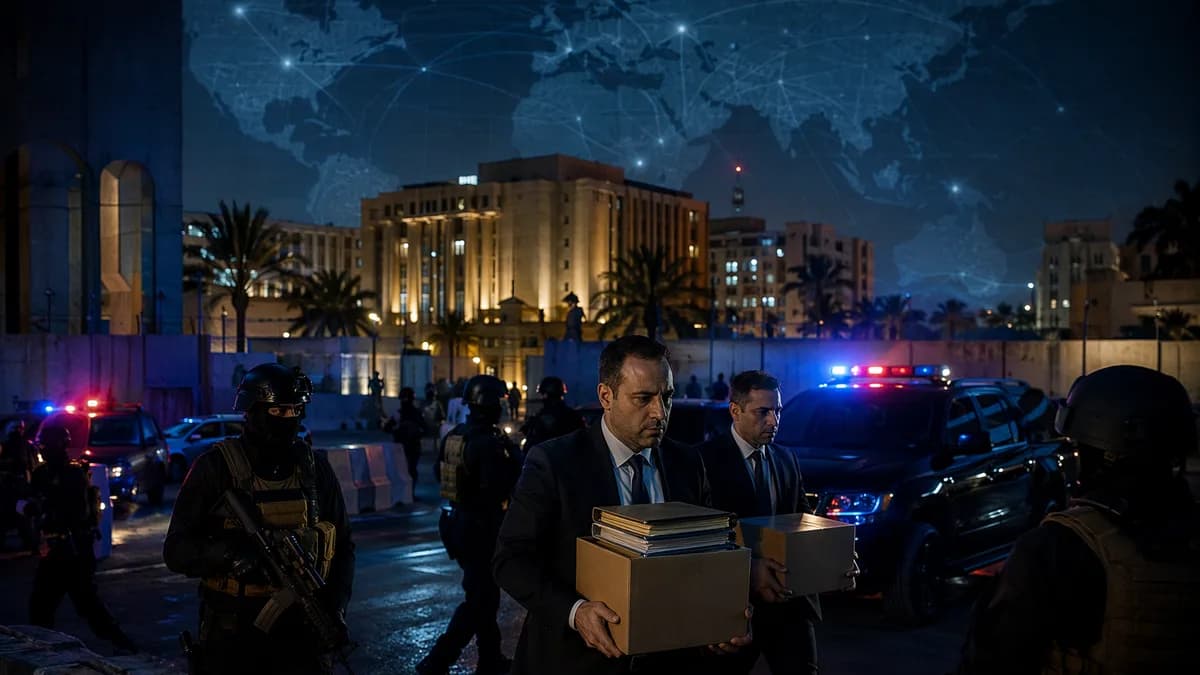
That phrasing matters. Baghdad has seen anti-corruption language before. What makes this case sharper is the combination of an overnight raid, the sealing of the Green Zone, and arrests inside the compound that houses key government institutions and foreign embassies. The operation was designed to be seen.
Iraq corruption arrests signal a power move against protected political networks
The strongest reading of the raid is that Iraqi authorities are trying to show they can pierce political cover, at least when immunity is removed first. Iraqi security forces sealed off all entrances to the capital’s heavily fortified Green Zone early Sunday and carried out raids inside the compound. A security agency report obtained by The Associated Press said seven people were arrested, including five members of Parliament.
That is not routine optics. Arresting lawmakers is different from detaining mid-level officials or contractors. It signals that the case has moved into the zone where legal action and political bargaining overlap. The report also says some of those arrested came from the bloc of former Prime Minister Mohammed Shia al-Sudani, which adds another layer because al-Sudani’s bloc won the largest share of seats in November’s parliamentary elections.
The strongest counterpoint is also obvious: the specific accusations were not immediately clear. Without named charges, evidence standards, or a disclosed theory of the case, the public is being asked to infer seriousness from the choreography of the raid. That is risky. High-profile arrests can create momentum, but they can also become theater if indictments are vague or prosecutions stall.
XOOMAR analysis: the raid becomes meaningful only if the state moves from spectacle to process. That means documented charges, court-visible evidence, and cases that survive pressure from political blocs. If the operation stops at headline arrests, it will reinforce the belief that corruption enforcement is another instrument in Iraq’s factional contest.
The arrests “included members of Parliament whose immunity had been lifted.”
That one line is the hinge. Immunity had to be stripped before detention became possible. Now the burden shifts to the institutions behind the raid.
The hard numbers are narrow, and that tells its own story
The confirmed data in this case is limited but politically loaded: seven arrests, five lawmakers, one former deputy oil minister whose statements helped trigger the operation, and a Green Zone lockdown. The available reporting does not provide governance index rankings, estimates of money lost to graft, or quantified asset recovery targets. Those figures may exist elsewhere, but they are not in the supplied source material, so they should not be treated as verified here.
That absence matters because corruption cases are often judged by volume: how much money was allegedly stolen, how many contracts were affected, which ministries were involved, and whether assets can be recovered. In this case, the state has disclosed the corruption label and the political status of several arrestees, but not the financial core of the alleged misconduct.
| Confirmed in supplied reporting | Not yet disclosed in supplied reporting |
|---|---|
| Seven people arrested | Specific charges against each person |
| Five members of Parliament among those arrested | Alleged financial amount involved |
| Immunity had been lifted for lawmakers | Contracts, ministries, or accounts under investigation |
| Arrests tied to statements by Adnan al-Jumaili | Whether assets were frozen or recovered |
| Green Zone entrances sealed before raids | Timeline for indictments or trial proceedings |
For citizens, the missing financial details are not academic. Corruption in public office becomes concrete when it affects electricity, infrastructure, employment channels, procurement, and confidence in ministries. But this specific AP report does not quantify those effects, so the honest analysis is narrower: the arrests indicate a serious institutional move, while the measurable corruption case remains undisclosed.
That distinction is useful. Anti-corruption rhetoric is cheap. Convictions, asset recovery, and durable controls are harder. Similar credibility tests appear in other jurisdictions too, as XOOMAR noted in Guilty Plea Cracks South Africa Police Corruption Case, where the legal value of a corruption case depended less on the headline and more on whether testimony opened a wider network.
Arresting lawmakers tests the limits of immunity in Baghdad
The raid tests a basic proposition: parliamentary status can delay enforcement, but it cannot permanently shield officials once immunity is lifted. The Iraqi News Agency report said the arrests included MPs whose immunity had been lifted. That is the legal and political gateway for the operation.
The political complexity begins after the arrest, not before it. If those detained have party protection, allied blocs can respond through parliament, public messaging, pressure on investigators, or demands to narrow the case. The AP report says some arrestees were from al-Sudani’s bloc. That matters because his political camp was not marginal. It won the largest share of seats in November’s parliamentary elections.
The counterpoint is that immunity being lifted suggests formal steps were taken. This was not described as a rogue detention or an unexplained disappearance. Security forces executed raids after the immunity issue had been addressed, at least according to the state-run agency’s account.
Still, due process will decide whether the Iraq corruption arrests strengthen institutions or deepen factional suspicion. If the case targets one camp while figures aligned with stronger blocs remain untouched, rivals will frame it as selective justice. If prosecutors show evidence that crosses party lines, the operation becomes harder to dismiss as a political purge.
The unknowns are large. The report does not say which judicial body authorized the arrests, what warrants were issued, or whether the detained lawmakers have responded to the accusations. Those gaps will become pressure points fast.
Al-Sudani’s bloc gives the raid its political charge
The arrests land inside the unresolved aftermath of Iraq’s November parliamentary election. Al-Sudani’s bloc won the largest share of seats, but he ultimately stepped aside during a deadlock inside the Coordination Framework, a coalition of Shiite parties allied with Iran that had brought him to power. He was replaced by Ali al-Zaidi, described in the AP report as a businessman and political newcomer who emerged as a consensus candidate and received the blessing of the United States.
That sequence makes the raid more than a corruption headline. It touches a bloc that performed strongly at the ballot box but failed to translate that result into keeping al-Sudani in the premiership. In a system already strained by coalition bargaining, arrests of lawmakers from that orbit will be read through the lens of power, not only law.
The strongest counterpoint is that not all arrestees were identified as al-Sudani allies. The report says “some” were from his bloc, not all. It also does not state that al-Sudani himself is accused of wrongdoing. Those limits are important. Turning “some arrestees were from his bloc” into a broader allegation would overstate the facts.
XOOMAR analysis: even with those limits, the political signal is unavoidable. A corruption probe that touches MPs from a major bloc can alter bargaining behavior inside parliament. Allies may close ranks, rivals may push for expansion, and investigators may face pressure to prove the case is not built for one political outcome.
Iraq’s anti-corruption promises keep colliding with the same credibility problem
The raid exposes the familiar gap between anti-corruption promises and institutional proof. The supplied reporting does not document earlier protest movements, post-2003 power-sharing history, or prior Iraqi anti-graft campaigns, so this article will not treat those as verified facts in this case. The narrower point is still strong: Iraq’s current political environment makes corruption enforcement difficult because allegations often intersect with fights over power and influence.
The AP report says the arrests are likely to have ripple effects across Iraq’s fractured politics, where corruption accusations frequently collide with rivalries over power. That is the core dynamic. Anti-corruption enforcement can either strengthen the state or become another tool in factional competition.
Here is the test:
- Legal clarity: Authorities need to identify specific accusations against each detainee.
- Evidence discipline: Prosecutors need to show why al-Jumaili’s statements support arrests of lawmakers and other officials.
- Political reach: Follow-up cases must not stop conveniently at one faction.
- Institutional protection: Judges and investigators need room to work without visible political intimidation.
- Public outcome: Asset recovery, convictions, or dismissed charges must be explainable, not buried.
The South Africa case we covered in Guilty Plea Cracks South Africa Police Corruption Case shows a broader lesson that applies here: corruption cases gain force when one insider’s statement opens a verifiable chain of evidence. They lose force when testimony becomes a political weapon without transparent proof.
Politicians, judges, protesters, and foreign partners will read the arrests differently
Every major stakeholder has a reason to see the same raid through a different lens. Reform-minded Iraqis may welcome arrests of protected officials, but skepticism will remain until charges are public and proceedings move forward. Protest networks, civil society figures, and ordinary voters are likely to treat the raid as a test, not a victory.
Political blocs face a harder calculation. Publicly, few will want to defend corruption. Privately, any faction with patronage channels, financing relationships, or exposure to state contracts may worry that the case could widen. That tension can produce a familiar pattern: loud support for anti-corruption enforcement in principle, resistance when investigators reach too close.
The judiciary and anti-corruption investigators now sit at the center of the story. Their credibility depends on due process, independence, and restraint. If they overreach, the case can be attacked as political. If they move too slowly, it can die quietly. If they disclose too little, the public will fill the vacuum with factional narratives.
Foreign partners and investors will also watch the case through a practical lens. The AP report says Ali al-Zaidi received the blessing of the United States, which gives the political transition an external dimension. Investors do not need every corruption case to produce a conviction. They do need to know whether contracts, procurement, and state spending are governed by rules or by access to political protection.
That is where the Iraq corruption arrests meet the business story. Corruption affects procurement risk, energy projects, banking confidence, and the cost of operating near state institutions. A credible crackdown can improve confidence. A politicized one can do the opposite.
Iraq’s government now has to prove this is enforcement, not theater
The practical stakes are larger than seven detainees. A serious corruption case could support Iraq’s reform narrative if it leads to clearer procurement controls, stronger oversight of state-linked spending, and visible consequences for officials who abused office. The source report does not say those reforms are underway, so they remain potential next steps rather than confirmed policy.
A failed case carries costs. If charges are vague, if allies pressure investigators, or if the case quietly stalls, it will feed public cynicism. It could also harden factional divisions, especially if the arrests are seen as aimed at al-Sudani’s camp while other political networks remain untouched.
The government’s immediate challenge is to move from force to credibility. Sealing the Green Zone showed capacity. Arresting MPs showed reach. Neither proves accountability. The proof comes later, in court filings, evidence, asset trails, and whether the law applies beyond one bloc.
For citizens waiting on services, the question is not abstract. Corruption claims become meaningful when enforcement changes how public money is handled. For investors, the same question appears in another form: can the Iraqi state protect contracts and public funds without every major dispute becoming political?
The next phase will decide whether the raid survives Baghdad’s bargaining machine
The next markers are simple: named charges, public evidence standards, asset action, investigator protection, and follow-up cases that cross party lines. If those appear, the Iraq corruption arrests could become more than a Sunday morning show of force. They could mark a rare moment when immunity removal leads to serious accountability.
Expect legal challenges from arrested officials and political bargaining around the scope of the case. Allies may try to limit exposure. Rivals may push to widen it. Judges and investigators will face the hardest pressure if the evidence points beyond the initial seven detainees.
The thesis weakens if authorities fail to disclose specific accusations, if proceedings disappear from public view, or if only politically weakened figures face consequences. It strengthens if the case produces transparent charges, survives parliamentary pushback, and follows evidence into networks rather than stopping at names convenient to arrest.
For now, the raid has done one thing clearly: it has forced Iraq’s political class to confront the possibility that immunity is not permanent armor. Whether that becomes accountability or another short-lived crackdown depends on what happens after the cameras, convoys, and sealed entrances fade from view.
Impact Analysis
- The arrests test whether Iraq’s anti-corruption efforts can reach lawmakers once immunity is lifted.
- The Green Zone raid signals a high-stakes move inside Baghdad’s protected political core.
- The case could either strengthen state institutions or collapse under factional pressure.
Officials Arrested in Iraq Corruption Raid
Members of Parliament
people5
Other officials
people2
Sources

Written by
XOOMAR Insights Team
Research and Editorial Desk
The XOOMAR Insights Team pairs automated research with human editorial judgment. We track hundreds of sources across technology, fintech, trading, SaaS, and cybersecurity, cross-check the facts, and explain what happened, why it matters, and what to watch next. We do not just rewrite headlines. Every article is fact-checked and scored for reliability before it goes live, and we link back to the original sources so you can verify anything yourself.
Explore More Topics
Related Articles
 Global Trends
Guilty Plea Cracks South Africa Police Corruption Case
Vusimusi Matlala's guilty plea could hand prosecutors a witness against senior South African police officials.
Jun 25, 20265 min
 Global Trends
Erling Haaland Hijacks the World Cup Before Knockouts
Four goals in two games have made Haaland the World Cup's emotional winner, and Norway hasn't even reached the hard part yet.
Jun 24, 20267 min
 Technology
M7 Pro Delay Traps MacBook Pro Upgrade Plans to 2027
Apple may skip M6 Pro and M6 Max, leaving high-end MacBook Pro buyers waiting for M7 Pro in 2027.
Jun 28, 20268 min
 Trading
AAVE Rips 8.9% as CoinDesk 20 Rally Faces Breadth Test
AAVE's 8.9% jump lifted the CoinDesk 20, but uneven breadth keeps the rally on trial.
Jun 28, 20267 min
 Technology
LG B5 OLED TV Crashes to $599 After Prime Day at Best Buy
Best Buy still has the 48-inch LG B5 OLED TV at $599 after Prime Day, matching a cited Black Friday low.
Jun 28, 20266 min
 Cybersecurity
Klue Supply Chain Hack Spirals After Hackers Rob Icarus
Klue's breach has morphed into a thief-robs-thief extortion fight, with customers stuck between Icarus and a second hacker group.
Jun 28, 20269 min
 Global Trends
Canada Eurovision Bid Clears Crucial EBU Hurdle at Last
CBC's EBU membership makes Canada Eurovision-eligible, but a real entry now depends on politics, money, and broadcaster will.
Jun 28, 20267 min
 Technology
Prime Day 2026 Deals Vanish as Apple and TV Cuts Linger
Prime Day is over, but 60 plus vetted deals are still live across TVs, Apple gear, wearables, phones and home tech. Move fast and verify prices.
Jun 28, 20268 min
 Technology
Dead Land Cruiser Exposes Prime Day Jump Starter Deals
A Wolfbox revived a dead V6 Land Cruiser 15 times. Prime Day's 20% NOCO and Wolfbox deals now look far less optional.
Jun 28, 20268 min
 Technology
TMD Keyless Bike Lock Turns $60 Security Into $280 Bet
TMD's $283 keyless lock makes sense for pricey e-bikes, but its Bluetooth perks struggle against a $68 ART-2 chain.
Jun 28, 20267 min
Don't miss the signal
Get our weekly roundup of the stories that matter across tech, fintech, and trading. No noise, just signal.
Free forever. No spam. Unsubscribe anytime.