
Moroccan police detained 111 people trying to cross into Spain’s North African territory on Saturday, a direct and immediate response to social media chatter calling for a second mass crossing attempt in as many weeks. This incident, confirmed by Moroccan security sources citing Spanish media and Reuters news agency, reveals a border security paradigm now dictated as much by viral posts as by physical patrols.
Global TrendsAugust 15, 2026· 6 min read· By XOOMAR Insights Team
Morocco Arrests 111 Migrants Mobilized by Ceuta Border Posts
Updated on August 15, 2026
XOOMAR Intelligence
Analyst Take
57/ 100
3 sources analyzedLow confidenceTrend10Freshness96Source Trust92Factual Grounding76Signal Cluster40
According to the BBC World report, the attempted crossing came a fortnight after roughly 78,000 migrants arrived in Ceuta by sea in a matter of hours, an event that caused over 100 deaths. This weekend's operation targeted migrants gathered near Fnideq, only 3km (1.8 miles) from the border, with most detainees reportedly from sub-Saharan Africa. Authorities used tear gas and deployed riot police, while Spain stationed more than 1,500 security officers on its side. This was not a spontaneous breach, but a calibrated, preempted response to organized digital mobilization.
Why a Border Detention Is a Geopolitical Flashpoint
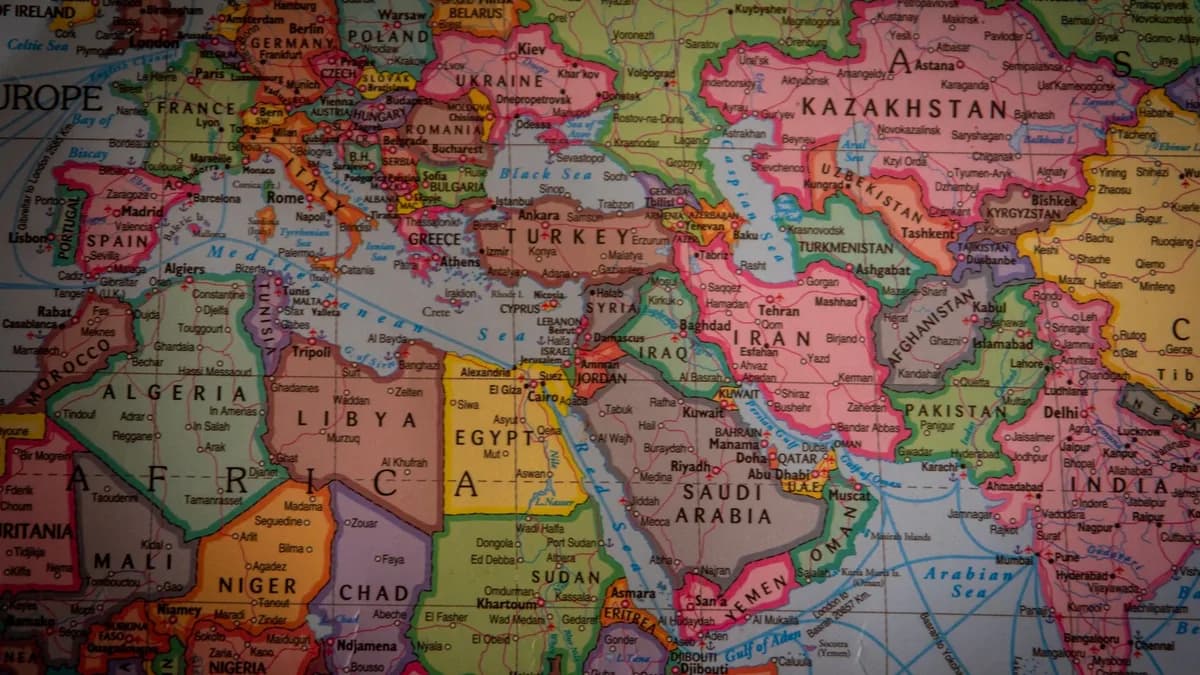
This is not a routine border skirmish. Ceuta is a Spanish exclave on the African continent, a geographical and political anomaly that makes it Europe's most direct land border with Africa. Its defense is a matter of national sovereignty for Madrid, yet it hinges entirely on cooperation from Morocco, which surrounds the territory. The late July influx of tens of thousands, followed by this weekend's organized attempt, shows how this small strip of land acts as a pressure valve for broader migration flows from sub-Saharan Africa.
The political stakes were immediately clear from the last crisis. The report notes it sparked tensions between EU nations, leading Italy to suspend its Schengen arrangement with Spain, backed by Finland and Denmark. The Czech Republic even called for Spain's Schengen membership to be temporarily suspended. Every attempted crossing tests a triangular relationship between Madrid, Rabat, and Brussels, where migration control is often traded for diplomatic and economic concessions.
Security Is Now a Battle Against Viral Timetables
The most critical new factor in this weekend's events is the explicit role of social media. Authorities were not responding solely to intelligence or observed patterns on the ground. They were reacting to what Rabat described as "the circulation of social media posts and messages of unknown origin" calling for a mass crossing on August 15. A proactive security surge was launched based on this digital chatter.
This changes the entire border calculus. Physical hardening alone is no longer sufficient. Spanish newspaper El País reported security at the breakwater entrance was "10 times stronger than the previous day," with Morocco adding army officers, navy speedboats, drones, a metal fence, and a floating barrier. Yet the primary trigger was information spreading on encrypted messaging apps and public platforms. Authorities are now engaged in a digital information war, where controlling a narrative can prevent a physical stampede. This dynamic, where online coordination dictates state security posture, mirrors other global contexts where digital speech meets state control, such as the legal battles over social media bans for minors in France’s Top Court Wipes Out Under-15 Social Media Ban.
From a Stampede to a Standoff: The Human Scale
The numbers tell a story of escalation and desperation. The late July event involved roughly 78,000 people. The preempted attempt this weekend targeted over 100 individuals. While the scale differs by orders of magnitude, the underlying driver remains. A source in Morocco's interior ministry told Reuters those detained included 109 migrants from sub-Saharan Africa.
The aftermath of the July crisis also lingers physically. While the situation has calmed, Spain's interior minister, Fernando Grande-Marlaska, stated about 5,000 migrants remained in Ceuta as of last week. Hundreds were seen sheltering on an urban beach. The minister's policy is stark: those who entered irregularly will not be allowed to stay, travel to mainland Spain, or obtain legal status, barring extreme vulnerability, and will be returned to Morocco. This sets the stage for a protracted, tense standoff within the enclave itself, a scenario that can destabilize local communities and fuel political crises far beyond the border fence.
The Domino Effect on European Cohesion
The Ceuta crisis demonstrates how a localized border event can rapidly unravel European unity. The Schengen Area, founded on open internal borders, is acutely vulnerable to perceived failures at its external edges. When Spain appeared unable to control the influx in July, other member states did not offer solidarity. They imposed internal border controls. Italy's suspension of its Schengen arrangement with Spain, supported by other nations, was a punitive political act.
“Italy suspended its Schengen arrangement with Spain, backed by Finland and Denmark, while the Czech Republic called for Spain's membership to be temporarily suspended.”
This reaction reveals a fundamental truth: for many EU states, the primary goal is insulation from migration flows, not shared burden or humanitarian protection. Ceuta becomes the focal point where this tension explodes into public view, damaging diplomatic relations and empowering nationalist, anti-immigration narratives across the continent.
Managed Crisis as the New Normal
XOOMAR analysis suggests this weekend's events point to a grim equilibrium. Morocco has significant leverage as the EU's gatekeeper on the African continent. It can demonstrate this power by allowing pressure to build or, as seen in July, by momentarily easing controls. Conversely, it can show its value as a partner through operations like Saturday's, where it proactively detained 111 people and dispersed others with tear gas.
For Spain and the EU, the response is a continuous, costly hardening. Madrid has deployed over 1,500 officers and installed maritime barriers. But this is a reactive, defensive posture. The initiative often lies with the complex, digitally-coordinated movements of migrant groups and the political will of the Moroccan state.
What to watch next: The key indicator is not another mass crossing, but the pattern of these smaller, organized attempts. They allow Morocco to repeatedly prove its indispensable role to Europe. Watch for continued reports of social media-driven mobilization dates. Observe whether the thousands of migrants remaining in Ceuta are repatriated or become a semi-permanent population. Finally, monitor political rhetoric in Europe. Any future spike will immediately fuel calls for more internal border closures, further straining the Schengen ideal, similar to how political tensions can escalate into broader instability, as seen in Zambia Halts Vote Count Amid Ballot Theft And Violence.
The tools are now in place: heightened patrols, floating barriers, and drones on one side, encrypted apps and viral timetables on the other. The result is a border in a state of permanent, managed crisis, where Saturday's detention of dozens is less an anomaly and more a routine feature of Europe's most volatile frontier.
Impact Analysis
- Ceuta is Europe's most direct land border with Africa, making its security a crucial test of EU border control and migration policies.
- Mass migration attempts strain diplomatic relations, as seen when Italy suspended Schengen arrangements with Spain, backed by other EU nations.
- Viral social media coordination now dictates border security responses, representing a new paradigm where digital mobilization drives physical migration attempts.
Comparison of Recent Ceuta Border Crossing Events
| Date/Event | Scale/Attempt | Deaths | Response |
|---|---|---|---|
| Late July mass crossing | ~78,000 migrants arrived | Over 100 deaths | EU nations suspended Schengen arrangements |
| August weekend attempt | 111 people detained (preempted) | None reported | 1,500+ Spanish security deployed, tear gas, riot police |
Scale Comparison: Recent Ceuta Migration Attempts
Late July Crossing
people78,000
Weekend Attempt (Detained)
people111
Sources

Written by
XOOMAR Insights Team
Research and Editorial Desk
The XOOMAR Insights Team pairs automated research with human editorial judgment. We track hundreds of sources across technology, fintech, trading, SaaS, and cybersecurity, cross-check the facts, and explain what happened, why it matters, and what to watch next. We do not just rewrite headlines. Every article is fact-checked and scored for reliability before it goes live, and we link back to the original sources so you can verify anything yourself.
Explore More Topics
Related Articles
 Global Trends
Mass Migration to Ceuta Leaves Thousands Stranded, 100 Dead
Ceuta's leader told the European Parliament that up to 5,000 migrants remain after last week's mass influx, with at least 100 deaths, revealing the crisis is no
Aug 8, 20268 min
 Global Trends
Drug Cartels Now Move Tonnage Like Multinationals
A massive drug bust in Spain and Ecuador seized 21 tons of cocaine, exposing an industrial-scale supply chain that is now as sophisticated as a multinational co
Aug 9, 20268 min
 Global Trends
Putin Warns of Retaliation for Commercial Ship Seizures
President Vladimir Putin has threatened direct retaliation against Western nations for seizing Russian commercial ships, calling the actions 'piracy' and riskin
Aug 12, 20265 min
 Technology
French Court Torpedoes Macron's Social Media Ban for Minors
France's Constitutional Council struck down a landmark law that would have banned children under 15 from social media, ruling the blanket restriction violated c
Aug 14, 20264 min
 Technology
Claude's Secret Watermark Sparks AI Payout Boycott
Anthropic's new watermark, aimed at compliance, sparked a user revolt due to its undetectable nature and secret method, highlighting a rift between AI policy an
Aug 15, 20266 min
 Technology
France’s Top Court Wipes Out Under-15 Social Media Ban
France's highest constitutional court struck down a law banning social media for under-15s, ruling it an unconstitutional and disproportionate infringement on f
Aug 14, 20267 min
 Fintech
SEC Exits Crypto After Admitting Rulemaking Defeat
The SEC voted to propose new rules giving crypto projects a legal pathway to operate outside its purview, marking a dramatic policy reversal after years of enfo
Aug 15, 20264 min
 Global Trends
Throne Now Falls To Firstborn Child In Liechtenstein
Liechtenstein abandoned centuries of male primogeniture, ruling that the firstborn child of the royal family, regardless of sex, will inherit the throne.
Aug 15, 20265 min
 Cybersecurity
Quantum Adversaries Harvest Your Encrypted Data Now
Your organization's encrypted data is being harvested today by adversaries who plan to decrypt it with future quantum computers, so migrating to post-quantum cr
Aug 15, 20267 min
 Technology
Forbes Editor Fired Over Secret $6 Million Payment
Forbes fired its chief content officer Randall Lane after he received an undisclosed $6 million payment from the founder of a firm that produces the magazine's
Aug 15, 20265 min
Don't miss the signal
Get our weekly roundup of the stories that matter across tech, fintech, and trading. No noise, just signal.
Free forever. No spam. Unsubscribe anytime.