Updated: This analysis has been refreshed to reflect the confirmed operational name, key details from the official government inquiry report, and the ongoing legal and international implications.
XOOMAR Intelligence
Analyst Take
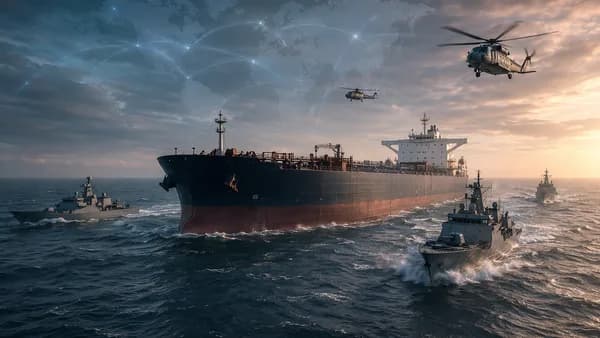
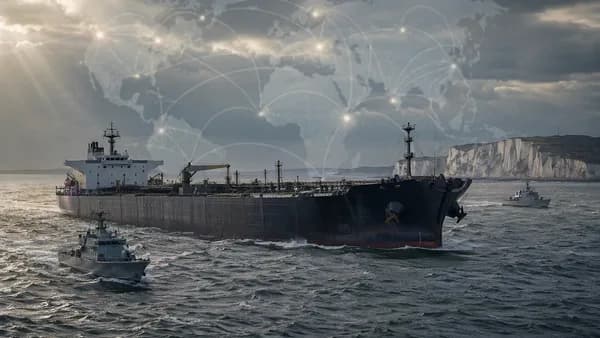
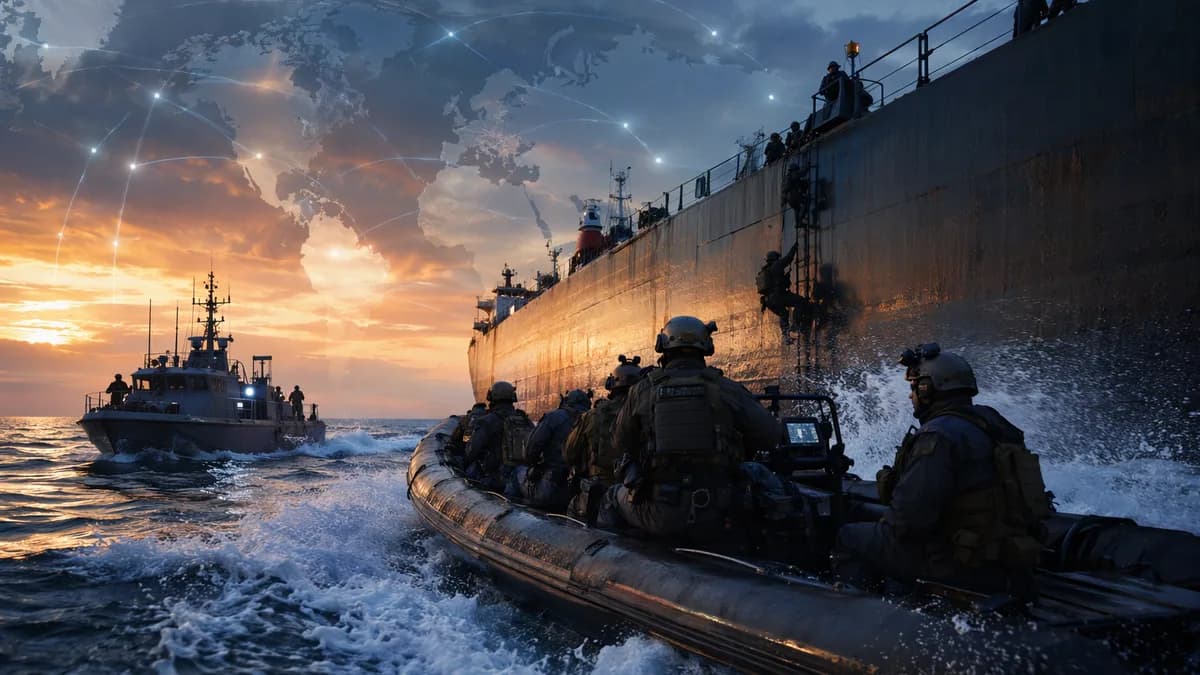
Britain has moved sanctions enforcement from the spreadsheet to the boarding ladder, putting commandos on a sanctioned Russian shadow fleet tanker in the English Channel. That is the real signal from Sunday morning’s operation.
The British armed forces intercepted the vessel Smyrtos in the early hours, with Royal Marine commandos and specially trained National Crime Agency officers boarding it during a six-hour operation, according to Guardian World. The Ministry of Defence said the tanker will be held and monitored off the south coast of England while investigations continue.
This was not a routine sanctions notice. It was a physical interdiction in one of Europe’s most politically visible waterways. That turns Russia’s shadow fleet from a compliance problem into a live UK security test.
Britain just turned Russia's shadow fleet into a Channel security test
The UK government is framing the boarding as a blow to Moscow’s war finance, not as a narrow maritime policing action. Prime Minister Keir Starmer said the operation—codenamed Operation Brimstone—targeted those helping fuel Russia’s war in Ukraine.
“This operation delivers yet another blow to Russia and reminds those fuelling (President Vladimir) Putin’s war in Ukraine that they cannot hide.”
That line matters because it ties the tanker directly to the war economy. The government is saying sanctioned vessels will not be treated as ordinary commercial traffic simply because they are at sea.
The location sharpens the message. The English Channel is close to British shores, watched by allies, and difficult to treat as a distant enforcement zone. A boarding there carries more political weight than a quiet asset freeze or another name added to a sanctions list.
New Context: The subsequent government inquiry confirmed the vessel was operating under a “flag of convenience” with falsified registration, strengthening the legal basis for the interdiction. The report highlighted systemic use of shell companies and layered ownership to obscure the tanker's ultimate beneficial ties to a sanctioned Russian energy conglomerate.
XOOMAR analysis: Starmer’s government is testing a more muscular sanctions posture. The aim is not only to stop one ship. It is to show that Russia-linked maritime evasion can trigger operational consequences in UK waters.
This also puts pressure on London. Once a government boards one sanctioned tanker, shipping firms, insurers, allies, and Moscow will ask the same question: was this exceptional, or the start of a repeatable model?
The Smyrtos boarding shows how narrow the legal path is
The Ministry of Defence said SMYRTOS was boarded in the Channel in the first UK-led operation of its kind. A government press release said the action was carried out “in accordance with domestic and international law,” initially in UK territorial waters and later extending into a contiguous zone for monitoring.
The operation drew on substantial military support. The MoD said it involved aircraft from the Maritime Air Group, including Chinooks, Merlin Mk4 and Wildcat helicopters, an RAF P-8 aircraft, plus HMS SUTHERLAND and HMS LEDBURY.
The legal framing is important. The government has since clarified its reliance on UNCLOS Article 110, which allows a warship to exercise a right of visit to verify a vessel’s flag where there are reasonable grounds to suspect it is without nationality, coupled with UK-specific Sanctions and Anti-Money Laundering Act 2018 powers to detain vessels linked to designated persons.
That is a tight lane. The UK needs enough legal basis to act, enough operational control to avoid an incident, and enough public clarity to avoid looking arbitrary.
XOOMAR analysis: the risk cuts both ways. If London overreaches, Moscow gets material for claims that sanctions enforcement is harassment. If London hesitates, shadow fleet operators learn that sanctioned oil can keep moving through legal ambiguity. The inquiry's findings have bolstered the UK's legal position for this specific case.
The numbers explain why one tanker got this much attention
The UK says Russia’s shadow fleet is made up of over 700 vessels and is responsible for carrying 75% of Russia’s sanctioned oil, according to the UK government’s 14 June 2026 statement. That scale explains why the Smyrtos boarding drew military assets rather than a purely administrative response.
The government also says the UK has sanctioned almost 600 Russian shadow fleet vessels to date. It claims Russia’s oil and gas revenues fell by 24% year-on-year in 2025, and that Russia’s oil revenues are down 27% compared to October 2024, described by the government as the lowest since the start of the war.
Other figures point to the operating risk behind the sanctions story:
- Fleet age: Over 72% of shadow tankers are more than 15 years old.
- Incident record: There have been over 50 incidents involving Russia’s shadow fleet, including spills, collisions, and near-misses.
- Cargo impact: In the first quarter of 2026, ships sanctioned by the UK carried $1.6 billion less in Russian oil than a year earlier.
Those numbers support the government’s case that enforcement is having an effect. They also show why enforcement is expensive and operationally demanding. Boarding and then monitoring a tanker off the south coast requires people, ships, aircraft, legal authority, and follow-through.
This is where the Channel case overlaps with wider maritime risk. Readers tracking energy chokepoint stress will recognize the same security-through-shipping channel in XOOMAR’s coverage of Trump Torches Iran Deal Leak as Hormuz Risk Spikes and Iran Claims Strait of Hormuz Ship Hits, Oil Flinches. The geography differs. The investor reflex is similar: when states test ships, markets watch the routes.
London, Moscow, shipowners, insurers, and traders all read different warnings
The UK government’s message is blunt: sanctioned vessels can be stopped, boarded, held, and monitored. Defence Secretary Dan Jarvis praised the personnel involved and linked the operation directly to Russia’s war financing.
“Operations like this require skill, professionalism and courage. I pay tribute to our armed forces personnel and all those involved. Russia relies on its shadow fleet to fund their conflict in Ukraine and our interdiction delivers a blow to Putin’s illegal war.”
Moscow’s likely reading is different. Al Jazeera has reported Russian anger over Western action against Russia-linked vessels, a framing that lets Moscow recast sanctions enforcement as a threat to navigation. The Russian Foreign Ministry has since issued a formal protest, calling the boarding an “act of state piracy.”
For shipowners and insurers, the message is practical. Opaque ownership, questionable flag status, and sanctions links can now create operational disruption, not only compliance risk. A vessel can be delayed, boarded, investigated, and monitored. Major P&I clubs are reportedly reviewing coverage for vessels with any ownership links to sanctioned entities.
Energy traders will focus on whether this becomes repeat behavior. One boarding is a signal. Repeated boardings around visible European waters would change routing assumptions for Russian-linked cargoes, potentially increasing costs and transit times.
| Stakeholder | Signal from the Smyrtos operation |
|---|---|
| UK government | Sanctions enforcement can now include direct interdiction; legal justification solidified post-inquiry. |
| Russia-linked operators | Sanctioned routes through UK/EU adjacent waters carry higher operational and legal risk. |
| Shipowners and insurers | Flag status, ownership opacity, and sanctions exposure can trigger physical enforcement and coverage revocation. |
| Energy traders | Watch whether enforcement disrupts flows or shifts routes, increasing risk premiums. |
Defence politics now sit inside the sanctions story
The boarding lands at a sensitive moment for UK defence policy. It puts a live operational example behind the broader Westminster question of whether Britain has the people, platforms, and funding needed to sustain more active security commitments.
That context matters because shadow fleet enforcement is not cost-free. It asks sailors, marines, law enforcement officers, aircraft crews, and commanders to operate in a gray zone between sanctions policy and military confrontation.
Jarvis, a former soldier and now defence secretary, told the Sunday Telegraph that he had a “big responsibility” toward personnel who risk their lives for the country.
“I have a responsibility now to them to make sure that they get what they need, and people should be very clear about my determination to fulfil those duties, to make sure that they do (get) precisely what they need.”
XOOMAR analysis: the Smyrtos operation gives Jarvis an early proof point for active defence. It also exposes the funding question. If Britain wants sanctions enforcement to become operational, the force structure has to carry that burden. The 2026 Integrated Review Refresh is now under increased scrutiny to resource such “below-threshold” operations.
More shadow fleet boardings may follow, but Russia can adjust quickly
The UK says Sunday’s action builds on recent support to allies, including RAF and Royal Navy capabilities backing US and French operations. It also said the Smyrtos operation was conducted in close coordination with France.
That points toward a more coordinated enforcement phase. The relevant evidence to watch is not rhetoric. It is whether the UK and its allies repeat this pattern against other sanctioned or suspect vessels, especially in high-visibility European waters. New Development: NATO has since announced the formation of a Joint Maritime Security Centre of Excellence in London, focused explicitly on countering sanctions evasion at sea, suggesting institutionalization of this tactic.
Russia-linked operators will have incentives to adapt. The supplied sources already describe a fleet built around opaque ownership, ageing vessels, and sanctions evasion. More enforcement pressure could push operators to test new flags, new routes, or more ambiguous documentation. Early signs point to increased use of Cambodian and Sierra Leonean flags, and routing adjustments farther from UK territorial waters.
The Channel boarding marks a sharper, more legally robust phase in maritime sanctions enforcement. The test now is endurance: whether repeated legal pressure raises the cost of evasion enough to hit Russia’s oil revenue, or whether the shadow fleet absorbs the shock and keeps moving.
Impact Analysis
- The UK is escalating sanctions enforcement from paperwork to direct maritime action, with Operation Brimstone establishing a legal and operational precedent.
- Boarding the Smyrtos signals that Russian shadow fleet vessels may face physical interdiction near UK waters, with NATO backing a more coordinated approach.
- The operation links maritime enforcement directly to efforts to disrupt funding for Russia’s war in Ukraine, raising stakes for shipowners, insurers, and traders.
- Success hinges on the repeatability of such operations and Russia's ability to further adapt its shadow logistics.
Sanctions Enforcement Shift
| Previous approach | Channel boarding approach |
|---|---|
| Asset freezes and sanctions listings | Physical interdiction of a sanctioned tanker |
| Treated mainly as a compliance issue | Framed as a live UK security test |
| Lower-visibility enforcement | High-profile operation in the English Channel |
Primary Sources & Disclosures

Written by
XOOMAR
Data desk
XOOMAR is a capital markets software and data company. Every brief on this site starts from a dataset the company collects itself from primary sources (CFTC, SEC EDGAR, FINRA, the Federal Reserve, exchange APIs) and names the numbers it is built on, with a link to the data page so you can check them. Briefs are reviewed before they go out and corrected in place when the data is revised.