That is the urgent disaster. The slower stories are in the US, where renters are fighting apartment fees and a bipartisan housing-cost bill has been pulled into a voting-rights standoff. Together, they point to the same pressure point: housing security is cracking in different ways.
According to Guardian World, Delcy Rodríguez declared a state of emergency after twin quakes hit Venezuela, collapsing dozens of buildings and shutting down major transport systems. In the US, Greystar is defending itself against tenant lawsuits over apartment fees, while Donald Trump canceled plans to sign a bipartisan bill aimed at lowering housing costs.
Different speeds. Same stress.
| Pressure point |
Story |
Immediate risk |
| Physical safety |
Venezuela’s twin quakes |
Collapsed buildings, trapped residents, disrupted rescue routes |
| Financial strain |
Greystar tenant fee lawsuits |
Higher effective monthly housing costs |
| Policy paralysis |
Trump withholds housing bill |
Affordability legislation becomes bargaining power |
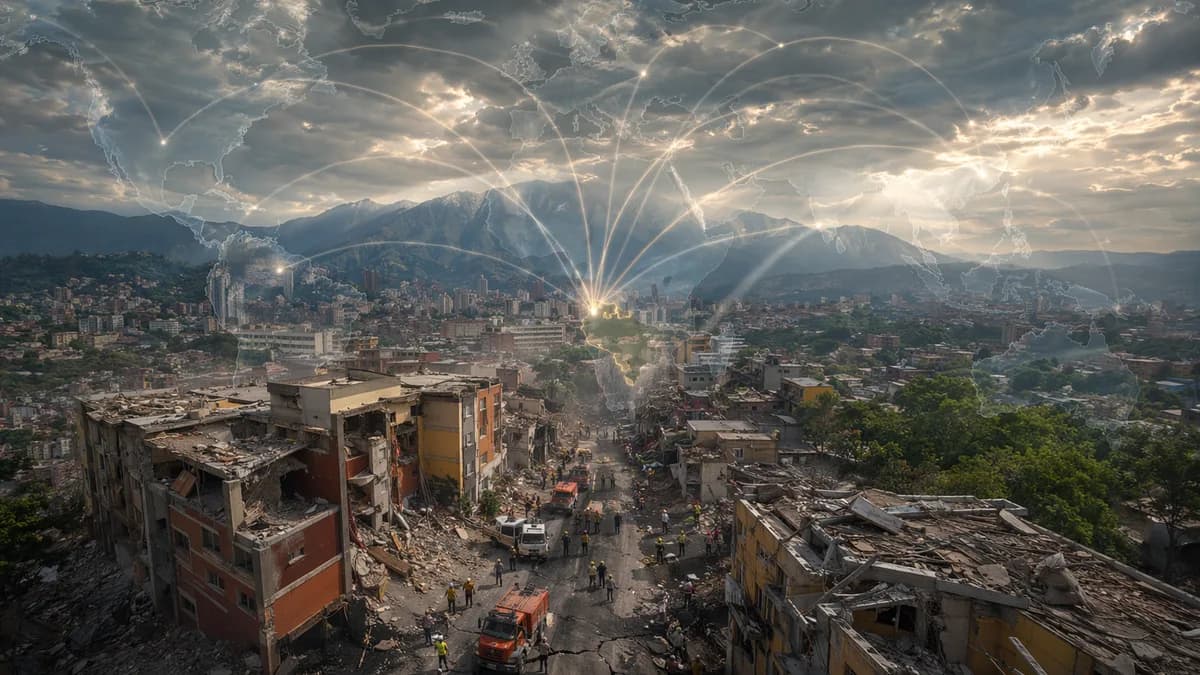
The Venezuela earthquake disaster began with a violent sequence: the US Geological Survey said a magnitude 7.2 foreshock hit 39 seconds before a magnitude 7.5 mainshock. That timing matters. A major first shock can weaken structures before the larger hit lands.
“High casualties and extensive damage are probable and the disaster is likely widespread,” the USGS said.
Rodríguez confirmed the early death toll cited by the Guardian and said the airport had been closed after sustaining “severe damage.” She also said the metro and train systems had been halted. The quakes struck shortly after 6pm on Wednesday, when people were still in homes, offices, transit systems, and streets.
A Guardian reporter saw at least three buildings that had collapsed in Altamira, an affluent Caracas district that houses many foreign embassies. That detail cuts against any easy assumption that damage is confined to weaker or poorer areas. When shocks of this size hit dense urban zones, expensive neighborhoods are not exempt.
For readers tracking the sequence, XOOMAR has related briefs on Twin Shocks Shatter Caracas in Venezuela Earthquake and Venezuela Earthquake Rips Open Caracas Buildings in Seconds. The confirmed facts are already severe enough: collapsed buildings, damaged airport infrastructure, suspended transit, and a death toll that later reports say has climbed.
The first assumption after a major quake is that rescue is mainly a manpower question. The reality is harsher. Rescue depends on roads, airports, trains, hospitals, communications, and heavy equipment all working under stress.
The confirmed airport closure matters beyond passenger travel. If an airport is damaged, the arrival of outside medical teams, search crews, equipment, and relief supplies can slow or reroute. AP reported that the coastal region of La Guaira, north of Caracas and home to the country’s main airport, suffered some of the heaviest damage and casualties.
The transport shutdowns also tighten the clock. Metro and train suspensions can strand residents, limit movement for families searching for missing relatives, and complicate the movement of emergency personnel. NBC reported that officials had canceled school for several days, another sign that authorities expect disruption to last beyond the initial shocks.
Before vs. after the twin shocks:
- Before: Caracas and surrounding areas depended on normal airport, metro, and train operations.
- After: Airport damage, halted rail systems, and unstable structures became part of the emergency itself.
- Before: Casualty figures were still early and incomplete.
- After: Later reports raised the toll to at least 188, with officials warning numbers could rise.
XOOMAR analysis: the story to watch is not only the final death toll. It is whether rescue teams can reach trapped people while infrastructure remains damaged. The USGS warning that widespread damage is probable points to a disaster whose scale may become clearer only as crews move through rubble.
For the aid race around the disaster, see Rivals Rush Into Venezuela Earthquake Rescue Scramble.
Far from the Venezuela earthquake zone, the housing pressure is financial rather than physical. The Guardian’s roundup also pointed to apartment renters facing a tide of fees, with Greystar pushing back against tenant lawsuits.
The company told the Guardian it disagreed with the allegations and was “actively defending” the cases. In court filings, Greystar has described tenants’ legal complaints as factually deficient, implausible, and “futile.”
That language signals a hard legal posture, not a settlement mood. For renters, the fight over fees matters because monthly housing costs are not always captured by headline rent alone. XOOMAR analysis: when charges are layered onto rent, tenants can face a wider gap between the advertised cost of an apartment and what they actually pay month to month.
This is the quieter version of housing insecurity. No buildings collapse. No airport shuts down. But predictability erodes, and housing becomes harder to budget.
The third housing story is political. Donald Trump abruptly canceled his plan to sign a bipartisan bill aimed at lowering housing costs, even though it had passed both the House and Senate, according to the Guardian.
He tied the bill to passage of the Save America Act, which would impose new identification requirements on voters and curtail mail-in voting. That turns a housing-cost measure into leverage in an election-rules fight.
The contrast is sharp. Lawmakers had already moved the housing bill through both chambers. Yet the bill’s path to becoming law now depends on an unrelated political demand.
XOOMAR analysis: this is where housing policy becomes fragile. A bill can have bipartisan momentum and still stall if the White House uses it as a bargaining chip. The people waiting for relief do not control that trade.
For broader context on Trump’s use of institutional pressure, see XOOMAR’s coverage of Congress Corners Trump With Iran War Powers Measure. Different issue, same governing pattern: force a separate political fight into a decision point.
The Venezuela earthquake shows how quickly shelter can become a survival issue. The US rental lawsuits show how housing costs can shift in less visible ways. The stalled housing bill shows how policy relief can be delayed even after Congress acts.
These are not the same crisis. They should not be treated as morally equal. A collapsed building and an apartment fee dispute sit on different levels of human urgency.
But they share one lesson: housing security depends on more than supply. It depends on buildings that can withstand shocks, transport systems that can keep rescue routes open, transparent rental pricing, and political actors who do not turn basic shelter policy into hostage material.
The next test in Venezuela is operational: how fast rescue teams, aid, and medical support can reach the worst-hit areas. In the US, the test is institutional: whether renters and lawmakers can force housing costs into plain view before the pressure breaks more households.
- The Venezuela quakes caused mass casualties and damaged critical infrastructure, raising urgent rescue and shelter needs.
- The disaster highlights how quickly unsafe or unstable housing can become life-threatening.
- The linked US housing stories show that affordability, tenant fees, and political gridlock are also weakening housing security.