
Change four Android Auto defaults and you can make the dashboard quieter, cleaner, more private, and faster to use before your next drive starts.
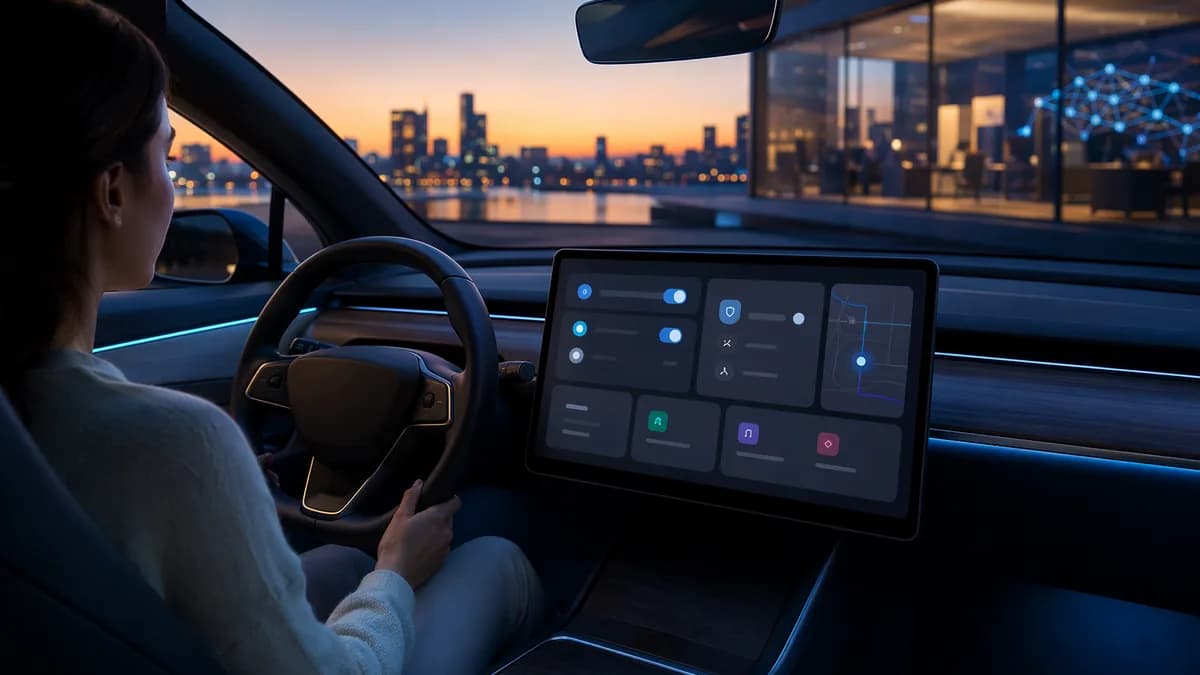
TechnologyJune 12, 2026· 8 min read· By XOOMAR Insights Team
4 Android Auto Defaults Wreck Your Dashboard Focus
Updated on June 12, 2026
XOOMAR Intelligence
Analyst Take
58/ 100
4 sources analyzedLow confidenceTrend10Freshness98Source Trust85Factual Grounding93Signal Cluster20
That’s the practical win from the settings list flagged by ZDNet: Android Auto works out of the box, but its defaults can leave you with auto-playing media, message pop-ups, a crowded launcher, and underused bottom-row controls.
“Toggling the settings makes Android Auto less distracting.”
Here’s the setup to aim for: no surprise audio, fewer dashboard alerts, only the car apps you actually use, and quick controls that do more than show recently opened apps.
Start with the Android Auto result you want: less noise, fewer taps, safer glances
Your goal isn’t to “customize” for the sake of it. It’s to remove friction from the first minute of every drive.
A better Android Auto setup should do four things:
| Default behavior | Better setup |
|---|---|
| Music or podcasts resume as soon as the car starts | Audio waits until you choose it |
| Message previews appear on the dashboard | Private texts stay off the big screen |
| Every compatible app clutters the launcher | Only useful driving apps appear |
| Bottom icons mostly show recent apps | Taskbar widgets show live controls |
This matters because Android Auto’s screen sits in your eyeline while you’re handling traffic, directions, passengers, and calls. A cleaner interface cuts the number of decisions you make while moving.
If you’re also thinking about the phone that powers your car setup, XOOMAR has separate buying context in 7-Year Updates Reveal the Best Budget Phones to Buy. For battery-heavy phone use outside this Android Auto guide, see Battery Drain Exposes the Best Phones for Hotspot Use.
Before you start: open Android Auto settings while the car is parked
Do this parked. Don’t poke through menus at a red light.
On many Android phones, the path is:
- Open Settings
- Go to Connected devices
- Tap Connection preferences
- Open Android Auto
Menu names can vary by Android version, phone brand, and car system. If that path doesn’t match your phone, use the fastest route: open Settings and search for Android Auto.
Make your changes before connecting to the car, then plug in or connect wirelessly once afterward. That parked-car check is where you confirm the launcher order, message behavior, media startup, and taskbar controls.
Watch out for: some settings may appear in slightly different places depending on your phone. Don’t assume the feature is missing until you’ve searched Settings for the exact label.
1. Turn off automatic music playback when Android Auto connects
The most annoying Android Auto default is also one of the easiest to fix: media can resume the moment your phone connects.
That means last night’s playlist, podcast, or audio app can start before you’ve backed out of the driveway. ZDNet notes that this may be fine if you’re the only person using the car, but it can get awkward fast with family members, passengers, or kids climbing in and out.
Do this:
- Open Android Auto settings on your phone.
- Find Start music automatically.
- Toggle it off.
The immediate benefit is silence by default. Your car won’t blast whatever you were listening to last, and you stay in control of when audio starts.
That’s useful for short errands, early drives, and any trip where you need the cabin quiet before picking a playlist or podcast.
Watch out for: ZDNet’s setting controls Android Auto behavior, but your media app may still remember its last state. If audio keeps starting unexpectedly, check the settings inside your music or podcast app too.
2. Remove apps you won’t use from the Android Auto launcher
Android Auto’s launcher can show every compatible app by default. That includes apps you rarely use in the car, old music services you tried once, and messaging apps you don’t want sitting next to navigation.
Fix the launcher from your phone:
- Open Android Auto settings.
- Tap Customize launcher.
- Uncheck apps you don’t need on the car screen.
- Keep your most-used apps easy to reach.
ZDNet makes a key distinction here: removing an app from the launcher does not delete it from your phone. It only hides it from the Android Auto screen. You can bring it back later.
A practical order looks like this:
- Navigation: Put your main maps app first.
- Audio: Keep your music or podcast app near the top.
- Phone: Make calling easy to reach.
- Messages: Keep only what you actually use in the car.
- Trip tools: Add parking, charging, or calendar apps only if they matter to your driving routine.
The payoff is simple. Fewer icons mean fewer swipes, fewer wrong taps, and less time staring at the dashboard instead of the road.
Watch out for: if your phone is currently connected to Android Auto, you may need to reconnect before the new launcher layout appears in the car.
3. Disable message previews and noisy group chats on the dashboard
Android Auto can show part of an incoming text by default. That’s convenient when you’re alone, but it’s a privacy problem with passengers and a distraction when navigation is on screen.
ZDNet points out two issues. First, passengers may see message content. Second, incoming messages can take over display space that you may need for directions or other information.
Start with these settings:
- Open Android Auto settings.
- Look for the messaging section.
- Turn off message preview behavior if your phone offers that option.
- Turn off Show group conversations if you don’t want group chats interrupting the drive.
- If you want quieter alerts, turn off Play message chime.
That last option is a useful middle ground. ZDNet says you’ll still see the notification, but your music or podcast won’t be interrupted by the chime.
For most drivers, the balanced setup is not “all notifications off.” It’s more targeted:
- Keep calls visible if missing calls would be a problem.
- Mute group chats because rapid-fire threads are rarely urgent while driving.
- Hide previews when passengers are in the car.
- Cut chimes if alerts keep breaking up audio.
Watch out for: don’t make messaging so locked down that you start reaching for your phone. If you rely on voice controls for messages, test your preferred setup while parked.
4. Turn on taskbar widgets so the bottom row does real work
ZDNet’s fourth recommended default change is taskbar widgets, and it’s the one many drivers overlook.
By default, Android Auto can show icons at the bottom of the screen for recently used apps. That’s helpful, but limited. When you turn on taskbar widgets, those icons become dynamic controls tied to what you’re doing.
ZDNet lists examples such as:
- Media controls to play or pause
- Navigation shortcuts for the next turn or route information
- Context-based shortcuts, such as calling a recent contact
Do this:
- Open Android Auto settings.
- Find the taskbar widget option.
- Turn it on.
- Reconnect to your car and test it with navigation and media open.
This is the highest-value tweak if you bounce between maps and audio. Instead of opening the full app just to pause music or check route context, you can use the bottom row for quick actions.
Watch out for: widget behavior depends on the active app and context. Don’t expect the same controls at all times. Test it with the apps you actually use while parked.
Confirm your four Android Auto changes with one parked-car test
After changing the settings, do one short test before driving.
Run through this checklist:
- Connect your phone to the car.
- Confirm audio stays silent until you press play.
- Open the launcher and check that only useful apps appear.
- Send yourself a test message or ask someone nearby to text you.
- Start navigation and media to see how taskbar widgets behave.
If anything feels harder to reach, adjust it now. The point is not to hide everything. The point is to keep the screen useful without letting it compete for attention.
Recap: turn off Start music automatically, clean up Customize launcher, reduce message previews and group chat alerts, and enable taskbar widgets.
Your next drive should start calmer. The watch item after that is your own routine: if you keep tapping the same control too often, move it higher, expose it through widgets, or remove the clutter sitting in its way.
Key Takeaways
- Changing Android Auto defaults can reduce distractions before you start driving.
- Turning off message previews and surprise audio makes the dashboard quieter and more private.
- A cleaner launcher and better bottom-row controls can cut taps and make key functions faster to reach.
Android Auto Defaults vs. Better Setup
| Default behavior | Better setup |
|---|---|
| Music or podcasts resume as soon as the car starts | Audio waits until you choose it |
| Message previews appear on the dashboard | Private texts stay off the big screen |
| Every compatible app clutters the launcher | Only useful driving apps appear |
| Bottom icons mostly show recent apps | Taskbar widgets show live controls |
Sources

Written by
XOOMAR Insights Team
Research and Editorial Desk
The XOOMAR Insights Team pairs automated research with human editorial judgment. We track hundreds of sources across technology, fintech, trading, SaaS, and cybersecurity, cross-check the facts, and explain what happened, why it matters, and what to watch next. We do not just rewrite headlines. Every article is fact-checked and scored for reliability before it goes live, and we link back to the original sources so you can verify anything yourself.
Explore More Topics
Related Articles
 Technology
AI Collaboration Quietly Rewrites Work Before Layoffs
AI is reshaping tasks before it replaces workers. The first shock is workflow, not mass layoffs.
Jul 26, 20269 min
 Technology
$1B Google Search Fine Threatens Its Ranking Machine
The EU's $1B Google fine goes after search placement and Play Store control, not just a one-off antitrust penalty.
Jul 26, 20267 min
 Technology
Missing Gemini 3.5 Pro Overshadows New Gemini Models
Google shipped cheaper Flash models, but the no-show Gemini 3.5 Pro is the real story for developers waiting on a capability leap.
Jul 21, 20266 min
 Technology
Google Opens Android App Stores but Keeps the Cash
Google will share Play listings with US Android app stores, but downloads and fees still run through Google Play.
Jul 19, 20267 min
 Technology
Avoiding AI Workshops Turn Libraries Into Big Tech Revolt
Public libraries are becoming AI opt-out clinics as users push back against forced defaults from Apple, Google, and Big Tech.
Jul 25, 202613 min
 Cybersecurity
Nvidia AI Security Alliance Leaves OpenAI Off Roster
Nvidia's 37-member AI security push puts open tools against closed labs, with OpenAI, Anthropic and Google missing from the launch.
Jul 27, 20267 min
 Global Trends
Logo Revolt Haunts Cracker Barrel CEO Masino's Exit
Julie Masino is leaving after Cracker Barrel's logo revolt became a culture-war test. David Deno inherits the bruised brand.
Jul 27, 20266 min
 Global Trends
53 Years Later, Chile Jails Víctor Jara Murder Fugitive
Chile jailed Nelson Haase Mazzei, the last fugitive in the Víctor Jara murder case, 53 years after the singer was killed.
Jul 27, 20268 min
 Technology
A $9 Autonomous Key Turns App Addiction Into Real Work
Autonomous Key uses a $9 NFC fob to make addictive apps harder to reopen, betting tiny friction can beat reflexive scrolling.
Jul 27, 20268 min
 Global Trends
Years on Run End As Police Catch Victor Jara Murder Fugitive
Nelson Haase, convicted in Victor Jara’s murder, was captured after fleeing a 25-year sentence in a landmark Pinochet-era case.
Jul 27, 20265 min
Don't miss the signal
Get our weekly roundup of the stories that matter across tech, fintech, and trading. No noise, just signal.
Free forever. No spam. Unsubscribe anytime.