
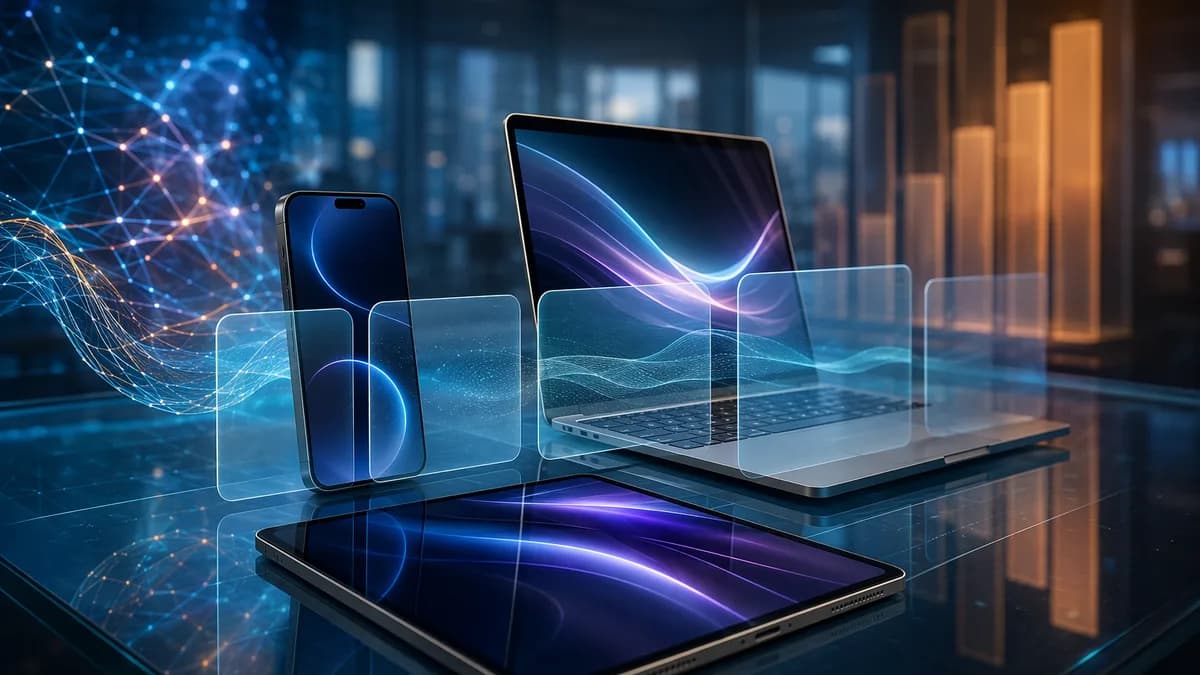
Apple Upgrade starts at $17.99 a month for an iPhone, and that number is the whole point: Apple is turning high hardware prices into smaller, recurring charges that feel easier to accept.
TechnologyJuly 28, 2026· 8 min read· By XOOMAR Insights Team
Apple Upgrade Hides iPhone Sticker Shock in Monthly Fees
Updated on July 28, 2026
XOOMAR Intelligence
Analyst Take
75/ 100
1 source analyzedMedium confidenceTrend20Freshness93Source Trust84Factual Grounding92Signal Cluster40
The new U.S. leasing program, undergirded by Klarna, covers iPhone, Apple Watch, Mac and iPad devices on fixed terms, according to Tom's Guide. Apple calls it a “more flexible way to pay for products.” The sharper read is that Apple Upgrade gives the company a cleaner way to sell expensive hardware without forcing customers to stare at the full sticker price first.
"By shifting the focus to lower monthly payments, it helps mask the effect of rising hardware costs and makes premium devices feel more affordable and attainable for a broader range of consumers," Jitesh Ubrani, a director at IDC, told Tom's Guide.
Apple Upgrade turns hardware sticker shock into a monthly habit
Apple Upgrade works like a device lease. Customers choose eligible products for fixed 12-, 24- or 36-month terms, depending on the category. At the end, they can return the device, upgrade to a newer generation, or buy it with a one-time payment.
That changes the psychology of the sale. A $1,199 iPhone 17 Pro Max becomes $34.99 per month on Apple’s default 24-month leasing option. A $2,499 Mac Studio becomes $48.99 per month. The device hasn’t become cheaper. The pain has been split into smaller pieces.
Apple’s own framing emphasizes flexibility. That’s not false. A customer who doesn’t want to pay upfront or sign up through a carrier plan may see the appeal. Tom’s Guide specifically contrasts the plan with carrier contracts from companies such as Verizon or T-Mobile.
XOOMAR analysis: the more important shift is control. Apple Upgrade pulls financing, upgrade timing, returns and possible device buyouts closer to Apple’s own retail channel. For readers tracking that angle, see XOOMAR’s related analysis, Apple Upgrade Grabs Control of Your Next iPhone Cycle, and the financing-focused breakdown, Apple Upgrade Turns iPhone Price Shock into Klarna Rent.
Apple Upgrade prices make the lease look cheap until ownership enters the frame
The headline monthly payments are low because the customer is not simply paying off the full device price over 24 months. They’re leasing. That distinction matters.
Here are several base-model examples from Tom’s Guide, using Apple’s default 24-month leasing option:
| Device | Upfront cost | Monthly lease | Total after 24 months |
|---|---|---|---|
| iPhone 17e | $599 | $17.99 | $431.76 |
| iPhone 17 Pro Max | $1,199 | $34.99 | $839.76 |
| Apple Watch Series 11 | $399 | $11.99 | $287.76 |
| iPad Pro | $1,199 | $24.99 | $599.76 |
| MacBook Pro | $1,999 | $38.99 | $935.76 |
| Mac Studio | $2,499 | $48.99 | $1,175.76 |
Those totals are below the listed upfront prices because they don’t automatically leave the customer owning the device. At the end of the term, the customer must return it, upgrade, or purchase it through a one-time payment.
That is the core trade. Apple Upgrade lowers the entry point, but it pushes the ownership decision into the future. If a customer would normally keep a Mac or iPad for years after paying it off, leasing may be less attractive. If they upgrade regularly, the structure may feel cleaner.
AppleCare is another difference. Tom’s Guide notes that the outgoing iPhone Upgrade Program included AppleCare, while Apple Upgrade does not. AppleCare becomes a separate subscription cost, and the price varies by device.
Klarna approval, missed payments and the fine print matter more than the monthly ad price
Signing up can happen online or at an Apple Store. Approval goes through Klarna, which requires a soft credit check that Tom’s Guide says should not affect the customer’s credit score.
The missed-payment terms are more revealing than the launch language. Per MacRumors, as cited by Tom’s Guide, a missed payment rolls into the next month with no late fees. But after three consecutive missed payments, the lease ends, and the customer must pay the full outstanding balance, minus the value of the returned device. If Klarna cannot collect, the customer’s information may be sent to a debt collection agency.
That gives Apple Upgrade a softer front door and a harder back end. The plan looks simple when payments are current. It becomes much more complex when a customer falls behind, wants to exit early, damages a device, or forgets to act at the end of the lease.
Tom’s Guide also notes two practical details:
- No security deposit: Apple says one is not required.
- Trade-ins: A trade-in device could reduce monthly payments.
- End-of-lease risk: If a customer does nothing at the end, they’ll be charged the purchase fee.
- Upgrade cost: Moving to higher-capacity devices or more expensive future models could raise monthly payments.
Apple Upgrade expands the old iPhone upgrade idea across Macs, iPads and Watches
The old iPhone-centered upgrade path was narrow. Apple Upgrade is broader. It covers phones, watches, tablets and computers, although not every device qualifies.
Eligible iPhones include the iPhone 17 lineup and iPhone Air. Eligible watches include Apple Watch Series 11 and Apple Watch Ultra 3. Eligible iPads include iPad Air, iPad Pro and iPad mini. Eligible Macs include MacBook Air, MacBook Pro, iMac and Mac Studio.
The exclusions are just as telling. Tom’s Guide lists the products Apple is not making available through the lease program:
- iPhone 16
- iPhone 16 Plus
- Apple Watch SE
- MacBook Neo
- Mac mini
- iPad (A16)
- Studio Display
XOOMAR analysis: Apple appears to be steering the program toward newer or higher-value hardware rather than using leasing as a blanket affordability tool across the whole catalog. That supports the expert critique. Apple Upgrade is not mainly about making every Apple product easier to access. It is concentrated around devices where the monthly framing can soften a larger purchase decision.
Customers get convenience, Apple gets returned devices and cleaner upgrade timing
The consumer case is real. Someone who wants predictable monthly payments, regular upgrades and less resale hassle may prefer Apple Upgrade to buying outright. Avi Greengart of Techsponential told Tom’s Guide that many people already lease phones through carrier plans, and that leasing a watch or Mac can make sense because those devices also have upgrade cycles.
But Greengart also gave the catch:
"it's still a lease, so you won't be able to use it until it dies unless you buy out the lease, and it may not be the absolute most economical approach."
That is the cleanest warning in the whole story. Leasing works best when the customer values access and upgrade optionality more than long-term ownership.
For Apple, the program creates another advantage. Ubrani told Tom’s Guide it gives Apple a “steady stream of trade-ins” that the company can resell to expand its customer base. That is a concrete business benefit, not just a financing tweak.
XOOMAR analysis: the trade-in flow may become one of the most important parts of Apple Upgrade. More predictable returns can make refurbished and resale operations easier to plan. The source does not say how Apple will price, allocate or distribute those returned devices, so that remains an open question. But the basic mechanism is clear: leasing increases the chance that devices come back to Apple instead of drifting into informal resale channels.
Apple Upgrade’s real test is whether customers still trust the math
The next phase is not about whether Apple can make monthly device payments look attractive. It clearly can. The harder question is whether customers understand the full cost of the lease, the buyout terms, the AppleCare add-on, the damage exposure and the consequences of missed payments.
For buyers, the practical test is simple:
- Compare the 24-month lease total with the upfront price.
- Add AppleCare separately if protection matters.
- Check the buyout cost before assuming the lease is cheaper.
- Decide whether you usually keep devices beyond two or three years.
- Read the missed-payment and early-termination terms before signing.
The evidence that would strengthen the expert critique is straightforward: Apple pushing more high-priced hardware through monthly lease framing while excluding more entry-level products. The evidence that would weaken it would be clearer, consistently favorable total-cost economics for customers who don’t upgrade often.
For now, Apple Upgrade looks less like a discount and more like a new pricing interface. The product is still expensive. Apple has just changed where the customer feels the cost.
The Bottom Line
- Apple is reframing expensive hardware as smaller monthly payments to reduce sticker shock.
- The lease model gives Apple more control over financing, upgrades, returns and buyouts.
- Consumers may find the plan flexible, but the devices are not necessarily cheaper overall.
Apple Upgrade pricing examples
| Device | Full price cited | Monthly lease price cited |
|---|---|---|
| iPhone | Not specified | $17.99/month starting price |
| iPhone 17 Pro Max | $1,199 | $34.99/month |
| Mac Studio | $2,499 | $48.99/month |
Monthly Apple Upgrade prices cited
iPhone starting price
$/month17.99
iPhone 17 Pro Max
$/month34.99
Mac Studio
$/month48.99
Sources

Written by
XOOMAR Insights Team
Research and Editorial Desk
The XOOMAR Insights Team pairs automated research with human editorial judgment. We track hundreds of sources across technology, fintech, trading, SaaS, and cybersecurity, cross-check the facts, and explain what happened, why it matters, and what to watch next. We do not just rewrite headlines. Every article is fact-checked and scored for reliability before it goes live, and we link back to the original sources so you can verify anything yourself.
Explore More Topics
Related Articles
 Technology
Download iOS 27 Free Today Without Wrecking Your iPhone
iOS 27 is free to test through Apple’s public beta, but back up first and don’t risk your main iPhone unless you accept bugs.
Jul 20, 20267 min
 Technology
Apple Mac AI Overhaul Throws Mac Buyers Into Limbo
Apple reportedly wants every Mac refreshed for AI, with M6 MacBook Pro and iMac updates kicking off a rollout that stretches into 2027.
Jul 22, 20267 min
 Technology
Apple Lawsuit Threatens OpenAI Hardware at Worst Time
Apple's trade secrets suit won't kill OpenAI hardware, but it could slow its device launch and IPO story when trust matters most.
Jul 19, 202613 min
 Technology
MacBook OLED Risks Apple's Touch Bar Mistake Again
MacBook OLED could headline Apple's next Pro laptops, but a rumored touchscreen may turn a clean upgrade into another Touch Bar fight.
Jul 26, 20268 min
 Technology
Apple Maps Seizes Ford EV Dashboards in $30K Truck Bet
Ford will bake Apple Maps into 2027 EVs, making navigation, charging and battery prep part of its $30K electric truck push.
Jul 23, 202611 min
 Fintech
Apple Upgrade Turns iPhone Price Shock into Klarna Rent
Apple is using Klarna leases to soften iPhone, Mac and iPad price shock without cutting prices or loosening its upgrade grip.
Jul 28, 20268 min
 Fintech
Apple Upgrade Grabs Control of Your Next iPhone Cycle
Apple Upgrade would replace iPhone financing with leases, giving Apple and Klarna more control over when customers swap devices.
Jul 28, 20267 min
 Trading
Bitcoin Fed Meeting Threatens to Crack $65K Calm This Week
Bitcoin held near $65,000 after Nvidia's slide, but Fed week will test whether BTC's calm is real demand or just a macro pause.
Jul 27, 20268 min
 Fintech
1 Billion Payments Push UK Open Banking Into Card Fight
UK open banking payments crossed 1 billion, proving scale. The next test is beating cards, wallets and old payment habits.
Jul 28, 20267 min
 Global Trends
Ghana’s Tallest Man Dies at 33 After Leg Infection
Sulemana Abdul Samed, Ghana’s tallest man, died at 33 after hospitalization for infected leg sores, sparking grief in Gambaga.
Jul 28, 20266 min
Don't miss the signal
Get our weekly roundup of the stories that matter across tech, fintech, and trading. No noise, just signal.
Free forever. No spam. Unsubscribe anytime.