
30 days of avoided downtime turns autonomous drone inspection from an operations tool into a finance signal.
TechnologyAugust 1, 2026· 7 min read· By XOOMAR Insights Team
Autonomous Drone Inspection Exposes 30-Day Outage Risk
Updated on August 1, 2026
XOOMAR Intelligence
Analyst Take
72/ 100
4 sources analyzedMedium confidenceTrend10Freshness96Source Trust88Factual Grounding94Signal Cluster20
A lender financing a power plant, pipeline or substation usually learns about physical deterioration through scheduled inspections, manual audits and periodic reports. By then, the asset may already be moving toward failure. Physical AI narrows that blind spot by sending machines into the field more often, then using software to interpret what they see, according to PYMNTS.
That matters because a prevented outage changes the timing of risk. The lender doesn't find out after the borrower misses a target or reports a disruption. It can see the warning sign closer to when the damage appears.
Why should power plant and pipeline lenders care about one autonomous drone flight?
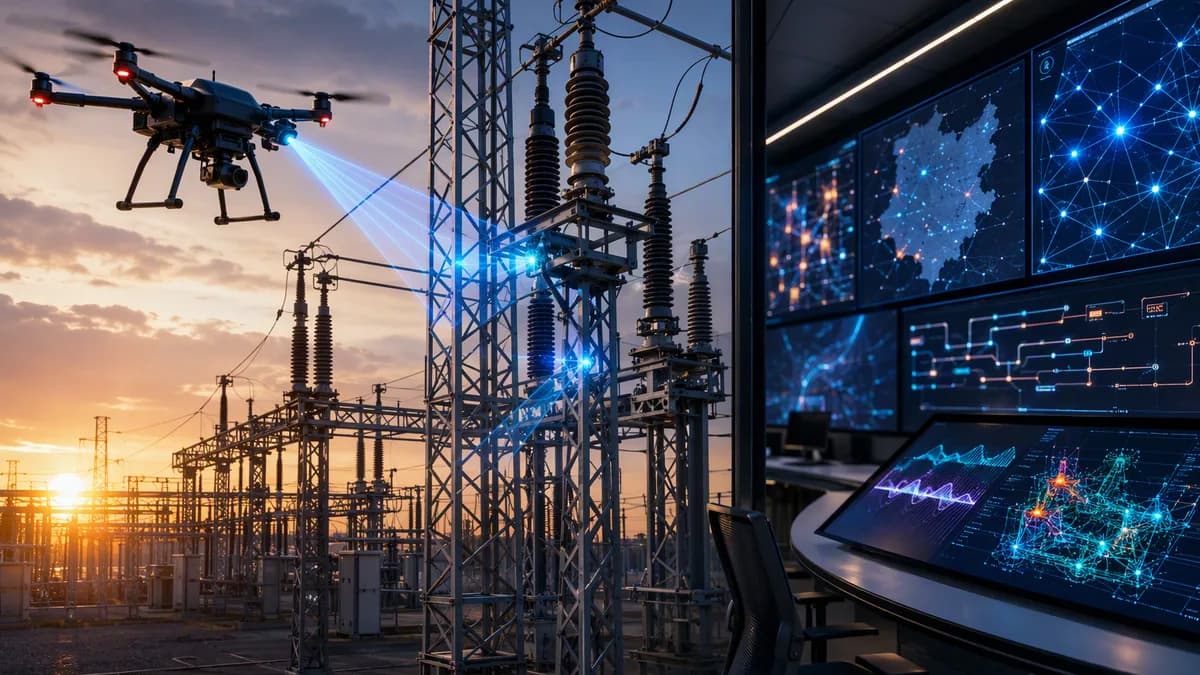
The headline case is simple: Southern California Edison used a Skydio X10 drone to inspect substation equipment from angles a ground crew could not reach. The drone found multiple loosening pivot bolts that were invisible from the ground. Skydio said the discovery headed off what would have become a 30-day outage.
For an operator, that is an avoided maintenance crisis. For a lender or insurer, it is something else: evidence that the physical asset backing a loan can now produce a more frequent risk signal.
The old model is blunt. Inspect on a calendar. Review the report. Assume nothing meaningful changed in the gap. PYMNTS frames the problem clearly: damage builds between scheduled inspections or manual audits that may happen once or twice a year.
Autonomous drone inspection attacks that gap. A machine can fly a repeatable route, capture site data and make deterioration visible sooner. That does not mean drones replace engineers or maintenance teams. It means the first alert may arrive before the asset fails, not after the outage begins.
XOOMAR analysis: that timing is the whole finance story. A 30-day outage can strain the assumptions behind an infrastructure loan because the asset is not operating as expected. The source does not provide the dollar impact, so the exact credit effect is unknown. But the direction is clear. Earlier visibility gives lenders a better chance to distinguish routine wear from emerging operational risk.
How did one drone inspection help avoid a 30-day outage?
The reported case did not involve a drone “fixing” infrastructure. It shortened the path between hidden damage and human action.
Skydio says Southern California Edison inspected substation equipment with a Skydio X10 from angles unavailable to a ground crew. The drone found multiple loosening pivot bolts that could not be seen from the ground. The company said that finding prevented a projected 30-day outage, according to its case study.
That is the practical value of autonomous inspection. It gets closer to equipment. It repeats difficult views. It captures details that a distant or ground-level inspection can miss.
“The next phase of industrial autonomy is about unlocking more value from the infrastructure energy companies already operate,” Percepto CEO Dor Abuhasira said in the company’s launch announcement.
Skydio also says its drones help utilities respond to outages and complete planned inspections three times faster than crews using bucket trucks. The source does not break down how that figure was measured across every use case, so it should be read as Skydio’s claim. Still, it points to the same operational shift: less waiting, less physical access friction and more inspection frequency.
| Inspection model | What it gives lenders | Main limitation |
|---|---|---|
| Scheduled manual inspection | A dated snapshot of asset condition | Long gaps between checks |
| Autonomous drone inspection | A more frequent record of visible equipment condition | Requires trusted data, access rights and review workflows |
| Onboard AI inspection | Faster triage of captured findings | AI-flagged issues still need confidence and governance |
What is physical AI in energy infrastructure monitoring?
Physical AI applies AI to machines that operate in the physical world. In this case, the machine is a drone inspecting energy infrastructure. The software does not just process invoices, contracts or transactions. It observes physical assets and helps interpret site conditions.
Percepto, an Austin-based company, launched a next-generation AI inspection platform for energy infrastructure that pairs autonomous drones with onboard AI, according to the company’s June 22 press release. The system is aimed at oil and gas operators and electric utilities, and is designed to collect inspection data at a scale manual crews cannot match.
The key detail is not merely that a drone captures footage. Percepto says the platform is designed to mimic how an experienced human inspector works by deciding what to capture and connecting each finding to a specific piece of equipment.
That distinction matters. Raw footage creates another backlog. Structured inspection intelligence creates a record a maintenance team, operator or financing party can potentially use.
This is where the finance analogy is clean. Banks already moved from periodic checks toward live risk signals in fraud detection and credit workflows, as PYMNTS notes. Physical AI applies a similar logic to collateral: the power plant, pipeline or substation becomes observable more often.
For adjacent XOOMAR coverage on automation reshaping finance and business workflows, see Real-Time Payments Invade Payroll, Checkout and B2B and $200 Billion Sales Let Amazon AI Agents Invade Workflows.
How can drone data change credit risk models for power plants and pipelines?
A lender cannot underwrite a pipeline or power plant solely from drone footage. It still needs financial statements, maintenance records, insurance materials, compliance certificates and operator reporting.
But autonomous drone inspection could add a missing layer: recurring evidence of physical condition.
XOOMAR analysis: the upgrade is from backward-looking confirmation to earlier warning. A scheduled inspection tells a bank what the asset looked like on inspection day. A drone program that flies the same route weekly, or in some deployments daily, can create a continuous record instead of a single dated snapshot, as PYMNTS describes.
That record could help lenders ask sharper questions:
- Repair urgency: Is a finding cosmetic, operationally relevant or time-sensitive?
- Asset availability: Is equipment condition consistent with the borrower’s operating plan?
- Maintenance discipline: Are repeat findings being closed or ignored?
- Data reliability: Can the inspection trail be audited and tied to specific equipment?
The constraints are real. The source does not say lenders are already repricing loans using Percepto or Skydio data. It also does not specify how banks would obtain data rights, verify AI findings or standardize reports across borrowers and vendors.
That is the next bottleneck. Drone inspection data becomes finance-grade only if lenders can trust the chain from capture to classification to remediation evidence.
Why could drone inspection become standard due diligence for infrastructure finance?
The strongest case for drone inspection in finance is not novelty. It is repeatability.
Infrastructure lenders care about whether the asset keeps operating as expected. Operators care about finding defects before they become outages. Drones sit at the overlap. They can revisit the same equipment, capture hard-to-reach views and reduce dependence on inspection schedules that leave months of darkness between reports.
The source supports a clear direction of travel. Percepto is building AI inspection for energy infrastructure. Skydio says more than 280 utility companies use its autonomous drones for infrastructure inspection. Southern California Edison’s substation case shows how one flight can expose a defect ground crews missed.
The practical test now is governance. If inspection intelligence is going to influence infrastructure finance, borrowers, lenders and insurers will need answers on who owns the data, how findings are verified, how false positives are handled and when an AI-flagged issue becomes material.
The scenario to watch: lenders start asking not only whether an asset was inspected, but how often it is observed and whether deterioration is tracked continuously. If that becomes standard, autonomous drone inspection stops being a maintenance upgrade and becomes part of how infrastructure risk is priced, monitored and managed.
Impact Analysis
- A single drone inspection helped Southern California Edison avoid a potential 30-day outage.
- More frequent field data can give lenders and insurers earlier warning of asset deterioration.
- Physical AI shifts infrastructure risk monitoring from periodic reporting toward real-time prevention.
Scheduled Inspections vs. Autonomous Drone Inspection
| Approach | How It Works | Risk Signal |
|---|---|---|
| Scheduled inspections | Manual audits and periodic reports, sometimes once or twice a year | Deterioration may be discovered after damage has advanced |
| Autonomous drone inspection | Repeatable drone flights capture hard-to-reach asset data | Warnings can surface closer to when physical damage appears |
Avoided Outage From Skydio X10 Inspection
Avoided downtime
days30
Sources

Written by
XOOMAR Insights Team
Research and Editorial Desk
The XOOMAR Insights Team pairs automated research with human editorial judgment. We track hundreds of sources across technology, fintech, trading, SaaS, and cybersecurity, cross-check the facts, and explain what happened, why it matters, and what to watch next. We do not just rewrite headlines. Every article is fact-checked and scored for reliability before it goes live, and we link back to the original sources so you can verify anything yourself.
Explore More Topics
Related Articles
 Technology
Brain Waves May Teach Physical AI What Video Misses
Encord is testing brain-wave data to teach robots the intent, hesitation, and error signals cameras miss.
Jul 27, 20269 min
 Technology
Wahoo Kickr Core 2 Deal Knocks $150 Off Winter Rides
Wahoo’s Kickr Core 2 drops to $399.99, making smart indoor cycling the standout bargain in this week’s gadget deals.
Aug 1, 20266 min
 Technology
Back-to-School Shopping Guide Turns Class Into Tech Race
Back-to-school shopping now spans pencils, laptops, earplugs, and projectors as student life becomes a tech stack.
Aug 1, 202613 min
 Global Trends
Avalanche Kills Nirmal Purja and 10 on Broad Peak Climb
Nirmal Purja and 10 others died in a Broad Peak avalanche, ending a guided expedition on one of the Karakoram's deadliest climbs.
Aug 1, 20266 min
 SaaS & Tools
App Store Hidden Gems Defy AI Agent Hype With Real Jobs
New app launches are up 60% in 2026, and focused App Store hidden gems show useful software isn't yielding to AI agents.
Aug 1, 20268 min
 Fintech
Pix BNPL Cracks Open Credit for 60 Million Brazilians
Ebanx and Pagaleve are turning Pix into BNPL, targeting 60 million Brazilians without credit cards.
Aug 1, 20266 min
 Technology
Dead Captain Locks The Mermaid Mask Into Summer's Best Case
The Mermaid Mask turns a dead submarine captain into a breezy, sharp summer mystery game that is hard to put down.
Aug 1, 20268 min
 Technology
12 Keychain Gadgets That Fight Tiny Daily Disasters
Your keyring isn't a gadget shelf. The best keychain gadgets solve small failures fast, from dead cables to dark stairs.
Aug 1, 20269 min
 Global Trends
Grocery Shock Knocks July Consumer Confidence Lower
July confidence dipped to 90.8 as grocery bills, not jobs or geopolitics, dominated shoppers' anxiety.
Aug 1, 20267 min
 Global Trends
Ceuta Migrant Crossings Shatter Europe's Schengen Trust
Spain says Italy's Schengen suspension over Ceuta is unlawful, exposing a sharp EU split over migration and border trust.
Aug 1, 20268 min
Don't miss the signal
Get our weekly roundup of the stories that matter across tech, fintech, and trading. No noise, just signal.
Free forever. No spam. Unsubscribe anytime.