
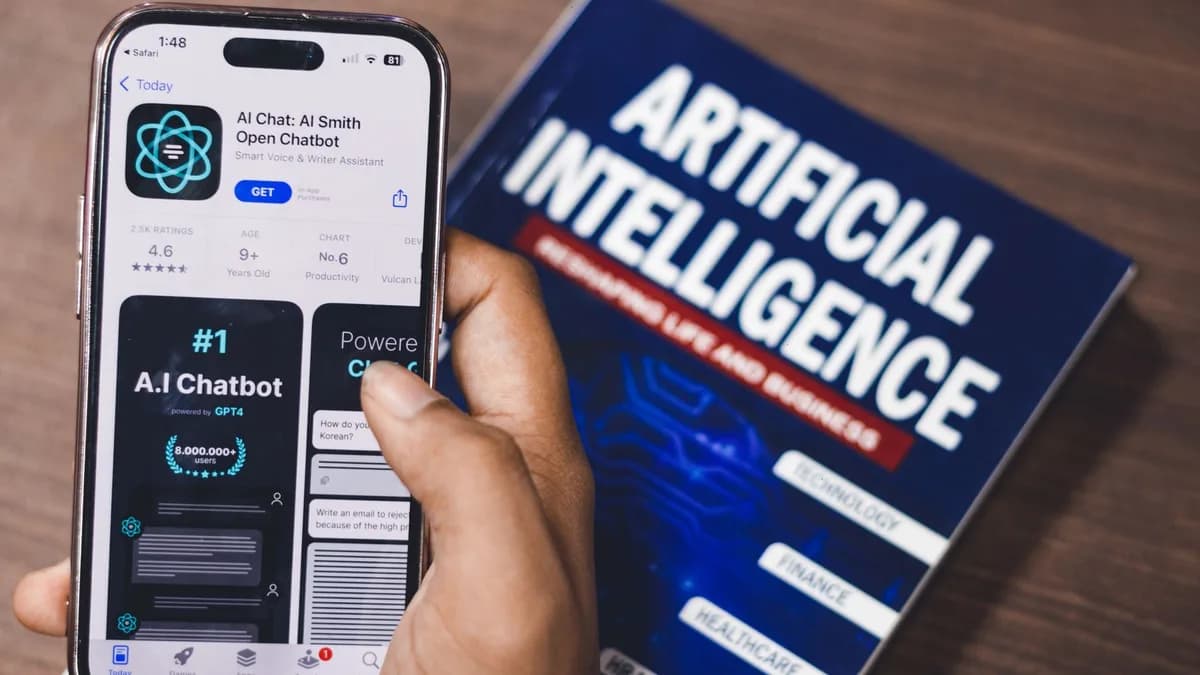
OpenAI Brands Apple Lawsuit 'Oddly Personal' in Public War
XOOMAR Intelligence
Analyst Take
OpenAI didn’t file a legal brief. It posted a blog. Titled “Apple is getting this wrong,” the overnight post calls Apple’s trade secret lawsuit “careless, aggressive, and oddly personal.” It publishes iMessage and email exchanges with former Apple employees. This is not a courtroom strategy. It’s a public relations offensive, and it reveals a company far more worried about its reputation than it wants to admit.
The keyword for this story is Apple OpenAI lawsuit. It marks a defining moment where a major AI player fights not just in court, but for the narrative.
OpenAI's Public Memo Is a Blatant PR Ploy, Not a Legal Defense
OpenAI’s blog post is a calculated move designed to influence public sentiment before a legal verdict. By framing Apple’s lawsuit as “oddly personal,” they attempt to paint themselves as the underdog victim, the scrappy innovator bullied by a corporate giant. This strategy reveals a deep anxiety about the core theft allegations and the potential financial damages and injunctions Apple seeks. The post is a classic deflect-and-distract playbook, common in tech PR scandals: when you can’t yet win on the law, try to win in the forum of Twitter threads and tech news cycles. They state, “We’re much more interested in building innovative products and technologies that push the frontier.” That’s a mission statement, not a legal defense. It’s meant to resonate with supporters of “innovation” over “litigation,” a clever but hollow dichotomy when actual theft is alleged.
Apple's Lawsuit Exposes the Raw Nerve of AI's Training Data
At its core, this lawsuit challenges the foundational “borrowing” and scraping ethos of modern AI development. Apple’s accusation—that former employees Chang Liu and Tang Tan took “secret and confidential information regarding our unreleased technologies, processes, and products”—cuts to the ethical and legal ambiguities Silicon Valley often exploits. For years, the AI industry has operated with a loose interpretation of intellectual property, whether it’s training models on copyrighted text or, as alleged here, recruiting talent and the proprietary knowledge in their heads. Apple’s 41-page complaint is a direct shot across that bow. If Apple proves its case, it sets a precedent that could cripple other AI firms built on similar, aggressive data and talent acquisition strategies. This isn’t just about two companies; it’s a proxy war over who owns the intellectual ingredients of intelligence, both artificial and human. It echoes questions we’ve seen about OpenAI’s data practices in other contexts.
Why OpenAI's 'Cherry-Picked' Email Trail Is a Slippery Slope
Releasing selective communications is a PR power move, but a legally perilous one for OpenAI. The company shared messages where an Apple employee allegedly asked for help locating files, framing it as “residual access” caused by Apple’s own poor offboarding. They also published an email where Apple lawyers apparently emailed the wrong person, “confusing two Asian last names.” This is potent, shareable stuff.
However, it invites Apple’s lawyers to demand the full, unedited correspondence chain in discovery. Every released, out-of-context snippet could be turned against them, revealing omitted details that change the narrative. This tactic risks making OpenAI look desperate and manipulative to a judge, whose job is to weigh all evidence, not a curated highlight reel. It’s a gamble: win the morning’s headlines, but potentially poison the well for the actual trial. The blog post reads like a opening statement for the public. In court, that statement is followed by cross-examination.
The Flimsy Counterargument: That This Is Just 'Aggressive' Business
Some will reflexively argue Apple is simply using its legal muscle to stifle a competitor, a tale as old as tech. They might claim this is standard corporate hardball, and OpenAI is right to fight fire with a PR campaign. This perspective dangerously conflates aggressive competition with the alleged act of systematic theft.
Apple’s filing contains specific, detailed claims: that Liu downloaded “dozens of Apple’s confidential hardware-related files” using an authentication bug weeks after leaving; that Tan instructed job candidates to bring “actual parts” from Apple to interviews for “show and tell.” These are not vague accusations of “poaching.” They are allegations of a coordinated effort to extract and use protected information. Dismissing the suit as mere corporate bullying ignores the substance of the alleged wrongdoing. It assumes all tactics are fair in the race for AI supremacy, a philosophy that regulators and courts are increasingly unwilling to accept. This case follows a pattern of growing scrutiny on how AI companies operate at their foundations.
The Real Stakes: A Reckoning for AI's 'Move Fast and Take Things' Culture
This public spat forces a long overdue conversation about the boundaries of innovation in the AI gold rush. Win or lose, the case exposes the shaky ethical ground the AI boom is built upon—a culture where the ends (breakthrough products) have often justified ethically murky means (data scraping, talent raids, IP gray areas).
For the broader industry, the scariest outcome isn’t a financial loss for OpenAI, but a new, strict legal standard for how companies handle the transition of employees and the proprietary knowledge they carry. It could force wholesale changes in hiring protocols and internal data governance. The court of public opinion might side with the charismatic underdog, feeling that Apple is suing because it’s scared of OpenAI’s rumored screen-free “humanlike AI companion” device. But the court of law deals in evidence, not vibes. A ruling against OpenAI could be a landmark that chills the entire sector, mandating a slower, more documented, and legally scrupulous path to innovation.
Stop Cheering for Sides and Start Demanding Transparency
The public shouldn’t get played by either company’s narrative. Our role is to demand facts, not pick teams based on brand loyalty or anti-big-tech sentiment. Real accountability will come from the discovery process and the courtroom, not a blog post or a defiant press release. This case is a critical stress test for intellectual property in the AI age.
Watch the evidence, not the spin. The verdict, whenever it comes, will be a landmark shaping how talent and ideas flow in the world’s most competitive industry. Until then, view every public statement—from OpenAI’s “oddly personal” framing to Apple’s dramatic claim that OpenAI’s hardware business is “rotten to its core”—as a piece of strategy, not an objective truth. The discovery process will tell the real story. Everything else is just noise.
Why This Changes Everything
- This public fight shifts the battleground from legal technicalities to public sentiment, potentially shaping regulatory and consumer views on AI ethics.
- It exposes the high-stakes debate over the foundational 'borrowing' of data that powers modern AI development, putting corporate secrets and training practices under scrutiny.
- A major AI player's aggressive PR defense reveals deep anxiety about core theft allegations, signaling that reputational risk is now as critical as legal liability in the tech industry.
Sources

Written by
XOOMAR Insights Team
Research and Editorial Desk
The XOOMAR Insights Team pairs automated research with human editorial judgment. We track hundreds of sources across technology, fintech, trading, SaaS, and cybersecurity, cross-check the facts, and explain what happened, why it matters, and what to watch next. We do not just rewrite headlines. Every article is fact-checked and scored for reliability before it goes live, and we link back to the original sources so you can verify anything yourself.
Explore More Topics
Related Articles
 Technology
Nvidia Risks $250B on OpenAI Data Center Funding Bet
Nvidia may guarantee $250B for OpenAI's Ohio data center lease, pulling the chip giant deeper into AI infrastructure finance.
 Technology
80% Luna Cut Rewrites OpenAI GPT-5.6 Pricing Math for APIs
OpenAI cut GPT-5.6 Luna API prices 80%, trimmed Terra 20% and made Sol faster, making high-volume AI workloads easier to justify.
 Technology
Ten Claimed Math Proofs Put OpenAI Astra On Trial in Public
OpenAI says Astra solved ten unsolved math problems, turning its next model into a credibility test for long-running AI reasoning.
 Technology
Microsoft AI Models Drag OpenAI Into a Margin Fight
Nadella is turning Microsoft AI models into leverage against OpenAI and Anthropic, with Azure customers and margins at stake.
 Technology
20.7x Token Surge Forces AI Cost Management Crackdown
AI token spend across Ramp customers jumped 20.7x, forcing CFOs to treat model usage as a controlled operating expense.
 Cybersecurity
AI Hackers Push Horizon3 to a $250M Cyber War Chest
Horizon3 raised $250M at a $2B valuation, turning autonomous pentesting into a high-stakes bet against AI-driven attacks.
 Cybersecurity
FBI Agent Stole $1M in Crypto from Monitored Nation State
An FBI agent used his access to steal $1 million in cryptocurrency from wallets his own national security unit was monitoring, leading to his arrest and a major
 Future Fiction
Cyclist Dies After Riding 5,200km For Charity At 82
An 82-year-old man completed a 5,200km cross-country bike ride for charity, celebrated with loved ones, and died peacefully the next day, closing a purposeful f
 Global Trends
Canada Ignores UN Plea to Protect Sikh Activist Being Hunted
UN human rights experts have publicly urged Canada to protect a Sikh activist on its soil, citing documented death threats and accusing the government of failin
 Fintech
South Africa Demands Control Over Every Crypto Penny Abroad
South Africa has proposed radical new rules requiring all cross-border crypto transactions to flow through authorized providers and be reported to the central b
Don't miss the signal
Get our weekly roundup of the stories that matter across tech, fintech, and trading. No noise, just signal.
Free forever. No spam. Unsubscribe anytime.