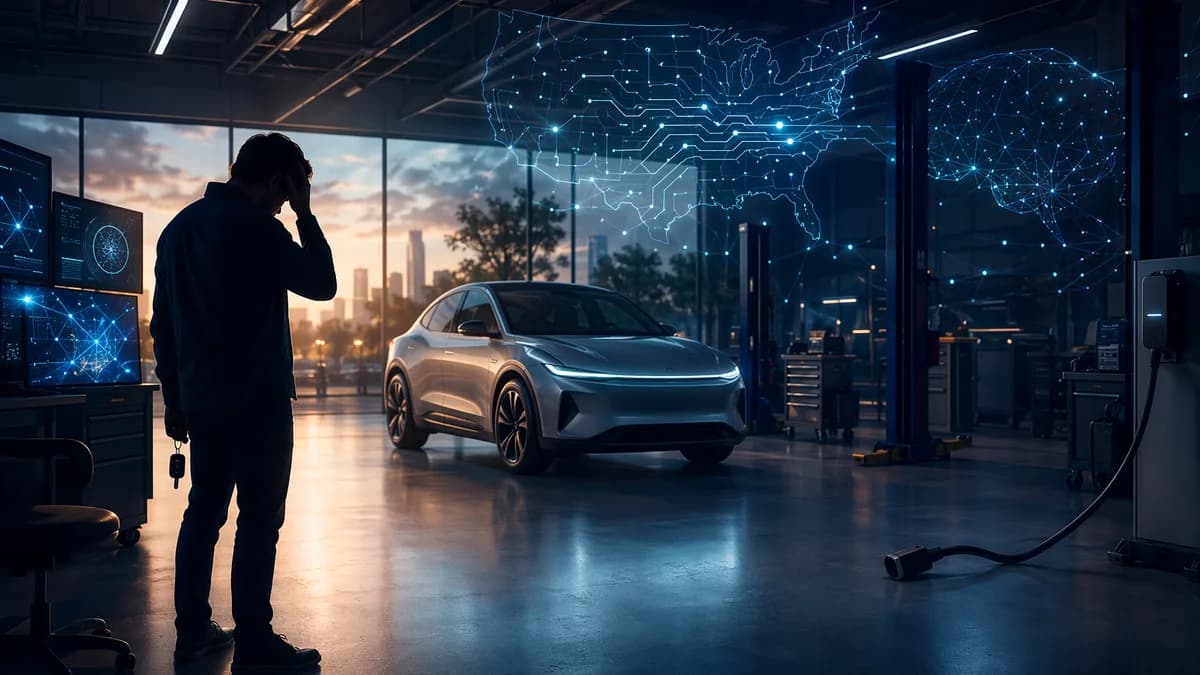
Polestar owners now face the hardest kind of car problem: their vehicles still work, but the brand’s US future does not.
XOOMAR Intelligence
Analyst Take
The Polestar US exit starts with model year 2027, after federal officials denied the EV maker authorization to keep selling vehicles under rules targeting Chinese-linked connected vehicle software, according to The Verge. Polestar is headquartered in Sweden, but majority owned by China’s Geely, placing it inside a policy fight over software, data, and control of connected cars.
For current owners, the immediate question isn’t whether their cars vanish from driveways. They won’t. The harder question is whether service, warranty work, lease returns, software support, and resale confidence survive once new-car sales stop.
“It feels like we’re the ones left holding the bag, with no compensation for the sudden loss in market value on cars we just bought or leased,” said DL Byron, a Washington state Polestar 2 owner, in The Verge.
Why Polestar owners and used EV buyers should care about the US sales shutdown
A modern EV purchase is tied to more than a battery pack and a monthly payment. It depends on a service network, dealer economics, software access, parts flow, warranty obligations, and buyer confidence in the used market.
That’s why the Polestar US exit lands harder than a routine product cancellation. Polestar says it will stop selling vehicles in the US starting with the 2027 model year. Existing cars remain on the road, but the infrastructure around them could change fast.
The exposed groups are clear:
- Current owners: They need warranty repairs, parts, diagnostics, and support.
- Leaseholders: They need a clear path for lease returns and end-of-term handling.
- Used EV shoppers: They now have to price in uncertainty around long-term support.
- Dealers: They invested in signage, leases, facilities, and parts for a brand that will no longer sell new cars in the US.
- EV buyers broadly: They’re watching a live case study in how geopolitics can alter vehicle ownership after the sale.
This sits beside a wider policy pattern around Chinese-linked technology. XOOMAR readers tracking Washington’s pressure on Chinese tech firms can also read our coverage of Cheap Chinese AI Models Rattle Congress and US Firms. Different sector, same broad tension: US officials are scrutinizing foreign-controlled technology that touches American users.
What triggered Polestar’s US exit after the Chinese connected vehicle software ban?
The trigger was not a bad quarter or a simple import tariff. The issue is connected vehicle technology.
The federal rule targets vehicles with Chinese-made connected vehicle software, tied to concerns that modern cars collect data, receive updates, communicate with outside networks, and contain systems that could be remotely accessed. Polestar’s ownership structure put it in the firing line.
Polestar is based in Sweden, but Geely is its majority owner. The Verge reports that the federal government denied Polestar authorization to continue selling its cars despite the rule banning vehicles with Chinese-made connected vehicle software. That denial made future US sales untenable.
The result is especially awkward because Volvo, also majority owned by Geely, received authorization from the Commerce Department to keep selling in the US despite its Chinese ties. That contrast has angered owners.
“The ‘brand‑within‑a‑brand’ model failed in the U.S., and that’s on Polestar — not on the owners who bought in,” Byron told The Verge. “We deserve better.”
The rule’s logic turns on trust in connected systems, not just where a vehicle is assembled or sold. That distinction matters. It means a car brand can be caught by corporate ownership and software concerns even if buyers saw it primarily as a Swedish premium EV nameplate.
How warranties, repairs, parts, and software updates could work for existing Polestar cars in the US
Polestar says owners and lease customers will still be supported.
“Existing Polestar owners and lease customers will continue to receive the same level of support and access to service as they do today,” Polestar spokesperson Michael Ofiara said. “All existing warranties remain in effect and will continue to be honored in accordance with their terms and conditions.”
That statement matters, but it doesn’t answer every practical question.
Dealer Matthew Haiken, who owns a Polestar dealership in Short Hills, New Jersey, told The Verge that dealers still face legal obligations after new sales stop. In New Jersey, Polestar vehicles carry an eight-year battery warranty. In California, battery warranty coverage is 10 years or 150,000 miles.
So the obligation can outlast the sales business by years.
The problem is dealer economics. If a dealer no longer has new vehicles to sell, the reason to keep a dedicated Polestar site open weakens. Haiken said dealers made investments that can’t easily be repurposed, including Polestar signage, long-term real estate leases, and specialized replacement parts.
“This is the first time that anyone has said, ‘Hey, this is not us. It’s outside our control. It’s the government,’” Haiken told The Verge. “So we’re left very vulnerable.”
The service map is the pressure point. Polestar told Reuters it has 32 service centers in the US, many co-located with Volvo dealerships. But The Verge also cited a Reddit report from a Polestar lessee saying San Francisco and San Jose service centers were being dissolved, potentially forcing a trip of more than 300 miles to Los Angeles for a lease return. A Polestar dealer replied that Volvo dealerships in nearby Marin County would likely accept the vehicle.
That is the ownership risk in one sentence: the warranty may still exist, while the nearest practical support point moves.
What happens to Polestar resale values, leases, and dealer commitments?
Resale confidence can crack before formal support does. Byron bought a certified pre-owned Polestar 2 just days before the US shutdown announcement, then faced an immediate change in market perception.
Owners carry that risk directly. If used buyers worry about service access or dealer closures, offers can fall. The Verge notes this is happening at a time of record-high EV depreciation, which makes brand uncertainty even more painful for recent buyers.
Leaseholders face a different problem. They may not own the residual-value risk in the same way an owner does, but they still need a place to return the vehicle and a process that works. If nearby service or retail locations close, the inconvenience can become real.
Dealers have their own version of being stuck. They must manage lease returns, buy returned vehicles, and resell them on the used market. Haiken said his dealerships have to be there for customers, but the operating model is unclear.
“It’s still too new to know what the future holds,” Haiken said. “We have to be here for our customers, but what does that mean? How does it work? I don’t know at this point.”
Polestar is also trying to clear remaining vehicles. Haiken said he expects sales to pick up because of discounts of up to $25,000 off on Polestar 3 and Polestar 4 models. That may move inventory, but it also highlights the bargain-risk tradeoff facing buyers: a cheaper vehicle from a brand exiting US sales.
For readers tracking how regulation can force products out of markets, XOOMAR has also covered a non-auto example in Battery Rule Ends Nintendo Switch Sales in Europe in 2027.
How a Polestar 2 owner could feel the shutdown in real life
Byron’s case shows the problem without needing a dramatic breakdown. He bought a certified pre-owned Polestar 2 days before the announcement. The car did not change overnight. The ownership assumptions did.
A normal ownership cycle now has more friction points:
- Service access: Is the nearest Polestar-certified location still open?
- Warranty claims: Which dealer will process the work if local facilities close?
- Lease returns: Where does the car go at the end of term?
- Software support: Will updates continue on the same cadence?
- Used sale timing: Will buyers discount the car because the US brand presence is shrinking?
The Verge’s reported Bay Area example gives the clearest concrete risk. If local service centers dissolve and the practical return point shifts hundreds of miles away, support technically exists but becomes harder to use.
That’s the distinction owners should focus on. Polestar’s warranty promise is important. The dealer footprint will determine how useful that promise feels.
What Polestar owners should do before the US support network changes
Owners shouldn’t panic, but they should get organized now.
Start by saving every relevant document: warranty terms, service records, lease paperwork, software update notices, recall-related communications if any are issued, and emails from Polestar or local dealers. If a dispute comes later, documentation matters.
Then contact the nearest Polestar service location and ask direct questions:
- Certification: Do you expect to remain an authorized Polestar service point?
- Warranty work: Will you continue handling battery and vehicle warranty claims?
- Lease returns: Where should leaseholders return cars if sales locations change?
- Parts: Are there any expected delays or changes in ordering procedures?
- Future communications: How will owners be notified if the location changes?
Used shoppers should ask the same questions before buying. A discount only matters if the support path is acceptable.
The next scenario to watch is not whether Polestar survives globally. The company says 94 percent of retail sales volumes in the first quarter of 2026 originated from markets outside the US, though some US dealers dispute that figure. The real US question is narrower and more urgent: how many dealers stay active once new sales stop, and whether Polestar can keep service convenient enough for owners who already bought in.
Impact Analysis
- Polestar’s planned US sales halt from model year 2027 could weaken confidence in service and resale support.
- Owners may face uncertainty over warranty work, parts availability, software updates, and lease returns.
- The decision shows how connected-car policy can directly affect EV buyers, dealers, and used-car markets.
Who Is Affected by Polestar’s US Sales Exit
| Group | Main Concern |
|---|---|
| Current owners | Warranty repairs, parts, diagnostics, and service support |
| Leaseholders | Lease returns and end-of-term handling |
| Used EV shoppers | Uncertainty around long-term support and resale value |
| Dealers | Investment in brand infrastructure despite future sales ending |
Primary Sources & Disclosures
- [1]The Verge
- [2]Polestar Exits US Market As Connected Vehicle Rule Punishes Geely Ownership Over Factory Address
- [3]'We Don't Know What We're Doing': Inside the Post-Ban Chaos at Polestar Dealerships
- [4]US bans Polestar over fears company could ‘share data’ — premium EV brand forced to quit America, while its sister brand gets a pass

Written by
XOOMAR Insights Team
Research and Editorial Desk
The XOOMAR Insights Team pairs automated research with human editorial judgment. We track hundreds of sources across technology, fintech, trading, SaaS, and cybersecurity, cross-check the facts, and explain what happened, why it matters, and what to watch next. We do not just rewrite headlines. Every article is fact-checked and scored for reliability before it goes live, and we link back to the original sources so you can verify anything yourself.