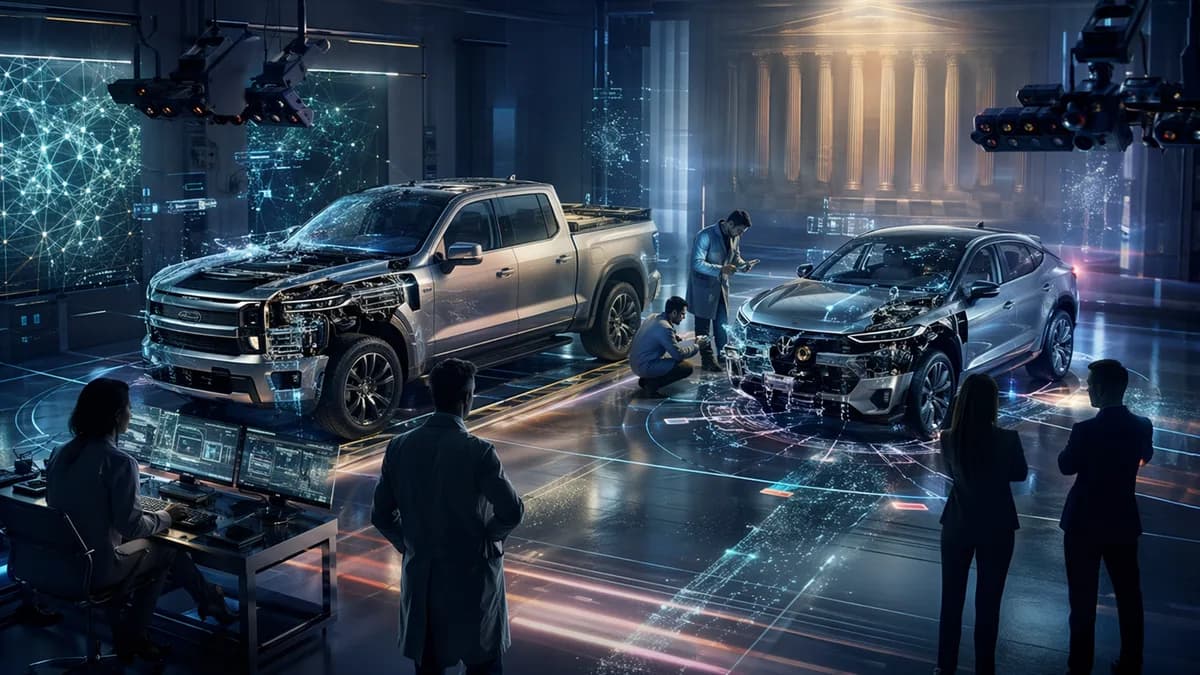
A five-year autonomy pitch is now at the center of a Rivian self-driving lawsuit, with owners accusing the EV maker of selling first-generation R1T trucks and R1S SUVs on hands-free driving features that never arrived.
XOOMAR Intelligence
Analyst Take
The proposed class action, filed Wednesday in the U.S. District Court for the Central District of California, alleges Rivian falsely represented that its early R1 vehicles would eventually support hands-free, eyes-off driving, according to TechCrunch. Rivian declined to comment, citing pending litigation.
Five years of Driver+ claims now face a fraud test
The complaint targets first-generation Rivian R1T and R1S vehicles and the company’s Driver+ system. Plaintiffs say Rivian told buyers through a coordinated nationwide marketing campaign that Driver+ would be standard in every vehicle it builds and would deliver true hands-free capability.
The lawsuit frames the disputed feature as Level 3 autonomy, the SAE category in which a vehicle can manage steering, acceleration, and braking without the driver’s hands on the wheel or eyes on the road in certain conditions, such as highways or low-speed driving. It still requires a human to stay available to take over.
The core accusation is blunt: Rivian allegedly sold a future software capability that the hardware in Gen 1 vehicles could not support.
“No software update, no matter how sophisticated, will enable its Gen 1 Vehicles to perform as advertised,” the complaint reads. “Rivian unquestionably knew that its Gen 1 Vehicles would never be capable of Level 3 autonomy or ‘true hands-free driving’ yet continued to tout the supposed capabilities of its vehicles to induce consumers to purchase them.”
The suit cites multiple public appearances, including Rivian CEO RJ Scaringe’s appearance at TechCrunch Disrupt 2022, where he reportedly discussed the company’s autonomous driving ambitions.
This is still an allegation, not a finding. But the legal theory is clear: Rivian’s autonomy roadmap was not treated by buyers as vaporous tech optimism. Plaintiffs say it was part of the purchase case.
For more on how consumer-facing tech promises can become product risk, see XOOMAR’s coverage of After 5 Years, $99 Gemini Bet Revives Google Home Speaker, another case where long-running software expectations shape hardware value.
Gen 1 versus Gen 2 is the lawsuit’s sharpest contrast
The plaintiffs’ argument gains force from Rivian’s own product split. First-generation R1T and R1S vehicles do not offer hands-free driving, according to the source material. Second-generation R1 vehicles do.
Rivian overhauled its second-generation R1 lineup in 2024. The vehicles looked materially similar, but the company changed major internal systems, including the battery pack, suspension system, electrical architecture, interior seats, and sensor stack.
That hardware divide matters because the lawsuit claims Gen 1 owners were told their vehicles would receive capabilities that Rivian later delivered only after a major platform revamp.
| Rivian R1 generation | Hands-free driving status | Key autonomy hardware detail |
|---|---|---|
| Gen 1 R1T and R1S | Does not offer hands-free driving | Plaintiffs allege hardware cannot support advertised Level 3 capability |
| Gen 2 R1T and R1S | Offers hands-free driving | Equipped with Rivian Autonomy Platform, including 11 cameras, five radar sensors, and a computer Rivian said is 10 times more powerful than the prior system |
The Gen 2 system initially included adaptive cruise control and a highway assist feature that automatically steers, brakes, and accelerates on select highways. Last year, Rivian pushed Universal Hands-Free driving to second-generation R1 vehicles through a software update.
That feature lets drivers take their hands off the wheel on more than 3.5 million miles of roads in the United States and Canada, including highways and surface streets, as long as visible lane lines are present.
Analysis: that is the commercial pressure point. If Rivian had marketed hands-free driving as a future-defining R1 capability, but the feature ultimately required Gen 2 hardware, plaintiffs will try to show Gen 1 buyers paid for an upgrade path that did not exist.
Owners say future autonomy helped sell today’s trucks
The complaint includes three named plaintiffs and brings claims for fraud, negligent misrepresentation, and unjust enrichment. The law firms Coleman Law and Tycko & Zavareei are representing the plaintiffs and have requested a jury trial.
Their damages theory appears to rest on a simple claim: buyers say they purchased R1 vehicles in part because Rivian said advanced hands-free driving would arrive later. If those claims inflated the perceived value of the vehicles, plaintiffs can argue they overpaid.
That distinction matters. The complaint is not merely about whether Driver+ worked as a conventional driver-assistance system. It centers on whether Rivian sold customers on a higher level of autonomy, then failed to deliver it to the vehicles at issue.
Driver-assistance features such as adaptive cruise control and lane-centering are now common selling points in high-end EVs. But hands-free or eyes-off driving sits in a different category because it changes the buyer’s expectation of what the vehicle will become through software.
This follows a pattern XOOMAR has tracked across software-dependent products, where buyers increasingly pay for future capability as much as present hardware. The gaming industry has seen similar tension around updates and upgrade paths, as covered in Free GTA V Upgrade Exposes Rockstar's Big GTA VI Play.
Rivian has already dealt with another high-profile legal challenge. Last year, the company agreed to pay $250 million to settle a class action shareholder lawsuit filed after it suddenly hiked prices on its R1 pickup truck and SUV in 2022.
Autonomy language is getting harder to defend in court
Rivian is not the only automaker facing legal pressure over self-driving promises. The TechCrunch report notes that Tesla and Elon Musk have spent a decade claiming Tesla vehicles would become fully autonomous through Full Self-Driving software.
Some Tesla owners have sued over alleged failure to deliver unsupervised Full Self-Driving. Tesla has also faced regulatory scrutiny over claims tied to FSD and Autopilot.
The California Department of Motor Vehicles accused Tesla of deceptively marketing Autopilot and Full Self-Driving. A judge ruled in the DMV’s favor, though the agency decided in February not to suspend Tesla’s sales and manufacturing licenses because Tesla had stopped using the term “Autopilot” in its California marketing.
For Rivian, the immediate issue is narrower: what exactly did the company say about Gen 1 R1 autonomy, when did it say it, and did buyers reasonably rely on those statements before purchase?
The company’s formal response will matter. Rivian may seek dismissal, challenge the fraud theory, or argue that its public statements did not amount to binding promises about Level 3 capability for Gen 1 vehicles.
Certification could turn one complaint into a broader R1 owner fight
The next major legal question is whether the court allows the proposed class to move forward. Class certification would raise the stakes by letting the case proceed on behalf of a wider group of first-generation R1 owners, not just the three named plaintiffs.
The factual record will likely focus on four points:
- Promises: What Rivian said about Driver+ and hands-free driving.
- Timing: Whether those statements were made before affected buyers purchased.
- Hardware: Whether Gen 1 R1 vehicles can support the disputed features.
- Reliance: Whether buyers saw and relied on Rivian’s autonomy claims.
A dismissal would limit the near-term legal threat. Certification would put Rivian’s multi-year autonomy marketing under a much brighter courtroom light.
The bigger issue for EV makers is practical, not philosophical. If a company sells a vehicle as a software platform, courts may ask whether the roadmap was marketing language or a promise with economic value. The Rivian self-driving lawsuit will test where that line sits for Gen 1 R1 owners.
Impact Analysis
- The case could test how far EV makers can go in marketing future software-based driving features.
- Rivian owners may seek compensation if courts find the company overstated Gen 1 vehicle capabilities.
- The lawsuit adds scrutiny to autonomy claims across the auto industry as promised features lag real-world deployment.
Rivian Driver+ Claims vs. Lawsuit Allegations
| Issue | Rivian Marketing Claim | Plaintiffs' Allegation |
|---|---|---|
| Hands-free driving | Driver+ would support hands-free capability in R1 vehicles. | Gen 1 R1T and R1S vehicles cannot deliver true hands-free driving. |
| Autonomy level | Early R1 vehicles were pitched as eventually supporting advanced autonomy. | The lawsuit says the promised capability amounted to Level 3 autonomy that the hardware cannot support. |
| Software updates | Future updates were presented as a path to added capability. | Plaintiffs argue no software update can make Gen 1 vehicles perform as advertised. |
Primary Sources & Disclosures

Written by
XOOMAR
Data desk
XOOMAR is a capital markets software and data company. Every brief on this site starts from a dataset the company collects itself from primary sources (CFTC, SEC EDGAR, FINRA, the Federal Reserve, exchange APIs) and names the numbers it is built on, with a link to the data page so you can check them. Briefs are reviewed before they go out and corrected in place when the data is revised.