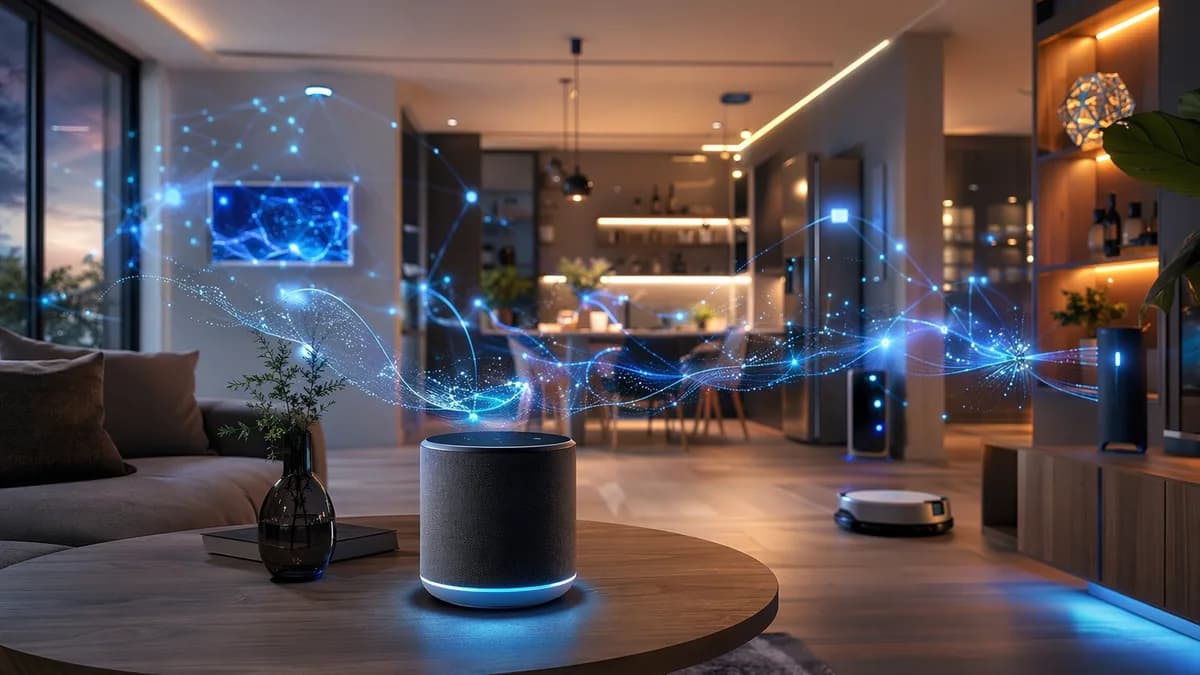
Google's first stand-alone smart speaker since September 2020 is a $99.99 Google Home Speaker built around Gemini, a clear attempt to make voice hardware feel useful again after years of stiff commands and minor updates.
XOOMAR Intelligence
Analyst Take
Google introduced the device on Wednesday, positioning it as its first audio product designed specifically for Gemini, according to TechCrunch. The speaker is available for preorder now and will ship later this month.
Google Home Speaker launches at $99.99 with Gemini built in
The Google Home Speaker replaces the old Assistant-era model with a more conversational interface. Instead of phrasing requests in the exact way a speaker expects, users can speak more naturally, stack tasks together, and correct themselves mid-command.
That matters because the last stand-alone Google smart speaker, Nest Audio, arrived in September 2020. Back then, smart speakers were mostly voice remotes for lights, music, timers, and basic home routines. They worked, but often only if users learned the machine’s syntax.
Google is now trying to reset that bargain. The new speaker leans on AI assistants to handle the kind of messy, casual speech that made older voice assistants feel brittle.
“turn off all the lights except for my bedside lamp,”
“dim the kitchen lights, play some relaxing music, and set a timer for 20 minutes.”
Google also says Gemini can understand corrections while someone is still talking. A user could say, “Turn off the coffee maker … I mean, turn it on!” and the speaker should respond to the correction rather than forcing a restart.
That’s the core bet. If Gemini can make home commands feel less like programming and more like talking, Google has a reason to bring people back to a category that had gone quiet.
Gemini aims to fix the smart speaker's command problem
Older smart speakers trained users to speak in fragments. Wake word. Device name. Command. Repeat if it failed.
The Google Home Speaker is built to loosen that pattern. It supports natural language requests, multistep instructions, and follow-up exchanges through Continued Conversation, which lets the microphone stay on briefly so users don’t have to say “OK, Google” again for every question.
Google is also shipping the device with 10 new voices. The speaker can hold two-way conversations that go beyond basic smart home controls, closer to how people already use Gemini on a smartphone.
Here’s the practical difference:
| Feature | Older Google smart speakers | New Google Home Speaker |
|---|---|---|
| Assistant model | Google Assistant commands | Gemini conversations |
| Request style | More rigid phrasing | Natural language requests |
| Task handling | Often one command at a time | Multistep requests |
| Corrections | Usually restart the request | Mid-sentence corrections supported |
| Follow-ups | Wake word often required again | Continued Conversation can keep listening briefly |
The hardware still looks familiar. Google kept the rounded design and 3D-knit textile wrapping, with dimensions of 3.4 x 4.2 inches. In the U.S., it comes in Jade and Berry, in addition to Hazel and Porcelain, which are available in the rest of the world.
A new ring light at the bottom shows whether the speaker is listening, thinking, or responding. That small detail matters because AI voice devices need visible feedback when they’re processing more than a simple timer.
For readers following how AI features are being pushed into consumer products, XOOMAR has also covered the broader consumer AI race in Pinterest Bets Ask Pinterest Can Steal AI Shopping. The Google version is different because the interaction happens in the home, often through voice, and sometimes through connected cameras.
Google returns to smart home hardware after a long pause
The launch is less about speaker design than Google’s renewed smart home pitch. The company is betting that Gemini can make the speaker a daily interface again, not just a countertop music box.
The timing is notable because Google’s smart speaker hardware has been dormant since Nest Audio in September 2020. A related PCMag report described Google’s smart home announcements as having slowed sharply in recent years, while noting that the company had taken steps around Matter, the interoperability standard for connected devices.
The new device gives Google a way to tie together several existing home surfaces: Google Home controls, Nest cameras, voice conversations, and Gemini. The strongest version of this product is not the speaker as a gadget. It’s the speaker as the front door to Google’s home software.
But Google is also drawing a line between included AI features and paid ones.
Google Home Premium costs $10 per month or $100 per year. The plan unlocks more advanced AI features, including free-flowing Gemini Live conversations started by saying, “Hey, Google, let’s chat.”
Premium also adds camera-related intelligence for Nest users. Google says subscribers can ask about activity captured by Nest cameras and get summaries of what happened at home while they were away.
Google will offer those advanced features free for six months before pushing users toward a subscription. That trial is doing real work. It gives Google time to prove that the paid layer is more than a novelty.
The subscription split may decide whether this feels useful or annoying
The biggest unresolved question is not whether Gemini sounds smarter than Google Assistant. It almost certainly will in controlled demos. The question is which features users get at the base $99.99 price, and which ones sit behind Home Premium.
If natural language smart home control works well without a subscription, the Google Home Speaker has a clear upgrade case for existing Google Home users. If the best conversations, camera summaries, and richer home intelligence live behind Premium, some buyers may see the speaker as a cheap device attached to another monthly bill.
XOOMAR analysis: the adoption test will come down to three things.
- Reliability: Gemini has to handle interruptions, corrections, background noise, and household phrasing without turning every request into a retry loop.
- Transparency: Continued Conversation and the ring light need to make it obvious when the speaker is listening or processing.
- Value: Home Premium has to justify $10 per month with features people use often, not just features that sound impressive at launch.
There’s also a practical security layer anytime home devices become more capable and more central to daily routines. For a separate look at login and account-risk tradeoffs, see XOOMAR’s Password Manager vs Browser Passwords Exposes Login Risk.
Google doesn’t need the new speaker to prove that Gemini can talk. It needs the device to prove that voice computing can become less fragile inside the home. The scenario to watch now is simple: if early buyers use Gemini for real household tasks after the six-month trial ends, Google may have a revived smart home platform. If they fall back to timers and music, this becomes another AI demo wrapped in fabric.
The Bottom Line
- Google is using Gemini to revive interest in a smart speaker category that has seen few major updates since 2020.
- More conversational commands could make smart home devices easier for regular users to control.
- The $99.99 speaker shows Google wants generative AI to move beyond phones and search into everyday home hardware.
Google Home Speaker vs. Nest Audio Era
| Feature | Google Home Speaker | Nest Audio / Older Smart Speakers |
|---|---|---|
| AI system | Gemini built in | Assistant-era voice controls |
| User interaction | Natural speech, stacked tasks, mid-command corrections | More rigid commands requiring specific phrasing |
| Positioning | Designed to make voice hardware feel useful again | Primarily used for lights, music, timers, and basic routines |
| Launch timing | Available for preorder now, ships later this month | Last stand-alone Google smart speaker arrived in September 2020 |
| Price | $99.99 | Not specified in the article |
Primary Sources & Disclosures

Written by
XOOMAR
Data desk
XOOMAR is a capital markets software and data company. Every brief on this site starts from a dataset the company collects itself from primary sources (CFTC, SEC EDGAR, FINRA, the Federal Reserve, exchange APIs) and names the numbers it is built on, with a link to the data page so you can check them. Briefs are reviewed before they go out and corrected in place when the data is revised.