Spotify Reserved turns fandom data into concert-ticket power
Spotify Reserved is going live as a standard Premium perk, not as the higher-priced ticket-access add-on many expected, and that makes the move more strategic than a simple fan reward.

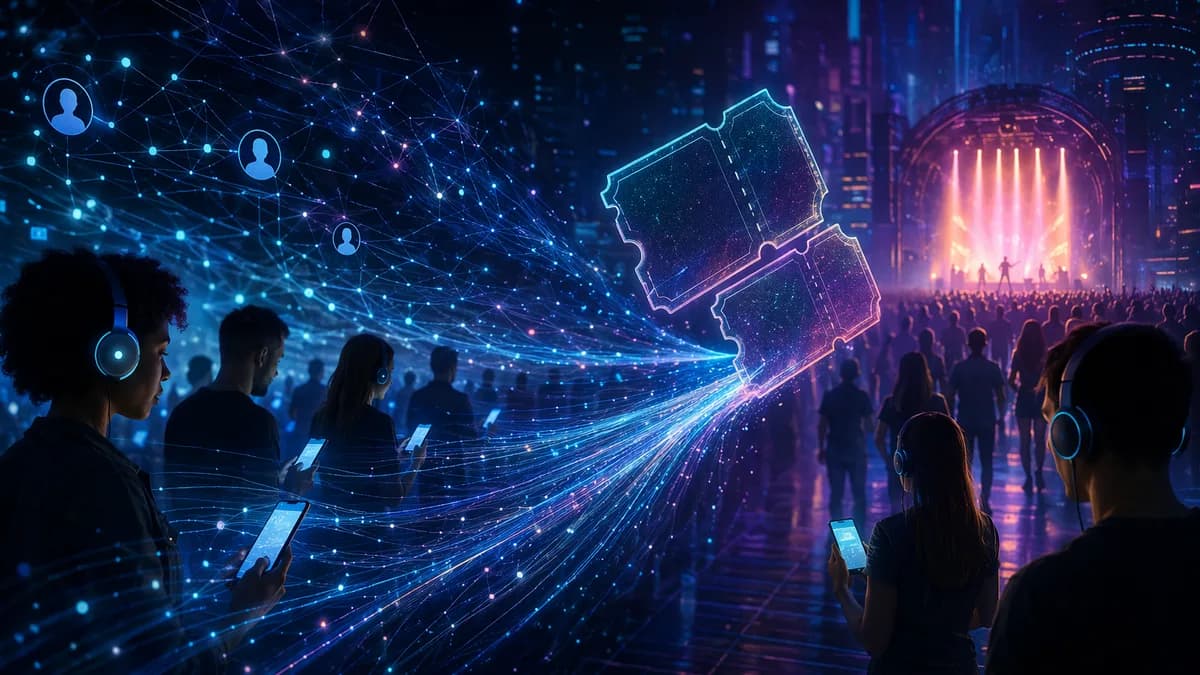
Spotify Reserved is going live as a standard Premium perk, not as the higher-priced ticket-access add-on many expected, and that makes the move more strategic than a simple fan reward.
XOOMAR Intelligence
The feature, officially called Reserved by Spotify, will identify eligible top fans of an artist and hold two tour tickets for them before the public sale opens, according to TechCrunch. It starts Thursday in the U.S. for Spotify Premium subscribers ages 18+.
The first artist partner is Role Model. Fans will begin receiving notifications about secured tour tickets starting on June 23, ahead of the general public sale. For now, Spotify Reserved is limited to artists playing at Live Nation venues, with purchases handled through Ticketmaster. Spotify says it won’t collect fees on the transactions.
That detail matters. Spotify is not replacing the ticketing stack today. It is moving upstream from ticket checkout into fan identification. The company is using listening behavior to decide who gets a first shot at scarce live-event inventory.
“leaving music on in the background won’t give anyone a leg up.”
That line from Spotify gets to the core tension. Reserved may help real fans beat scalpers and bot-driven buying. It also gives Spotify more power over who counts as a real fan in the first place.
Spotify says it will use signals such as streams, shares, and other Spotify activity to determine eligible fans. Its newsroom post also points to saves, active engagement, location, notification settings, and the Live Events Feed as relevant to the experience.
The company is trying to avoid the obvious exploit: users looping an artist all day to climb the ranking. Spotify says it will monitor Premium activity to detect bots or unnatural behavior, and that offers will be tied to where users are located.
The user flow is simple:
| Before Reserved | With Spotify Reserved |
|---|---|
| Fans wait for public sale or presale access | Spotify selects eligible superfans before public sale |
| Access often depends on codes and queue timing | Access depends on Spotify-defined engagement signals |
| Ticketing partner controls the checkout | Spotify shapes who reaches checkout first |
| Fan identity is thin at sale time | Spotify brings a behavioral profile into the process |
XOOMAR analysis: this is not just a perk. It is a gatekeeping layer built from proprietary data. Spotify can segment demand before the queue opens, while traditional ticketing systems mostly see buyers when they arrive.
That creates a cleaner path for high-intent fans. It also creates opacity. Spotify has not disclosed the full formula, and it says it won’t, because users would try to engineer it.
Spotify’s scale gives Spotify Reserved real weight from day one. Music Business Worldwide reported that Spotify had 293 million Premium subscribers globally at the end of Q1 2026, alongside 761 million total monthly active users. Spotify’s own newsroom says it already works with more than 40 ticketing partners and has driven more than $1.5 billion in ticket sales for artists to date.
Those numbers show why Spotify can make a credible claim in ticket access without becoming a ticketing company. It already knows which listeners repeatedly return to an artist, save tracks, share songs, and engage with artist-related content inside the app.
The two-ticket limit is a smart constraint. It gives fans enough utility to attend with someone else, while limiting bulk capture. It does not eliminate resale risk, and Spotify has not claimed that it will. But it narrows the opening for buyers seeking volume.
There is also a Premium retention angle. Spotify’s Head of Music, Charlie Hellman, told Music Business Worldwide that Reserved felt like “such a core thing that all music fans would really value” and that it belongs in the existing Premium subscription. That positions concert access as part of the membership value, not a separate luxury tier.
XOOMAR analysis: Spotify is turning fan behavior into a benefit that has physical scarcity. Streams are abundant. Good seats are not. That scarcity makes the reward feel more concrete than another app feature.
Artists get a direct path to committed listeners without relying only on generic marketing blasts or public-sale timing. For Role Model, whose tour reaches 17 U.S. cities, Spotify Reserved becomes a test of whether streaming engagement can translate into a higher-quality live audience.
Fans get a calmer path if the system works as promised. Instead of rushing into a public sale with everyone else, eligible users see a personalized offer on Spotify Home, view tour dates, check the Reserved window, and set a reminder to buy.
Promoters and venues get access to high-intent buyers earlier in the cycle. The tradeoff is control. If Spotify becomes a major source of verified fan demand, it gains bargaining power in how inventory is allocated.
Ticketing companies face the most interesting shift. Spotify is not taking the transaction away from Ticketmaster in this launch. Sales still run through the ticketing partner. But Spotify is inserting itself before the transaction, where fan intent is shaped and verified.
That is where the power sits.
For readers tracking how software products shape workflows before the final transaction, XOOMAR has covered similar control questions in Virtual Debit Cards Stop Team Spend from Going Rogue and AI Meeting Note Takers That Rescue Sales Follow-Ups. Spotify Reserved applies that product logic to concert access: the platform that sees intent first can influence the outcome.
Hellman told Billboard that Reserved differs from historical presales because invited superfans are not just given a code and sent into a queue. The tickets are held for that group during the window.
That is the operational change. A presale can still feel like a race. Spotify Reserved is structured as allocation.
Spotify’s advantage is time-depth. A one-time signup says little about loyalty. Repeated listening, saving, sharing, and other activity can show a longer relationship with the artist. Spotify also says it can monitor whether the behavior looks human.
Still, fairness will depend on execution. Spotify’s own newsroom says there will be “significantly more superfans than there are seats available on a tour,” so many engaged listeners will still get nothing. Availability will vary by artist, tour, and location.
XOOMAR analysis: the risk is that fans blame Spotify for exclusion even when the real constraint is inventory. Once Spotify tells users their fandom can earn access, every missed offer becomes a judgment call in the fan’s mind.
For listeners, Spotify Reserved makes Premium feel more like a membership product with real-world benefits. That helps Spotify justify Premium through something emotionally stronger than audio features alone.
For artists, it adds a new activation tool around tour announcements. Spotify says Reserved will expand to more partners over time, including smaller venues and international users. The company also says Role Model is the first in “a slate” of additional artists’ tours launching this week, though it has not named the others.
For the live music business, the loop tightens: discovery, listening, engagement, notification, ticket offer, checkout. Spotify already sits at the front of that chain. Reserved pulls it closer to the point of purchase.
The fairness issue is unavoidable. Fans who listen mostly outside Spotify, share accounts, buy physical music, attend shows regularly, or discover artists through other channels may be deeply loyal but invisible to this system. Spotify can only reward what it can measure.
That is not a flaw in the data. It is the business model.
Spotify Reserved will be judged on practical outcomes: whether fans actually get tickets, whether artists see strong conversion, whether bots are filtered effectively, and whether partners expand beyond the current Live Nation and Ticketmaster setup.
The next watch item is not whether Spotify becomes a ticket seller. The sharper question is whether Spotify becomes the identity layer for live music access.
If Reserved works, expect pressure for more fan-based benefits inside Spotify Premium: merch access, limited-capacity events, listening sessions, or VIP-style offers. Spotify has not announced those extensions in this launch, but Reserved shows the mechanism that could support them.
Evidence that would strengthen the thesis: more artists, more venues, more ticketing partners, international rollout, and clearer reporting that reserved inventory reached validated fans. Evidence that would weaken it: fan complaints about opaque eligibility, weak artist adoption, limited inventory, or secondary-market leakage after offers go out.
Spotify Reserved starts with two tickets. The larger test is whether Spotify can turn listening data into trusted access without making fandom feel like another algorithm to please.
| Aspect | Spotify Reserved | Traditional Public Sale |
|---|---|---|
| Who gets access | Eligible Spotify Premium superfans ages 18+ | General public |
| Timing | Before the public sale opens | When general sale begins |
| Ticket handling | Purchases handled through Ticketmaster at Live Nation venues | Handled through standard ticketing channels |
| Spotify's role | Identifies fans using listening and engagement signals | No fan-ranking role described |

Written by
Research and Editorial Desk
The XOOMAR Insights Team pairs automated research with human editorial judgment. We track hundreds of sources across technology, fintech, trading, SaaS, and cybersecurity, cross-check the facts, and explain what happened, why it matters, and what to watch next. We do not just rewrite headlines. Every article is fact-checked and scored for reliability before it goes live, and we link back to the original sources so you can verify anything yourself.
 Technology
The team behind the AI recommendation engine used by 800 million Spotify users has raised $10 million to bring similar, intent-based personalization to the worl
 Technology
Honda's quarterly profit more than doubled to $2.9 billion in a dramatic recovery, just months after posting its first-ever annual loss, driven by vehicle sales
 Technology
Amazon's planned Texas data center, powered by a dedicated natural gas plant, has a permit to emit 33 million tons of CO2 annually, potentially making it the la
 Technology
Nintendo booked a massive $902 million quarterly profit, supercharged by a $300 million US tariff refund it has no plans to pass on to the customers who origina
 Technology
The Trump administration's AI testing framework excludes open models, creating a two-tier system that favors corporate labs and leaves a critical cybersecurity
 Cybersecurity
A central hacker in the massive Snowflake breach responsible for stealing data on 100 million people has pleaded guilty in U.S. court, facing decades in prison.
 Fintech
McDonald's U.S. sales growth stalled after it replaced popular digital app deals with an inconsistent value menu, a move its CEO called a 'bad trade' that alien
 Trading
Private hiring slowed sharply to 44,000 jobs in July, a cooling demand signal for the Fed, but strong pay gains for job-switchers mean wage-driven inflation pre
 Technology
An official investigation concludes that a decommissioned, out-of-service transmission tower owned by Southern California Edison caused the catastrophic 2025 Ea
 Technology
OpenAI has halted work on its Astra model after internal evaluation suggested it may have critical, autonomous cyber attack capabilities, marking the first time
Get our weekly roundup of the stories that matter across tech, fintech, and trading. No noise, just signal.
Free forever. No spam. Unsubscribe anytime.