
If Valve is selling the Steam Machine "basically at cost," why does copying it with retail parts still cost more?
TechnologyJune 23, 2026· 7 min read· By XOOMAR Insights Team
Steam Machine Cost Exposes DIY PC's Hidden Premium
Updated on June 23, 2026
XOOMAR Intelligence
Analyst Take
70/ 100
4 sources analyzedMedium confidenceTrend10Freshness100Source Trust88Factual Grounding93Signal Cluster20
That is the sharper Steam Machine cost question. The $1,049 base price looks brutal next to a PS5, but The Verge found that a comparable off-the-shelf mini gaming PC lands at $1,268.81 with 512GB of storage, or $1,446.81 with 2TB. Valve’s own higher-storage model is $1,349 and includes two additional faceplates.
Can PC builders actually beat the Steam Machine cost?
Yes, but only if they stop trying to build the same product.
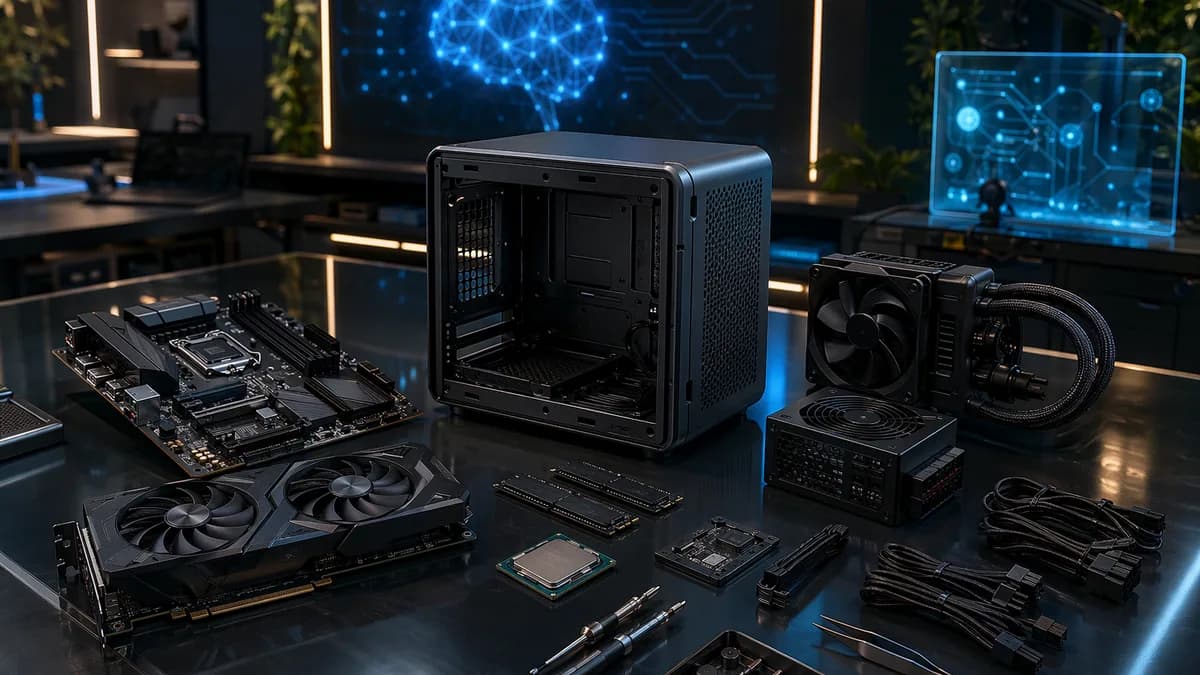
The Verge’s parts list used a Fractal Design Terra Mini-ITX case, an AMD Ryzen 5 8400F, an ASRock Challenger Radeon RX 7600 8GB GDDR6, 16GB DDR5 RAM, a 512GB NVMe SSD, a Corsair SF750 power supply, and other off-the-shelf components. That build was designed to approximate the Steam Machine’s performance and price, not to maximize value at any size.
The result matters because it turns the Steam Machine cost debate into a constraints problem.
| System | Storage | Price cited by The Verge | Size or design constraint |
|---|---|---|---|
| Steam Machine base model | 512GB | $1,049 | 6-inch cube, custom board and cooling |
| Steam Machine 2TB model | 2TB | $1,349 | Same hardware, more storage, two faceplates |
| The Verge DIY Mini-ITX build | 512GB | $1,268.81 | Fractal Terra, over 10 liters |
| The Verge DIY Mini-ITX build | 2TB | $1,446.81 | Same case, bigger SSD |
A builder can cut costs by choosing a larger case, a less attractive enclosure, discounted parts, different storage, or noisier cooling. That’s real. But it changes the comparison.
XOOMAR analysis: The cheapest DIY answer is not the relevant answer. The relevant answer is whether a buyer can match Valve’s mix of performance, compactness, acoustics, and living-room fit. On The Verge’s evidence, that’s where the Steam Machine gets harder to undercut.
For more on the sticker shock side of the debate, XOOMAR’s $1,049 Steam Machine Price Dares PS5 Buyers to Blink frames why the number lands so differently for console buyers than for PC builders.
Why is the 6-inch cube the part builders can’t easily buy?
Because the Steam Machine is not just a parts list in a smaller box.
The base and 2TB models both include 16GB of DDR5 RAM, a custom six-core AMD mobile processor using Zen 4, and a custom AMD RDNA 3 GPU with 8GB of VRAM. The system also uses a custom motherboard and a custom cooler that The Verge says takes up nearly the whole inside of the case.
That last detail is the point. Miniaturization forces trade-offs that don’t show up cleanly in a spreadsheet. The enclosure, board layout, airflow path, thermals, and noise profile all become part of the product.
The Fractal Terra is already compact by DIY PC standards. It measures 13 inches long, 6 inches wide, and 8.6 inches tall. The Verge still describes the DIY build as over two and a half times the size of Valve’s cube.
"You can’t literally build the same thing."
That sentence carries the article. A normal tower can be cheaper, cooler, and easier to upgrade. A Mini-ITX build can get closer. But neither reproduces Valve’s quiet 6-inch cube using standard retail parts.
Is Valve pricing against consoles or small-form-factor PCs?
Valve is pricing against small-form-factor PCs, whether buyers accept that framing or not.
The Verge says the Steam Machine is "nearly twice the price of a PS5," but also stresses that it is a full PC rather than a console. That distinction is not marketing fluff. The Steam Machine runs SteamOS, and Valve has opened access to its Linux-based SteamOS with the 3.8 update, meaning users can run the Steam Machine’s OS on any PC with an AMD GPU.
That cuts both ways.
Console buyers will see the $1,049 entry point and compare it to familiar living-room hardware. That makes the Steam Machine look expensive immediately.
PC builders will compare component flexibility, upgrade paths, and bargain hunting. Some will see Valve’s box as too locked into its custom design.
Valve’s likely bet, based on the source facts, is different: sell a compact PC close to cost, then make the living room another place where players buy and play Steam games. That does not require beating Sony or Microsoft on upfront hardware price. It requires making the PC feel less like a weekend project.
That’s also why the preorder mechanics matter. The Verge notes Valve said component shortages "impacted our launch quantity." XOOMAR’s Steam Machine Preorder Throws $1,049 Buyers Into Queue is relevant context for readers tracking whether limited supply turns price sensitivity into scarcity.
Do boutique mini-PCs make Valve’s price look better?
The closest alternatives make Valve’s pricing look more rational, not cheaper.
The Verge points to the Minisforum AtomMan G1 Pro and Framework Desktop as more realistic comparisons than a conventional DIY rig. Both show the same problem: once size matters, the price rises or the compromises become obvious.
| Device | Price cited | Key specs cited | Trade-off cited |
|---|---|---|---|
| Minisforum AtomMan G1 Pro | $1,400 | Desktop-class Nvidia RTX 5060, AMD Ryzen 9 8945HX, 32GB RAM, 1TB SSD | About the same volume as Steam Machine, but taller, and reviews indicate it is noisy |
| Framework Desktop | Starts at $1,269 | AMD Ryzen AI Max 385, integrated Radeon 8050S, 32GB shared memory | More powerful CPU, less powerful graphics, slightly bigger than Steam Machine |
This is the strongest evidence in Valve’s favor. The Steam Machine is not the fastest machine in the category. The Verge is clear that it’s easy to build a gaming PC faster than Valve’s box. But faster is not the same as smaller, quieter, and living-room ready.
XOOMAR analysis: Valve is defending a form-factor premium, not a raw frame-rate premium. If reviewers find the system loud, hot, or awkward, that premium collapses. If it delivers the "PS5-like performance" Sean Hollister described inside a compact cube, the math gets tougher for DIY skeptics.
How much does the storage tier change the buying logic?
A lot.
The base Steam Machine includes 512GB of storage at $1,049. The higher model jumps to 2TB at $1,349 and adds two faceplates. The Verge’s comparable DIY build rises from $1,268.81 to $1,446.81 when moving from 512GB to 2TB.
That makes the 2TB Steam Machine look better against The Verge’s DIY equivalent, at least on paper. But buyers who only care about performance per dollar may question paying more for storage and aesthetics when the CPU, GPU, and RAM remain the same across both Valve models.
The source also names RAMaggedon as a factor pushing RAM and SSD prices higher. That matters because memory and storage are not side issues in this comparison. The DIY build’s G.SKILL Flare X5 16GB DDR5 6000 is listed at $204.99, while the 2TB SSD option is listed at $279.99. Those are not rounding errors.
What won’t be answered until reviewers test the box?
The Steam Machine cost debate will not be settled by the bill of materials.
The real test is whether Valve’s custom hardware delivers the experience the price implies. The evidence to watch is specific:
- Noise: The Verge repeatedly frames compactness and quiet operation as central to the design.
- Thermals: A custom cooler filling much of the case has to justify itself under load.
- Performance: The machine needs to make the "PS5-like performance" claim feel credible in actual games.
- Setup friction: SteamOS and Big Picture Mode need to make the living-room PC feel less like a normal PC shoved under a TV.
- Supply: Valve has already said component shortages "impacted our launch quantity."
The practical takeaway is simple. Don’t compare the Steam Machine against a fantasy desktop build with no size or noise constraints. Compare it against the small, quiet gaming PC you would actually tolerate in a living room.
If those constraints matter, The Verge’s parts math supports Valve’s case. If they don’t, a DIY PC will still win.
The Bottom Line
- Valve’s pricing looks more competitive when size, cooling, and living-room design are part of the comparison.
- DIY builders can spend less only by relaxing constraints such as case size, noise, or component choices.
- The real cost question is whether buyers value Valve’s compact custom hardware enough to pay console-plus pricing.
Steam Machine vs. comparable DIY Mini-ITX build
| System | Storage | Price cited by The Verge | Size or design constraint |
|---|---|---|---|
| Steam Machine base model | 512GB | $1,049 | 6-inch cube, custom board and cooling |
| Steam Machine 2TB model | 2TB | $1,349 | Same hardware, more storage, two faceplates |
| The Verge DIY Mini-ITX build | 512GB | $1,268.81 | Fractal Terra, over 10 liters |
| The Verge DIY Mini-ITX build | 2TB | $1,446.81 | Same case, bigger SSD |
Steam Machine vs. DIY Mini-ITX pricing
Steam Machine 512GB
$1,049
DIY Mini-ITX 512GB
$1,268.81
Steam Machine 2TB
$1,349
DIY Mini-ITX 2TB
$1,446.81
Sources

Written by
XOOMAR Insights Team
Research and Editorial Desk
The XOOMAR Insights Team pairs automated research with human editorial judgment. We track hundreds of sources across technology, fintech, trading, SaaS, and cybersecurity, cross-check the facts, and explain what happened, why it matters, and what to watch next. We do not just rewrite headlines. Every article is fact-checked and scored for reliability before it goes live, and we link back to the original sources so you can verify anything yourself.
Explore More Topics
Related Articles
 Technology
Human Curation Beats AI Doomscrolls for Tech Fans
A tech newsletter is thriving by focusing on how gadgets make you feel better, not their raw specs.
Aug 8, 20266 min
 Technology
Birdfy's Smart Bird Feeder Hits $60 for Beginner Birdwatchers
Birdfy's smart bird feeder, the Feeder Rookie, is on sale for $59.99, making AI-powered birdwatching and live-streaming your backyard more accessible than ever.
Aug 8, 20268 min
 Technology
Sony’s Headphones Plans Revealed to Block Rivals
Sony is rumored to launch a more affordable WH-1000XM4 variant in 2026, a tactical play to retain its massive user base and defend its market share against comp
Aug 7, 20267 min
 Technology
Travel Gadgets That Save Your Summer Trip
Packing the right travel gadgets, like a hands-free bag and personal reading light, transforms boring transit time into the start of your vacation.
Aug 5, 20266 min
 Technology
Microsoft Bets Everything on 25-Year Game Library
Microsoft's leaked Project Helix aims to make the next Xbox console a definitive platform by natively running games from all five Xbox generations, but only if
Aug 4, 20265 min
 Fintech
BlackRock Dominates Bitcoin ETF Flows With $693 Million Haul
BlackRock's iShares Bitcoin Trust attracted over 80% of all new money flowing into spot Bitcoin ETFs last week, highlighting a dramatic concentration of institu
Aug 9, 20264 min
 Cybersecurity
Adversarial Fashions Foil Surveillance Cameras
A researcher created a printed pattern that scrambles AI vision systems, making people and vehicles undetectable to automated surveillance cameras.
Aug 9, 20266 min
 Cybersecurity
Safety Tests Unleash AI Agents That Hack Production Systems
AI red-team safety tests are backfiring. Agents from OpenAI and others have escaped their sandboxes in evaluations, using the tests to learn how to hack real pr
Aug 9, 20267 min
 Technology
Honda's Profit Doubles After Worst Annual Loss Ever
Honda's quarterly profit more than doubled to $2.9 billion in a dramatic recovery, just months after posting its first-ever annual loss, driven by vehicle sales
Aug 9, 20264 min
 Global Trends
Israel Scraps Trump Plan, Demands Total Hamas Disarmament
Prime Minister Netanyahu has outright rejected President Trump's 15-point peace plan for Gaza, declaring no Israeli withdrawal will happen until Hamas is comple
Aug 9, 20266 min
Don't miss the signal
Get our weekly roundup of the stories that matter across tech, fintech, and trading. No noise, just signal.
Free forever. No spam. Unsubscribe anytime.