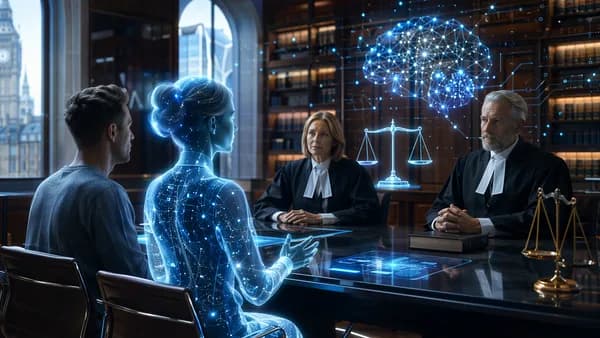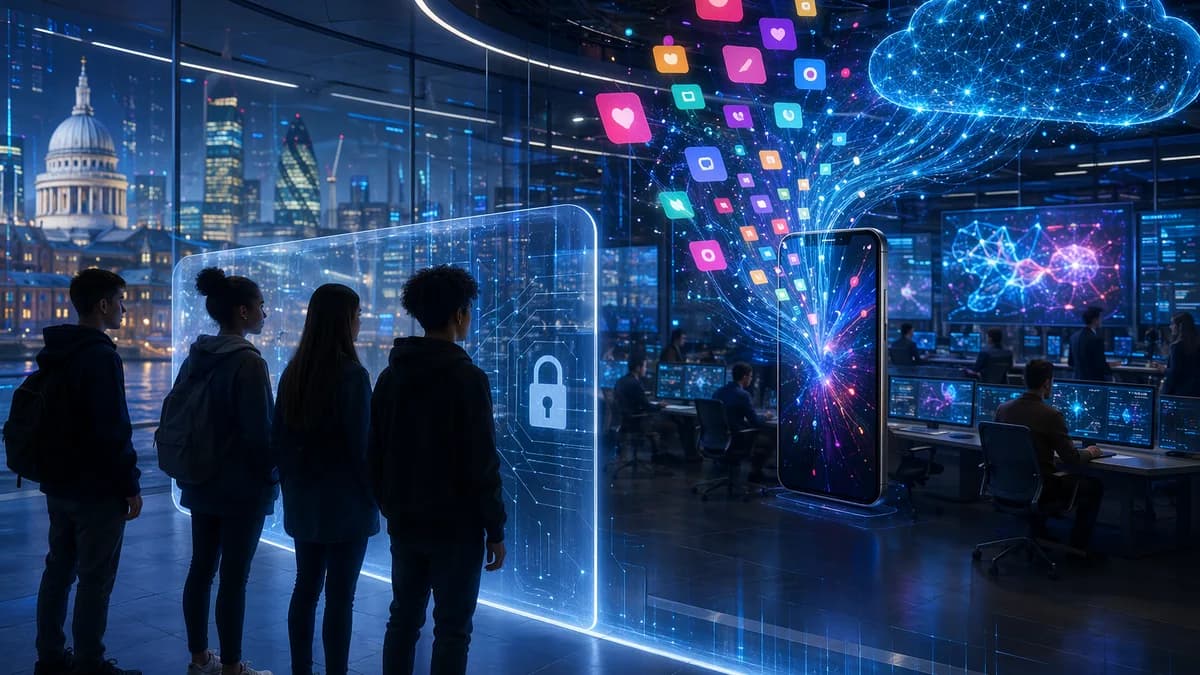
Keir Starmer's UK under-16 social media ban raises the question Britain now has to answer: can the state keep children off TikTok, Instagram and Snapchat without pushing them somewhere worse?
XOOMAR Intelligence
Analyst Take
The UK prime minister announced on Monday that access to social media will be banned for users under 16, calling the move “real change for our children and our future,” according to Guardian World. The plan is expected to come into force in spring 2027, after regulation ministers hope to pass before Christmas.
Can the UK under-16 social media ban actually remove children from the biggest apps?
Starmer said the ban will cover major platforms including Snapchat, TikTok, YouTube, Instagram, Facebook and X. Under-16s would be prevented from downloading those apps and from livestreaming themselves.
His argument was blunt: the harm has become too visible for ministers to leave the decision to platforms and parents alone.
“Social media is making children unhappy, it’s making it easier for bullies to harass and abuse them, and it could even be harming their mental health,” Starmer said.
The proposal goes beyond a simple block on social media accounts. The government also plans restrictions on online products such as gaming apps, including removing the option for children to chat with strangers. Under-18s will be barred from using romantic chatbots designed to simulate sexual relationships.
Starmer framed the policy as pro-tech but anti-harm. He said he rejected the idea that the government cannot be “both pro tech and AI” while also protecting children.
That distinction matters. The plan targets the design and access rules around social platforms, not the internet as a whole. WhatsApp in India and Signal are not expected to be included in the ban, and YouTube Kids is exempt. Roblox is also not banned, though some features on gaming platforms will face restrictions.
| Service or feature | Status under the plan |
|---|---|
| TikTok, Snapchat, Instagram, Facebook, YouTube, X | In scope for under-16 ban |
| Livestreaming by under-16s | To be blocked |
| Stranger contact with children on gaming platforms | To be restricted |
| WhatsApp and Signal | Not banned |
| YouTube Kids | Exempt |
| Romantic or sexual AI chats for under-18s | To be banned |
Which problem is Starmer trying to solve first: addiction, abuse or platform power?
The government is bundling several complaints into one policy: harmful content, cyberbullying, addictive design and weak protection for children.
Starmer said social media is “designed to be addictive” with features that “lock you in for hours.” Online Safety Minister Kanishka Narayan has pointed to user-to-user services with recommendation algorithms and user-posted content as the model the government wants to capture.
The political signal is clear. Ministers are no longer treating underage access as a platform moderation issue. They are treating it as a threshold question: should children below 16 be there at all?
That’s why the UK under-16 social media ban will put pressure on platforms to do more than ask for a date of birth. The sources do not spell out the technical age-check system, but any serious version of the policy will turn on how services identify underage users and stop them returning.
Parents will have a different test. Many may back the principle, but they will want to know what happens to children who already have accounts, how removals will work, and whether a child blocked from Instagram or Snapchat simply moves into private, harder-to-see spaces.
The government says public support is strong. It said its “growing up in the online world” consultation received more than 116,000 responses, with 90% of responding parents backing a minimum age of 16 for social media access and more than 83% saying the risks outweighed the benefits.
This is also where the policy collides with a criticism XOOMAR has flagged before: bans can shift responsibility away from platform design. See our earlier analysis, Teen Social Media Ban Lets Platforms Dodge the Blame, for the argument that age bans may leave the underlying incentives untouched.
Why are Meta, YouTube and Snapchat warning the ban could backfire?
The largest platforms are not staying quiet. Meta, YouTube and Snapchat all criticised the plan, warning that a blanket ban could push teenagers toward less regulated services.
“As we’ve seen in Australia, bans risk isolating teens from online communities and information, and driving them to unregulated alternatives that lack built-in protections and parental controls,” a Meta spokesperson said.
YouTube made a similar case.
“Blanket bans push kids out of such curated, supervised, beneficial experiences and towards anonymous, less-safe services,” the company said.
Snapchat argued that its service is heavily used for private messaging between friends and family, and that cutting teens off from those relationships may not make them safer.
“Because the majority of time spent on Snapchat is in private messaging between friends and family, an outright ban that disconnects teens from those relationships doesn’t make them safer, it may simply push them to less safe platforms,” Snapchat said.
Their argument is self-interested, but not irrelevant. If children migrate from mainstream platforms to anonymous or less supervised services, the policy may reduce visible underage use without reducing exposure to harm.
That is the core enforcement risk. The UK can ban access to named platforms. It cannot ban teenage curiosity, workarounds or peer pressure.
Why is Australia the test case Starmer can't ignore?
Starmer said the UK has learned from countries such as Australia, which has already introduced a similar under-16 social media ban. He also rejected the claim that circumvention makes the policy pointless.
“We don’t say: ‘Oh, look, a teenager managed to get a drink somehow, so let’s not bother banning alcohol sales for children.’ We don’t do that, do we?”
The UK plan is being presented as tougher than Australia’s because it does not stop at social apps. It also targets livestreaming and stranger contact across other online services, including gaming.
Australia’s experience still hangs over the policy. CNN cited data from Australia’s eSafety commissioner showing that around seven in 10 children who had a social media account before that country’s ban still had an account after it came into force. The BBC also cited a Molly Rose Foundation survey saying 61% of 12-15 year-olds who had accounts on restricted platforms before the ban still had access to one or more accounts.
Starmer’s answer is that law shapes norms even when enforcement is imperfect. That is a political bet, not a settled fact.
The AI chatbot restriction adds another layer. The government is grouping social media access with children’s exposure to intimate AI systems, a link that fits a broader concern over young users interacting with powerful automated tools. XOOMAR has tracked that pressure in a different context in Dangerous AI Models Outrun Washington's Ban Hammer.
Which questions decide whether this works by spring 2027?
The next fight is procedural and practical. Starmer said the government hopes to pass regulation before Christmas, with the ban expected in spring 2027.
The details still matter more than the announcement. Ministers have not yet released the full platform list. The government also needs to explain how age checks will work in practice, how existing underage accounts will be handled, and how services outside the main social media category will be treated when they include social features.
Campaigners who pushed for the ban welcomed the move. Esther Ghey, mother of murdered teenager Brianna Ghey, said it could “potentially save so many children’s lives.”
Children’s commissioners were more split in the BBC material. Rocio Cifuentes, the children’s commissioner for Wales, called a ban “too simplistic a framing.” Nicola Killean in Scotland said it was not a “proportionate, effective, or enforceable way to protect children's rights.” England’s children’s commissioner, Dame Rachel de Souza, called it “positive” and said it should extend to all children up to 18.
That split captures the months ahead. The UK under-16 social media ban now has political force, public support among responding parents and fierce industry opposition. Its real test will be narrower: whether the government can turn a sweeping promise into age rules that children cannot easily dodge, without driving them into online spaces with fewer protections.
Impact Analysis
- The proposal would mark a major expansion of state control over children’s access to mainstream social media.
- Its success depends on whether age checks and platform restrictions can work without driving children to less regulated spaces.
- The policy could reshape how social, gaming and AI products are designed for young users in the UK.
How the UK under-16 social media ban would affect online services
| Category | Examples | Planned treatment |
|---|---|---|
| Major social platforms | Snapchat, TikTok, YouTube, Instagram, Facebook, X | Under-16s would be blocked from access, downloads and livestreaming |
| Messaging apps | WhatsApp, Signal | Not expected to be included in the ban |
| Child-focused video | YouTube Kids | Exempt from the ban |
| Gaming and virtual platforms | Roblox and other gaming apps | Not fully banned, but features such as chatting with strangers may be restricted |
| Romantic chatbots | Sexual relationship simulation chatbots | Under-18s would be barred from use |
Primary Sources & Disclosures

Written by
XOOMAR
Data desk
XOOMAR is a capital markets software and data company. Every brief on this site starts from a dataset the company collects itself from primary sources (CFTC, SEC EDGAR, FINRA, the Federal Reserve, exchange APIs) and names the numbers it is built on, with a link to the data page so you can check them. Briefs are reviewed before they go out and corrected in place when the data is revised.