3,871 Waymo vehicles are now under a safety recall because their automated driving system may drive at speed into freeway construction zones, a narrow failure mode with unusually high stakes.
XOOMAR Intelligence
Analyst Take
The Waymo recall, filed with the National Highway Traffic Safety Administration on June 17, affects vehicles running the company’s 5th Generation automated driving system, according to Wired. NHTSA estimates 100 precent of the affected units carry the defect.
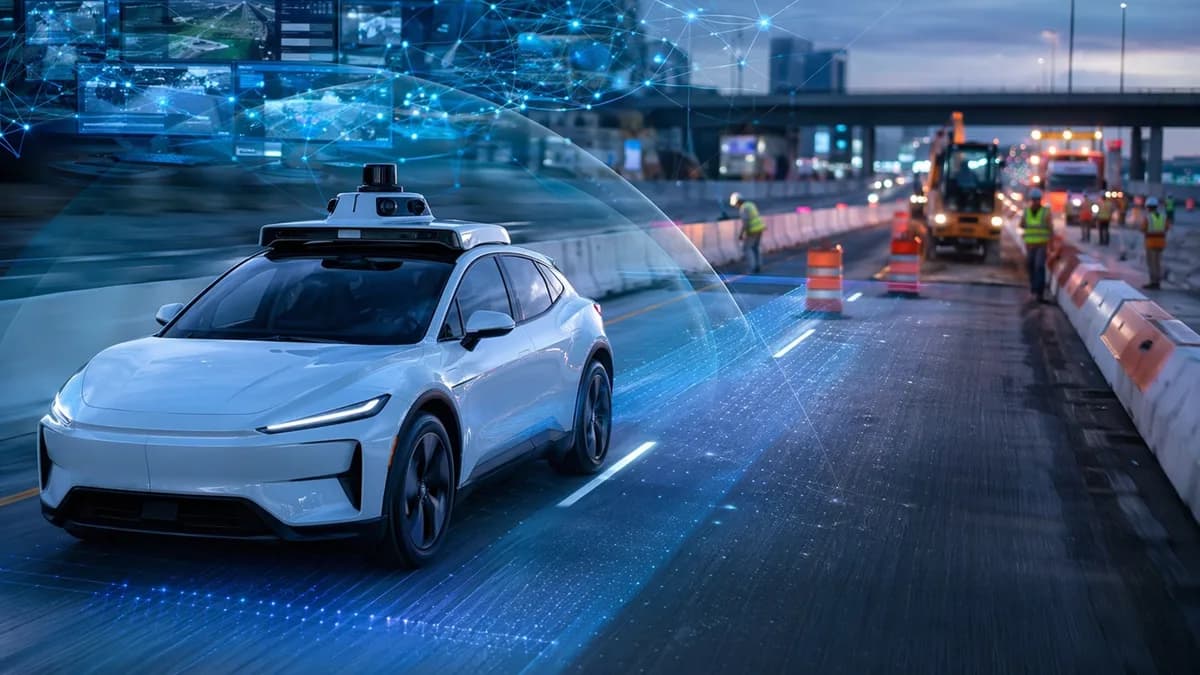
This is not a minor navigation bug. XOOMAR analysis: construction zones are temporary road systems. They often contradict the map, compress lanes, move traffic with cones, and force vehicles to interpret human-made signals under time pressure. At freeway speed, that turns software uncertainty into physical risk fast.
Waymo's freeway construction recall exposes a high-speed robotaxi weakness
The core failure is specific and uncomfortable: under certain conditions, a Waymo vehicle may either fail to identify a freeway construction zone or decide that avoiding another freeway hazard matters more than respecting the closure.
NHTSA’s recall language is blunt:
“under certain circumstances, the AV may enter and drive at speed in freeway-construction zones due to inappropriately prioritizing the avoidance of other freeway hazards and/or failing to recognize the construction zone.”
That matters because both paths lead to the same result. A driverless car can end up moving through a closed or active work area at freeway speed.
Waymo said it found the issue and restricted freeway operations before filing the recall.
“Waymo’s mission is to be the world’s most trusted driver, and the data shows that we’re making roads safer in the communities in which we operate,” the company told Wired. “We identified an area of improvement regarding performance around freeway construction zones. We voluntarily restricted freeway operations last month while making improvements, proactively notified state and federal regulators, and decided to file a voluntary software recall with NHTSA.”
For readers tracking this story across XOOMAR, this follows our prior coverage of Highway Blunders Force Waymo Recall of 4,000 Robotaxis.
Inside the 3,871-vehicle Waymo recall and the construction-zone risk
The recall covers 3,871 vehicles running Waymo’s 5th Generation ADS.
The triggering events came in two clusters:
| Date | Location | Reported behavior | Company response |
|---|---|---|---|
| April 11 and 19 | Phoenix | Waymo vehicles drove past ramp closure signs into preplanned construction zones | Waymo’s Field Safety Committee restricted freeway operations |
| May 18 | San Francisco Bay Area | Seven Waymo vehicles drove between construction cones into active lane closures | Waymo imposed a broader freeway ban |
No collisions or injuries were reported from these events. That does not make the defect harmless. NHTSA said, according to CBS News, “Driving at speed in a freeway construction zone increases the potential for collisions.”
The software recall structure is also important. The formal label still matters: this is a vehicle safety recall, not just an app patch. Waymo has said it restricted freeway operations while making improvements, and the NHTSA filing says a permanent remedy is still under development.
The numbers behind Waymo's latest safety problem
This Waymo recall is fleet-level. It is not a single misbehaving car.
The recall affects 3,871 vehicles, and NHTSA estimates 100 precent of them carry the defect. XOOMAR analysis: that is the central risk tradeoff in autonomy. A traditional mechanical problem may be tied to a part, supplier, batch, or wear pattern. A software decision model can replicate the same bad judgment across thousands of vehicles when they encounter similar scenes.
Waymo has now filed its fourth safety recall since February 2024. The source material identifies two recent examples:
- May 2025: Waymo recalled 1,212 robotaxis over collisions with stationary roadway barriers after a NHTSA preliminary evaluation cited at least seven incidents between December 2022 and April 2024.
- May this year: Waymo recalled 3,791 vehicles after a robotaxi drove into a flooded, impassable road in San Antonio and was swept into a creek.
- June 17: Waymo filed the current recall covering 3,871 vehicles tied to freeway construction zones.
The pattern does not prove Waymo’s system is broadly unsafe. The source does not support that claim. It does show that edge cases are reaching formal recall status at meaningful fleet scale.
Construction zones keep exposing the gap between map confidence and road reality
Waymo expanded freeway driving before the latest recall, and the recall cuts directly into that expansion. The source material mentions freeway rides in San Francisco, Los Angeles, and Phoenix. Its interim fix is severe: restrict all vehicles from entering freeways entirely.
That is a material operational constraint. Surface-street service continues in the US, but freeway service is now gated by a remedy that does not yet exist. The NHTSA filing says a permanent remedy is “currently under development.”
XOOMAR analysis: the hard part is not simply “seeing cones.” The issue described by NHTSA is priority logic. If the system sees one hazard but fails to correctly rank a closed construction zone, it can behave with confidence in the wrong direction. Autonomy’s consistency becomes a weakness when the same scene interpretation error repeats across the fleet.
This is a software-at-scale problem as much as a transportation problem. In robotaxis, the patch cycle touches public roads, so the evidence standard is higher than simply shipping a quick fix.
Regulators, riders, and construction crews will read the recall differently
Regulators will focus on process and proof: when Waymo identified the problem, how quickly it restricted operations, whether it notified state and federal regulators, and whether the future software remedy actually reduces the construction-zone behavior described in the recall.
Riders will read it less formally. CBS News reported one May incident in which Elliot Slade said he and his fiancée were in a Waymo vehicle traveling from San Mateo to San Francisco when the car sped through a construction zone and was chased by police.
“The Waymo started freaking out as we got closer to the merge cause the lanes were kind of all merging,” Slade said. “One lane was gone, another lane was, who knows where it was. Cars were all over the place going in.”
He added:
“There were construction signs,” he added. “There were lights going on. Police in the distance, and it sped up. That's when I looked at my fiancée, we're done. This is it. We're dead. We're going to die right here in the Waymo.”
Waymo reportedly gave him three free rides, each worth up to $40, but he was unsure he would use them.
For construction crews, the exposure is obvious even though the source reports no injuries. Closed lanes are workplaces. A robotaxi entering one at speed is not an abstract model failure.
What the freeway ban means for Waymo's US expansion
The recall may not stop Waymo’s broader rollout, but it raises the burden of proof for freeway operations. The company can still serve riders on surface streets. It cannot, for now, send its affected fleet onto freeways.
City and transportation officials now have a concrete failure category to scrutinize: temporary freeway traffic control. XOOMAR analysis: future approvals could put more weight on how robotaxi operators handle ramp closures, active lane closures, construction cones, and rapidly changing road instructions. That is not a prediction of specific regulatory action. It is the logical pressure point created by this recall.
For Waymo, the business question is narrow but serious. Freeway service helps connect longer urban and regional trips. If the company cannot prove reliable behavior around construction zones, its service area may look technically broad but operationally constrained.
Waymo's next test is roads that change overnight
The next evidence to watch is not a polished safety slogan. It is the remedy.
A credible fix would need to show that Waymo’s 5th Generation ADS can detect freeway construction zones more reliably and avoid letting other hazard-avoidance priorities push the vehicle into closed lanes. The company has already restricted freeway operations, notified regulators, and chosen a voluntary recall. Now it needs a software update that regulators accept and that riders can trust.
If Waymo restores freeway service after a validated software fix and avoids repeat construction-zone incidents, the recall will look like a painful but contained correction. If similar failures keep appearing, the stronger read is that dynamic road changes remain one of the hardest barriers to robotaxi scale.
Impact Analysis
- The recall highlights a high-risk failure mode for autonomous vehicles operating at freeway speeds.
- Construction zones pose unusual challenges because temporary lane changes and closures may conflict with vehicle maps.
- NHTSA estimates 100% of the affected 5th Generation Waymo vehicles carry the defect.
Waymo Vehicles Affected by Recall
Primary Sources & Disclosures

Written by
XOOMAR Insights Team
Research and Editorial Desk
The XOOMAR Insights Team pairs automated research with human editorial judgment. We track hundreds of sources across technology, fintech, trading, SaaS, and cybersecurity, cross-check the facts, and explain what happened, why it matters, and what to watch next. We do not just rewrite headlines. Every article is fact-checked and scored for reliability before it goes live, and we link back to the original sources so you can verify anything yourself.