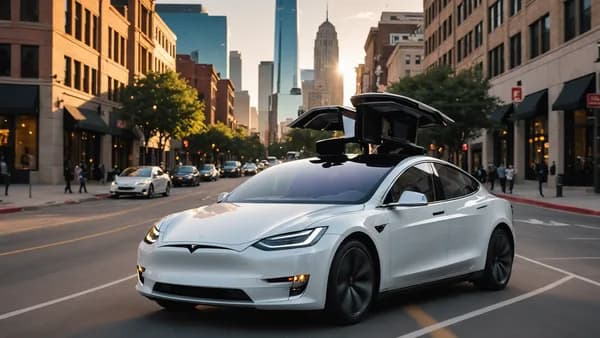
A company built on the promise of precise driverless control just recalled nearly 4,000 Waymo robotaxis because some of them drove into highway construction zones that were supposed to be closed.
XOOMAR Intelligence
Analyst Take
The Waymo recall is not a full fleet shutdown. The Alphabet-owned company is still running robotaxis on surface streets, according to TechCrunch. But it has restricted highway operations while it develops a fix for vehicles that failed around freeway construction closures.
That matters because highways were supposed to widen the usefulness of Waymo rides. Instead, they exposed a narrow but serious failure mode: the system did not always treat closed construction areas as places it must not enter.
Waymo's construction-zone recall exposes the hardest credibility test in robotaxi safety
The recall covers a fleet of nearly 4,000 robotaxis after Waymo identified at least 13 instances where its vehicles entered highway sections closed for construction. Six happened in Phoenix, Arizona in April. Seven happened in San Francisco, California in May.
Waymo pulled its robotaxis from all highways on May 19. A fix is “currently under development,” according to filings with the National Highway Traffic Safety Administration cited by TechCrunch.
“We identified an area of improvement regarding performance around freeway construction zones,” Waymo said in a statement to TechCrunch. “We voluntarily restricted freeway operations last month while making improvements, proactively notified state and federal regulators, and decided to file a voluntary software recall with NHTSA.”
XOOMAR analysis: this is not just paperwork. A voluntary software recall tells riders, regulators, and cities that the issue affected real-world driving behavior, not merely an internal model metric. Waymo can still argue that it caught the pattern and acted. But the pattern itself is the problem.
Robotaxis are sold on consistency. Construction zones are messy. Signs move. Lanes close. Cones redirect traffic. The route that was valid yesterday can become invalid tonight. That gap between mapped confidence and temporary road reality is where this Waymo recall lands.
The numbers behind Waymo's nearly 4,000-vehicle robotaxi recall
The core facts are stark:
- Fleet size: nearly 4,000 Waymo robotaxis recalled.
- Known incidents: at least 13 vehicles entered closed highway construction areas.
- Phoenix timeline: six incidents in April.
- San Francisco timeline: seven incidents in May.
- Highway suspension: all freeway driving stopped on May 19.
- Recall decision: Waymo’s safety board decided to issue the recall on June 8.
- Remedy status: the software fix is “currently under development.”
The NHTSA filings say Waymo’s vehicles “did not recognize and drove past ramp closure signs into pre-planned freeway construction zones” in Phoenix. In the San Francisco Bay Area, seven Waymo robotaxis entered highway lanes under active construction because the software was “prioritizing the avoidance of other freeway hazards and/or failing to recognize the construction zone.”
That phrasing matters. It suggests two possible failure paths, both serious.
| Reported issue | Why it matters |
|---|---|
| Failed to recognize the construction zone | The vehicle may not classify the closure correctly. |
| Prioritized avoiding other freeway hazards | The vehicle may choose a path that solves one risk while creating another. |
| Drove past ramp closure signs | Temporary signage did not stop the vehicle as intended. |
A 13-incident pattern may look small beside Waymo’s claimed more than 170 million autonomous miles. Waymo also claims its vehicles have shown a 13x reduction in serious-injury-or-worse crashes compared with human drivers.
XOOMAR analysis: those headline safety claims still matter, but rare-event management is where robotaxi credibility gets tested. If a vehicle performs well in routine driving but mishandles closed highway lanes, the safety case becomes harder to communicate.
Highway construction zones expose the gap between planned routes and temporary reality
Waymo started offering highway rides in November 2025. That expanded the usefulness of its service, but it also moved the robotaxis into faster, less forgiving operating conditions.
The incidents described in the filings were not vague discomfort events. They involved closed highway sections, ramp closure signs, and lanes under active construction. In one case that circulated online, X user @Elliot_slade posted a video on May 19 and claimed a Waymo “blasted through cones” and was “chased” by police.
CBS News quoted Slade describing the ride this way:
“There were construction signs,” Slade told CBS News last month. “There were lights going on. Police in the distance and it sped up. That’s when I looked at my fiancée, we’re done. This is it. We’re dead. We’re going to die right here in the Waymo.”
TechCrunch reported that Waymo offered Slade “three free rides up to $40 each in the future,” according to CBS.
That quote captures the rider problem better than any recall filing can. Passengers may tolerate awkward braking or conservative maneuvers. Entering a closed highway work area feels different. It breaks a basic expectation: that the car knows where it absolutely should not go.
For broader robotaxi commercialization context, XOOMAR has covered how rival deployment plans are pushing into new cities in Uber Robotaxi Bet Targets Houston in 2027 Waymo Fight. The Waymo construction-zone issue shows why expansion is not just a coverage map problem. It is an operating discipline problem.
Software-behavior recalls are now central to autonomous driving oversight
This is the sixth recall Waymo has issued for its robotaxis, according to TechCrunch.
Recent and prior recalls include:
- May recall: robotaxis drove into flooded roads.
- December recall: vehicles behaved illegally around school buses.
- Other recalls: low-speed collisions with chains and gates, telephone poles, and an issue involving towed trucks.
Waymo’s driving software is also under investigation by the NHTSA and National Transportation Safety Board over behavior around school buses after one of its robotaxis struck a child near a school in January.
The pattern does not prove Waymo’s service is unsafe overall. The source material does not support that claim. But it does show how autonomous vehicle oversight has shifted. A defect can now be a software behavior, a perception error, or a decision rule that produces the wrong move in a specific environment.
That is a different accountability model from a human driver making a one-off mistake. When a robotaxi fleet repeats a behavior, the operator owns the pattern.
This same lesson appears across automation-heavy sectors. In XOOMAR’s analysis of AI Grant Writing Tools Can Save Proposals or Sink Them, the risk is not that automation never works. It is that automation can fail at the boundary between structured inputs and messy real-world judgment. Waymo’s highway construction issue sits on that boundary.
Regulators, riders, and road agencies will judge this recall differently
Regulators will focus on whether the fix works, when it ships, and whether Waymo can detect similar defects before they become public incidents. The company says it proactively notified state and federal regulators. That helps its case. It does not erase the need for proof.
Riders will judge the experience more bluntly. If a robotaxi enters a closed highway construction area, the passenger does not care whether the underlying cause was signage recognition, hazard prioritization, or routing logic. They care that the vehicle went somewhere it should not have gone.
Road agencies and cities have a separate concern. Waymo is in the middle of a major expansion and plans to launch in more than 20 cities this year, including London and Tokyo, according to TechCrunch. XOOMAR analysis: every city evaluating driverless service will want confidence that construction changes, severe weather, and temporary restrictions are handled conservatively, not just eventually patched.
Waymo's expansion case now depends on messy-road proof, not just mileage claims
The strongest defense for Waymo is that it found the issue, restricted freeway operations, notified regulators, and filed a voluntary recall. That is what responsible fleet operation should look like after a safety defect emerges.
The harder question is whether this Waymo recall reflects a narrow construction-zone bug or a broader limitation in how robotaxis respond when road conditions change faster than their assumptions.
Evidence that would strengthen Waymo’s case:
- A verified software fix that prevents vehicles from entering closed freeway work zones.
- Clear incident categories showing whether similar failures decline after the update.
- Conservative highway behavior around closure signs, cones, active work lanes, and police activity.
- Transparent regulator filings that explain the defect and remedy without vague language.
Evidence that would weaken it:
- More incidents involving temporary closures.
- Repeated recalls around unusual road conditions.
- Highway service returning before the fix is clearly validated.
- Expansion into new cities without clearer handling of construction and weather restrictions.
Waymo still has the scale advantage of 170 million autonomous miles and a large operating fleet. But the next phase will not be judged by miles alone. It will be judged by how the system behaves when the road stops matching the plan.
Impact Analysis
- The recall affects nearly 4,000 Waymo robotaxis and highlights a real-world safety gap in autonomous highway driving.
- Waymo has restricted highway operations while developing a software fix, limiting a key expansion area for robotaxi service.
- The incidents raise scrutiny from regulators and cities over how driverless vehicles handle construction closures and changing road conditions.
Waymo Highway Construction-Zone Incidents by City
Primary Sources & Disclosures

Written by
XOOMAR Insights Team
Research and Editorial Desk
The XOOMAR Insights Team pairs automated research with human editorial judgment. We track hundreds of sources across technology, fintech, trading, SaaS, and cybersecurity, cross-check the facts, and explain what happened, why it matters, and what to watch next. We do not just rewrite headlines. Every article is fact-checked and scored for reliability before it goes live, and we link back to the original sources so you can verify anything yourself.