WeWard Walking Mode turns phone distraction into a fitness gate, and that signals a sharper turn in wellness apps: from rewarding behavior after the fact to controlling access before the reward.
XOOMAR Intelligence
Analyst Take
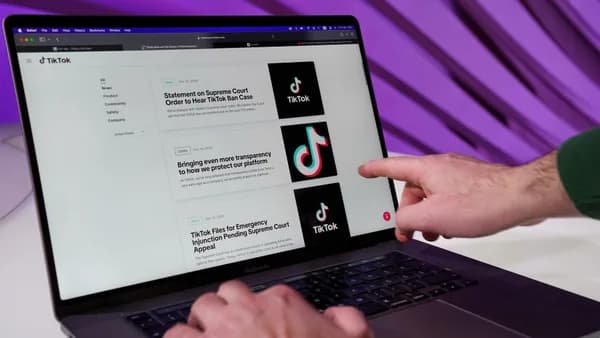
The France-based WeWard app, backed by Venus Williams, is launching a feature called Walking Mode that lets users lock selected apps until they hit a chosen step count, according to TechCrunch. A user could, for example, block access to TikTok or Instagram until reaching 3,000 steps. The apps and step goals are customizable.
That’s the real shift. WeWard already rewarded walking with Wards, an in-app currency that can be exchanged for cash, gift cards, or donations. It also has leaderboards for competition with friends. Walking Mode adds a different kind of pressure: no steps, no scrolling.
WeWard Walking Mode makes social scrolling conditional
WeWard Walking Mode is built on a blunt behavioral wager: the phone habit that keeps users seated can be used to get them moving. Instead of asking people to open a fitness app for motivation, WeWard inserts itself before the apps people already want to open.
That makes the feature more consequential than another badge or streak. If the user chooses Instagram as the locked app, the reward is immediate and personal. The walk becomes the price of admission.
WeWard co-founder Yves Benchimol framed the product as a rejection of attention-maximizing design.
“We believe the next generation of products should be designed to create healthier behaviors in the real world, not simply capture more attention,” Benchimol told TechCrunch. “Walking Mode is our contribution to that vision, and we hope it inspires a broader conversation about mindful design and how the industry defines success.”
XOOMAR analysis: that quote is doing more than selling a feature. It positions WeWard against the dominant app logic of maximizing time spent. The company says users spend only a few minutes per day in WeWard, which it presents as a positive because the app is not trying to monopolize attention.
The counterpoint is obvious. An app that locks other apps still becomes a gatekeeper. That can feel useful when self-imposed, and irritating if it starts to feel punitive.
The nearly 25% walking claim is strong, but incomplete
WeWard says its platform has been shown to increase walking time by almost 25%. On its own site, the company says users increase walking activity by 24% on average, and that 30 million walkers use the app across 29 countries. TechCrunch reports 4 million U.S. users.
Those numbers give WeWard a strong pitch. If a low-friction app can produce a roughly one-quarter lift in walking, the company can argue that rewards and app restrictions are not just engagement tricks. They may alter daily routines.
But the evidence still needs detail. The supplied material does not state the sample size, baseline activity levels, measurement method, retention period, or whether the gains persist after the novelty fades. It also does not say whether the users who increased activity were already motivated enough to download a rewards walking app.
A useful reading of the claim looks like this:
| Claim or metric | What it supports | What remains unanswered |
|---|---|---|
| Almost 25% increase in walking time | WeWard may change user behavior | Sample size, duration, baseline activity |
| 30 million users | Broad adoption across markets | Active user frequency is not specified |
| 4 million U.S. users | The app has meaningful U.S. reach | U.S. retention and engagement are not given |
| Few minutes per day in app | WeWard says it is not built to capture attention | It does not prove health outcomes |
Step counts are useful, but they’re still a proxy. XOOMAR analysis: more walking can reduce sedentary time, but step totals alone do not show intensity, consistency, cardio improvement, weight change, or mental health impact. WeWard’s claim is promising. It is not the same as a full health outcome study.
Rewards were soft pressure. App locks are harder friction
WeWard’s earlier model fit the familiar gamified fitness playbook: track movement, award points, offer rewards, rank friends. The app’s Wards can be exchanged for cash, gift cards, or donations. Its site also says users can redeem rewards through PayPal or Venmo, access deals from more than 100 top brands, support charities, collect WeCards, and compete on leaderboards.
Walking Mode changes the emotional contract. Rewards say, “walk and get something.” App locks say, “walk or wait.” That’s a meaningful escalation.
XOOMAR analysis: this is where wellness software starts to look less like passive tracking and more like behavioral infrastructure. Phone permissions, habit loops, social apps, and rewards all get tied into one daily routine. If the user opted in freely, that can be a practical accountability tool. If the friction feels too heavy, it risks making exercise feel like punishment.
The strongest version of WeWard’s argument is that the user stays in charge. The source material says the locked apps and step goals are customizable. That matters. Control is the difference between a nudge and a nag.
This focus on user-level controls also connects to a broader XOOMAR theme in consumer tech: small settings can carry outsized consequences. We’ve covered that in different contexts, from rearranging CarPlay apps to WhatsApp username reservation. WeWard’s version is more personal because the setting is tied to movement.
Venus Williams adds credibility, not proof
Venus Williams gives WeWard a wellness halo that most rewards apps would struggle to create on their own. TechCrunch identifies her as a funder of the company, while Ministry of Sport reported that Williams joined WeWard as both an investor and ambassador on 28 February 2025.
Her public comments fit the product neatly.
“As someone who is deeply passionate about personal health and wellness, I'm thrilled to be partnering with WeWard.”
She also said:
“A large part of staying well and active is simply by moving your body whichever way you can, and with WeWard, walking becomes a fun and rewarding experience. I'm excited to be part of a movement that encourages people to take that first step towards a healthier, more active lifestyle,”
The partnership included a pledged initial donation of USD$25,000 to CARE, Williams’ charity of choice, with a potential maximum donation of USD$40,000 if community step goals were met, according to Ministry of Sport.
Celebrity backing can get a user to take a first look. It cannot prove that the product works over months. Retention will depend on whether Walking Mode helps users build a routine without making the phone feel more controlling than before.
Privacy claims matter because Walking Mode touches steps and app habits
WeWard’s privacy positioning is central to the story. TechCrunch reports that while some rewards apps fund payouts by collecting and selling user data to third parties, WeWard says it does not do that. Instead, it says it makes money from in-app purchases, affiliate marketing, premium subscriptions, and advertising.
That claim matters because Walking Mode sits near two sensitive signals: physical activity and app usage choices. The source material does not say WeWard sells user data. It says the opposite. Still, users should care about how step data, locked-app selections, ad targeting, affiliate offers, and subscriptions interact inside the product.
The supplied reporting also does not say Walking Mode is designed for parents, employers, insurers, schools, or third-party wellness programs. That boundary is important. The current story is about a user-controlled feature. Any move beyond that would need separate evidence and closer scrutiny.
Accessibility is another open issue. The source material does not describe accommodations for users with disabilities, chronic illness, injury recovery, or unsafe walking conditions. A step gate can be motivating for one person and exclusionary for another if the controls are not flexible enough.
The next test is whether WeWard keeps the lock in the user’s hands
WeWard’s idea is clever because it attacks sedentary behavior at the point of temptation. The user reaches for a distracting app, and the phone answers with a physical requirement. That is a cleaner loop than hoping a generic fitness reminder lands at the right time.
The evidence to watch is not just download growth or headline user count. The stronger test is whether WeWard Walking Mode produces sustained increases in walking without driving users to disable the feature. Useful signals would include retention, repeated goal completion, opt-out rates, and clearer measurement behind the nearly 25% activity claim.
The thesis weakens if Walking Mode becomes annoying faster than it becomes habit-forming. It strengthens if users keep it on voluntarily, customize it often, and spend less time in locked apps while maintaining higher walking activity.
For now, WeWard has found a sharp product hook: turn screen time into a bargaining chip for movement. It deserves attention. It will deserve lasting trust only if the user, not the app, remains in charge of the lock.
The Bottom Line
- WeWard is turning screen time into a direct incentive for physical activity.
- The feature shows wellness apps moving from passive rewards to active behavior control.
- Locking popular apps until step goals are met could make fitness nudges harder to ignore.
WeWard’s Motivation Shift
| Approach | How It Works | Behavioral Pressure |
|---|---|---|
| Traditional WeWard rewards | Users earn Wards after walking, redeemable for cash, gift cards, or donations. | Rewards movement after the fact. |
| Walking Mode | Users can lock selected apps like TikTok or Instagram until they hit a chosen step goal, such as 3,000 steps. | Makes app access conditional on walking first. |
Primary Sources & Disclosures

Written by
XOOMAR Insights Team
Research and Editorial Desk
The XOOMAR Insights Team pairs automated research with human editorial judgment. We track hundreds of sources across technology, fintech, trading, SaaS, and cybersecurity, cross-check the facts, and explain what happened, why it matters, and what to watch next. We do not just rewrite headlines. Every article is fact-checked and scored for reliability before it goes live, and we link back to the original sources so you can verify anything yourself.