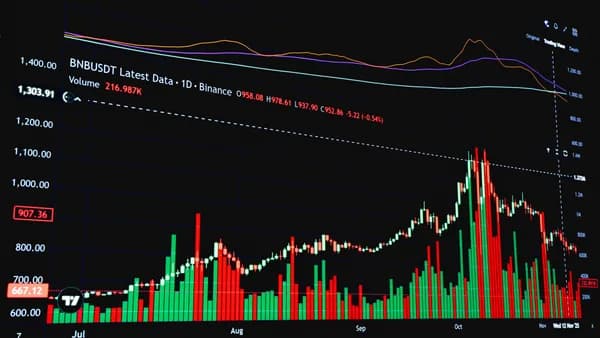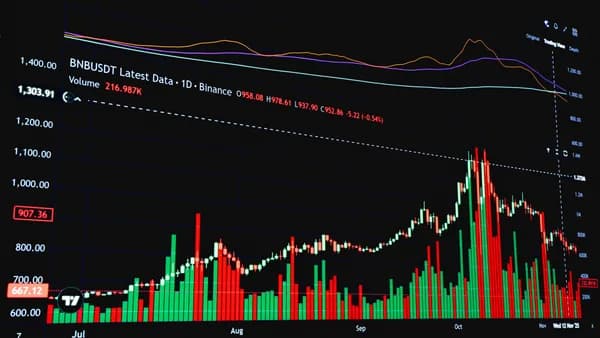
Strategy's STRC closed at $91.79, its third-lowest close since trading began, and the message is aimed less at bitcoin tourists than at income investors asking whether a bitcoin treasury company can keep paying rich cash dividends when confidence thins. The selloff in Strategy preferred stock is a credibility test for a financing model built around crypto collateral, capital-market access, and investor patience.
XOOMAR Intelligence
Analyst Take
The security remains nearly 8% below its intended $100 par value, according to CoinDesk. That discount matters because STRC was designed to trade close to par, not behave like a stressed yield instrument. The buyers most affected are not common-stock speculators chasing bitcoin beta. They are holders who expected a high-yield preferred with enough structure to stay anchored near $100.
STRC closed at $91.79, its third-lowest close since launch, while trading nearly 8% below its intended $100 par value.
STRC's near-record discount turns Strategy's bitcoin yield into a credibility test
The crash in Strategy preferred stock is not mainly a bitcoin-price story. Bitcoin is part of it, clearly. CoinDesk says bitcoin was hovering around $65,000, roughly 50% below its October all-time high. STRC has historically traded in tandem with bitcoin, so pressure on BTC bleeds into the preferred.
But the deeper issue is cash.
Preferred shareholders don't get paid in unrealized bitcoin gains. They need distributions. That creates the central tension in STRC: Strategy may own a large bitcoin-backed balance sheet, but the preferred's value depends on whether investors believe cash dividends can keep flowing without repeated dependence on favorable capital markets.
Who is really underwriting this product: bitcoin bulls, income investors, or both?
STRC sits in an awkward but intentional middle ground:
- Crypto exposure: Its pricing responds to bitcoin.
- Income security: It pays dividends and targets a $100 par value.
- Capital-structure bet: It depends on Strategy's ability to manage debt, liquidity, and investor demand for its securities.
That mix worked better when the market trusted the machine. It looks weaker when buyers demand a larger discount for payout risk, liquidity risk, and competition from alternatives with cleaner capital structures.
CoinDesk reports that STRC has not traded at $100 since May 15, last month's ex-dividend date. Historically, it would approach par before an ex-dividend date, then drop by roughly the dividend amount and recover. On June 15, it never reached par. That break in behavior is the real signal.
The market isn't just asking for more yield. It's questioning the anchor.
Strategy managers face a harder math problem: par value, dividend coverage, and bitcoin pressure
The numbers explain why STRC is trading like a challenged credit rather than a stable preferred.
| Metric | STRC data from source |
|---|---|
| Latest close | $91.79 |
| Intended par value | $100 |
| Discount to par | Nearly 8% |
| Third-lowest close since launch | Yes |
| Lower closes | Two sessions later in July 2025 |
| Lowest cited close | $88.60 |
| Debut price | Approximately $90 |
| Current dividend rate | 11.5% |
| Annualized yield at market price | Approximately 12.53% |
| Cash dividend coverage now | Approximately seven months |
| Previous coverage before debt repayment | Up to 24 months |
| Convertible debt repaid | $1.5 billion |
The sharpest deterioration is not the share price alone. It is the fall in reported dividend coverage from up to 24 months to approximately seven months after Strategy used part of its cash reserves to repay $1.5 billion of convertible debt.
That does not prove a dividend cut is coming. The source does not say that. It does show why the market is pricing STRC with more caution. A preferred with seven months of available dividend coverage looks different from one with two years of cushion, especially when its underlying brand is tied to a volatile asset.
Could Strategy simply raise the dividend rate to pull STRC back toward par?
CoinDesk suggests the market may be signaling that STRC's dividend rate needs to rise by about 100 basis points to restore demand and move the security closer to $100. That would make the preferred more attractive to buyers, but it would also raise the cost of the financing structure.
A related report from CryptoBriefing earlier this month said STRC fell to an intraday low of $90.40 before recovering near $93.40, while bitcoin briefly dropped below $60,000. That report also said Strategy disclosed it sold 32 Bitcoin between May 26 and May 31 for about $2.5 million to fund preferred stock distributions.
That detail cuts straight to the thesis. Bitcoin collateral can be enormous on paper, but preferred investors care about priority, liquidity, dividend mechanics, and management's willingness to sell assets when cash is needed.
The supplied sources do not provide Strategy's recurring operating cash flow, interest expense, or full preferred obligation schedule. That limits any full coverage model. The cleanest available signal is the shrinking cash-reserve runway, and the market is treating that signal as material.
A simple stress map for STRC holders
- Bitcoin falls further: The perceived collateral cushion weakens and STRC may trade more like distressed crypto credit.
- Capital markets tighten: New issuance or refinancing becomes harder, increasing pressure on existing liquidity.
- Dividend rates rise: Demand may improve, but Strategy's financing cost climbs.
- SATA keeps its par anchor: STRC must offer either more yield or a clearer structure to compete.
That is why the discount is more than a price move. It is a repricing of the whole Strategy preferred stock promise.
Income buyers now have a cleaner rival in Strive's SATA
The most damaging part of the STRC story is not bitcoin's drawdown. It is Strive's SATA.
CoinDesk says investors are increasingly favoring SATA, Strive's bitcoin-backed preferred security. SATA trades close to its $100 par value, at $99.99, and offers an annualized yield of approximately 13%, compared with STRC's 11.5% stated rate. It also pays daily dividends, while STRC pays bi-monthly distributions.
Why buy the messier income stream if a cleaner one sits near par?
| Feature | Strategy STRC | Strive SATA |
|---|---|---|
| Recent trading level | $91.79 | $99.99 |
| Par target | $100 | $100 |
| Stated or cited yield | 11.5% dividend rate, about 12.53% annualized yield at market price | Approximately 13% annualized yield |
| Payout schedule | Bi-monthly distributions | Daily dividend payments |
| Debt position of issuer | Strategy repaid $1.5 billion of convertible debt, but debt concerns remain in source framing | Strive has no debt outstanding, per CoinDesk |
| Capital-structure appeal | Competes with other claims and market confidence concerns | Sits at the top of Strive's capital structure, per CoinDesk |
| Fees | Not specified in supplied source | Not specified in supplied source |
SATA's advantage is not only yield. It is narrative simplicity.
CoinDesk reports that Strive has no debt outstanding. SATA therefore sits at the top of the capital structure and is not obligated to convertible debt holders. For income-focused buyers, that matters. A higher quoted yield plus daily payments plus no outstanding debt is easier to explain to an investment committee than a discounted preferred tied to a company with debt concerns and shrinking dividend coverage.
This is where competition changes Strategy's pricing power. STRC depends on investor appetite. If another bitcoin-linked income product offers comparable or better yield with fewer perceived complications, Strategy has to compete through price, structure, or payout.
The current spread shows that happening in real time. CoinDesk says STRC trades at a roughly $8.20 discount to SATA, the largest gap on record.
Strategy's capital machine is being judged by preferred holders, not bitcoin bulls
Strategy's common-stock story and STRC's preferred-stock story are not the same trade.
Common shareholders can tolerate volatility if they believe bitcoin upside will eventually dominate the balance sheet. Preferred holders are different. They want cash distributions, capital-structure protection, and some confidence that the security can hold near par.
Can a bitcoin treasury company satisfy both groups at once during a drawdown?
That is the question behind the selloff. STRC was built for income investors, but its risk engine is tied to bitcoin and Strategy's broader financing model. When bitcoin rises and capital markets are receptive, that model can look efficient. When bitcoin falls and a competing product offers higher yield with a cleaner balance sheet, the same model looks more fragile.
This is not unique to Strategy. Crypto finance keeps trying to turn volatile assets into predictable cash-flow products. Sometimes that means miners pivoting their infrastructure story. Sometimes it means treasury companies issuing preferred stock. The common thread is capital intensity. As we covered in Bitcoin Miners' AI Pivot Slams Into $50B Funding Gap, ambitious crypto-adjacent strategies can run into funding constraints when investor enthusiasm cools.
STRC now sits at that intersection. Its discount says the market wants more proof.
Earlier phases of the Strategy trade rewarded bold balance-sheet construction. This phase is more clinical. Preferred investors are not paying for branding. They are pricing coverage, seniority, cash, volatility, and alternatives.
The lesson from prior crypto yield cycles is simple, without overstating the comparison: yield tied to volatile assets gets repriced fast when confidence slips. STRC has not failed. But it is no longer being valued as if par is automatic.
Crypto-income buyers need a stricter checklist before chasing STRC's yield
A below-par preferred can tempt investors for two reasons. First, the lower price raises the current yield. CoinDesk calculates STRC's annualized yield at approximately 12.53% based on its current dividend rate and market price. Second, a recovery toward $100 would create capital upside.
That is the bull case in one sentence.
The risk is that the discount is not a gift. It may be the market's warning that STRC deserves to trade below par for longer because dividend coverage, bitcoin sensitivity, and capital-market dependence have worsened.
What should a crypto-income buyer check before reaching for the yield?
- Dividend coverage: CoinDesk says coverage is now approximately seven months, down from up to 24 months before the $1.5 billion convertible debt repayment.
- Capital-structure rank: STRC buyers need to know what claims sit ahead of them and how management prioritizes cash.
- Bitcoin sensitivity: STRC has historically traded in tandem with bitcoin, per CoinDesk.
- Dividend mechanics: STRC pays bi-monthly, while SATA pays daily.
- Rate-reset pressure: CoinDesk says the market may be signaling the need for roughly 100 basis points more yield.
- Liquidity and par behavior: STRC's failure to return to par before the June ex-dividend cycle broke from its historical pattern.
- Terms not supplied here: Call provisions, conversion terms, and tax treatment require document-level review beyond the supplied source material.
Investors should also test assumptions before buying the discount. A preferred that trades at $91.79 can look cheap in a spreadsheet, but bad assumptions can make cheap securities cheaper. For readers building scenarios around drawdowns, rate changes, and recovery paths, our guide to No-Code Stock Backtesting Software Exposes Bad Trades is relevant because STRC's appeal depends heavily on path assumptions, not just headline yield.
This is less like buying a plain bond against hard collateral and more like underwriting a leveraged bitcoin treasury strategy with a preferred wrapper. The distinction matters. Hard collateral only helps if the structure, liquidity, and management choices let investors access value when conditions tighten.
The market signal: three paths for Strategy preferred stock from here
STRC has three credible paths from here, and each one depends on evidence rather than slogans.
The recovery path
Bitcoin stabilizes or rises. Strategy preserves enough liquidity to rebuild dividend confidence. Capital-market access remains open. A higher dividend rate, if adopted, pulls buyers back. Under that scenario, STRC narrows its discount and starts behaving more like the par-tracking instrument it was designed to be.
The confirming evidence would be simple: STRC trades closer to $100, dividend coverage improves, and the gap with SATA shrinks.
The deeper-discount path
Bitcoin weakens again. Investors keep favoring SATA. Strategy's dividend coverage remains thin. Any need to raise STRC's dividend rate increases financing costs without fully restoring confidence. In that scenario, STRC keeps trading less like a preferred and more like stressed crypto credit.
The warning signs would be another failure to approach par around dividend dates, a wider STRC-SATA spread, or more evidence that distributions require balance-sheet actions investors view as defensive.
The product-redesign path
Strategy or rivals respond with clearer collateral rules, different payout schedules, stronger investor protections, or more liquid wrappers. SATA already shows how a rival can pressure the incumbent by offering higher yield, daily payouts, and a debt-free structure.
That path would confirm a broader shift in crypto income: investors are starting to separate transparent yield from financially engineered yield. They want to know where the cash comes from, who gets paid first, and what happens when bitcoin falls.
XOOMAR analysis: the market won't reward bitcoin-linked dividends on Strategy's name alone anymore. The next test is not whether STRC can quote a high yield. It is whether Strategy can prove that yield is funded by durable liquidity rather than by confidence that must constantly be refinanced.
Disclaimer: This XOOMAR analysis is for informational and educational purposes only. It is not financial, investment, legal, tax, or professional advice. It does not provide buy, sell, hold, price-target, portfolio, or personalized recommendations. Verify information independently and consult qualified professionals before making decisions.
The Bottom Line
- STRC’s drop tests whether Strategy can keep income investors confident in its dividend-paying crypto financing model.
- The discount below par signals investors are questioning the stability of a product designed to trade near $100.
- Bitcoin weakness adds pressure, but the bigger concern is whether cash dividends can be sustained without favorable capital markets.
STRC and Bitcoin Relative to Key Benchmarks
| Asset | Current Level | Benchmark | Gap |
|---|---|---|---|
| STRC preferred stock | $91.79 | $100 par value | Nearly 8% below par |
| Bitcoin | Around $65,000 | October all-time high | Roughly 50% below |
STRC Close vs Intended Par Value
Primary Sources & Disclosures
Disclaimer: Content on XOOMAR is produced using AI-assisted research, drafting, and verification workflows and is intended for informational and educational purposes only. It does not constitute financial, investment, legal, tax, medical, or professional advice of any kind. All analysis reflects available information at the time of publication and may not be current. Verify information independently and consult qualified professionals before making decisions. Editorial policy

Written by
XOOMAR
Data desk
XOOMAR is a capital markets software and data company. Every brief on this site starts from a dataset the company collects itself from primary sources (CFTC, SEC EDGAR, FINRA, the Federal Reserve, exchange APIs) and names the numbers it is built on, with a link to the data page so you can check them. Briefs are reviewed before they go out and corrected in place when the data is revised.