Bitcoin miners' AI pivot is moving from story-stock momentum to project-finance scrutiny, and VanEck’s message is blunt: the sector has sold Wall Street on the idea, but it still has to build the data centers.
XOOMAR Intelligence
Analyst Take
According to CoinDesk, VanEck estimates that bitcoin miners pivoting to AI infrastructure face a roughly $50 billion near-term funding gap and as much as $221 billion in long-term capital needs if current development plans move ahead. That doesn’t kill the thesis. It changes the test. The next phase is less about signing AI and high-performance computing deals, and more about proving miners can finance, construct, energize, and operate capacity at scale.
Bitcoin miners are selling an AI reinvention before they’ve proven delivery
The Bitcoin miners AI pivot has worked as an equity story because it gives investors a cleaner narrative than mining economics alone. After the 2024 halving hit profitability, miners began pitching their power access and data center footprints as assets for AI and HPC customers. That story is credible enough to move stocks, but VanEck says investors are now separating announcements from execution.
"Execution, not signing, becomes the next premium," said VanEck investment analyst Griffin MacMaster and head of digital asset research, Matthew Sigel.
That sentence captures the shift. A signed lease is no longer the finish line. It’s the first diligence item.
The counterpoint is real: miners do control assets that matter. The source material points to operators repurposing power infrastructure because technology companies may pay more for electricity and data center capacity than bitcoin mining can support. Core Scientific (CORZ) signed a multibillion-dollar hosting agreement with CoreWeave, while TeraWulf (WULF), Hut 8 (HUT), Iren (IREN), and Cipher Mining (CIFR) have announced plans to lease power and data center capacity to AI and HPC customers.
XOOMAR analysis: the market is not rejecting the AI pivot. It is repricing the evidence required to believe it.
The $50 billion gap turns contract headlines into construction tests
VanEck’s $50 billion near-term funding gap is the number that forces discipline into the trade. The firm also estimates long-term capital needs of about $221 billion, assuming current development plans proceed. Those figures matter because the AI pitch depends on converting leased or promised capacity into working infrastructure, not just repositioning a miner’s investor deck.
VanEck says the industry has delivered only about 25% of the AI and HPC capacity it has leased to customers. That is the core risk. If a company signs capacity faster than it can finance and build it, investors eventually stop paying for the backlog and start discounting the miss.
The strongest bullish case is tenant-driven. VanEck expects valuations to depend heavily on energized power, meaning operational power infrastructure already available, and on tenant quality. Companies serving investment-grade hyperscalers may get lower financing costs and higher valuations than miners working with smaller AI startups.
| Investor question | VanEck-linked evidence | XOOMAR read |
|---|---|---|
| Can the miner fund the plan? | Roughly $50 billion near-term gap | Financing is now central to valuation |
| Has capacity actually been delivered? | About 25% of leased AI and HPC capacity delivered | Backlog quality needs proof |
| What asset gets valued first? | Energized power | Power beats promises |
| Which tenants matter most? | Investment-grade hyperscalers favored | Customer quality can lower perceived risk |
| What happens after delays? | Missed milestones risk "structural de-ratings" | Timelines now carry valuation consequences |
That last phrase is severe. A delay may not be treated as a temporary hiccup if investors conclude a miner cannot execute the operating model.
Power, capex, bitcoin pressure, and the new valuation split
The Bitcoin miners AI pivot did not appear in a vacuum. CoinDesk cites the collapse in mining profitability after the 2024 halving as a key driver of the shift. With mining economics under pressure, miners have sought alternative revenue streams that could support balance sheets and equity valuations.
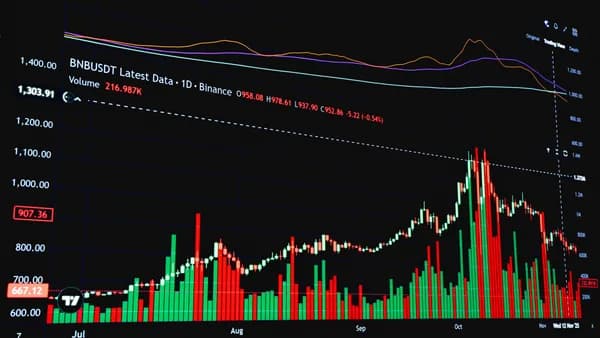
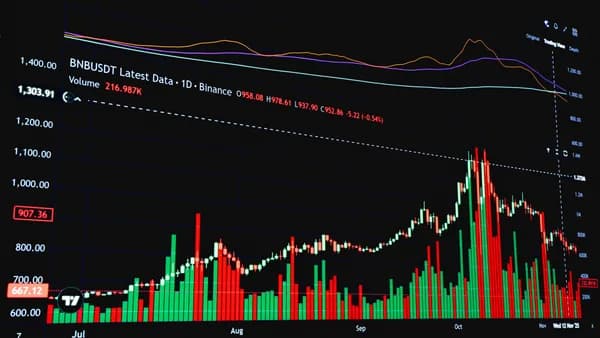
The stock action shows why the narrative spread. CoinDesk reports bitcoin is down about 24% since January, while RIOT is up nearly 94% year-to-date and CIFR is 62% higher. That divergence says investors are no longer valuing some miners as pure bitcoin proxies. They are paying for AI optionality.
That creates a split inside the sector. VanEck identified HIVE, Bitdeer (BTDR), Keel, and IREN as names with potential upside if they secure additional contracts. It also suggested Marathon Digital (MARA), CleanSpark (CLSK), and Riot Platforms (RIOT) remain more closely tied to bitcoin’s price performance.
For readers following the bitcoin side of that split, XOOMAR’s recent trading coverage, including Bitcoin Defies Japan Rate Hike as Shorts Get Crushed and $59K Bitcoin Low Sparks Wall Street's Crypto Spring Call, is useful context for how quickly BTC-linked sentiment can change. The VanEck report adds a separate lens: miners may now trade on construction credibility as much as bitcoin beta.
Wall Street has seen this pattern before, but the assets are different
The familiar part is the capital-market choreography. A stressed sector finds a new growth story, investors reward the companies with the clearest narrative, then scrutiny shifts to execution. Bitcoin miners have done this before around scale, treasury strategy, and operational expansion.
The difference this time is that the AI story is tied to a scarce input: power. VanEck’s focus on energized power shows why miners are not just attaching themselves to an AI buzzword. They may own or control infrastructure that AI customers want.
Still, the harder read is that not every miner with power becomes a data center operator. CoinDesk’s source material says valuations are difficult because investors are pricing businesses caught between declining mining operations and AI businesses that have yet to generate meaningful cash flow. That is the tension.
XOOMAR analysis: the strongest operators may genuinely transform. The weaker ones risk using AI language to cover a mining business that still depends heavily on bitcoin price performance.
Miners, AI tenants, lenders, and shareholders are grading different scorecards
Miners want recurring revenue and less dependence on bitcoin’s cycle. AI and HPC customers want usable capacity. Investors want proof that signed capacity becomes revenue without destroying the balance sheet first.
VanEck’s tenant-quality point is important because financing follows confidence. A miner serving an investment-grade hyperscaler may look very different from one tied to a smaller AI startup. The former can support a cleaner financing case. The latter may carry more counterparty risk, even if the headline megawatt number looks impressive.
Shareholders face a more complicated trade than they did when miners were valued mainly as leveraged bitcoin exposure. Some companies are now hybrids: part bitcoin miner, part power developer, part AI infrastructure candidate. That can create upside, but it also makes valuation messier.
The market’s new checklist is narrower than the press releases:
- Financing: Has capital been secured for the buildout?
- Energized power: How much operational power is actually available?
- Delivery: Are leased megawatts turning into functioning capacity?
- Tenant quality: Is the customer an investment-grade hyperscaler or a smaller AI buyer?
- Milestones: Are construction targets being hit on time?
VanEck’s reality check points to a tougher, smaller AI future for miners
The practical takeaway is simple: treat every new AI contract from a miner as the start of diligence, not evidence of earnings power. The headline may move the stock. The valuation should depend on funding, energized power, customer quality, and delivered capacity.
VanEck’s report does not say the Bitcoin miners AI pivot is fake. It says the easy part is over. The sector has already benefited from the narrative, with names like RIOT and CIFR rising sharply even as bitcoin fell. Now investors are asking whether the companies can turn leased megawatts into functioning data centers.
The evidence that would confirm the bullish thesis is concrete: closed financing, construction milestones met, more capacity delivered beyond the current roughly 25%, investment-grade tenants signed, and AI revenue showing up in reported results. The evidence that would weaken it is just as clear: missed timelines, unfunded expansion plans, weaker tenant rosters, or continued reliance on bitcoin mining to carry earnings.
VanEck’s warning lands because it reframes the trade. AI ambition got miners noticed. Execution will decide who keeps the premium.
Disclaimer: This XOOMAR analysis is for informational and educational purposes only. It is not financial, investment, legal, tax, or professional advice. It does not provide buy, sell, hold, price-target, portfolio, or personalized recommendations. Verify information independently and consult qualified professionals before making decisions.
The Bottom Line
- Bitcoin miners’ AI strategy is shifting from investor narrative to a financing and construction test.
- VanEck’s $50 billion near-term funding gap highlights how costly the pivot could become.
- Companies with power access may benefit, but only if they can deliver operational data center capacity at scale.
VanEck's Estimated Capital Needs for Bitcoin Miners' AI Pivot
| Scenario | Estimated Capital Need | Implication |
|---|---|---|
| Near-term funding gap | $50 billion | Miners must secure financing before AI infrastructure plans can scale. |
| Long-term capital needs | $221 billion | Full development plans require far larger project-finance execution. |
Estimated Capital Needs for Bitcoin Miners' AI Pivot
Primary Sources & Disclosures
Disclaimer: Content on XOOMAR is produced using AI-assisted research, drafting, and verification workflows and is intended for informational and educational purposes only. It does not constitute financial, investment, legal, tax, medical, or professional advice of any kind. All analysis reflects available information at the time of publication and may not be current. Verify information independently and consult qualified professionals before making decisions. Editorial policy

Written by
XOOMAR
Data desk
XOOMAR is a capital markets software and data company. Every brief on this site starts from a dataset the company collects itself from primary sources (CFTC, SEC EDGAR, FINRA, the Federal Reserve, exchange APIs) and names the numbers it is built on, with a link to the data page so you can check them. Briefs are reviewed before they go out and corrected in place when the data is revised.