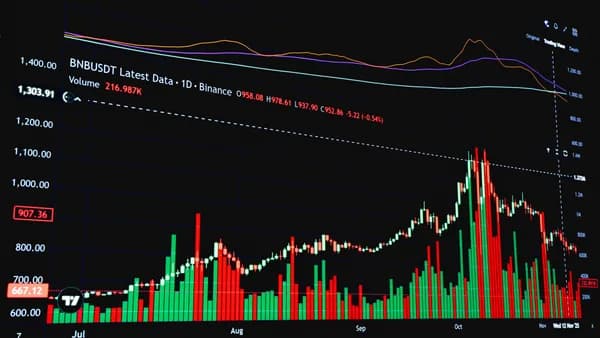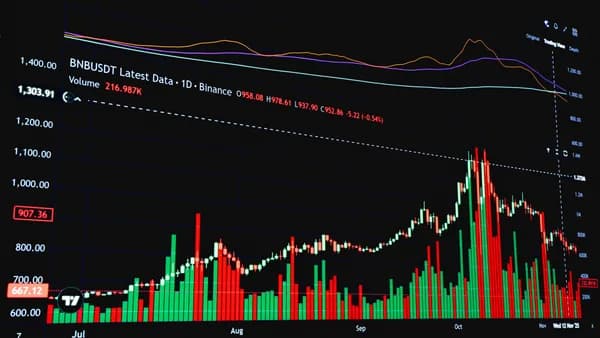
STRC preferred stock has turned bitcoin’s four-day slide into a broader confidence test for crypto leverage, treasury risk, and altcoin exposure. Bitcoin fell 2.5% in 24 hours to just below $62,400, but the sharper signal is that smart-contract and DeFi coins are leading the damage, according to CoinDesk.
XOOMAR Intelligence
Analyst Take
That matters because this isn’t only a spot-price story. The pressure is clustering around Strategy (MSTR), its bitcoin-heavy corporate identity, and STRC, the company’s dividend-paying preferred stock. When a bitcoin proxy starts driving sentiment across crypto tokens, traders are no longer just pricing bitcoin volatility. They’re pricing the risk that balance-sheet structures tied to bitcoin become harder to defend in a falling market.
STRC preferred stock is now the crypto market’s confidence trigger
XOOMAR analysis: The selloff says traders are treating STRC preferred stock as a market-structure warning, not just a Strategy-specific problem.
CoinDesk reported that concerns around Strategy, led by Michael Saylor, “continue to dominate market sentiment,” with special focus on the STRC preferred stock. The reason is simple enough: if the market starts doubting a bitcoin-linked capital structure, that doubt can spill into the tokens most exposed to leverage and momentum.
Marex analysts put the fear plainly:
“Strategy, the largest listed BTC holder, has watched its STRC preferred collapse below par, and the market is now openly pricing the tail that it has to sell coins to defend the structure.”
They added:
“Add five straight months of BTC trading under its estimated $78k production cost, quietly forcing the weakest miners to capitulate, and you have two real sellers that were not in the frame a week ago.”
That quote is doing most of the work. It identifies two potential sources of supply pressure: Strategy-related concerns and stressed bitcoin miners. Neither needs to become an immediate forced-sale event to matter. In crypto, the trade often moves before the proof arrives.
The strongest counterpoint is that the source does not show Strategy selling bitcoin. It shows traders pricing a tail risk. That distinction matters. But in a market already bleeding leveraged longs, perceived supply risk can be enough to change positioning.
Bitcoin is down, but smart-contract and DeFi coins are falling harder
The numbers show a broad CoinDesk 20 slide, with smart-contract and DeFi coins taking more heat than bitcoin.
| Market gauge | Move or signal reported |
|---|---|
| Bitcoin (BTC) | Down 2.5% in 24 hours, just below $62,400 |
| CoinDesk 20 Index (CD20) | Down 3.3% |
| CoinDesk Smart Contract Platform Select Capped Index | Down 4% |
| Ether (ETH), XRP, Solana (SOL) | All weaker |
| Leveraged liquidations | More than $450 million in 24 hours, mostly longs |
| Bitcoin options | Demand rising for puts targeting a potential slide to $52,000 or lower |
This is the useful read: bitcoin is weak, but the broader crypto complex is weaker. CoinDesk’s sector indexes show smart-contract platforms and DeFi-linked exposure underperforming the headline bitcoin move. That points to a market reducing beta, not simply abandoning bitcoin alone.
The derivatives setup makes the move more fragile. Open interest in bitcoin and ether futures was largely unchanged over 24 hours, while SOL futures open interest rose to over 70 million tokens, just below the June 5 record of 71.57 million. XRP futures open interest hovered at its highest level since October last year.
That means leverage has not fully left the room. It has been repriced, wounded, and in some cases liquidated, but not cleared. As we reported in bitcoin’s break below $63K, the key issue in this zone is not only price direction. It’s whether leveraged positioning turns a selloff into a feedback loop.
Derivatives traders are paying for downside protection
The derivatives data backs the bearish mood. CoinDesk reported that most of the biggest 25 tokens, except TRX and LAB, showed negative open-interest-adjusted cumulative volume delta over the past 24 hours. In plain market terms, sellers are hitting bids with market orders rather than waiting passively.
Funding rates also lean defensive. CoinDesk said funding for most tokens remains flat to negative, with ADA, XLM, and BCH funding rates down to between minus 20% and minus 30%. In the bitcoin options market, traders are lifting puts “in size,” preparing for a potential move toward $52,000 or lower in the coming weeks. One-week 25-delta skews show puts trading at a volatility premium of 10% or more.
That is not a calm hedge book. It is a market paying up for crash insurance.
The counterpoint: high open interest can fuel rebounds as well as selloffs. If price stabilizes, crowded bearish positioning can snap back fast. But the current evidence still favors caution, because liquidations have already topped $450 million in 24 hours and most were longs.
This liquidation dynamic also fits the stress pattern we covered in Borrowed Money Shatters Digital Credit Market Calm, where leverage, not spot selling alone, turned a price move into a market event.
LAB’s rally shows this is not a full speculative shutdown
One token is breaking the script. LAB, the token native to LAB Terminal, has gained 57% in seven days, 92% this month, after rising 900% in May, 250% in April, and 78% in March, according to CoinDesk.
LAB Terminal is described as a browser-based and extension-accessible platform for high-performance trade execution, with AI-powered research and trade routing aimed at minimizing slippage. That AI angle has helped LAB detach from broader market weakness.
But CoinDesk also flagged controversy. Blockchain investigator ZachXBT recently highlighted that insiders supposedly own 95% of LAB’s token supply. He said they have used four methods concurrently to attract retail investors, including high-interest over-the-counter loans with promotional conditions, unilateral vesting period extensions, delayed or withheld market rewards, and undisclosed market-making deals.
That makes LAB useful as a contrast. The market is not rejecting every risk asset equally. It is punishing crowded, leveraged weakness while still chasing isolated narratives. That split is often messier than a clean bear market.
STRC risk hits different holders in different ways
XOOMAR analysis: The same STRC concern means different things depending on who owns the risk.
For crypto traders, STRC preferred stock is a sentiment trigger. The immediate trade is visible in the data: long liquidations, negative funding, put buying, and heavier selling in smart-contract and DeFi indexes.
For Strategy investors, the question is narrower and more specific: can confidence hold around the structure if STRC trades below par and bitcoin remains below the estimated miner production cost cited by Marex? The source does not prove Strategy needs to sell coins. It does show the market is pricing that possibility.
For DeFi users and token holders, the practical issue is volatility. If collateral values keep falling and leverage stays elevated, liquidation pressure can move faster than spot holders expect. That does not mean every protocol is impaired. It means token prices are being marked through the lens of leverage and forced de-risking.
Three paths if STRC keeps driving the tape
The next crypto move will depend less on token narratives and more on whether investors regain trust in bitcoin-linked financial engineering.
Base case: Bitcoin stabilizes after the four-day slide, STRC concerns cool, and smart-contract and DeFi coins recover unevenly. Stronger tokens may rebound first, but the source data does not identify which protocols would lead.
Bear case: STRC anxiety deepens, traders keep pricing possible bitcoin sales by major holders, miners remain under pressure, and leveraged longs face another liquidation wave. In that scenario, the put demand around $52,000 or lower becomes the market’s reference point.
Bull case: Strategy-related concerns ease, downside hedging demand fades, and the selloff becomes a positioning reset rather than a deeper confidence break.
The evidence that would weaken the bearish thesis is clear: cooling put skew, improving funding rates, falling open interest without another price break, and smart-contract and DeFi indexes no longer underperforming bitcoin. Until then, STRC preferred stock remains the symbol traders are using to price a bigger question: who has to sell if bitcoin keeps falling?
Disclaimer: This XOOMAR analysis is for informational and educational purposes only. It is not financial, investment, legal, tax, or professional advice. It does not provide buy, sell, hold, price-target, portfolio, or personalized recommendations. Verify information independently and consult qualified professionals before making decisions.
The Bottom Line
- Bitcoin’s four-day slide is spreading pressure into smart-contract and DeFi tokens.
- STRC preferred stock has become a confidence test for bitcoin-linked corporate leverage.
- Persistent trading below estimated production cost could add miner selling pressure to the market.
Key Crypto Market Pressure Points
| Pressure Point | Why It Matters |
|---|---|
| Strategy/STRC preferred stock | Market concern is rising that a bitcoin-linked capital structure could force coin sales to defend the structure. |
| Bitcoin miners | Five straight months of BTC trading below an estimated $78,000 production cost may push weaker miners to capitulate. |
Bitcoin Price vs Estimated Production Cost
Primary Sources & Disclosures
Disclaimer: Content on XOOMAR is produced using AI-assisted research, drafting, and verification workflows and is intended for informational and educational purposes only. It does not constitute financial, investment, legal, tax, medical, or professional advice of any kind. All analysis reflects available information at the time of publication and may not be current. Verify information independently and consult qualified professionals before making decisions. Editorial policy

Written by
XOOMAR
Data desk
XOOMAR is a capital markets software and data company. Every brief on this site starts from a dataset the company collects itself from primary sources (CFTC, SEC EDGAR, FINRA, the Federal Reserve, exchange APIs) and names the numbers it is built on, with a link to the data page so you can check them. Briefs are reviewed before they go out and corrected in place when the data is revised.