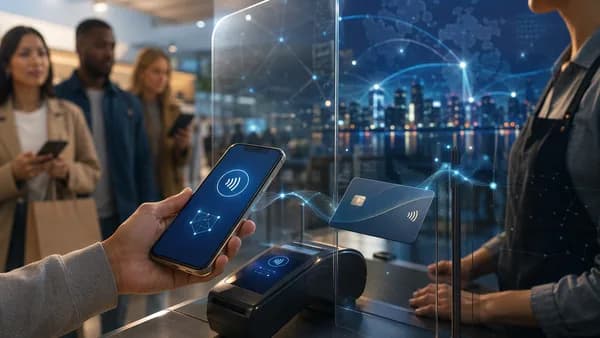
Open banking payment solutions are changing how merchants, fintech platforms, and software providers move money online. Instead of routing every checkout through card networks or relying only on digital wallets, open banking enables customer-authorized account-to-account payments, real-time bank data access, and automated financial workflows through secure APIs.
For merchants, the appeal is straightforward: lower processing costs, faster settlement, improved reconciliation, and fewer intermediaries in certain payment flows. But open banking is not a universal replacement for cards or wallets. Its value depends on geography, regulation, customer trust, bank coverage, user experience, and the level of consumer protection required.
What Open Banking Payment Solutions Are
Open banking payment solutions are payment and financial data tools that let authorized third-party providers connect securely to bank accounts through APIs. With customer consent, these providers can access account data, initiate payments, verify balances, support reconciliation, or power financial applications.
Stripe defines open banking as a model that allows third-party service providers to access consumer data from traditional banking systems through application programming interfaces, or APIs. PXP describes open banking payments as direct transfers from a customer’s bank account to a business or provider, without relying on cards or traditional intermediaries.
In practical terms, open banking is not one single product. It is a framework that supports multiple financial services, including:
- Payment Initiation: Retailers or platforms initiate payments directly from a customer’s bank account.
- Account Aggregation: Apps combine data from multiple bank accounts into one dashboard.
- Automated Reconciliation: Businesses match invoices, bills, and payments using bank transaction data.
- Real-Time Verification: Platforms verify income, balances, identity, or account ownership.
- Pay-by-Bank: Customers pay directly from a bank account in an online or mobile checkout.
Open banking shifts payments from closed, siloed systems toward API-based bank connectivity where customers control what data is shared and which payments are authorized.
Stripe notes that open banking can help businesses streamline payment services, optimize banking products, improve account management, and create more personalized financial experiences. PXP adds that open banking payments are designed around customer consent, transparency, secure authentication, and direct bank-to-bank transfers.
The market is still developing, but Stripe cites a Juniper Research forecast that open banking payment transaction values will exceed $330 billion globally by 2027. That scale helps explain why merchants, payment providers, fintechs, and software platforms are evaluating where open banking can reduce cost and operational friction.
How Account-to-Account Payments Work
Account-to-account payments, often called A2A payments, move funds directly between bank accounts. In open banking, that transfer is usually initiated by a regulated or authorized third-party provider after the customer grants permission.
Unlike a card transaction, where the payment passes through card networks and other intermediaries, an open banking payment uses APIs to connect the customer’s bank account, the payment provider, and the merchant or platform.
The Typical Open Banking Payment Flow
A simplified pay-by-bank transaction usually works like this:
- Customer Chooses Pay-by-Bank: At checkout, the customer selects a bank payment option instead of a card or wallet.
- Customer Selects Their Bank: The open banking provider routes the customer to their banking environment or authentication flow.
- Customer Gives Consent: The customer authorizes the payment and, where relevant, access to specific account data.
- Bank Authenticates the User: The bank verifies the customer through secure authentication.
- Payment Is Initiated: The third-party provider sends the payment instruction through a transaction API.
- Funds Move Account-to-Account: The payment is transferred directly from the customer’s bank account to the merchant or receiving account.
- Data Supports Reconciliation: Transaction data can be used to match the payment to an invoice, order, bill, or customer account.
Stripe explains that open banking APIs generally fall into three categories:
| API Type | What It Does | Common Payment-Related Uses |
|---|---|---|
| Data APIs | Provide read-only access to account information, balances, and transaction history | Account aggregation, affordability checks, cash flow dashboards |
| Transaction APIs | Enable fund transfers, direct debits, and payment services | Pay-by-bank, payment initiation, direct account-to-account payments |
| Product APIs | Let third parties list financial products, rates, and terms | Comparison tools, marketplaces, product discovery |
PXP emphasizes that open banking payments differ from online banking. Online banking generally refers to a bank’s own digital services, such as viewing balances or making transfers inside the bank’s app or website. Open banking, by contrast, lets third-party providers securely access banking information and initiate payments across an interconnected ecosystem.
Example: Connected Banking for Business Payments
OPEN provides a practical example of how connected banking can support business payment workflows. Its platform lets businesses connect bank accounts, create bills and invoices, make direct account-to-account payments, track receivables and payables, and reconcile payments with accounting software.
According to OPEN’s published data, its platform is used by 3.5 million+ businesses, processes $35 billion+ in transactions annually, and is used by 65,000+ tax practitioners. OPEN also states that its automation can reduce manual payment tasks by 80%, save an average of 500 hours every year, and reduce reconciliation efforts by 25% through real-time two-way accounting software sync.
Those figures are specific to OPEN’s platform, but they illustrate the broader operational value open banking-style connectivity can bring to finance teams: fewer manual bank logins, more automated reconciliation, and a clearer view of cash flow.
Open Banking Payments vs Card Payments
Open banking payments and card payments solve overlapping but different problems. Cards remain deeply embedded in online commerce, while open banking payments are designed to reduce intermediaries and move money directly between bank accounts.
NMI describes pay-by-bank as a payment option where a customer connects a bank account to an online checkout or digital wallet through a third party. That makes A2A payments “as simple as paying by card” in supported flows, while allowing the transaction to settle instantaneously, carry no interest, and cost far less to process than card payments.
Core Differences Between Open Banking and Cards
| Comparison Area | Open Banking / A2A Payments | Card Payments |
|---|---|---|
| Payment Rail | Direct bank-to-bank transfer through APIs | Card network-based transaction |
| Intermediaries | Bypasses many traditional card intermediaries | Uses card networks and related payment infrastructure |
| Settlement | NMI states A2A payments settle instantaneously | Source data does not provide a card settlement benchmark |
| Processing Cost | NMI says A2A fees are often under 1% in the U.K. and EU | NMI says open banking can offer merchants 40% to 85% lower end fees than credit card swipes |
| Consumer Credit | NMI states A2A payments carry no interest | Cards may involve credit, but source data does not provide specific card credit terms |
| Chargeback-Like Recourse | NMI warns A2A transfers lack a forced reversal mechanism like credit card chargebacks | Credit cards have chargeback mechanisms |
| Adoption Maturity | NMI says open banking is still early in the adoption cycle | Card payments are presented as the incumbent rail |
Where Open Banking Beats Cards
Open banking payment solutions can outperform cards when the merchant’s priority is reducing payment cost, improving settlement speed, and automating back-office workflows.
NMI states that A2A payments often have extremely low fees, frequently under 1% in the U.K. and EU. It also notes that these are often flat fees, which can be especially attractive for higher-ticket sales. For merchants with large transaction values, a lower or flatter fee structure can matter more than it does for smaller purchases.
NMI also says fintechs and payment providers can use lower A2A transaction costs to offer merchants 40% to 85% lower end fees compared with credit card swipes, while still building value-added services on top.
Open banking is also useful when payment data needs to flow into finance operations. Stripe lists automated invoice reconciliation as a key open banking use case, while OPEN’s platform shows how connected bank accounts can support bills, invoices, vendor payments, receivables tracking, and accounting sync.
Where Cards Still Make More Sense
Cards can still be the better option when consumer protection, familiarity, and broad acceptance matter more than cost reduction.
NMI highlights a major limitation: A2A transfers currently lack a forced reversal mechanism like credit card chargebacks. That means consumers using pay-by-bank may have limited recourse if a merchant fails to meet obligations or fraud occurs. Until refund and dispute mechanisms mature, cards may remain preferable for transactions where buyers expect strong post-payment protection.
Cards may also be more practical in markets where open banking coverage, consumer trust, or API standardization is limited. NMI reports that open banking adoption is 20% among consumers and small businesses in the U.K., one of the more advanced markets, and 11% among U.S. adults. That shows meaningful progress, but also confirms that open banking remains far from universal.
Open banking can beat cards on cost, settlement, and reconciliation. Cards can still win when customer recourse, familiarity, and broad reach are the deciding factors.
Open Banking Payments vs Digital Wallets
Digital wallets and open banking payments are sometimes framed as competitors, but the relationship is more nuanced. NMI notes that pay-by-bank can be connected to digital wallets, meaning open banking can operate inside wallet-like checkout experiences rather than only as a standalone payment method.
The source data does not provide detailed pricing, settlement, or adoption benchmarks for specific digital wallets. So the most reliable comparison is functional: open banking is primarily a bank-connectivity and A2A payment framework, while digital wallets are consumer-facing payment experiences that may use multiple funding sources.
Functional Comparison
| Comparison Area | Open Banking Payments | Digital Wallets |
|---|---|---|
| Primary Function | Initiate direct bank payments and access bank data through APIs | Provide a consumer-facing payment experience |
| Funding Source | Customer bank account | Source data does not specify; NMI notes wallets can connect to bank accounts for pay-by-bank |
| Merchant Value | Lower-cost A2A payments, bank data, balance verification, reconciliation | Checkout convenience where customers already use wallets |
| Relationship to A2A | Native to account-to-account payment flows | Can incorporate pay-by-bank, according to NMI |
| Source-Confirmed Competitive Role | Challenges traditional card payments through low-cost A2A rails | NMI lists native digital wallet payments as another emerging rail competing in payments |
When Open Banking Beats Wallets
Open banking is more compelling when the merchant or platform needs capabilities beyond checkout convenience. Examples from the source data include:
- Direct Bank Transfers: PXP explains that open banking payments enable direct bank-to-bank transfers without relying on card networks.
- Real-Time Balance Verification: NMI says open banking supports instantaneous balance checks, reducing bounces from insufficient funds.
- Automated Reconciliation: Stripe describes automated invoice reconciliation using open banking APIs.
- Cash Flow Visibility: OPEN shows how connected bank accounts can provide dashboards for balances, payables, and receivables.
- Business Payment Automation: OPEN supports vendor payments, invoice creation, receivables tracking, and accounting software sync.
In other words, if the goal is to combine payment initiation with bank data, open banking has a broader operational role than a wallet-only checkout button.
When Digital Wallets Still Make More Sense
Digital wallets may still make more sense when the user experience depends on an already familiar consumer payment interface. NMI describes digital wallet payments as one of several emerging rails competing alongside pay-by-bank, peer-to-peer apps, stablecoins, and buy now, pay later options.
Because the provided source data does not include wallet-specific fees, fraud rates, or settlement timelines, merchants should avoid assuming that open banking automatically outperforms wallets in every checkout. The better question is whether the use case requires direct bank connectivity, lower A2A processing costs, or bank data-driven workflows.
If not, a wallet may remain a practical customer experience layer—especially if pay-by-bank is eventually embedded inside it.
Key Benefits for Merchants and Fintech Platforms
The strongest case for open banking payment solutions comes from the combination of payment cost savings, faster money movement, real-time data access, and operational automation.
Lower Payment Processing Costs
NMI states that A2A payments often cost under 1% in the U.K. and EU and may be flat-fee based. It also says payment companies can offer merchants 40% to 85% lower end fees compared with credit card swipes.
That cost advantage is particularly relevant for:
- High-Ticket Sales: Flat or lower-cost A2A payments can be attractive when transaction values are large.
- Recurring Payments: NMI says open banking can support more reliable recurring payments.
- Margin-Sensitive Merchants: Lower payment costs can improve unit economics.
- Payment Orchestration: NMI notes providers can route transactions to the lowest-cost option.
Faster Settlement and Real-Time Data
NMI states that A2A payments settle instantaneously. Stripe also highlights open banking’s role in improving access to real-time financial data.
For merchants and platforms, this can support:
- Cash Flow Management: Faster visibility into incoming and outgoing money.
- Balance Verification: NMI says real-time balance checks can reduce insufficient-funds bounces.
- Fraud Detection: Stripe lists real-time fraud detection as an open banking use case.
- Credit Decisions: Stripe and NMI both reference lending and affordability checks using real-time financial data.
Better Reconciliation and Finance Automation
Stripe identifies automated invoice reconciliation as a key open banking service. OPEN’s connected banking model shows this in practice: businesses can create or import bills, pay them from connected bank accounts, and auto-reconcile payments with accounting software.
OPEN states that its two-way sync keeps accounting software updated with payments and bills, reducing manual record updates and reconciliation work. Its published metrics include an 80% reduction in manual payment tasks, 500 hours saved annually on average, and a 25% reduction in reconciliation efforts.
Improved Onboarding and Underwriting
NMI notes that open banking data can help payment providers onboard and underwrite merchants faster. This is because open banking can provide access to financial data that supports identity verification, affordability checks, cash flow analysis, and risk assessment.
Stripe similarly describes instant loans and credit scoring as an open banking use case, where lenders access real-time consumer data to assess credit more accurately and speed up approvals.
Limitations, User Experience Challenges, and Coverage Gaps
Open banking is promising, but the source data is clear that adoption remains complex. Stripe warns that data privacy concerns, security risks, and inconsistent regulatory frameworks create challenges businesses must consider carefully.
NMI goes further, describing open banking as still early in the adoption cycle.
Adoption Is Still Uneven
NMI reports that the U.K. is one of the most advanced markets, with 20% of consumers and small businesses currently using open banking. In the U.S., adoption is much lower, at 11% of adults.
That matters because payment methods depend on customer readiness. A merchant can add pay-by-bank, but if customers do not recognize or trust the flow, conversion may suffer.
Trust Remains a Barrier
NMI highlights a significant consumer trust issue: less than half of Americans trust a bank or credit union to provide open banking payments. Even highly trusted third parties cited by NMI do not reach the 25% mark.
This is especially important because open banking involves sensitive banking data. NMI notes that the amount of information available through open banking can far exceed what is included in a standard credit card transaction.
API Fragmentation Creates Implementation Complexity
Open banking depends on APIs, but API quality and standardization vary by region. NMI explains that U.K. and European regulation is moving toward bank-side API standardization, yet fragmentation and lack of interoperability remain issues in the implementation layer.
In other regions, including the U.S. and parts of Asia-Pacific, NMI says API standardization is immature or nonexistent. That makes it harder for third parties to build consistent user experiences and slows consumer adoption.
Consumer Recourse Is Not Fully Mature
One of the biggest drawbacks is the lack of forced reversals. NMI warns that A2A transfers do not currently have a mechanism equivalent to credit card chargebacks. If a merchant fails to deliver or fraud occurs, consumers may have limited recourse.
For merchants, this is not just a compliance issue. It affects customer trust, checkout conversion, and the types of transactions where pay-by-bank is appropriate.
Open banking should not be treated as a drop-in replacement for every card or wallet transaction. It works best where cost, speed, and bank data matter—and where the user experience and dispute model are acceptable for the transaction type.
Security, Consent, and Regulatory Considerations
Security and consent are central to open banking. Both Stripe and PXP emphasize that open banking depends on customer-authorized access to financial data through secure APIs.
Consent-Based Access
Open banking requires the customer to give explicit permission before a third-party provider can access banking data or initiate payments. NMI describes this as a framework where customers share financial information with third parties to improve services.
PXP similarly states that open banking payments are initiated through customer consent, giving users transparency and control over financial data.
Regulatory Frameworks
Several regulatory and market frameworks support open banking:
| Region / Framework | Source-Confirmed Role |
|---|---|
| PSD2 in Europe | Stripe and PXP cite PSD2 as a major open banking and payment services framework |
| U.K. Open Banking Initiative | PXP identifies it as a framework requiring major banks to share data with authorized third parties |
| Australia’s Consumer Data Right | PXP lists CDR as a regulatory foundation for open banking |
| U.S. Dodd-Frank Section 1033 | PXP and NMI reference consumer data access provisions |
| U.S. CFPB 1033 Rule | NMI says the rule is in legal uncertainty, leaving the U.S. without stable open banking regulation at the time of writing |
NMI notes that the U.K. and EU have the most mature regulatory frameworks, while the U.S. market faces legal uncertainty. It also reports that JPMorgan is rolling out fees for open banking data access, with payments-related data affected heavily.
That could change the economics for fintechs and payment companies, especially if banks are allowed to charge for access to open banking data.
Data Privacy and Internal Misuse
Security is not only about preventing external attacks. NMI points out that providers must convince users their data is safe from attackers and from internal misuse.
Because open banking can reveal balances, income patterns, spending behavior, and transaction history, businesses using these tools need clear consent flows, data minimization, secure storage, and transparent user controls.
Best Use Cases for Open Banking Payments
Open banking payment solutions are strongest where direct bank connectivity creates measurable value. The following use cases are directly supported by the source data.
1. High-Value Merchant Payments
Because NMI says A2A payments often have low or flat fees, they can be attractive for higher-ticket transactions. Merchants processing expensive purchases may benefit more from lower A2A costs than merchants selling low-value items.
2. Recurring Payments and Bill Payments
NMI states that open banking can support more reliable recurring payments and real-time balance verification, reducing bounces from insufficient funds. It also lists subscription and bill management as an open banking use case.
3. B2B Vendor Payments
OPEN’s platform demonstrates how connected bank accounts can support vendor bill uploads, dashboard-based payables tracking, direct account-to-account payments, beneficiary management, and accounting sync.
This makes open banking-style payment infrastructure especially relevant for finance teams managing payables and receivables across multiple bank accounts.
4. Invoice Collection and Reconciliation
Stripe identifies automated invoice reconciliation as an open banking use case. OPEN also supports GST-compliant invoices, payment reminders, receivables tracking, automated reconciliation, and settlement directly into bank accounts.
For businesses with many invoices, the value is not only the payment itself. It is the reduction in manual matching between bank transactions and accounting records.
5. Fintech Onboarding and Underwriting
NMI says open banking data helps payment providers onboard and underwrite merchants. Stripe also notes that lenders can use real-time data to assess credit more accurately and speed up loan approvals.
This is useful for platforms that need to verify financial health, income, balances, or transaction history before approving access to financial products.
6. Cash Flow Dashboards and Multibanking
Stripe lists multibanking platforms as an open banking use case, where a corporation can consolidate accounts from different banks into a single dashboard. OPEN similarly offers dashboards for account balances, payables, and receivables across connected bank accounts.
7. Fraud Detection and Account Verification
Stripe lists real-time fraud detection as a use case, while NMI notes that real-time verification can reduce fraud. OPEN also describes account validation through APIs in the context of payouts from business bank accounts.
These capabilities are valuable for marketplaces, payout platforms, lenders, and any business that needs to reduce payment failures or verify account details.
Bottom Line
Open banking payment solutions are most compelling when merchants and fintech platforms need lower-cost account-to-account payments, faster settlement, real-time bank data, and automated reconciliation. Compared with cards, open banking can reduce processing costs and improve operational workflows, especially for high-value payments, recurring payments, invoices, and B2B finance operations.
But open banking does not replace cards and wallets in every scenario. Cards still provide mature consumer recourse through chargeback mechanisms, while digital wallets may offer familiar checkout experiences. Adoption is also uneven: NMI reports 20% usage among consumers and small businesses in the U.K. and 11% among U.S. adults, with trust, interoperability, and regulation still developing.
The practical takeaway: use open banking where direct bank connectivity creates clear value, but keep cards and wallets where customer familiarity, coverage, and dispute protection matter more.
FAQ
What are open banking payment solutions?
Open banking payment solutions are API-based tools that let authorized third-party providers access bank data or initiate payments with customer consent. They can support pay-by-bank, account-to-account transfers, automated reconciliation, balance verification, and financial dashboards.
How do open banking payments differ from card payments?
Open banking payments move money directly between bank accounts, while card payments use card networks and related intermediaries. NMI states that A2A payments settle instantaneously, carry no interest, and can cost far less to process than card payments. However, A2A payments currently lack a forced reversal mechanism like credit card chargebacks.
Are open banking payments cheaper than cards?
According to NMI, A2A payments often cost under 1% in the U.K. and EU and are often flat-fee based. NMI also says payment providers can offer merchants 40% to 85% lower end fees compared with credit card swipes. Actual costs depend on provider, region, and implementation.
Are open banking payments the same as online banking?
No. PXP explains that online banking refers to services provided by a customer’s own bank, such as viewing balances or making transfers. Open banking allows third-party providers to securely access bank data or initiate payments across a broader interconnected ecosystem with customer consent.
When should merchants use open banking payments?
Open banking is best suited for high-value payments, recurring payments, invoice collection, B2B vendor payments, cash flow dashboards, automated reconciliation, and fintech onboarding. It is especially useful when lower payment costs and real-time bank data are important.
What are the main risks of open banking payments?
The main challenges are consumer trust, data privacy, API fragmentation, regulatory uncertainty, and limited consumer recourse. NMI warns that A2A transfers do not currently offer a chargeback-like forced reversal mechanism, while Stripe notes that privacy, security, and inconsistent regulation remain adoption challenges.