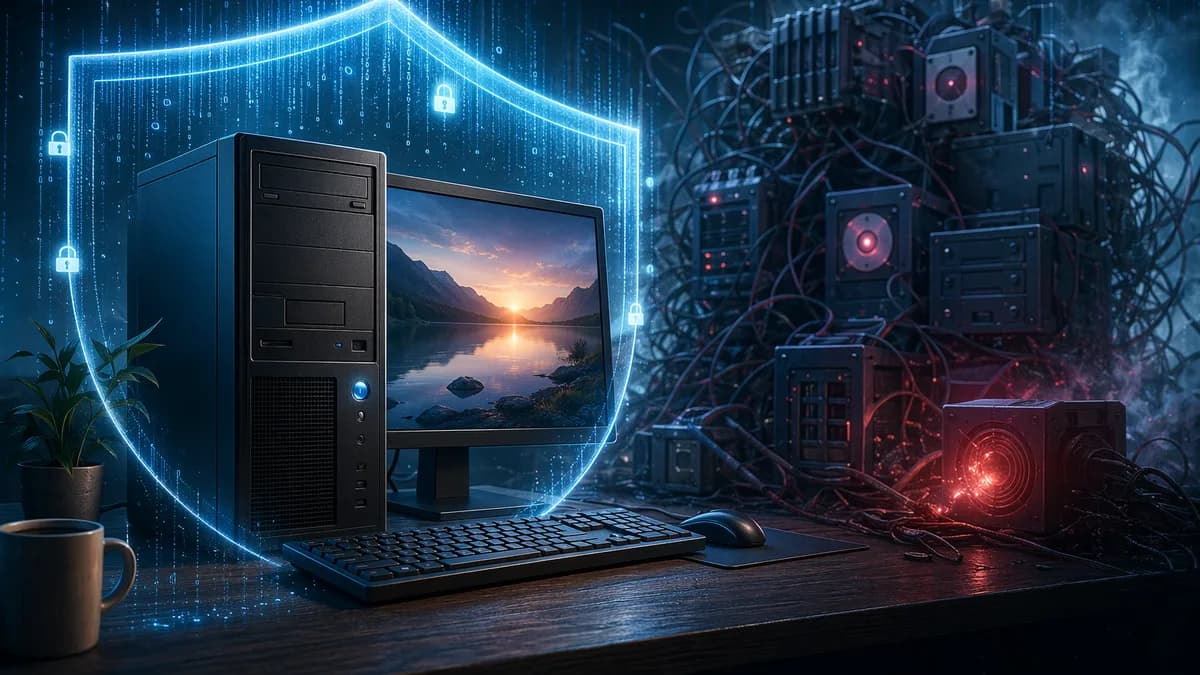
If you’re shopping for an antivirus for low end PC hardware, the goal is not simply “maximum features.” It is protection that stays quiet, avoids heavy background work, and does not make an older laptop or budget desktop feel unusable. The research points to a clear pattern: lightweight design, cloud-based scanning, scan scheduling, and fewer always-on extras matter more than a crowded feature list.
XOOMAR Intelligence
Analyst Take
Below is a buyer-focused guide grounded in the available research from Comparitech, WindowsReport, Softvire, Techdator, All About Cookies, and user discussion from r/antivirus. It covers which antivirus options are repeatedly described as lighter, what features actually help, and how to reduce the performance hit on your own machine.
1. Why Some Antivirus Apps Slow Down Older PCs
Older and budget PCs usually have less room for background security software to work. Comparitech identifies the main bottlenecks as limited processing power, limited memory, and low storage capacity. Softvire adds that many low-end PCs run with 4GB RAM or less and often still use traditional hard drives instead of SSDs.
That combination matters because antivirus software does several resource-heavy jobs:
- Real-time scanning: Checks downloads, files, and installs as they happen.
- Full system scans: Reads large portions of your drive, which can be especially slow on older hard drives.
- Background services: Runs protection modules, update checks, browser protection, VPNs, password tools, and cleanup tools.
- Startup processes: Loads security components when Windows starts.
The biggest slowdown risk on a low-end PC is not always the antivirus brand itself. It is often the number of enabled modules, the timing of scans, and whether the software runs multiple background extras you do not need.
Softvire specifically warns that extra features such as VPNs, system cleaners, and backup tools can run additional background services. On low-end hardware, those extras may matter more than they would on a modern high-performance PC.
There is also disagreement around built-in protection. Comparitech describes Microsoft Defender Antivirus as pre-installed on Windows devices and says it balances strong real-time protection with smooth performance for low-resource devices. However, Softvire notes that Defender can feel heavy during full scans on old hard drives, and r/antivirus commenters were split: some recommended Defender as the default option, while others argued it is not the lightest choice.
That is why the best choice depends on your exact hardware and how you use the PC.
2. Key Features to Prioritize on Low-End Hardware
When choosing an antivirus for low end PC setups, the research points to a few features that matter more than a long list of add-ons.
Lightweight design and low idle usage
Comparitech prioritized free antivirus tools with minimal impact on CPU, RAM, and storage. Softvire recommends looking for antivirus programs that use minimal memory while idle and suggests looking for tools that can run under 100MB of RAM when not scanning.
That does not mean every product publicly advertises RAM usage. But it does mean you should favor software described as lightweight, cloud-based, or optimized for older hardware.
Cloud-based scanning
Cloud-based scanning reduces the amount of work done locally on your PC. Comparitech specifically looked for free antivirus solutions with cloud-based scanning to reduce local resource usage.
Panda Free Antivirus is repeatedly highlighted for this reason. Comparitech describes it as cloud-based protection for low-resource devices, while WindowsReport says Panda Dome uses cloud processing to clean the PC and has cloud-based protection that does not impact the user’s PC too much.
Custom scan scheduling
Scan scheduling is one of the most practical features for low-end PCs. Softvire recommends running full scans only when you are not using the computer. WindowsReport notes that TotalAV allows users to set a preferred time and schedule automatic scans for malware, junk files, or tracking cookies.
For an older laptop, that can make a major difference. A scan running while you browse, work, or play a game is much more noticeable than one running overnight or during a lunch break.
Quiet or gaming/work modes
Pop-ups and heavy background activity can be just as annoying as CPU usage. Softvire says Bitdefender Antivirus Plus includes Gamer or WorkMode, which can pause pop-ups and other heavy activities. WindowsReport also describes ESET HOME Security Essential as a good fit for gamers or users who want uninterrupted work or gaming sessions, with a Game Mode to prevent pop-ups while playing.
Browser and phishing protection
Many threats arrive through unsafe links, phishing pages, malicious downloads, browser notifications, and spoofed websites. Several products in the research include web protection features:
| Product | Web or phishing-related protection mentioned in sources |
|---|---|
| TotalAV | WebShield defends against phishing and spoofing websites |
| Bitdefender Antivirus Plus | Detects and blocks phishing websites before users reach them |
| Avast Free Antivirus | Detects and blocks spyware, ransomware, and phishing attacks |
| Avira | Blocks infected websites, browser trackers, and intrusive ads |
| AVG Free Antivirus | Blocks unsafe links, downloads, and email attachments |
| Malwarebytes | Web protection blocks traffic to known dangerous addresses |
For low-end PCs, browser-level protection can help stop threats before they become full malware scans or cleanup jobs.
3. Lightweight Antivirus vs Full Security Suites
A lightweight antivirus focuses on essential protection: malware detection, real-time protection, web protection, and scheduled scanning. A full security suite may add VPNs, password managers, system optimization tools, webcam protection, banking protection, data breach monitoring, ad blocking, cleanup utilities, or device coverage across multiple platforms.
Neither approach is automatically better. On budget hardware, the trade-off is important.
Buyer shortlist: lightweight options repeatedly mentioned in the research
| Antivirus option | Why it may suit low-end PCs | Notable features from sources | Caveats from sources |
|---|---|---|---|
| Avast One Basic | Comparitech calls it very lightweight and its best free option for low-resource devices | Ransomware protection, 5GB weekly VPN data, performance optimization on Windows/Android, junk file cleanup | Free version covers one device according to Comparitech |
| Bitdefender Antivirus Free | Comparitech says it passed performance testing “with flying colors” | Easy to use, strong protection, live support | Free version feature depth is not fully detailed in source data |
| Panda Free Antivirus / Panda Dome | Cloud-based protection reduces local resource demand | Cloud processing, USB vaccination tool, rescue USB, dark web scanner in Comparitech listing | Some advanced features may require paid editions |
| Avira Free Antivirus / Free Security | Described as light and cloud-based by Techdator; includes extras | Real-time protection, password manager, VPN, browser protection | WindowsReport says full scans can take about two and a half hours |
| AVG Antivirus Free | Comparitech describes it as lightweight and low in false positives | Multiple protection layers, malicious download detection, unsafe link and attachment blocking | Less detail in source data on scan impact |
| Microsoft Defender Antivirus | Built into Windows and free; no extra install | Automatic updates, real-time protection, no extra interface | Sources disagree on performance; full scans may feel heavy on old hard drives |
| ESET NOD32 / ESET HOME Security Essential | Softvire recommends it for limited RAM; WindowsReport says it does not need many resources | Prevention-first approach, Game Mode, multi-layered technologies | Paid/free status depends on product; source mentions free trial for ESET HOME |
| Kaspersky Free / Kaspersky Antivirus | Softvire says it is known for low system impact and strong protection | Some benchmarks cited by Softvire report full-scan impact as low as 6%; real-time scanning and anti-ransomware features mentioned by Techdator | Availability may depend on region, according to Softvire |
| Malwarebytes | WindowsReport says it works well alongside another antivirus; user discussion often describes it as light | Malware detection, web protection, useful as a second-opinion scanner | Several sources frame it more as a companion scanner than a full replacement |
When a full suite makes sense
A full suite may be worth considering if you want more than basic malware protection. For example:
- TotalAV includes real-time protection, WebShield, data breach monitoring, password generation/storage, ransomware and phishing scam protection, ad blocking, and notification controls.
- Bitdefender Antivirus Plus includes AI and machine learning technologies, system optimization tools, safe online banking, phishing protection, and an integrated VPN.
- Norton 360 is described by Softvire as feature-rich but often well-ranked in performance tests, and the All About Cookies search data calls Norton a top lightweight choice because it offers many features and strong protection scores without slowing the device down.
When a lightweight antivirus is better
A lighter product is usually the safer choice if your PC has:
- 4GB RAM or less
- Older dual-core CPU
- Traditional hard drive
- Slow startup
- Frequent freezes during scans
- Gaming or school/work tasks that cannot tolerate interruptions
For low-end PCs, fewer enabled features can be a performance feature in itself.
4. Real-Time Protection and Resource Usage Explained
Real-time protection continuously checks files, downloads, installs, and system activity. It is one of the most important antivirus functions, but it can also be one of the most noticeable on weaker hardware.
WindowsReport describes TotalAV Real-Time Protection as continuously checking downloads and installs to keep harmful threats away. Techdator says AVG Free Antivirus provides real-time security updates, scans malware, and finds malicious downloads before running them. Avira, Kaspersky, and Adaware are also described as offering real-time scanning or protection.
The performance question is not whether real-time protection is useful. It is how efficiently it works.
What affects real-time protection speed?
Based on the research, the main factors are:
- Local vs cloud scanning: Panda’s cloud-based approach is repeatedly described as lighter because more analysis is handled away from the local PC.
- File access behavior: Softvire says real-time scanning should not freeze the system when opening files.
- Threat database and update behavior: Techdator notes AVG automatically updates virus definitions.
- Background modules: Extra features can add services that compete for RAM and CPU.
- Storage type: Softvire notes full scans can feel heavy on old hard drives.
Built-in protection: good enough or too heavy?
Microsoft Defender Antivirus is the easiest option because it is already included on Windows devices. Softvire lists its advantages: it is free, built into Windows, receives automatic Microsoft updates, and does not require an extra interface using additional RAM.
But the source data is mixed. Comparitech includes Defender among the best free options for low-resource devices, while Softvire says it can feel heavy during full scans on older hard drives. Reddit discussion also reflects divided user experience, with some recommending Defender plus an ad blocker or Malwarebytes, and others saying Defender is not lightweight.
For buyers, the practical takeaway is simple: if Defender feels smooth on your PC, it may be enough. If full scans or background activity cause lag, consider a lighter third-party option from the researched shortlist.
5. Free vs Paid Antivirus for Budget PCs
A budget PC owner may not want to pay for antivirus, especially when several free tools are repeatedly recommended in the research. The important distinction is between genuinely free protection and free trials.
Comparitech specifically prioritized antivirus programs that are genuinely free as opposed to a free trial. Its free shortlist includes Avast One Basic, Bitdefender Antivirus Free, Panda Free Antivirus, Avira Free Antivirus, AVG Antivirus Free, and Microsoft Defender Antivirus.
Free antivirus options mentioned in the research
| Free option | Key free features mentioned | Best fit |
|---|---|---|
| Avast One Basic | Ransomware protection, 5GB VPN data weekly, lightweight design, junk cleanup/performance optimization on Windows/Android | Users wanting the most extras in a free lightweight package |
| Bitdefender Antivirus Free | Strong protection, easy use, live support, strong performance testing | Users wanting simple protection with low performance impact |
| Panda Free Antivirus | Cloud-based protection, dark web scanner, strong independent lab scores according to Comparitech | Older PCs that benefit from cloud scanning |
| Avira Free Antivirus | Real-time protection, password manager, VPN, user-friendly interface | Users who want free extras but can schedule scans carefully |
| AVG Antivirus Free | Multiple protection layers, low false positives, unsafe link/download/email attachment blocking | Users wanting a familiar free Windows antivirus |
| Microsoft Defender Antivirus | Built into Windows, automatic updates, real-time protection | Users who want no extra install or account setup |
Paid antivirus can still make sense
Paid versions are worth considering if you specifically need features that the sources associate with paid or fuller products:
- Bitdefender Antivirus Plus: AI and machine learning detection, optimization tools, phishing blocking, safe online banking, integrated VPN.
- Panda Dome Advanced: r/antivirus discussion mentions ransomware protection and application control, though this comes from community discussion rather than a lab test in the provided source data.
- ESET HOME Security Essential: Game Mode, multi-layered technologies, regular updates, and low resource needs.
- TotalAV: Real-time protection, WebShield, data breach monitoring, password tools, ransomware and phishing protection, ad blocking, and notification disabling.
However, the research does not provide exact subscription prices for these products. At the time of writing, you should compare current pricing directly on the vendor’s site and avoid paying for modules you will disable on a low-end machine.
6. Settings That Reduce Performance Impact
Even a lightweight antivirus can slow an old PC if it is configured poorly. The research consistently points to settings and habits that reduce the burden.
Use scheduled scans
Softvire recommends running full scans only when you are not using the computer. WindowsReport notes that TotalAV lets users schedule automatic scans for malware, junk files, or tracking cookies.
Good scan times include:
- Overnight: Best for desktops or laptops left plugged in.
- Lunch break: Useful for school or work laptops.
- After downloads: Helpful if you install new software often.
- Weekly maintenance window: Better than letting full scans start randomly.
Choose the basic version
Softvire recommends choosing a basic version instead of feature-heavy packages because simpler antivirus software uses fewer background processes.
For example, a low-end PC user may not need:
- VPN module
- System cleaner
- Driver updater
- Backup tool
- Multiple browser extensions
- Password manager if already using another one
- Performance dashboard constantly running
That does not mean those tools are useless. It means they may not be worth the background load on an older machine.
Enable gaming or work modes where available
Softvire says Bitdefender’s Gamer or WorkMode can pause pop-ups and other heavy activities. WindowsReport says ESET includes Game Mode to prevent pop-ups while playing.
This is useful not only for gaming but also for video calls, presentations, online classes, and any task where interruptions matter.
Use browser protection to reduce malware exposure
Softvire recommends lightweight extensions such as ad blockers to stop threats before they download, reducing the antivirus workload. Reddit discussion also included multiple users recommending Defender with an ad blocker or Malwarebytes as a secondary scanner.
This is especially relevant because some “virus-like” experiences are actually browser notification permissions or malicious redirects. One r/antivirus discussion described unwanted explicit notifications that were resolved by removing site/app permissions from the user’s account settings; another commenter clarified that this was likely notification permission abuse rather than a traditional virus.
Keep Windows and the antivirus updated
Softvire notes that updates improve system stability and security. Techdator also notes that AVG automatically updates virus definitions.
On low-end PCs, updates can be inconvenient, but outdated protection can create more cleanup work later.
Consider storage upgrades if possible
Softvire says even a small SSD can make a big difference because faster storage reduces scan times and improves overall performance. This is not an antivirus setting, but it is one of the few hardware changes that directly improves scan responsiveness on older systems.
7. Extra Features Worth Having: Ransomware and Phishing Protection
Some extras are worth keeping even on low-end hardware because they address common high-impact threats.
Ransomware protection
Ransomware can lock or encrypt files and demand payment before access is restored. WindowsReport emphasizes that ransomware can put users at risk of losing information and files or being held for ransom.
Several products in the research mention ransomware protection:
| Product | Ransomware-related detail from sources |
|---|---|
| Avast One Basic | Comparitech says it includes ransomware protection for files, unusual for many free antivirus tools |
| TotalAV | WindowsReport lists ransomware and phishing scam protection |
| Bitdefender Antivirus Plus | WindowsReport says it blocks threats before infection; Techdator describes Bitdefender as multilayer security |
| Kaspersky Antivirus | Techdator mentions anti-ransomware among its features |
| ESET HOME Security Essential | WindowsReport says it protects against ransomware, spyware, worms, and other malware |
| VIPRE | WindowsReport says it defends against ransomware and emerging threats |
If you store school files, work documents, family photos, or business records on an old PC, ransomware protection is one of the few extras that may justify keeping a feature enabled.
Phishing protection
Phishing protection is also worth prioritizing because it can prevent credential theft without requiring a heavy full-system cleanup.
The research mentions phishing protection across several tools:
- TotalAV WebShield defends against phishing and spoofing websites.
- Bitdefender Antivirus Plus detects and blocks phishing websites before users see their false promises.
- Avast Free Antivirus detects and blocks phishing attacks.
- AVG Free Antivirus blocks unsafe links, downloads, and email attachments.
- Avira blocks infected websites and browser trackers.
For older PCs, preventing a bad click is often better than cleaning up after one.
8. Features Low-End PC Users Can Skip
Commercial antivirus products often bundle many tools. Some are useful, but low-end PC users should be selective.
Skip or disable extras you do not actively use
Softvire specifically advises avoiding total security suites when you do not need the extra tools. The reason is simple: extra services can run in the background.
Features to consider skipping include:
- VPN: Useful on public Wi-Fi, but not always needed. Avast One Basic includes 5GB weekly VPN data, while Panda’s freemium VPN data is described by Techdator as 150MB daily. If you do not use the VPN, disable it.
- System cleaners: Avast includes junk file cleanup, and paid Avast plans add optimization tools such as disk cleanup and automatic driver updates, according to Comparitech. These may help some users, but they are not core malware protection.
- Driver updaters: Useful for maintenance, but not essential antivirus protection.
- Password manager: Avira and TotalAV include password features. If you already use another password manager, avoid running duplicate tools.
- Multiple browser extensions: Browser protection can help, but stacking several extensions can create clutter and slow browsing.
- Constant notifications: WindowsReport lists notification disabling as a TotalAV feature. On older machines, fewer alerts also means fewer interruptions.
Be careful with full-suite overlap
If you install a third-party antivirus, understand how it interacts with Microsoft Defender. The source data does not provide detailed coexistence rules, so do not assume running multiple real-time antivirus engines will improve performance.
WindowsReport describes Malwarebytes as best used with another antivirus because it helps detect unwanted bugs that accompany downloads. Reddit discussion also often frames Malwarebytes as a useful secondary scanner. That is different from running several full real-time suites at once.
9. How to Test Antivirus Performance on Your Own Device
No list can perfectly predict performance on your exact PC. The same antivirus may feel light on one older laptop and heavy on another, especially if one has an SSD and the other has a traditional hard drive.
Use a simple before-and-after test.
Step 1: Record your baseline
Before installing anything new, note how your PC behaves with your current setup:
- Startup time: How long until the desktop is usable?
- Idle behavior: Does the fan run constantly?
- Browser launch: How long does Chrome, Firefox, or Edge take to open?
- File opening: Do documents, downloads, or folders lag?
- Gaming or video playback: Does performance stutter?
At the time of writing, Windows includes built-in tools such as Task Manager that can show CPU, memory, disk, and startup activity. You do not need a paid benchmark tool to notice whether an antivirus is consuming too much RAM, CPU, or disk activity.
Step 2: Install only one candidate at a time
Test one product at a time from your shortlist. Do not install several full antivirus suites together.
A practical test order for many low-end Windows users would be:
- Microsoft Defender Antivirus if already installed and acceptable.
- Avast One Basic, Bitdefender Antivirus Free, Panda Free Antivirus, Avira Free Antivirus, or AVG Antivirus Free if you want a free third-party option.
- ESET, Kaspersky Free, Bitdefender Antivirus Plus, or TotalAV if you want specific paid or suite-level features mentioned in the research.
- Malwarebytes as a second-opinion scanner if you want an additional manual check.
Step 3: Test idle impact
After installation and updates finish, restart your PC and let it sit for a few minutes. Then check whether the system feels usable.
Look for:
- High disk activity when you are doing nothing.
- High memory usage from the antivirus process.
- Delayed app launches.
- Startup slowdown.
- Frequent pop-ups or promotional alerts.
Softvire recommends looking for low RAM usage while idle, and Comparitech prioritized minimal CPU, RAM, and storage impact.
Step 4: Run a full scan at the right time
Full scans are supposed to be heavier. The question is whether they make the PC unusable and how long they take.
Avira is a useful cautionary example: WindowsReport says Avira can take about two and a half hours for a full scan, and subsequent scans may still take more than 2 hours because it validates the same files again. That does not mean Avira is a bad product, but it means scan scheduling matters.
Step 5: Keep the winner simple
Once you find the smoothest option, disable extras you do not need, schedule scans outside active hours, and keep real-time protection enabled unless you have a specific reason to run manual-only scanning.
The best antivirus for low-end hardware is the one that you will actually keep updated, configured, and running without constantly disabling it out of frustration.
Bottom Line
The best antivirus for low end PC users is usually a lightweight product with real-time protection, cloud-assisted scanning where possible, scheduled scans, and minimal extras. Based on the source data, the strongest free candidates include Avast One Basic, Bitdefender Antivirus Free, Panda Free Antivirus, Avira Free Antivirus, AVG Antivirus Free, and Microsoft Defender Antivirus.
If you are willing to consider paid or fuller tools, ESET, Kaspersky Free or Kaspersky Antivirus, Bitdefender Antivirus Plus, TotalAV, and Norton 360 are all mentioned in the research as options that may work well depending on hardware and feature needs. For second-opinion scanning, Malwarebytes is repeatedly discussed as useful, especially alongside another antivirus.
For most older laptops and budget desktops, start simple: test Microsoft Defender first, compare one lightweight free alternative if Defender feels heavy, schedule full scans outside work hours, and avoid running unnecessary suite features in the background.
FAQ
What is the best free antivirus for a low-end PC?
Comparitech names Avast One Basic as its best free antivirus for low-resource devices, citing its lightweight design, ransomware protection, and 5GB of weekly VPN data. Other free options mentioned positively include Bitdefender Antivirus Free, Panda Free Antivirus, Avira Free Antivirus, AVG Antivirus Free, and Microsoft Defender Antivirus.
Is Microsoft Defender good enough for an older PC?
It can be. Comparitech includes Microsoft Defender Antivirus among the best free options for low-resource devices and notes that it is pre-installed on Windows. However, Softvire says Defender can feel heavy during full scans on old hard drives, and user discussion is mixed. If it slows your PC, test a lighter third-party option.
Is Malwarebytes good for low-end PCs?
The research generally presents Malwarebytes as useful, especially as a companion or second-opinion scanner. WindowsReport says it is best used with another antivirus and helps detect unwanted bugs from software downloads. Reddit discussion also frequently describes it as light, but several commenters would not use it as their only antivirus.
Should I choose free or paid antivirus for a budget PC?
Free antivirus is often enough if you need basic malware protection and want minimal background load. Paid antivirus may make sense if you need specific features such as ransomware protection, phishing protection, banking protection, optimization tools, or fewer interruptions. The provided research does not include exact subscription prices, so compare current pricing directly before buying.
Which antivirus features matter most on low-end hardware?
Prioritize low RAM usage, minimal startup impact, efficient real-time protection, scan scheduling, cloud-based scanning, and phishing/ransomware protection. Skip extras you do not use, such as VPNs, cleaners, driver updaters, or duplicate password managers.
Can antivirus slow down games on a low-end PC?
Yes, especially during full scans, updates, or pop-up-heavy background activity. Softvire notes that Bitdefender Antivirus Plus includes Gamer or WorkMode, while WindowsReport says ESET HOME Security Essential includes Game Mode to prevent pop-ups while playing. Scheduling scans outside gaming sessions is one of the easiest fixes.
Sources & References
Content sourced and verified on June 16, 2026
- 1Best free Antivirus for Low-Resource Devices in 2025
https://www.comparitech.com/antivirus/best-free-antivirus-low-resource-devices/
- 211 Best Antivirus Software for Low-End PCs [2026 Guide]
https://windowsreport.com/antivirus-low-specs-pc/
- 3good antivirus for LOW END PC
https://www.reddit.com/r/antivirus/comments/1cpf459/good_antivirus_for_low_end_pc/
- 44 Best Antivirus for Low End PC
https://softvire.net/antivirus-for-low-end-pc?noredirect=true
- 510 Best Lightweight Antivirus For Windows 10, 11 (2026)
https://techdator.net/lightweight-antivirus-windows-10/
- 6The Best Lightweight Antivirus Software for 2026 | All About Cookies
https://allaboutcookies.org/best-lightweight-antivirus

Written by
XOOMAR Insights Team
Research and Editorial Desk
The XOOMAR Insights Team pairs automated research with human editorial judgment. We track hundreds of sources across technology, fintech, trading, SaaS, and cybersecurity, cross-check the facts, and explain what happened, why it matters, and what to watch next. We do not just rewrite headlines. Every article is fact-checked and scored for reliability before it goes live, and we link back to the original sources so you can verify anything yourself.