How long can a ransomware event disrupt a Coca-Cola-owned dairy brand before it becomes a supply-chain problem?
XOOMAR Intelligence
Analyst Take
Has the Fairlife cyberattack made Coca-Cola’s dairy unit the 17th U.S. corporate cyber incident this year?
Fairlife, the dairy company owned by The Coca-Cola Co., is the latest U.S. company to report a cyber incident, bringing the reported or affected company count to 17 this year amid a global rise in AI-driven cyberattacks, according to PYMNTS.
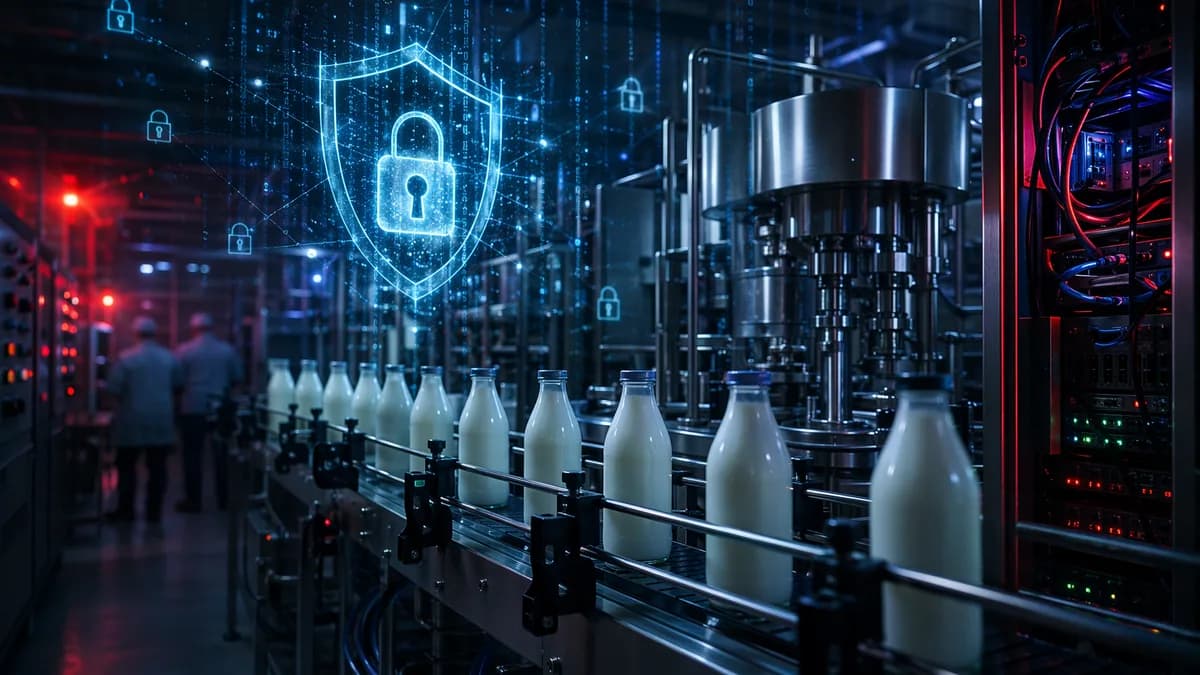
Coca-Cola said in a Thursday press release that Fairlife found unauthorized third-party access to its production-related systems and “some other systems” in connection with a ransomware event. The company temporarily suspended its U.S. production operations while it works to complete an investigation and restore affected systems.
That makes the Fairlife cyberattack more than a data-security disclosure. It hit systems tied to production, which turns a digital intrusion into an operational event. Readers tracking the production impact can follow XOOMAR’s related coverage of the Fairlife ransomware attack freezing Coca-Cola dairy lines.
Coca-Cola said Fairlife moved quickly after detecting the issue.
“After detecting the issue, the company promptly activated its incident response and business continuity protocols,” Coca-Cola said in the release. “The company’s investigation and assessment of the impact of the incident is ongoing, with the assistance of outside advisers and cybersecurity experts. The company has also notified law enforcement.”
The disclosure does not say whether customer data, employee information, supplier records, payment data, or other sensitive information was accessed. It also does not identify the attackers or say whether any ransom demand was made.
That matters because the first public notice in a ransomware case usually answers only the narrowest question: did something happen? It rarely answers the harder one: how deep did the access go?
Why does an attack on a dairy brand land inside the AI cyberattack surge?
The Fairlife cyberattack arrived as companies face a broader rise in cyber incidents tied to AI-enabled fraud and intrusion tactics. The source material does not say Fairlife’s ransomware event used AI. That distinction matters.
The AI connection is the environment around the attack, not a confirmed cause of it.
The FBI Internet Crime Complaint Center said in April that it received 22,364 internet crime complaints in 2025 that referenced AI. Those complaints reported $893 million in losses. Across all internet crime categories, IC3 received 1,008,597 complaints reporting $20.9 billion in losses in 2025, up from 859,532 complaints and $16.6 billion in losses in 2024.
The FBI’s warning centered on synthetic content.
“AI-enabled synthetic content is becoming increasingly difficult to detect and easier to make, which allows criminal actors to potentially conduct successful fraud schemes against individuals, businesses and financial institutions,” the FBI said in its 2025 Internet Crime Report.
For a consumer brand, the risk is not limited to stolen files. A production-linked cyber incident can force internal containment steps, vendor checks, legal review, customer communications, and retailer questions before the company even knows the full scope.
That is the pressure point in the Fairlife case. A dairy brand depends on manufacturing systems, logistics, retailer relationships, and trust in product availability. Even if product quality, consumer data, or payment systems are not shown to be affected, the public confirmation of a ransomware event forces every connected party to ask whether their own exposure has changed.
This is why ransomware remains such a sharp corporate threat. Attackers do not need to prove permanent damage to create leverage. Downtime, uncertainty, and brand pressure can do the work fast.
XOOMAR readers following the broader ransomware playbook can also read Ransomware Groups Slip the Net With Serial Rebrands, which gives context on why attribution and repeat-offender tracking can be difficult once groups change names or infrastructure.
Which details are Fairlife partners still waiting to hear?
Fairlife customers, retail partners, suppliers, and regulators still lack the details that determine the real severity of the incident.
The key open questions are specific:
- Data exposure: Coca-Cola has not said whether personal data, employee information, supplier files, or payment-related information was accessed.
- System scope: The company identified production-related systems and some other systems, but has not described the full set of affected platforms.
- Operational recovery: Fairlife is working to restore systems, but the source material does not provide a restart timeline for U.S. production.
- Regulatory path: Coca-Cola said law enforcement has been notified. The source material does not say whether breach notices or other regulatory filings tied to data exposure will follow.
- Attacker claims: No ransomware group claim is identified in the supplied source material.
Coca-Cola also said Fairlife is working with outside advisers and cybersecurity experts. That is the standard next phase after containment: determine what was accessed, whether data left the network, which systems can safely return, and who must be notified if exposure is confirmed.
The harder question for decision-makers is whether the incident stays contained inside Fairlife’s own systems or forces a wider review across partners that connect to the brand through manufacturing, logistics, retail ordering, payments, or shared vendor tools.
The company’s next statements will carry more weight than the first one. Speed matters, but clarity matters more. A fast update that avoids the central questions will not settle partner concerns.
The signals to monitor now are updated Coca-Cola or Fairlife statements, regulatory filings, breach notices, ransomware-site claims, continued production disruption, and retailer or distributor advisories. The question that may take months to answer is whether this was a short operational interruption or evidence of a deeper systems exposure across a major consumer brand’s production network.
Impact Analysis
- Fairlife’s ransomware event affected production-related systems, turning a cyberattack into an operational disruption.
- The incident makes the Coca-Cola-owned dairy brand the 17th reported or affected U.S. corporate cyber case this year.
- Key details remain unknown, including whether sensitive data was accessed or a ransom demand was made.
Reported or Affected U.S. Corporate Cyber Incidents This Year
Primary Sources & Disclosures

Written by
XOOMAR Insights Team
Research and Editorial Desk
The XOOMAR Insights Team pairs automated research with human editorial judgment. We track hundreds of sources across technology, fintech, trading, SaaS, and cybersecurity, cross-check the facts, and explain what happened, why it matters, and what to watch next. We do not just rewrite headlines. Every article is fact-checked and scored for reliability before it goes live, and we link back to the original sources so you can verify anything yourself.