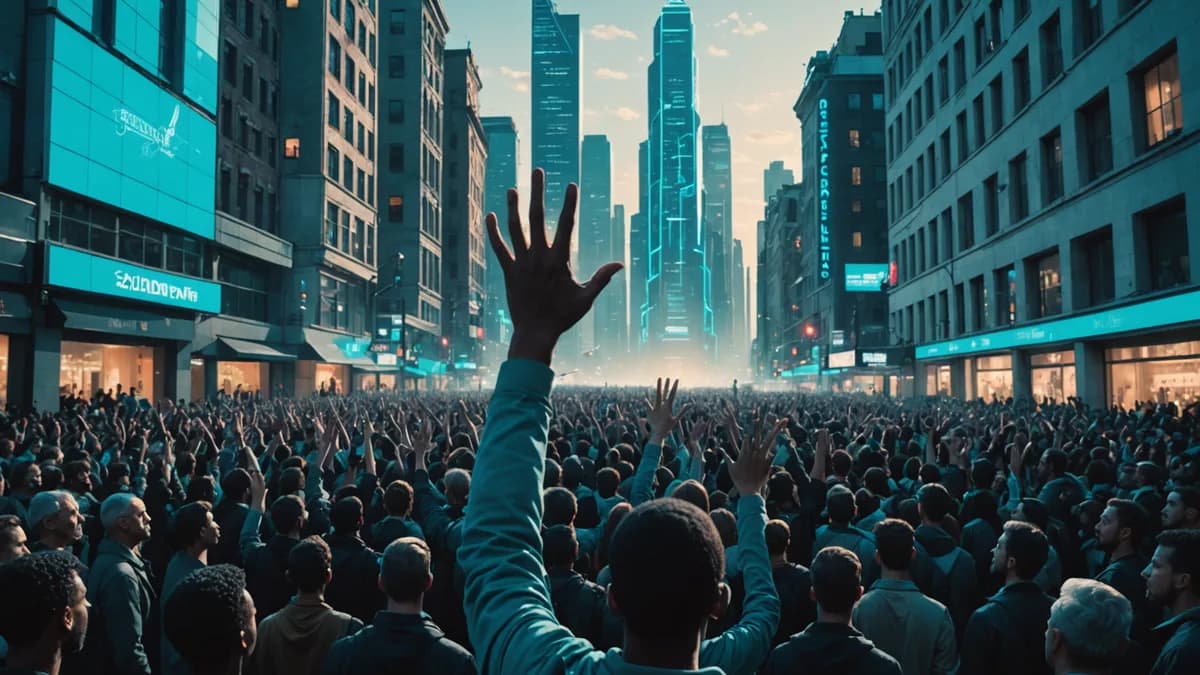
The Empathy Sifaka
They made contact, but not with words. They touched every human mind at once.
The Whisper
The air in Elara Vance’s soundproofed lab is dry and cold, carrying the ozone scent of overworked processors. It is 3:17 AM on July 19th. A pixelated waterfall of data, a spray of ones and zeros meant to represent cosmic noise, flows silently down her main screen. She is looking for symbols. For syntax. For the Rosetta Stone from the stars. Her coffee tastes like bitter ash. The quiet hum of the machines is the only sound, a sterile cocoon against the sleeping California night outside.
Then, the coffee cup warms in her hands.
Not physically. The ceramic is still cool. But a feeling of warmth blooms in her palms, a sense of gentle, encompassing heat that spreads up her arms and floods her chest. She freezes, thinking *stroke, aneurysm, catastrophic system failure*. But the feeling is not a symptom. It is a state.
It is the profound, disorienting sensation of being understood. Not by a person, but by the universe. A wave of serene compassion, unconditional and absolute, pours into her. There are no images. No words. She feels, for a single, stretched moment, the weary loneliness of the night janitor buffing the floors two halls over, the sharp joy of her nephew dreaming in Tokyo, the quiet desperation of a fisherman lost in fog off the coast of Chile. She feels seven billion points of light, each distinct, each connected to her own consciousness by a filament of pure, tender regard. Her cynicism, her secret resentments, her academic rivalries—they are not erased, but gently held, smoothed like stones in a river. The world is a single, breathing, feeling thing, and she is part of its pulse.
The lab’s lights flicker. On her screen, the data waterfall flatlines into a steady, solid tone.
Then, it ends.
The ordinary chill of the air rushes back in, a physical shock. Elara gasps, her hand flying to her chest. Her heart hammers against her ribs, a frantic drumbeat reclaiming its territory. From the open doorway, a scream echoes down the hall, followed by bewildered laughter. She stumbles to the window. Outside, the night is erupting. Car horns blare in discordant symphony. Lights are flicking on in every house. A man is standing in the middle of the empty street, arms wide, head thrown back, weeping.
She looks at her hands, still tingling with the ghost of that impossible warmth. The sterile hunt for symbols is over. They made contact. But they didn’t send a message. They sent a feeling. And every single person on Earth just felt it.
The Afterglow and the Backlash
For seventy-two hours, the world breathes in a single, shuddering sigh.
Newsfeeds show soldiers on stagnant frontlines putting down their weapons, not in surrender, but in baffled, shared exhaustion, sharing canteens under a truce no one ordered. Boardroom arguments dissolve as executives find themselves weeping, suddenly pierced by the chronic anxiety of their assistants. Elara watches it all from her apartment, the global pulse rewiring local reality. Her phone rings with a call from her estranged sister. They don’t discuss their feud; they just cry, silently, for three minutes before hanging up. The language of their rift has been rendered obsolete.
“It wasn’t communication,” Elara says aloud to her empty kitchen, her life’s work lying in ruins at her feet. “It was… overwriting.” A linguist without a lexicon. She feels cheated, and yet, the ghost of that profound connection lingers in her sternum, a warm, guilty ember.
On the fourth day, the backlash begins. The ember starts to cool.
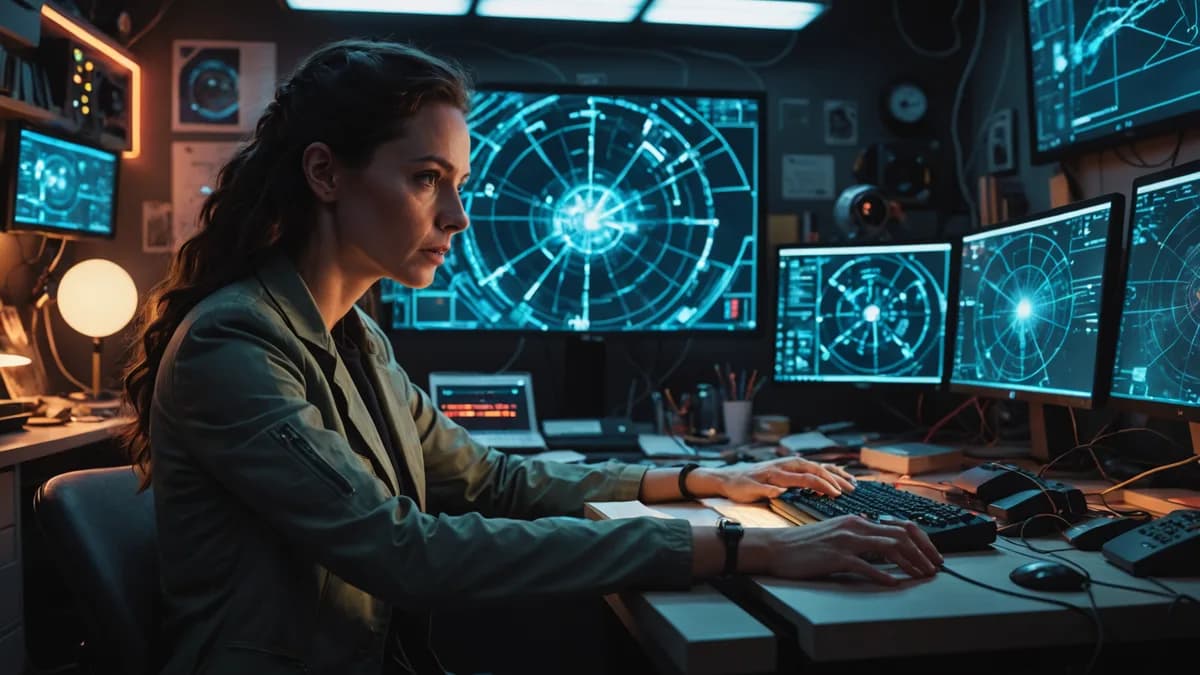
The first signs are clips of people destroying the new communal art installations, faces twisted in a familiar, human rage. Talking heads appear on screens, their voices sharp as broken glass. “They didn’t say hello,” one Essentialist spokesperson snarls, her words scrolling beneath her in real-time. “They *violated* us. They smoothed out our edges, our passion, our righteous anger. That was not a gift. It was a neural pacifier.”
The Harmonists respond with gentle, maddening calm. “They showed us a better state of being,” their advocates murmur, their eyes still holding a trace of that otherworldly softness. “A way to exist without the cancer of hatred. It is a seed we must cultivate.”
Elara listens to both, the cynic in her wrestling with the woman who felt the fisherman’s fear. The world fractures along a new fault line. It is no longer about nations or beliefs, but about the fundamental software of the self. Do you cling to the jagged, flawed, human emotional spectrum? Or do you reach for the serene, alien empathy that felt, for a moment, like coming home? The silence from the stars is now filled with the roar of humanity arguing with its own soul.
Cultivating the Signal
The lab is different now. Not a SETI facility, but a clandestine node in a global, underground network. They call themselves The Gardeners. The tools are not radio telescopes, but neuro-feedback helmets and shared virtual spaces—lush, impossible landscapes generated by a chorus of linked minds.
Elara fits the sleek band over her temples. “Focus on the resonance,” the soft voice of the facilitator, Kaito, instructs. “Not the memory of the pulse itself. But the trace it left in how you connect.”
In the virtual space, she is standing on a glassy plain under a binary sunset. Across from her floats the shimmering avatar of Amir, a former conflict mediator from Jerusalem. Their task is not to speak, but to *feel* towards each other the unconditional regard of the Pulse. To cultivate it like a muscle.
It is exhausting. For minutes, they manage a fragile harmony—a shared sense of peace, a mutual understanding of fatigue. Then, Elara’s own mind betrays her. A sudden, unbidden memory of professional betrayal flashes, sharp and cold. In the virtual space, a black crack splinters the glass plain at her feet. Amir’s avatar flinches.
“It’s not a message,” Elara pants, pulling the helmet off after the session, her hair stuck to her sweat-damp neck. “We’ve been thinking about it wrong.”
Kaito brings her water. “What is it, then?”
“A handshake.” The realization is chilling in its simplicity. “You don’t communicate your entire biography in a handshake. You just… offer your hand. You demonstrate your basic state of being. That’s what they did. That serene empathy, that connection—that’s their baseline. That’s just… how they are.”
The room is quiet, the hum of the servers like a distant hive.
“So the signal…” Kaito whispers.

“The signal was the question,” Elara finishes, the truth settling into her bones. “They reached out a hand, drenched in their own consciousness. The real message isn’t in the stars. It’s the terrifying, beautiful question they left hanging in the air of our minds: ‘Can you meet us here?’”
The Ugliness of Trying
Trying is messy. It is ugly. It feels, at times, like psychological self-mutilation.
The Gardeners’ sessions become brutal mirrors. In a shared space meant to foster unity, Elara is paired with a woman whose political views once filled her with contempt. The exercise is to hold the woman’s perspective, her fears, her history, in that same empathetic field. Instead, Elara’s own trauma surges—the memory of her father’s cold, dismissive voice, a sound that shaped her. The virtual space doesn’t turn harmonious; it curdles into a screaming storm of reciprocal pain and anger. They break the link, both nauseous and trembling.
“This is torture,” Elara spits, throwing the helmet across the room. “You can’t graft an alien consciousness onto a human psyche! It’s like forcing a rose to grow on a hateful, volcanic rock.”
Outside the Garden, the world convulses. The Essentialist narrative hardens into the Empathic Rejection movement. Their rhetoric is potent, viral: “They showed us their paradise to make our own world seem like a hell. They softened us for the harvest. Your ‘harmony’ is the bleating of a docile flock.” Acts of sabotage target Gardener nodes. Voices that were once merely opposed now scream for purification, for a return to the “glorious, untampered human heart,” with all its capacity for rage and vengeance.
The conflict is no longer about the aliens at all. It is about the definition of a worthwhile mind. Is the pinnacle of consciousness a state of perfect, peaceful connection? Or is it the fierce, fragile, chaotic tumult of individual feeling, where love is meaningless without the possibility of hate? Elara lies awake, the ghost-pulse in her chest now feeling like a scar. She wanted a dictionary. She got a civil war, fought on the battlefield of every human heart.
The Long Hello
Five years have passed. No second signal has come. The stars over Santa Fe are sharp and silent, the same as they were before.
Elara walks through the quiet courtyard of the institute that now houses her work. A gentle fountain plays. She is older. The struggle has etched lines of patience, not peace, around her eyes. The Essentialists still hold their enclaves. The Harmonists still cultivate their fragile gardens. But the screaming has softened into a global, weary, persistent murmur—the sound of a species in a long, difficult conversation with itself.
She is not a Gardener leader, nor an Essentialist. She has become an advocate for what she terms “The Struggling Harmony.” Her thesis, published today, sits heavy and real in her hands, a physical artifact in a digital age.
She writes: *We awaited a transmission of knowledge, but they transmitted a state of being. We awaited a dialogue between civilizations, but the dialogue happened within. The ‘Sifaka Pulse’ was not an invasion, nor a salvation. It was a mirror held up at interstellar distance. In it, we saw both a utopian potential and the ferocious attachment to our own beautiful, broken selves.*
*The contact was not a failure because they have not spoken again. The contact was a profound success. The philosophical shockwave—the relentless, messy, human struggle to integrate radical empathy without surrendering our individual souls—that is the dialogue. They offered a hand. Our grasping, fumbling, sometimes violent, sometimes graceful attempt to reach back, that is the reply. The conversation was never between stars. It always was, and will always be, within the human heart.*
She looks up at Proxima Centauri, a faint pinprick in the velvet dark. No flash. No pulse. Just the endless quiet. The long hello, it turns out, was not theirs. It was ours. And we are still learning how to say it back to each other.