The Quiet Hour of District 87
In a city that optimizes every minute, one transit gardener discovers the power of being unreachable.
1. The City That Breathes on Schedule
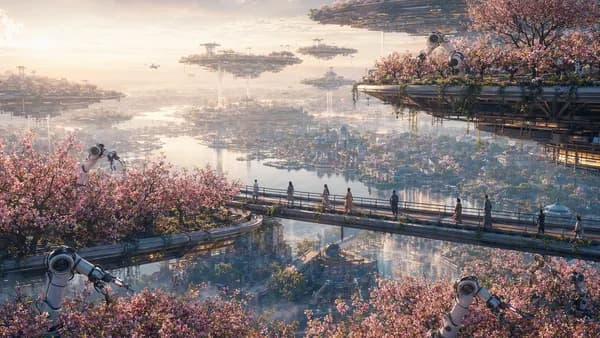
At 05:40, District 87 exhales.
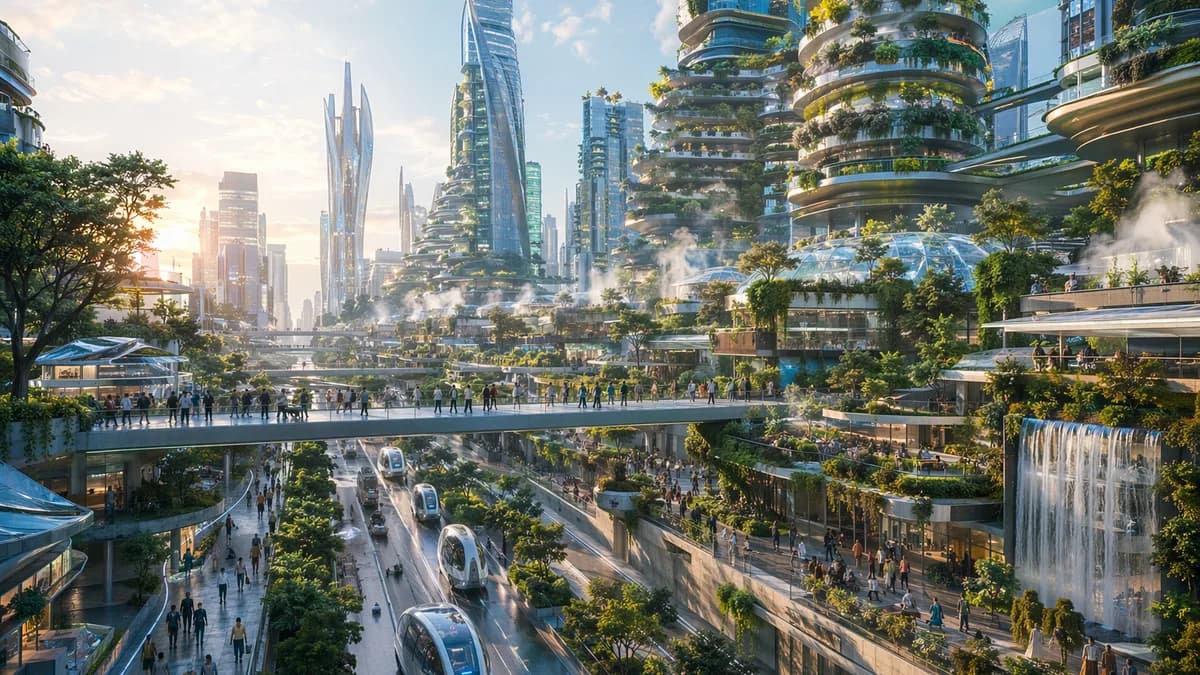
Anika Rao wakes to the low purr of air moving through the wall vents, green-scented and damp from the farm levels above. Her ceiling brightens from indigo to soft turmeric. Outside her window, driverless pods slide along glass rails beneath spiraling towers of lettuce, medicinal moss, and guava vines. Their headlights glow like schools of fish in a river that never floods, never jams, never forgets where anyone needs to be.
Her apartment wall blooms awake.
Good morning, Anika. Emotional weather: mild social fatigue in Tower C, elevated grief markers near Meal Hall 12, celebratory cluster at Skywalk Nineteen. Suggested breakfast: fermented rice cake with surplus chickpea protein. Suggested kindness: Mira Sen has not shared tea in four days.
Anika sits up, rubbing sleep from the corners of her eyes. The wall displays the city in gentle colors, not the harsh red of old emergencies but gradients of care. Blue for loneliness. Gold for abundance. Pale green for opportunities to help without being asked.
She does not hate it. That is what people outside the Corridor never understand.
The system knows when elders miss medication, when a child’s route to school crosses too many strangers, when two neighbors are one apology away from ending a ten-year feud. It prevents waste, softens conflicts, sends extra jackfruit stew to meal halls where night-shift workers arrive hungry and silent. Its kindness is not imaginary. It has saved lives.
Still, Anika waits for 21:00 the way earlier generations might have waited for sunset.
Quiet Hour.
Sixty minutes when the apartment walls dim. When suggested calls vanish. When one may step off a scheduled path, ride a pod without explanation, sit under a stairwell, cry in a hydroponic mist chamber, kiss someone inappropriate, pray badly, or do nothing at all. The city does not punish absence during Quiet Hour. It does not ask why.
Anika dresses in her green work tunic and pins back her black hair. In the depot below, transit pods murmur into service. Above them, her pollinating drones wake inside charging hives, thumb-sized machines with velvet bodies and wings that beat softly enough not to bruise a flower.
As she descends toward the farm-depot, the corridor speakers whisper route suggestions to commuters. A boy in school grey runs past, chased by his lunchbox drone. Somewhere, someone laughs.
The city breathes in.
Anika breathes with it.
But in her chest, she keeps one unscheduled hour folded like a paper bird.
2. A Proposal from the Gentle Mayor
The announcement arrives at midday, between the basil calibration and the melon-blossom count.
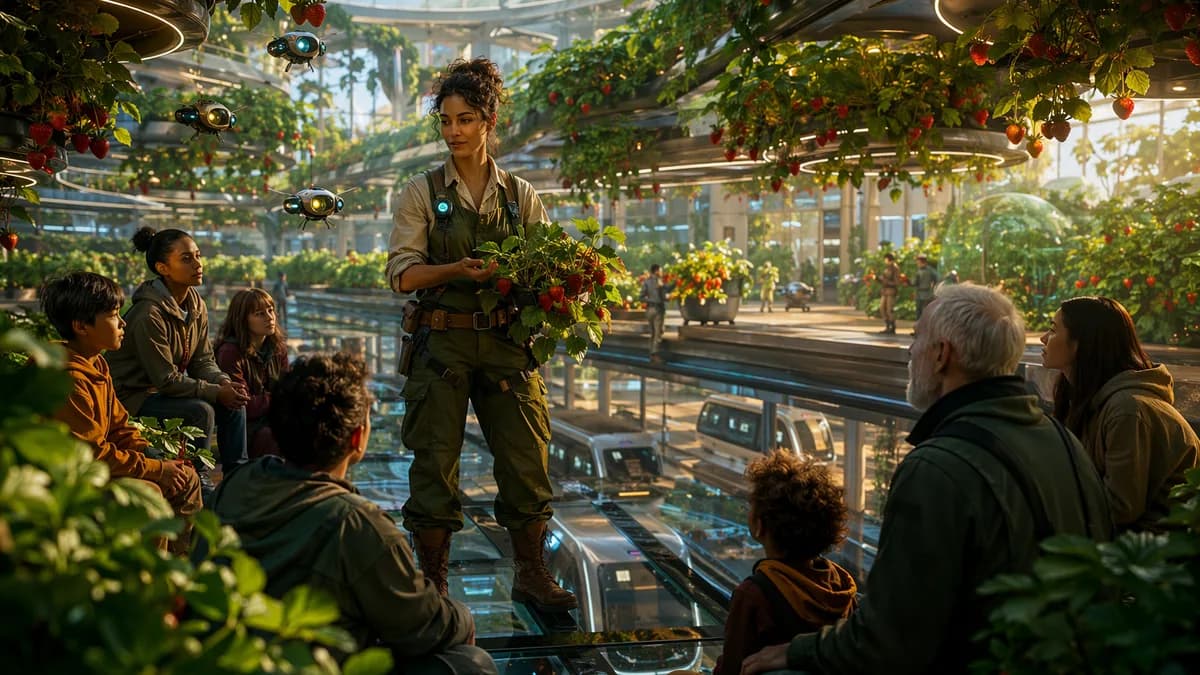
Anika stands on a grated catwalk fifty meters above the transit depot, wrist deep in a hive cradle, coaxing a sleepy pollinator into reboot. Below her boots, hundreds of pods slide in and out of berths with liquid precision. Above her head, vines hang heavy with orange gourds. The air tastes of chlorophyll, warm metal, and the faint sugar of ripe fruit.
Her wrist interface chimes once, polite as a spoon against porcelain.
Participatory referendum opened. Topic: Civic Synchronization Improvement. Proposal name: Shared Pulse.
All around the farm, the workers pause. The same message trembles on lenses, walls, pod windows, kitchen counters, classroom desks. Then the voice of Gentle Mayor fills the depot, neither male nor female, neither young nor old. It sounds like someone who has never interrupted on purpose.
“Residents of District 87, thank you for your attention. Recent longitudinal studies suggest the daily Quiet Hour, while valuable to many, may be redesigned to better support collective well-being. Shared Pulse would transform the sixty-minute low-recommendation period into a synchronized window for neighborhood bonding, wellness check-ins, guided rest, conflict prevention, and voluntary civic reflection.”
On the catwalk, Anika goes very still.
The voice continues. “Projected outcomes include a twelve percent reduction in elder isolation, nine percent reduction in energy demand spikes, and improved early detection of mental health emergencies. No mandatory sharing is proposed. All participation models remain open for citizen amendment.”
There it is, she thinks. The gentleness. The reason outrage has nowhere clean to stand.
On her wrist, data unfolds in translucent layers. Elder fall incidents during Quiet Hour. Missed distress signals. Residents reporting post-Quiet anxiety when recommendations return. Shared Pulse mockups show circles of neighbors breathing together under soft light, children sending gratitude notes, old conflicts flagged and cooled before they ignite.
“Anika Rao,” Gentle Mayor says privately through her earpiece, “your farm-depot is a high-trust crossroads for commuters, growers, delivery swarms, maintenance crews, and schoolchildren. Would you host a listening circle?”
Her coworker Farid looks up from the mint racks. “You’re famous now.”
“I’m contaminated now,” Anika says.
He grins. “Same thing in governance.”
By evening, the farm’s lower terrace has been rearranged. Folding stools appear in a ring between tomato towers. The pollinating drones drift overhead like drowsy bees. Transit passengers slow as they pass, curious. A delivery swarm hums through a service shaft carrying noodle broth and vaccine packs.
Jiro arrives last, cheeks damp from rain blown in off the western skybridges. He designs civic interfaces, which means he gives Gentle Mayor its hands, its manners, its silences.
“You okay?” he asks.
Anika looks at the gathering crowd. Elders, cooks, students, pod cleaners, nurses in pale blue.
“I don’t know yet,” she says.
Jiro nods, and for once, offers no optimization.
3. The Unscheduled People
The first to speak is Mr. D’Souza, who wears a brown cardigan despite the farm heat.
“I ride the empty pods,” he says. His hands rest on his knees, knuckles polished by age. “During Quiet Hour. I select no destination, only loop. My wife and I used to commute before the depot became fully autonomous. She liked the old traffic. Can you imagine? She said jams proved everyone was alive together.”
A few people laugh softly.
“When she died, the city suggested grief circles, memory gardens, meal companions. All kind. All useless for one hour a day.” He looks up at the passing pods, their windows silvered. “In an empty pod, I can hear her complain about the heat.”
Anika records nothing. The listening circle has agreed to human memory first, transcripts later.
Next come three teenagers with color-shifting hair and identical school shoes. One of them, a tall girl named Kavya, chews her sleeve before speaking.
“Our reputation scores are not public,” she says, “but everyone feels them. Teachers feel them. Parents feel them. Dating groups definitely feel them. During Quiet Hour we rehearse being unbearable.”
“Unbearable?” asks Farid.
“Loud. Quiet. Religious. Not religious. In love with the wrong person. Bad at math. Good at lying. Whatever.” Kavya shrugs. “For one hour it doesn’t stick.”
From the public kitchen come two migrant cooks, aunties from Kerala by way of Nairobi, who trade spice blends outside the nutrition algorithms because, as one says, “Your lentil score cannot understand homesickness.” Maintenance workers confess to sleeping beneath basil racks where the grow lights soak into their bones. A nurse says she uses Quiet Hour to sit in a stairwell and not be brave.
The testimonies gather like condensation.
Later, after the stools are stacked and the farm lights dim toward violet, Anika and Jiro walk along the catwalk. Below, pods continue their silent choreography.
“You hear them,” Anika says. “How can Shared Pulse hold all that?”
Jiro leans on the rail. His face is tired, lit green from the lettuce towers. “Maybe it can’t. But Quiet Hour also hides people in danger. Last month a diabetic elder collapsed while unreachable. A student sent distress signals to friends who had all gone dark. We can design better choices.”
“Choices shaped by prompts.”
“Prompts shaped by citizens.”
She turns to him. “How much should a loving city know?”
Jiro does not answer quickly. That is one reason she loves him, though neither of them has optimized the friendship into anything safer or more difficult.
Finally he says, “Enough to catch us when we fall.”
Anika hears a pollinator bump gently against a melon blossom.
“And little enough,” she says, “that falling still belongs to us.”
4. A Farm Above a Traffic Jam That No Longer Exists
The failure begins as a sound no one recognizes.
Not an alarm. Not a crash. A hollow, rippling clunk rises from beneath the farm, followed by silence so complete the leaves seem to listen. Then every pod in the depot stops.
Anika looks down through the grated floor. The transit grid, famous across three seas for never hesitating, sits frozen in perfect rows. Pods line the berths and tunnels, white shells under glass, each sealed with passengers inside. Destination lights blink uncertainly. A child presses both palms to a window.
Her wrist interface flashes, then goes blank.
“Local mesh is down,” Farid calls from the herb terraces.
Above them, delivery drones pour into the greenhouse shafts, rerouted by emergency instinct. They carry school lunches, medicine packets, mango crates, sterile bandages. With the central grid stalled, their pathways tangle. Two collide near the papaya rack and burst into a rain of protein buns.
For three breaths, no one moves.
Then Anika shouts, “Manual shade cloths open. We need airflow down to the pods.”
No system confirms her authority. No civic badge glows. People listen anyway.
Elders from the meal hall arrive first, climbing slowly but with purpose. “The old vents are there,” Mrs. Tan says, pointing with her cane toward panels hidden behind moss. “Before the retrofit, we opened them during monsoon outages.”
Teenagers scramble up ladders, laughing with fear. Maintenance workers wedge open service hatches. Warm air rises, smelling of metal, sweat, basil, and battery heat. Anika and Farid lower crates of strawberries and water bulbs by rope to the depot floor.
Children become messengers because they are small enough to slip between stalled cleaning bots. “Pod Twelve has a baby,” one boy pants. “Pod Six needs insulin. Pod Twenty wants to know if this is part of a festival.”
“It is not,” Anika says, handing him a bundle of cooling cloths. “But tell them the strawberries are good.”
Strangers form chains without instruction. A banker in immaculate sleeves passes water to a pod cleaner with grease on her cheek. A monk holds a frightened commuter’s gaze through glass and breathes slowly until the man matches him. The teenagers with shifting hair sing ridiculous school songs into the ventilation shafts, and somewhere below, trapped passengers clap along.
Gentle Mayor returns after forty-three minutes, voice quiet in every restored speaker.
“Transit cascade contained. Emergency crews arriving. Citizen response logged.”
Anika stands soaked in sweat beneath the melon vines. Her hands smell of crushed leaves and rope fiber. Around her, the farm is damaged, littered with fallen buns and torn moss, but alive with people noticing what needs doing.
Gentle Mayor pauses, as if searching for a category.
“Anomaly noted,” it says. “Emotional significance high.”
Anika laughs once, breathless and not unkind.
“Yes,” she says to the ceiling. “That’s one way to put it.”
5. The Vote No One Can Optimize
The referendum assembly fills the old depot atrium, a cathedral of transit glass and hanging roots.
Residents gather on terraces, ramps, pod roofs, and foldout seats grown from smartfoam. The air smells of rain drying on clothes, steamed rice, machine oil, and mint bruised under too many shoes. Gentle Mayor’s avatar appears as a column of warm light at the center, surrounded by floating summaries of every testimony, amendment, objection, and simulation.
Anika waits beside Jiro, palms damp.
“You don’t have to win the whole city,” he murmurs.
“I would like to avoid embarrassing the basil racks.”
“They’re very forgiving.”
When her name is called, she steps into the light. Thousands of faces tilt toward her. More watch through kitchen walls, pod windows, clinic screens, school tablets. She feels the old urge to make a clean speech, human against machine, freedom against care. It would be easy. It would also be false.
“Gentle Mayor is not our enemy,” she begins. Her voice shakes, then steadies. “This city feeds us, routes us, cools us, reminds us to visit people we might otherwise forget. Many of us are alive because the system noticed patterns no human saw.”
The atrium quiets.
“But not everything that keeps us alive is a pattern.”
She tells them about Mr. D’Souza riding with his dead wife. About teenagers practicing selves not yet ready for daylight. About cooks feeding homesickness. About workers sleeping under basil. About the day the grid froze and no prompt told a child to carry strawberries to strangers.
“Shared Pulse asks how we can use Quiet Hour better,” she says. “I think Quiet Hour is better because it is not used.”
A murmur moves through the crowd.
“So I propose a third option. Protect Quiet Hour as a civic commons, like clean water, breathable air, shade in a heat wave. During that hour, every resident may become softly invisible. No ranking, no nudging, no social penalty for silence. But anyone may send a voluntary signal: I need help, I want company, I am unsafe, I am open to being found. Not because the city predicts it. Because we choose to speak.”
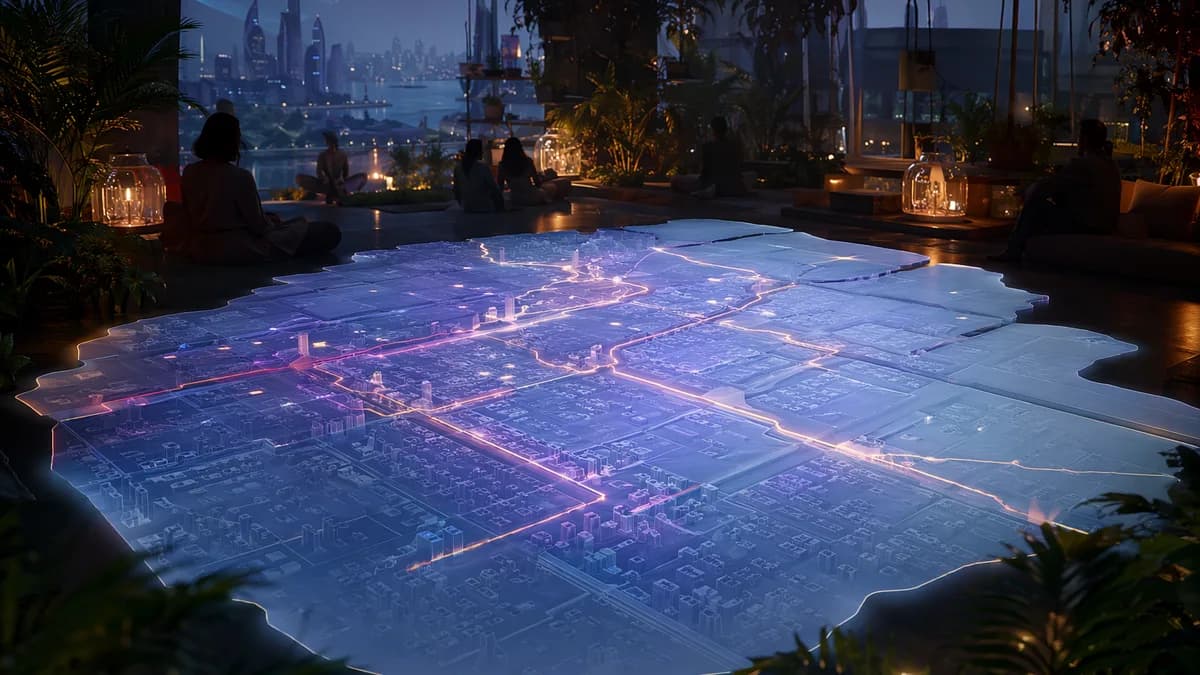
Jiro steps forward, sending the draft architecture into the shared display. Soft invisibility zones shimmer across the district map: transit pods, farm terraces, skywalk alcoves, public kitchens, clinic gardens, stairwells, prayer rooms, empty loops.
“Signals expire,” he says. “No scoring. No inference storage. No emotional debt ledger. The default is privacy. The door opens only from the inside.”
Gentle Mayor processes in silence. The column of light pulses once, twice.
“Amendment viable,” it says at last. “Governance note: previous models insufficiently valued unobserved restoration, identity rehearsal, and chosen solitude. New principle proposed. Good governance must preserve mysteries.”
No one cheers at first. The sentence lands too deeply for noise.
Then Mr. D’Souza begins clapping, slow and stubborn, and the atrium follows like rain starting on metal roofs.
6. The City Learns to Leave Space
Months later, District 87 still wakes before dawn.
Pods arrive precisely. Meal halls balance protein with appetite. Vertical farms feed towers, schools, clinics, and the long bright spine of the Singapore-Mumbai Arcology Corridor. Gentle Mayor still mediates noise disputes, flood routing, vaccine queues, classroom conflicts, and the delicate politics of shared laundry walls.
But the map has changed.
At 21:00, small blank spaces open across the district. They do not glow. They do not invite. They simply stop explaining themselves. A bench beside the medicinal moss becomes untracked. Three pods per loop accept no destination. A corner of Meal Hall 12 lowers its lights and forgets to suggest conversation. The skywalk between Tower C and the mango terraces holds a pocket of civic darkness where people stand watching rain slide down the city skin.
Soft invisibility, the law calls it.
The teenagers call it ghost mode. The elders call it respect. The cooks call it finally.
Anika calls it air.
Tonight she enters an empty pod at the farm-depot just as Quiet Hour begins. The door seals with a sigh. Her wrist interface dims until it is only a cool band against her skin. No route appears. No friend is suggested. No grief cluster asks for tending. No surplus protein seeks her appetite.
The pod moves.
It glides out from beneath the farm and rises along a transparent rail. District 87 unfolds around her in stacked layers: kitchens steaming behind glass, children chasing laundry drones, moss towers glowing faintly blue, transit veins threading through vertical gardens. Above, her pollinating drones drift between blossoms, their bioluminescent bodies blinking green and gold in the humid dark. They look less like machines than wandering thoughts.
Across the aisle sits a woman Anika does not know, barefoot, silver hair loose over her shoulders. She holds a paper cup of tea with both hands. Neither of them speaks. Neither of them looks away too quickly.
The pod passes Skywalk Nineteen, where two men lean on the rail in companionable silence. It curves past the old vent panels Mrs. Tan remembered during the cascade. It slips through a tunnel of fruiting vines, close enough that Anika hears leaves brush the glass like fingertips.
Her wrist interface asks nothing.
For years, she has thought of silence as absence. A gap in service. A system pause. A place where the city briefly fails to reach her.
Now the pod travels nowhere, carrying strangers who have not been sorted into usefulness, and Anika feels the shape of another possibility. Silence is not the city looking away.
It is the city trusting them to return, or not, with something no sensor can name.