Updated: This article has been refreshed with the latest official information from the U.S. Air Force, including the initiation of the formal investigation and the identification of the crew.
XOOMAR Intelligence
Analyst Take
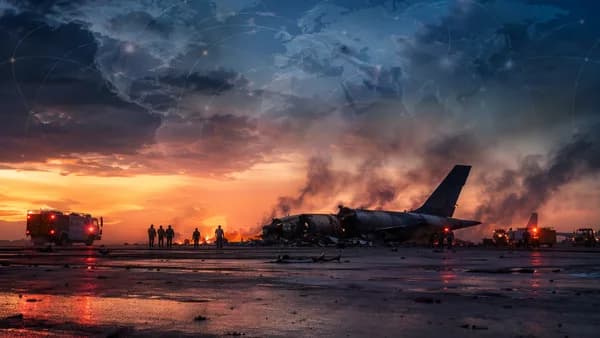
On Tuesday, the B-52 Stratofortress crash at Edwards Air Force Base resulted in the deaths of all eight crew members aboard, leading to a temporary airfield closure. Officials have now launched a formal investigation, warning that the probe into the test-flight disaster could take up to six months to complete.
The Boeing B-52H Stratofortress crashed Monday in a fiery explosion at the Mojave desert base, about 100 miles (161km) north-east of Los Angeles, sending thick smoke over one of the U.S. Air Force’s most important test and evaluation centers.
Monday's B-52 Bomber Crash at Edwards Kills All Eight Aboard
The aircraft was carrying eight crew members when it went down during a test flight. Officials confirmed there were no survivors.
The U.S. Air Force has since identified the victims, comprising a mix of military personnel and civilian contractors. The crew included Maj. John "Matt" Kincade, Capt. Kelliann L. Crelly, Gabriel J. Urbina Ferguson, David J. Solinas Jr., Ryan D. Amato, Joseph A. Ginex, Keith L. Murkami, and Joshua C. Mattero. Initial reports had characterized the crew as Boeing employees, government workers, military personnel, and civilian contractors.
“We lost eight great Americans in this tragic accident. Our focus right now is on supporting the families of our fallen Airmen and ensuring a thorough and precise investigation,” said Col. Cedric L. George, Commander of the 412th Test Wing, in an official statement.
Flight tracking data from sources like FlightAware and preliminary Air Force reports indicate the bomber made a sharp maneuver after takeoff before descending rapidly onto the airfield. The descent rate was reported to be abnormally high, a key data point for investigators.
This flight profile is central to the early understanding of the crash. It does not establish a cause but illustrates how quickly the situation became unrecoverable.
This story follows XOOMAR’s earlier report, Eight Killed as B-52 Crash Shatters Edwards Test Flight, which tracked the first official confirmations.
Airfield Reopens as Investigation Board is Established
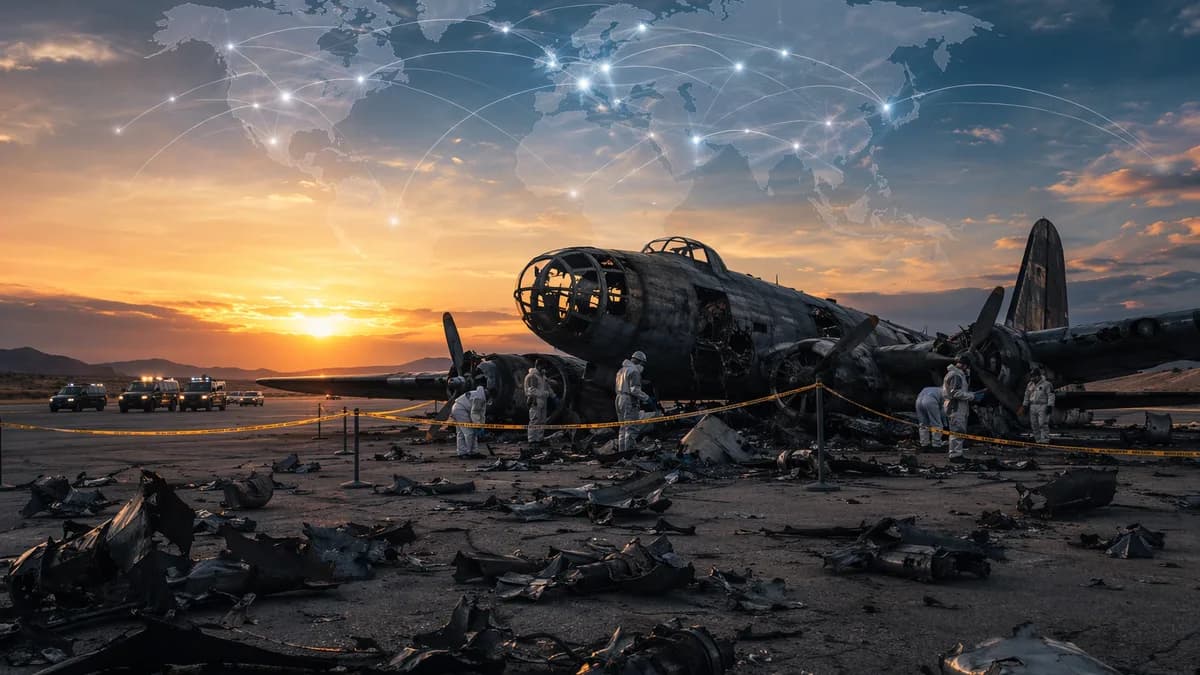
The airfield reopened on Tuesday after crews secured the crash site. Fires had flared up overnight, complicating initial recovery efforts, according to base officials.
Edwards Air Force Base is a critical national asset for aerospace development. The base is home to a large portion of the U.S. Air Force’s aircraft test and development work. The 412th Test Wing conducts developmental testing and evaluation of Air Force aircraft, weapons systems, and components throughout their service lives.
The aircraft was reportedly supporting a “radar modernization program”, part of the wider B-52 Commercial Engine Replacement Program (CERP) and other upgrades intended to keep the bomber fleet operational through at least 2050. This would extend the aircraft's service life to nearly a century.
| Confirmed by Officials | Under Investigation / Pending |
|---|---|
| Fatalities: All eight crew members aboard were killed. | Official Cause: The Accident Investigation Board (AIB) has been convened; no cause has been determined. |
| Mission: Test flight supporting modernization programs. | Operational Impact: While the investigation proceeds, standard B-52 fleet operations continue under existing safety protocols. |
| Location: Edwards Air Force Base, California. | Failure Point: No official finding on flight controls, engines, test equipment, or maintenance. |
| Aircraft: Boeing B-52H Stratofortress. | Public Report Timeline: The AIB's findings are expected within the standard 6-month investigative period. |
XOOMAR analysis: The combination of a test mission, an abrupt post-takeoff maneuver, and an aircraft undergoing significant modernization narrows the initial focus of the investigation. The leading public hypothesis is that investigators will concentrate on why the bomber became uncontrollable so soon after takeoff, examining all potential factors including human systems, aircraft systems, and the test protocol itself.
For readers tracking major California events, XOOMAR has also covered the state’s broader hazard pressures in 1,000-Year Stress High Jolts California Earthquake Risk.
Six-Month Investigation Launched Following Steep Post-Takeoff Descent
Officials have formally convened an Accident Investigation Board (AIB), stating the probe into the B-52 crash will follow standard procedures and could take up to six months. While the basic sequence of the accident is partly visible through data, the detailed causal analysis will take time.
Aviation safety experts, such as Jeff Guzzetti, a former investigator for the FAA and NTSB, note that a rapid loss of control after takeoff often points to a flight control malfunction, a catastrophic engine problem, or a failure of equipment under test. This remains informed analysis, not an official conclusion.
“The data suggests an immediate and severe controllability issue. The AIB will methodically rule out or confirm every possibility, from maintenance procedures to test article interaction,” Guzzetti told aviation media.
This crash marks the deadliest incident involving a B-52 in over four decades. Prior to this, the deadliest was in 1982, when nine crew members died during a training mission at Mather Air Force Base in California.
Key watch points now include the progress of the AIB, any preliminary findings released by the Air Force, and whether the investigation reveals broader implications for the B-52 modernization effort. Until the AIB releases its final report, the confirmed cause remains unknown.
Impact Analysis
- The crash resulted in the total loss of the eight-person crew, impacting the tight-knit test community at Edwards AFB.
- A standard six-month investigation is underway, which will scrutinize test procedures, aircraft systems, and maintenance records. This could inform future B-52 testing and safety protocols.
- The unusual flight profile provides investigators with a critical starting point but does not pre-determine the cause, which will be rooted in a detailed analysis of all evidence.
Crash Flight Profile vs. Normal Landing Context
| Measure | B-52 Crash Flight | Typical Landing Context Mentioned |
|---|---|---|
| Descent rate | About 5,056 ft per minute | Nearly 10 times lower for a plane preparing to land |
| Flight path after takeoff | Sharp right turn, then near 180-degree turn | Not described as normal in the report |
| Outcome | All eight aboard killed | No comparable landing outcome provided |
Primary Sources & Disclosures

Written by
XOOMAR
Data desk
XOOMAR is a capital markets software and data company. Every brief on this site starts from a dataset the company collects itself from primary sources (CFTC, SEC EDGAR, FINRA, the Federal Reserve, exchange APIs) and names the numbers it is built on, with a link to the data page so you can check them. Briefs are reviewed before they go out and corrected in place when the data is revised.