Revoked Iran World Cup tickets turn fan access into a governance test
Iran's revoked World Cup ticket allocation is no longer a back-office sales problem. It is a test of whether Fifa can protect fan access when U.S. regulatory restrictions hit a sanctioned country's official allotment days before kickoff.
XOOMAR Intelligence
Analyst Take
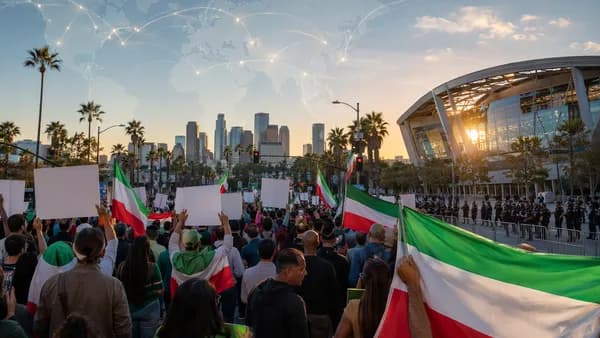
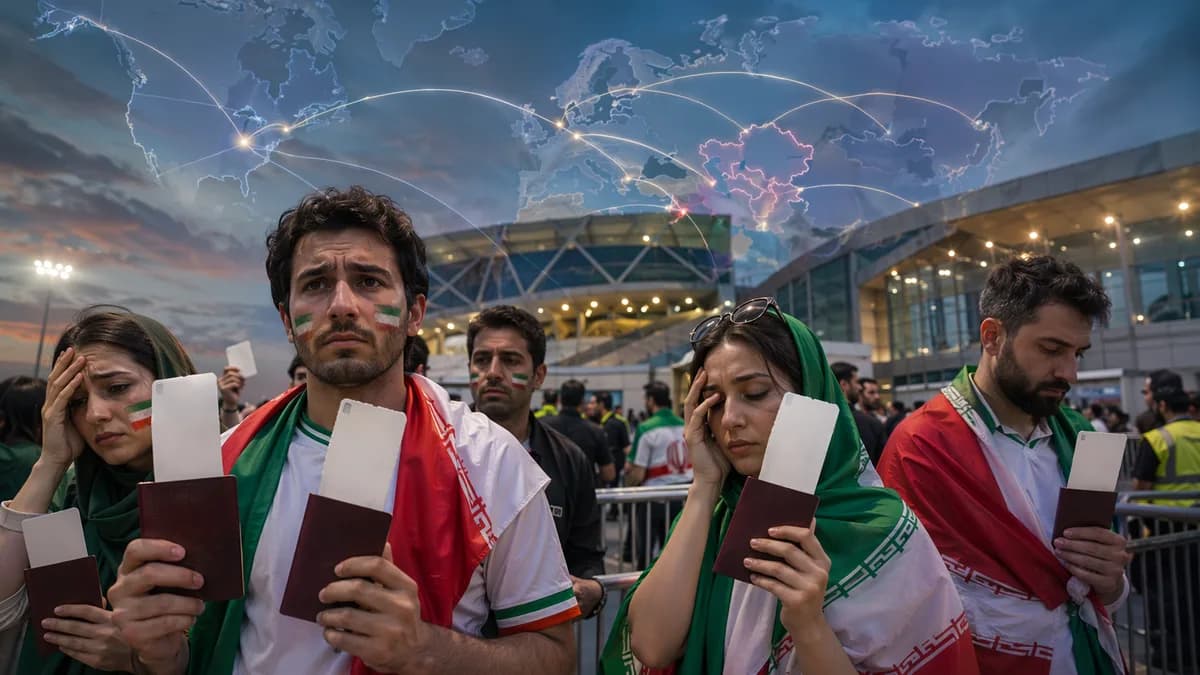
Fifa said it is working to "maximise opportunities for Iranian supporters to attend matches" after Iran's group-stage ticket allocation was revoked, according to BBC World. The Iranian Football Federation, or FFIRI, says it had already started selling tickets and can no longer provide them to supporters, including some who had made travel arrangements.
That timing is the story. A ticket dispute months out can be treated as administration. A ticket dispute days before a World Cup begins becomes a governance failure, or at least a governance stress test.
Iran are scheduled to play New Zealand on 15 June and Belgium on 21 June, both in Los Angeles, before facing Egypt in Seattle on 26 June. Those are not abstract fixtures on a spreadsheet. They are travel plans, hotel bookings, visa questions, local transport decisions, and for many fans, one rare chance to watch a national team at the World Cup.
The central question is still unresolved: was this a technical ticketing decision, a sanctions-driven compliance move, a security calculation, a political signal, or a communication breakdown that left ordinary supporters exposed? The answer matters because World Cup ticket access sits at the intersection of sport, commerce, border control, and diplomacy.
The 8% allocation is where abstract fairness becomes real seats
The 8% ticket allocation is the hard number that gives this dispute weight. The FFIRI says Fifa regulations give each federation involved in the World Cup 8% of the tickets for each of their matches, to distribute to supporters.
That allocation is different from general availability. It gives each national federation a defined supporter presence inside the stadium. When that channel breaks late, fans are pushed into uncertainty, or into whatever tickets may remain if the allocation goes back on sale.
BBC reported that Office of Foreign Assets Control, or OFAC, restrictions are central to the problem. OFAC is the U.S. sanctions enforcement office. In this case, the issue is not simply whether fans want tickets, but whether U.S.-based entities can process certain transactions involving Iran.
If no resolution is found, BBC reported that the Iran allocation will go back on sale.
| Verified point | Why it matters |
|---|---|
| Three matches affected | Iran's entire group stage is implicated, not one isolated game. |
| 8% allocation claimed by FFIRI | The dispute concerns an official federation entitlement, not casual resale demand. |
| Tickets were already being sold | Fans may have acted on an official process, not rumor. |
| Some fans made travel arrangements | Late revocation shifts costs onto supporters. |
| OFAC restrictions are involved | Ticketing has become a sanctions compliance issue. |
| Exact number of affected fans is not confirmed | The scale of financial harm remains unclear. |
The absence of confirmed numbers is part of the problem. We do not have a verified count of revoked tickets. We do not have confirmed travel costs. We do not have a public breakdown of who made the revocation decision.
That data gap weakens accountability. Fans cannot easily challenge a decision if they do not know whether the blocker is Fifa, a payment processor, a host-country restriction, a compliance interpretation, or a federation-level failure to plan around known constraints.
XOOMAR analysis: if the 8% figure applies cleanly to full stadium capacity, the allocation can represent thousands of seats per match. Associated Press reported Iran's opener against New Zealand will be at the 70,000-seat Los Angeles Rams' stadium in Inglewood. On simple arithmetic, 8% of 70,000 is 5,600 seats. That is not a niche dispute. It is a visible supporter section.
Iranian supporters are paying for uncertainty they did not create
The fans are the least powerful actors in this chain, and they are carrying the most immediate risk.
The FFIRI said it had already begun the ticket sales process and could no longer provide tickets to fans. France 24 reported the federation said many Iranian football fans had made plans based on the officially announced process.
A late ticket revocation creates two classes of supporters:
- Flexible fans: Those who can absorb losses, search for replacement tickets, change hotels, or reroute travel.
- Locked-in fans: Those for whom one revoked ticket collapses the whole trip.
- Diaspora supporters: Those already in North America who may see this World Cup as a rare chance to gather around Iran on a global stage.
- Traveling supporters: Those facing the most expensive changes if match access disappears after flights and accommodation are booked.
The emotional cost is harder to measure, but it is real. World Cup attendance is not just a transaction for national-team supporters. It is identity, family, politics, and sport packed into one match day.
The FFIRI's language shows how quickly a ticketing dispute becomes a legitimacy fight.
"Depriving Iranian supporters of access to their lawful and official allocation of tickets is an action contrary to the spirit of governing international competitions and the principle of equality among participating countries," the FFIRI statement said.
The danger now is rumor. When fans do not receive a clear explanation, they fill the gap themselves. Some will blame Fifa. Some will blame the U.S. government. Some will blame the FFIRI. Others will turn to secondary markets, where opacity can become expensive fast.
Federation officials, tournament organizers, host authorities, and fans all have different incentives
This dispute is difficult because every actor has a different definition of success.
For the FFIRI, the priority is to defend the allocation and show Iranian supporters it is fighting. The federation also has to avoid looking powerless before domestic audiences and the wider Iranian diaspora. Its statement directly questioned political interference.
"This development raises serious questions about the interference of non-sporting and political considerations in the organisation of the world's biggest football event."
For Fifa, the priority is control. It owns the World Cup ticketing operation and must keep stadium access compliant with host-country law. Its statement that it is trying to "maximise opportunities for Iranian supporters to attend matches" is carefully worded. It does not concede blame. It signals effort.
For U.S.-linked entities, the issue appears to be compliance. BBC reported that OFAC restrictions limit the ability of U.S.-based entities to process certain transactions. That is a different constraint from stadium logistics. It is not about whether a seat exists. It is about whether the sale can legally move through the relevant system.
Host authorities and security planners sit in another lane. BBC reported Iran's World Cup involvement has been clouded by uncertainty tied to the ongoing war in the Middle East and related security concerns. The team moved its training base from Tucson, Arizona, to Tijuana, Mexico, on 25 May, claiming the U.S. was unwilling to host them. Under their visa conditions, Iran will have to fly in and out of the United States on matchday for each group game.
The players are exposed too. A reduced or uncertain fan presence can change the atmosphere around a team before the first whistle. XOOMAR analysis: for Iran, the football story is already competing with visas, sanctions, travel restrictions, and political messaging. That is a heavy frame for a squad preparing for three group-stage matches.
This is not Iran's first access problem at this World Cup
The ticket row lands after a string of access disputes around Iran's participation.
On 6 June, Iran accused the U.S. of denying visas to "integral" members of the national team's backroom staff, with 15 administrative officials denied entry, according to BBC. The FFIRI had already presented Fifa with a list of 10 conditions for participation, including allowing players, coaches and officials who had completed military service with the Islamic Revolutionary Guard Corps, or IRGC.
U.S. secretary of state Marco Rubio has said Iran's players will be welcome at the tournament, but individuals with links to the IRGC could face entry restrictions.
Iran also missed Fifa's annual congress in Vancouver in April after a delegation of FFIRI officials, including president Medhi Taj, were turned away at the Canadian border.
This wider Iran-U.S. tension has been building across diplomacy and security, as we covered in Hardliner Capitulation Cry Rattles Iran US Peace Deal and Beirut Strikes Push Iran Peace Deal to the Brink. The football dispute is not separate from that context. It is one more place where political constraints show up in operational form.
France 24 cited a 2017 comment from Fifa chief Gianni Infantino, made when U.S. soccer officials were preparing the joint bid with Canada and Mexico:
"It’s obvious when it comes to FIFA competitions as well (that) any team, including the supporters and the officials of that team, who would qualify for a World Cup need to have access to the country, otherwise there is no World Cup."
That quote now reads less like boilerplate and more like a standard Fifa has to meet under pressure.
Major tournaments sell neutrality. Ticketing exposes the limits. A global event can promise equal participation, but allocations, accreditations, sanctions rules, visas, payment rails, and border decisions decide who actually gets through the gate.
This Iran ticket row should worry every World Cup traveler and sports business partner
The practical lesson for fans is blunt: an official route is safer than an unofficial one, but it is not immune to late disruption.
That should worry more than Iranian supporters. Every World Cup traveler depends on a chain of trust. The match ticket anchors the trip. Flights, hotels, local transport, time off work, and family plans orbit around it. If the ticket disappears days before kickoff, the whole travel package can fail.
For sports-business partners, this is a confidence problem. XOOMAR analysis: airlines, hotels, hospitality firms, sponsors, and ticketing platforms are not named as parties in the BBC report, but their economics depend on fans believing that tournament logistics will hold once money has changed hands.
The reputational risk is sharper for football governance. If supporters do not know why tickets vanish, they will assume politics, favoritism, incompetence, or some mix of all three.
The minimum standard now should be clear:
- Written explanation: Fans should know what rule or restriction caused the revocation.
- Named responsibility: Fifa, the federation, ticketing operators, and relevant authorities should clarify who controlled the decision.
- Fast refunds: If tickets cannot be delivered, money should move back quickly.
- Replacement path: If compliant alternatives exist, fans need a transparent route.
- Escalation channel: Supporters should not be left guessing through press statements.
This is also where Fifa's governance language meets reality. Calling for neutrality and fairness is easy. Delivering tickets through a sanctions-constrained system is the harder test.
Before Iran vs New Zealand, the evidence will matter more than statements
The immediate pressure point is Iran vs New Zealand on 15 June in Los Angeles. If Fifa and the FFIRI find a compliant solution before then, the story may shrink into an ugly but contained operational crisis.
If not, the dispute can follow Iran into every group-stage match.
Possible outcomes remain narrow but important:
- Tickets restored: The cleanest result, if payment and compliance issues can be resolved.
- Replacement seats offered: A partial fix that preserves some official supporter presence.
- Refunds issued: Financial repair, but not a sporting or emotional substitute.
- Smaller allocation accepted: A compromise that may still anger fans.
- Tickets returned to sale: The most damaging outcome for supporters who relied on the federation channel.
The evidence that would confirm the strongest version of the thesis is simple: written confirmation that regulatory restrictions, not ordinary administration, caused an official national allocation to collapse days before kickoff. The evidence that would weaken it would be a fast fix showing the revocation was temporary, procedural, and reversible without major fan losses.
Until that proof arrives, the ticket row should be treated as more than a scheduling headache. It is a live test of whether a World Cup co-hosted by Canada, Mexico, and the United States can reconcile global sporting access with domestic legal restrictions and political conflict.
The next tournaments should take note. Fans now treat ticket access as part of the integrity of the event. If national allocation decisions stay opaque, every late revocation will be read as something larger than ticketing, especially when politics is already at the stadium door.
Impact Analysis
- Iranian fans may lose access despite already making travel and accommodation plans.
- The dispute tests whether Fifa can protect ticket access when sanctions and compliance issues intervene.
- The case highlights how World Cup logistics can quickly become entangled with politics, regulation, and diplomacy.
World Cup Ticket Allocation Per Federation
Primary Sources & Disclosures

Written by
XOOMAR
Data desk
XOOMAR is a capital markets software and data company. Every brief on this site starts from a dataset the company collects itself from primary sources (CFTC, SEC EDGAR, FINRA, the Federal Reserve, exchange APIs) and names the numbers it is built on, with a link to the data page so you can check them. Briefs are reviewed before they go out and corrected in place when the data is revised.