The U.S. barred Omar Abdulkadir Artan, the only Somali referee selected for the FIFA World Cup 2026, just days before kickoff, turning a border decision into a test of whether America can host global sport without last-minute immigration shocks.
XOOMAR Intelligence
Analyst Take
Artan arrived at Miami International Airport from Istanbul, Turkey, on June 6 and was denied entry after additional inspection because of unspecified “vetting concerns,” according to Time. That decision affects Artan first. It also hits FIFA, Somali football, other match officials, and fans who expect the tournament’s logistics to be settled before the opening whistle.
Security screening is legitimate. No host country should waive border controls because someone has sports credentials. But unexplained exclusions of credentialed tournament officials corrode trust in the event system, especially when they happen after travel has begun and when the affected official has little public path to rebut the concern.
“Admissibility determinations are made on a case-by-case basis using law enforcement, national security, and immigration information available at the time of inspection,” CBP said.
That sentence is legally clean. Operationally, it’s messy.
Omar Artan's border stop turns World Cup security into a credibility test
Artan was not a fringe invitee. He was one of 52 FIFA-handpicked referees for the tournament, and Time notes he was the only Somali on that list. FIFA later confirmed he “will be unable to train and officiate at the FIFA World Cup 2026 after he was denied entry” into the U.S.
The core tension is simple: a referee selected for the world’s largest soccer event was blocked by the host country for reasons the public cannot inspect. The question now is whether this was a narrow security call or a symptom of an event infrastructure problem.
Timing sharpens the issue. The tournament kicks off on June 11. Artan arrived on June 6. A denial that close to tournament operations leaves almost no clean runway for review, replacement, public explanation, or diplomatic repair. It also means the decision landed after FIFA’s selection process, after travel planning, and after the symbolic moment in which Somalia expected its first men’s World Cup finals referee.
FIFA’s position is procedural. It says host governments control visas and admission.
“In line with previous FIFA events, a host government ultimately determines who receives a visa and who is admitted into their country,” FIFA said.
That’s true, but it doesn’t end the governance question. If the U.S. border process can override FIFA accreditation at the airport, then immigration clearance is not a side function. It’s part of the tournament’s operating system.
For global sport, the damage comes from opacity. CBP did not identify Artan by name in the statement cited by Time, though the surrounding facts pointed to him. The agency cited “vetting concerns” and said he was “inadmissible.” It did not disclose the underlying issue. That may protect sensitive information, but it also leaves the football world judging the consequence without seeing the evidence.
FIFA's referee operation now has an immigration single point of failure
The World Cup depends on predictable movement. Teams, referees, assistant referees, coaches, media, medical staff, federation officials, sponsors, broadcasters, and fans all need border access to align with a fixed match calendar. A single denial can be contained. A pattern creates operational risk.
The referee logistics are especially tight. BBC reported that referees’ chief Pierluigi Collina created a Miami training hub for the tournament’s 52 referees and 88 assistant referees, and that on-pitch officials must stay at the Florida base for training, preparation, and security. That means Artan could not simply live outside the U.S. and officiate matches in Canada or Mexico, the other two host nations.
| Tournament actor | Immediate problem | Longer-term risk |
|---|---|---|
| FIFA | A selected match official is removed before kickoff | Immigration clearance becomes a visible governance weakness |
| U.S. authorities | Must defend a security decision without public detail | Host credibility suffers if denials look arbitrary |
| Somali football | Historic representation is lost | Smaller federations may see access as politically fragile |
| Referees | Assignments can collapse after travel begins | Officials from scrutinized countries may need earlier legal support |
| Fans and teams | Fairness concerns move off the field | Trust in tournament neutrality weakens |
The numbers matter because they show how little slack exists. FIFA was working from a finite referee pool. Match officials are not interchangeable in a casual sense. They carry fitness status, language capability, tournament preparation, and neutrality constraints. Replacing one official at the final stage may be possible, but it’s not frictionless.
The missing number is also important: the U.S. has not disclosed the basis for the vetting concern. That absence becomes a data point. When the stated reason is broad and the consequence is public, outsiders cannot assess consistency. Was the issue documentation? A database match? Travel history? Intelligence? Something else? The public record doesn’t answer.
Somali nationality and vague "vetting concerns" put risk politics in the frame
Somalia sits at the center of the politics around this case because it is among the 39 countries covered by the Trump Administration’s revived travel ban, according to Time. The ban includes exemptions, including for “any athlete or member of an athletic team, including the coaches, persons performing a necessary support role, and immediate relatives, traveling for the World Cup, Olympics, or other major sporting event as determined by the Secretary of State.”
That exemption matters, but it is not the same as guaranteed entry. CBP’s statement makes clear that border officers still determine admissibility at inspection.
The hard question is how much weight Artan’s nationality carried. The public record does not prove discrimination. It does support a narrower conclusion: Somali nationals face a policy environment where additional scrutiny is structurally more likely than for many other travelers. CNN reported that nationals of countries listed under the travel ban are placed under additional scrutiny, while CBP did not provide details on why Artan was refused entry.
Vetting can involve documentation checks, law enforcement records, national security information, immigration history, and name-based screening. Those systems can catch genuine threats. They can also generate unresolved flags that are hard for an individual to contest in real time, especially at an airport.
The phrase “vetting concerns” does a lot of work here. It signals seriousness without revealing substance. It may be necessary in some cases, but it also blocks the affected traveler from answering a specific allegation in public. That asymmetry is tolerable in routine immigration processing. It becomes harder to defend when the decision alters a global event.
Artan’s own background adds to the symbolic weight. He became a FIFA referee in 2018, officiated Somali national football league championships, and was named men’s referee of the year by the Confederation of African Football in 2025, according to Time. Somali President Hassan Sheikh Mohamud congratulated him in April, saying:
“I commend the effort, professionalism, and integrity shown by referee Omar, as he has become a symbol of inspiration for the new generation of Somalis.”
That symbolism does not entitle him to admission. It does raise the cost of silence.
U.S. authorities, FIFA, Somali football, and fans absorb different costs
From the U.S. government’s view, the hierarchy is clear. Border security comes first. A World Cup credential is relevant, but it does not remove CBP’s authority to inspect, question, and deny entry under U.S. law.
FIFA sees a different failure mode. The governing body can select officials, design training hubs, and coordinate match operations, but it cannot compel a host state to admit a person. FIFA said it is not involved in host country immigration processes, including visa decisions. That creates an awkward split: FIFA owns the tournament, but the host country controls the door.
Somali football officials see a public loss. Ciise Aden Abshir, a senior adviser to Somalia’s Ministry of Youth and Sports, told AFP that Artan is “among Africa’s most respected referees and deserves the support of the entire football community.” BBC also reported that a Somali embassy official in Nairobi said Artan’s diplomatic passport had been issued specifically to ease travel after earlier visa difficulties.
Fans and players carry a softer but real cost: confidence. Tournament fairness is not only built through VAR protocols, referee neutrality, or disciplinary rules. It also depends on the belief that access to the event is governed by predictable standards. If one official can be removed at the airport with no public explanation, observers will ask whether others are exposed to the same risk.
Artan has chosen a restrained tone. In a statement cited by Time, he said that “despite the circumstances,” he was “in a positive mood” and “focused on the next challenges” in his refereeing career.
“I want to thank the football family for their messages,” Artan said, “and wish my colleagues all the best success during the World Cup and I look forward to joining them again in future competitions.”
That response protects his career. It doesn’t resolve the institutional problem.
Iran, Iraq, and Artan show how border policy can disrupt match operations
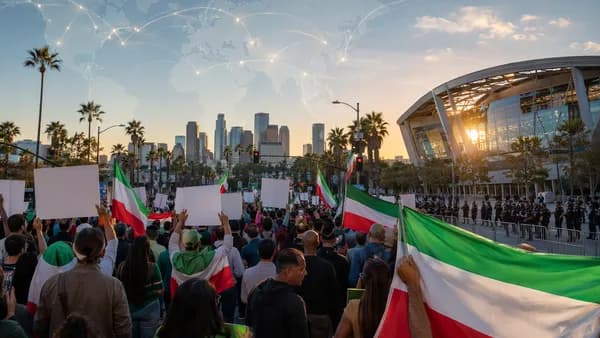
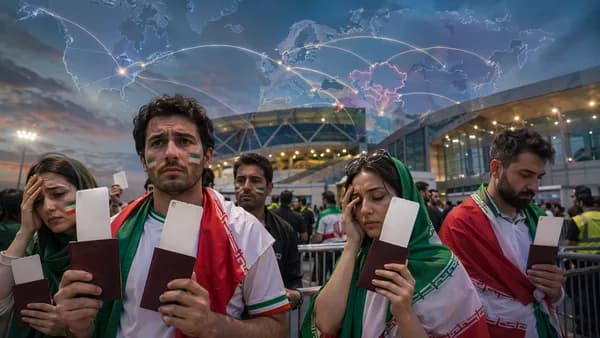
Artan’s case did not land in isolation. Time reported that Iranian players and officials also faced issues around planned World Cup attendance. Iran eventually set up its World Cup home base in Mexico and will fly in and out of the U.S. on match days. CNN added that Iran’s football federation president Mehdi Taj said the team had been granted permission to enter the U.S. “only one day before the match,” while some management staff, media personnel, and an executive director had still not been granted permission.
Iraq’s delegation faced another airport incident. Time reported that Aymen Hussein and team photographer Talal Salah were detained at Chicago O’Hare International Airport. CBS News, cited by Time, reported that Hussein was questioned for about seven hours before being allowed entry, while Salah was denied entry and sent back home, with CBP again citing “vetting concerns.”
This is the operational distinction that matters: routine visa delays are disruptive, but last-minute denials are destabilizing. A delay can sometimes be planned around. A denial at arrival forces immediate replacement decisions, diplomatic calls, media scrutiny, and reputational fallout.
Civil society groups saw the risk before the tournament. Time reported that more than 120 civil organizations issued a joint travel advisory warning soccer fans to “exercise caution” and have an emergency contingency plan when traveling to the U.S. amid restrictions and limitations on noncitizens’ travel.
The U.S. can argue each case on its own facts. That’s how CBP frames admissibility. But tournaments are judged by patterns as much as individual files. If multiple World Cup-linked travelers encounter denials or severe restrictions, the event starts to look less like a smooth global gathering and more like a stress test for U.S. border policy.
World Cup organizers now need immigration clearance months before kickoff
The practical lesson is blunt: FIFA and future U.S.-based event organizers cannot treat immigration clearance as paperwork handled near the end. For referees, officials, support staff, and federation personnel, pre-vetting needs to move much earlier in the cycle.
That means stronger channels between FIFA, host governments, and national federations. It also means identifying officials from heavily scrutinized countries early enough to resolve documentation issues before they become airport crises. For referees from smaller federations, the support burden may grow. Legal review, document preparation, and escalation contacts could become part of the assignment process.
The U.S. faces reputational risk even if it believes Artan’s denial was justified. Secrecy can make a security decision look arbitrary. Silence may protect intelligence, but it also creates a vacuum filled by suspicion, politics, and resentment. That is a poor fit for a tournament built on international participation.
For FIFA, the precedent is uncomfortable. A host country’s immigration system can remove a selected official after years of career progression and months of tournament planning. That gives host governments practical power over who participates beyond the field of play.
The next evidence to watch is not whether officials issue sharper statements. It’s whether processes change. If FIFA, U.S. agencies, and federations move screening earlier, create clearer escalation routes, and reduce airport-stage surprises, Artan’s case may become a painful correction. If more denials emerge with the same vague language, the stronger inference is that the tournament clock and U.S. vetting system are still colliding.
The U.S. can protect its borders and host global football. It can’t do both well if opaque decisions keep arriving days before kickoff.
Impact Analysis
- The denial raises questions about whether World Cup logistics can withstand last-minute immigration decisions.
- FIFA’s credibility is affected when a credentialed official is blocked after selection and travel.
- The case highlights the tension between legitimate border security and transparency for global sporting events.
FIFA World Cup 2026 Referee Selection
Primary Sources & Disclosures

Written by
XOOMAR
Data desk
XOOMAR is a capital markets software and data company. Every brief on this site starts from a dataset the company collects itself from primary sources (CFTC, SEC EDGAR, FINRA, the Federal Reserve, exchange APIs) and names the numbers it is built on, with a link to the data page so you can check them. Briefs are reviewed before they go out and corrected in place when the data is revised.