Walmart still owns the grocery trip, but the grocery basket breakaway shows why that may no longer be enough: shoppers are increasingly taking their routine essentials to Walmart and their planned, higher-consideration purchases to Amazon, according to PYMNTS.
XOOMAR Intelligence
Analyst Take
The tension comes from PYMNTS Intelligence’s report, “The Basket Breakaway: How Amazon Is Turning Walmart’s Store Traffic Into a Retail Weakness.” Walmart remains the dominant stop for routine shopping, especially groceries. Amazon, though, is winning more of the purchases shoppers research, plan and have delivered.
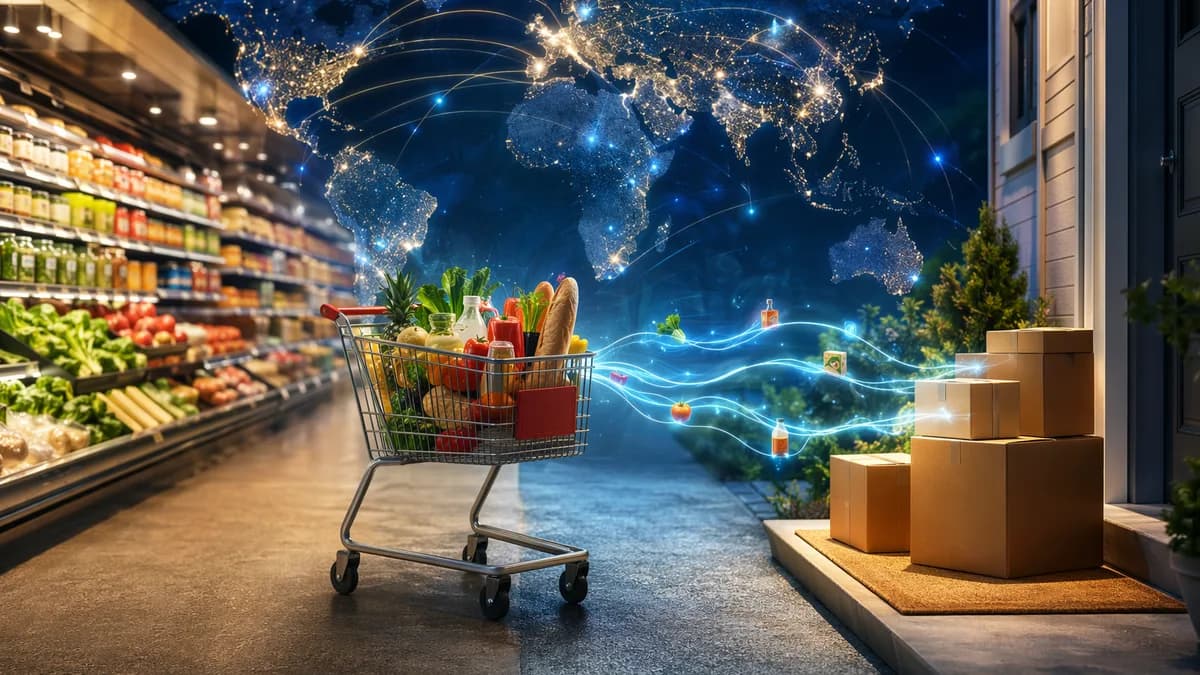
That is the core shift. The grocery run used to be the anchor. Now it’s just one stop in a split shopping routine.
Walmart Still Wins the Grocery Trip, but the Basket Breakaway Narrows Its Advantage
The old retail assumption was simple: get shoppers into the store for groceries, then capture the rest of the household basket while they’re there. PYMNTS’ data suggests that assumption has weakened.
Walmart’s advantage is still real. Its stores pull in regular shopping traffic, and routine trips remain a major strength. But the grocery basket breakaway means consumers are separating the immediate errand from the planned purchase.
In plain English: shoppers may still visit Walmart for everyday essentials, but they don’t automatically buy electronics, appliances, sporting goods, hobby products, books or music there too. Those considered categories are increasingly moving toward Amazon.
The before-and-after looks stark:
- Old model: The weekly grocery trip absorbs more of the household’s total spending.
- New model: Grocery stays physical and routine, while planned purchases move to digital channels.
- Strategic problem: Store traffic creates chances to sell more, but it no longer guarantees the shopper will complete the larger basket in the same place.
That makes Walmart’s grocery dominance narrower than it looks. Traffic is valuable. But if the follow-on purchase goes elsewhere, the visit does less work.
The Numbers Behind the Split Grocery Basket and Amazon’s Retail Creep
The PYMNTS numbers are the backbone of this story.
Walmart’s share of “trip” spending reached 10.35% in the first quarter of 2026, while its share of “considered order” spending was 5.87%. PYMNTS says that makes Walmart’s routine shopping share about 76% higher than its share of planned merchandise purchases, the widest gap on record.
The gap has also widened sharply. PYMNTS says the difference between Walmart’s trip spending and considered order spending is five times larger than it was in 2019.
| Measure from PYMNTS | Walmart position | Signal |
|---|---|---|
| Trip spending share, Q1 2026 | 10.35% | Walmart still dominates routine shopping behavior |
| Considered order spending share, Q1 2026 | 5.87% | Walmart captures far less planned merchandise spending |
| Gap versus 2019 | 5x larger | The split is worsening, not fading |
| Amazon lead in sporting goods, hobby products, books and music | Nearly 28 percentage points | Amazon is stronger in researched categories |
| Amazon lead in electronics and appliances | 24 points | Higher-consideration purchases are tilting online |
The report does not provide margin data, so any claim about profitability would go beyond the evidence. The supported point is narrower and still serious: Walmart can lead in routine trips while losing incremental category spending to Amazon.
That distinction matters. Visit share is not the same as basket share. Basket share is not the same as category control. Walmart may win the trip, while Amazon wins the purchase the shopper thinks about after leaving the store.
Amazon Is Pulling Back From Some Grocery Stores While Gaining in Planned Orders
The Amazon side of the story is more complicated than “Amazon is winning grocery.” It isn’t that simple.
Related reporting supplied with the source material says Amazon is closing its 57 Amazon Fresh stores and remaining 15 Amazon Go locations, while prioritizing online grocery delivery and Whole Foods Market. Some closed locations will be converted to Whole Foods stores, and Amazon plans to add more than 100 new Whole Foods Market stores in the coming years.
That retreat from Amazon-branded physical grocery stores doesn’t weaken the PYMNTS thesis. It sharpens it. Amazon does not need to beat Walmart at the weekly grocery run if it can win the planned purchase around it.
Amazon’s Fresh and Go concepts failed to deliver a “truly distinctive customer experience,” according to the supplied Forbes context.
Amazon’s grocery strategy, based on the supplied context, is moving toward online delivery, Whole Foods and faster fulfillment. The same context says Amazon served over 150 million grocery customers last year, generated $150 billion in gross grocery and everyday-essentials sales, and introduced same-day delivery in over 5,000 U.S. cities and towns.
That gives Amazon multiple ways to touch the household basket without relying on a shopper walking through an Amazon Fresh aisle.
For XOOMAR readers tracking how purchase decisions are shifting across digital channels, this sits beside broader retail-tech coverage such as ChatGPT Shoppers Crush Search Traffic for Retailers and Amazon-focused shopping coverage like Amazon Dorm Finds Rescue Tiny Rooms From Chaos for $9.
The One-Stop-Shop Promise Has Less Pull Than It Used To
PYMNTS frames the change as an inversion of traditional retail logic. For decades, grocery trips brought shoppers into stores and created chances to sell home goods, apparel and electronics during the same visit.
That logic depended on physical convenience. If a shopper was already in the store, adding another item made sense. The cart was there. The checkout lane was there. The trip had already been made.
Digital commerce changes the comparison. A shopper no longer weighs only whether an item is available in the aisle during a grocery run. They can compare that store trip with delivery, saved payment credentials, marketplace selection and prior purchase behavior.
This is where Amazon benefits. PYMNTS says Amazon leads Walmart by nearly 28 percentage points in sporting goods, hobby products, books and music, and by 24 points in electronics and appliances. Those are not random categories. They fit the “considered order” pattern: researched, planned and often delivered.
Walmart’s store density still matters. PYMNTS says the company attracts millions of shoppers every week. But the one-stop-shop promise has to compete with a different kind of convenience now: the retailer that captures intent before or after the store visit.
Walmart’s Store Traffic Turns Exposed When Shoppers Don’t Add More
The uncomfortable part for Walmart is that its greatest strength can expose the gap. Every grocery visit is an opportunity to sell more. But every visit also gives the shopper a moment to decide what belongs in-store and what can wait for Amazon.
PYMNTS says frequent store traffic no longer guarantees a larger share of discretionary spending. That is the pressure point.
Walmart is not standing still. The source notes investments in Walmart+, curbside pickup, its marketplace and OnePay. Those tools are aimed at linking routine trips with digital engagement, payment options and higher-value purchases over time.
The challenge is execution. Walmart has to convert a grocery shopper into a broader Walmart shopper across channels. That means the app, marketplace, pickup flow and payment experience have to reinforce the store visit rather than sit beside it.
If Walmart gets that right, its weekly traffic remains a major weapon. If it doesn’t, the grocery run becomes a habit Amazon can orbit around.
Retailers, Brands and Shoppers Now See One Basket Differently
From Walmart’s perspective, the case is not broken. High-frequency store visits are still rare and valuable. A retailer that sees customers every week has more chances to shape behavior than one waiting for occasional purchases.
From Amazon’s perspective, the bar is different. It does not need to own every grocery trip. It can win by capturing considered orders, delivery-led replenishment and high-intent shopping moments outside the store.
For merchants and brands, the PYMNTS findings point to a more fragmented selling problem. Physical shelves still matter, but so do digital placement, marketplace availability and the path between store visit and online purchase. XOOMAR analysis: brands that treat Walmart and Amazon as interchangeable channels will miss the behavioral split PYMNTS is measuring.
For shoppers, this looks less like disloyalty and more like optimization. The report’s core point is that consumers are choosing the retailer that best fits each purchase, rather than buying everything wherever the weekly errand happens.
The Next Grocery War Starts After Checkout
The next fight between Amazon and Walmart will not be limited to who gets the grocery trip. It will focus on what happens after the shopper leaves the store, opens an app, searches a category or responds to a recommendation.
The evidence to watch is specific. Walmart needs to narrow the gap between trip spending and considered order spending. Amazon needs to keep extending its lead in the categories PYMNTS identifies, especially electronics and appliances, sporting goods, hobby products, books and music.
A confirmation of the grocery basket breakaway thesis would be a wider gap between Walmart’s routine shopping share and its considered-order share. A weakening signal would be Walmart using Walmart+, pickup, marketplace expansion and OnePay to pull more planned purchases back into its own channels.
The retailer that controls the household’s shopping rhythm, not just the grocery destination, is the one with the stronger position. Right now, PYMNTS’ data says that rhythm is splitting.
The Bottom Line
- Walmart’s grocery dominance may be less valuable if shoppers buy higher-margin planned items elsewhere.
- Amazon is turning digital research and delivery convenience into an advantage beyond everyday essentials.
- The shift shows that retailers can no longer rely on one habitual shopping trip to capture the full household basket.
How Shoppers Are Splitting the Retail Basket
| Retailer/Model | Strength | Shopper Behavior | Strategic Implication |
|---|---|---|---|
| Walmart | Routine essentials and grocery trips | Shoppers still visit stores for everyday needs | Store traffic no longer guarantees capture of the broader household basket |
| Amazon | Planned and higher-consideration purchases | Shoppers research, plan and have items delivered | Gains share in categories beyond routine grocery |
| Old model | Weekly grocery trip as spending anchor | One trip absorbed more household purchases | Physical traffic drove cross-category sales |
| New model | Split shopping routine | Groceries stay routine while planned purchases move digital | Retailers must win each category separately |
Primary Sources & Disclosures

Written by
XOOMAR Insights Team
Research and Editorial Desk
The XOOMAR Insights Team pairs automated research with human editorial judgment. We track hundreds of sources across technology, fintech, trading, SaaS, and cybersecurity, cross-check the facts, and explain what happened, why it matters, and what to watch next. We do not just rewrite headlines. Every article is fact-checked and scored for reliability before it goes live, and we link back to the original sources so you can verify anything yourself.