
In the first half of 2026, South Korea's Incheon International Airport became the world’s busiest for international passengers, handling 38.39 million travelers. But this isn't solely a success story. According to data from the Airports Council International (ACI), it is a direct consequence of a geopolitical shock. “Part of the increase was attributed to disruption caused by the US-Iran conflict,” according to Guardian World, revealing a global aviation map violently redrawn by distant war. The crown has been pried from traditional hubs, and the new king sits uneasily on a throne built on risk aversion, a geopolitical posture further complicated by Trump's pressure on South Korean military drills and global realignments, such as Ghana leading slavery reparations talks.
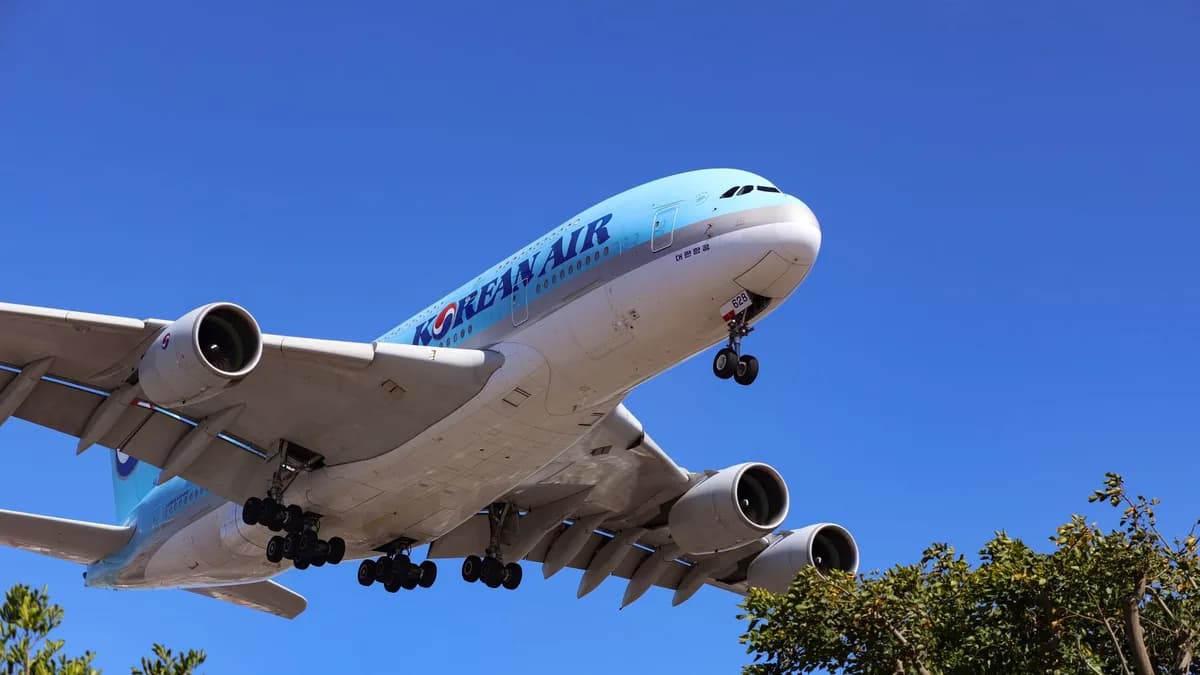
Incheon Airport Crowned World's Busiest by Iran War
XOOMAR Intelligence
Analyst Take
South Korea's Sudden Aviation Windfall
The numbers are stark. Incheon squeaked past London's Heathrow (37.79 million) and Singapore's Changi (34.53 million). For a facility that ranked 12th and 13th globally in 2024 and 2025 respectively, this is a staggering vertical leap.
The surge wasn't just broad growth, it was a targeted flood of rerouted human capital. Key drivers emerged:
- Transfer Passenger Explosion: Transfer passengers overall jumped 18.1% year-on-year to 4.24 million. More tellingly, those connecting through Incheon to final destinations in Europe surged 63.2% to 210,000. These are travelers who, in a stable world, would have connected in Dubai or Doha.
- Infrastructure Readiness: A major expansion completed in late 2024 wasn't just good luck. It increased annual capacity to 106 million passengers and serviced 158 international destinations. This readiness allowed Incheon to capture the diverted traffic that other airports may have been physically unable to absorb.
- Regional Demand: Beyond the Middle East diversion, foreign visitors, particularly from China and Japan, contributed to growth. Foreigners accounted for a record 44.4% of passengers in Q2 2026.
Kim Beom-ho, acting president of Incheon International Airport Corporation (IIAC), framed it as an achievement of hard work. But the underlying message is clear: global instability created a unique, high-volume opportunity, and Incheon was structurally prepared to seize it.
The Hollowed-Out Hubs: A Gulf in Traffic
The flip side of Incheon’s rise is the precipitous fall of Middle Eastern super-connectors. Dubai International Airport, which held second place globally in both 2024 and 2025, is now forecast to fall outside the top five for this period. This isn't a dip, it's a collapse.
Heathrow’s own data hints at the regional devastation: while its Asia-Pacific traffic rose 7.9%, capacity to the Middle East fell 16.5% "owing to the regional conflict." The numbers paint a picture of airlines and passengers voting with their flight paths, abandoning what were recently considered the world’s most efficient and luxurious hubs.
The Strategic Dilemma: Airlines like Emirates and Qatar Airways are built on a hub-and-spoke model that demands dense, reliable transfer traffic. A prolonged regional conflict doesn't just ground a few flights, it attacks the core of their business proposition. The rerouting of even a small percentage of Europe-Asia traffic represents a significant revenue leak and a crisis of operational confidence.
The long-term danger for these hubs isn't just lost passengers this quarter. It's the potential for a permanent recalibration of traveler and airline psychology. Once new routing habits are established and deemed safe and reliable, the incentive to return to a geopolitically volatile transit zone diminishes.
The Passenger’s New Calculus: Risk, Routes, and Reliability
For the global traveler, this shift manifests in tangible, often inconvenient ways.
- Longer Journeys: A flight from Sydney to London that once connected seamlessly in Dubai may now add hours via Incheon or Singapore.
- Psychological Shifts: Route planning now requires a new layer of geopolitical risk assessment, much like the calculations made during the pandemic or after major volcanic ash disruptions.
- Uncertain Pricing: Disrupted supply (Middle East capacity down 16.5%) and shifted demand (Asian hubs surging) will create unpredictable fare pressure on key corridors.
This event underscores a modern truth: the passenger experience is now inextricably linked to global conflict. As we saw with events like the Tokyo floods that paralyzed airport operations, infrastructure is vulnerable to more than just weather.
Can Incheon Hold the Crown?
South Korea’s challenge is locking in this windfall. Being the beneficiary of a crisis is not a sustainable strategy. The airport's leadership has stated plans to “strengthen competitiveness by focusing on passenger convenience,” but the real test is strategic.
Capacity vs. Competition: Incheon's 106 million annual capacity is now being stress-tested. Rivals like Singapore Changi and Tokyo Haneda won't cede this traffic without a fight, offering their own superior services and efficiencies. They are also vying for the same diverted passengers.
The Dependency Question: South Korea's gain is almost entirely a function of Middle Eastern instability. The moment US-Iran tensions ease, airlines will be economically compelled to reroute back to the more geographically central Gulf hubs. The speed of that return depends on how deep the new routing patterns have set.
The Korean government must now decide if it will use policy tools, visa waivers, and incentives to make Incheon's new traffic sticky, transforming a crisis-driven boom into an organic, long-term hub advantage.
A More Fragmented Future for Global Skies
The primary lesson for the aviation industry is profound vulnerability. A single regional conflict has instantly dethroned the world's busiest international hub and propelled a new one to the top. This reveals a system that prizes hyper-efficiency but is brittle under geopolitical strain.
XOOMAR ANALYSIS: We are likely entering an era where airlines and alliance planners will build more redundancy into their global networks, avoiding over-concentration in any one region. Investment will continue to surge in East and Southeast Asian airport infrastructure, solidifying them as a perceived "safe zone" corridor. The leaderboard for the world's busiest airport may now be permanently sensitive to the headlines from conflict zones thousands of miles away.
Watch the traffic numbers in Q3 and Q4 2026 closely. If Incheon maintains its lead regardless of diplomatic developments in the Middle East, it will signal a true and lasting power shift in global aviation. If, however, the crown shifts again with the winds of war, it will confirm that the title of "world's busiest" has become a temporary trophy, awarded not just by efficiency and service, but by the unpredictable calculus of global risk. For a glimpse at how other geopolitical tensions are moving markets, see our analysis on how Iran deal talk is currently impacting risk assets.
Why This Changes Everything
- A geopolitical conflict has abruptly reshaped global aviation routes, moving the world's busiest hub from Europe to Asia.
- Infrastructure readiness during a crisis proves critical for economic opportunity, as Incheon's recent expansion allowed it to capitalize.
- The shift reveals how quickly global travel patterns can change, impacting airlines, tourism, and regional economies worldwide.
Top International Airports - First Half 2026
| Airport | Passengers (millions) | Notes |
|---|---|---|
| Incheon (South Korea) | 38.39 | New leader, 12th-13th in 2024-25 |
| London Heathrow | 37.79 | Former leader |
| Singapore Changi | 34.53 | Major Asian hub |
Incheon Airport Transfer Passenger Growth (Year-on-Year)
Sources

Written by
XOOMAR Insights Team
Research and Editorial Desk
The XOOMAR Insights Team pairs automated research with human editorial judgment. We track hundreds of sources across technology, fintech, trading, SaaS, and cybersecurity, cross-check the facts, and explain what happened, why it matters, and what to watch next. We do not just rewrite headlines. Every article is fact-checked and scored for reliability before it goes live, and we link back to the original sources so you can verify anything yourself.
Explore More Topics
Related Articles
 Global Trends
Trump Ties South Korea Drills To Iran Feud
President Trump is slashing joint military exercises with South Korea as a direct punishment for Seoul's refusal to support U.S. pressure on Iran, turning allia
 Global Trends
North Korean Troops Bring Ukraine War Lessons to Drills
South Korea and the U.S. are launching annual military drills explicitly designed to counter North Korean forces who have gained battlefield experience fighting
 Global Trends
Oil Plunges 2% on Secret Iran Peace Deal Hints
Crude oil prices dropped 2% on unconfirmed reports that a ceasefire deal between the U.S. and Iran could reopen the Strait of Hormuz, despite ongoing attacks on
 Global Trends
Trump Slashes Key Korea Drills Overriding Generals
President Trump has ordered a substantial reduction in a major joint military exercise with South Korea, personally overriding commanders who designed the drill
 Global Trends
Global Coalition Smuggles China Past US Tariffs
A White House report reveals more than 40 countries, including major allies, are helping China circumvent U.S. tariffs, exposing a fundamental flaw in unilatera
 Trading
Gold Surges Past $4,395 as Fed Rate Bets Collapse
Gold prices soared as weak U.S. economic data slashed the probability of a Fed rate hike, making the non-yielding metal more attractive than the dollar.
 Trading
Bitcoin Slides As Trap in July CPI Data Emerges
A market analyst argues July's cooler CPI reading is a head-fake, hiding stubborn underlying inflation that's rattling Bitcoin and could keep the Fed hawkish.
 Fintech
Trump Summons Crypto CEOs in White House Ultimatum
President Donald Trump is meeting with CEOs from Coinbase, Ripple, and Robinhood to personally direct crypto policy ahead of a key CFTC advisory committee sessi
 Global Trends
Crown Prince’s Protest Exposes Imperial Monarchy Rift
Japan’s Crown Prince Akishino broke royal protocol by publicly opposing the government’s new male-only succession law, exposing a deep rift within the imperial
 Global Trends
Met Police Chooses Victims Who Matter, Mother Says
Mina Smallman, a mother who lost two daughters to murder and witnessed police corruption, declares the Metropolitan Police incapable of reform after seeing how
Don't miss the signal
Get our weekly roundup of the stories that matter across tech, fintech, and trading. No noise, just signal.
Free forever. No spam. Unsubscribe anytime.